1 Timothy 3:15, "...that thou mayest know how thou oughtest to behave thyself in the house of God, which is the church of the living God, the pillar and ground of the truth."
This question put a smile on my face when I read it because it reminded me of Paul Rudd’s final reply to Zach Galifianakis after he had asked him a series of uncomfortable questions on the comedy sketch/movie Between Two Ferns: The Movie:
ZG: “What advice would you give to a young actor who wants to hide his Jewishness as well as you have?”
PR: “I’ve never really tried to hide my Jewishness.”
ZG: “Jesus was Jewish and he didn’t hide it.”
PR: “No, he put it out there for everybody to see. He’s one of our best.”
ZG: “Are you practicing?”
PR: “No, I’m not a practicing Jew…”
Paul Rudd then says with a wry smile, “I perfected it.”
Makes me smile every time I watch that clip.
Unfortunately, perfection and religion are not always congruent terms. In fact, of the five times “religion” is used in the KJV it is only used positively one time and it is qualified with the adjective “pure.”
While we are working and practicing the command to “be perfect,” which is found eight times in the KJV, let’s also endeavor to perfect the “pure religion” James wrote about.
“If any man among you seem to be religious, and bridleth not his tongue, but deceiveth his own heart, this man’s religion is vain. Pure religion and undefiled before God and the Father is this, To visit the fatherless and widows in their affliction, and to keep himself unspotted from the world” (James 1:26-27, KJV).
“If anyone thinks he is religious and does not bridle his tongue but deceives his heart, this person’s religion is worthless. Religion that is pure and undefiled before God the Father is this: to visit orphans and widows in their affliction, and to keep oneself unstained from the world” (James 1:26-27, ESV).
“If you claim to be religious but don’t control your tongue, you are fooling yourself, and your religion is worthless. Pure and genuine religion in the sight of God the Father means caring for orphans and widows in their distress and refusing to let the world corrupt you” (James 1:26-27, NLT).
“Anyone who sets himself up as “religious” by talking a good game is self-deceived. This kind of religion is hot air and only hot air. Real religion, the kind that passes muster before God the Father, is this: Reach out to the homeless and loveless in their plight, and guard against corruption from the godless world” (James 1:26-27, MSG).
Whenever an anointed man of God hits a nerve in individuals, or groups, when preaching, there is usually a positive or a negative response. We call this “being convicted,” or, simply, “conviction.”
We observe these opposing responses in two passages in the Book of Acts:
1. Those who respond positively – Acts 2:37, “Now when they heard this, they were pricked in their heart, and said unto Peter and to the rest of the apostles, Men and brethren, what shall we do?”
2. Those who respond negatively – Acts 5:33, “When they heard that, they were cut to the heart, and took counsel to slay them.”
One hears and obeys, the other hears and rebels.
One hears the message and desires to hear more from the messenger, the other hears the message and then seeks to destroy the messenger.
Unfortunately, whenever there is a desire to silence the voice of God’s messenger many actions take place that are often dishonorable and that was the way the unbelieving Jews acted towards Stephen.
His defense against the accusations of blasphemy towards God and the Temple shows us that he had an advanced understanding of Judaism and Christ that was on the cutting edge of Divine revelation.
Stephen hit a nerve with the unbelieving Jews of his day and they sought a way to shut him up.
Pastor and author Mark Copeland provides the following outline of Stephen’s Defense before the Sanhedrin:
STEPHEN’S DEFENSE (Acts 7:1-53)
A. GOD’S DEALINGS WITH ABRAHAM (7:1-8)
1. The call to leave Mesopotamia
2. The sojourn in Canaan
3. The promise of possession to his descendants
4. The covenant of circumcision
5. His descendants: Isaac, Jacob, the twelve patriarchs
B. THE PATRIARCHS SOJOURN IN EGYPT (7:9-16)
1. Joseph sold into Egypt, becomes governor
2. Jacob and his sons move to Egypt during the famine
3. The patriarchs buried in Canaan
C. GOD’S DELIVERANCE OF ISRAEL BY MOSES (7:17-36)
1. The children Israel in Egypt become slaves
2. The work of Moses, deliverer of Israel
a. Raised by Pharaoh’s daughter
b. Kills an Egyptian, but despised by his brethren
c. Flees to Midian where he lives for forty years
d. The Lord appears to Moses in a burning bush at Mount Sinai
e. Returns to Egypt, delivers Israel and brings them into the wilderness
D. ISRAEL’S REBELLION AGAINST GOD AND MOSES (7:37-43)
1. Moses is the person:
a. Who said God would raise up another prophet like him
b. Who spoke to the Angel on Mount Sinai
c. Who received living oracles to give to Israel
d. Whom the fathers would not obey but rejected
2. Israel is the nation:
a. Who turned back into Egypt in their hearts
b. Who pressured Aaron to make a golden calf
c .Whom God gave up to worship the host of heaven for 40 yrs in the wilderness:
1) They may have offered sacrifices to the Lord
2) They also worshiped Moloch and Remphan – cf. Amos 5:25-27
E. GOD’S TRUE TABERNACLE (7:44-50)
1. The fathers of Israel had the tabernacle of witness
a. In the wilderness, built according to the pattern shown Moses
b. Brought into the promised land by Joshua
2. They also had the temple
a. Asked for by David, who found favor before God
b. Built by his son Solomon
3. Yet the Most High does not dwell in temples made with hands
a. For heaven is His throne and earth is His footstool
b. His hand has made all these things – cf. Isaiah 66:1-2
F. ISRAEL’S RESISTANCE OF THE HOLY SPIRIT (7:51-53)
1. Stephen charges the council of resisting the Holy Spirit, as their fathers did
2. Their fathers persecuted & killed the prophets, and they killed the Just One
3. They received the law, but did not keep it
As Stephen ended his defense, the men present were convicted: “When they heard these things, they were cut to the heart, and they gnashed on him with their teeth” (Acts 7:54, KJV).
This episode ends with the men stoning Stephen as he looks to heaven and sees a vision from heaven’s throne room while a young man named Saul watched over the coats of the men who stoned Stephen.
Many would consider Stephen’s defense and death a sign of failure, but I like to think that this event was a catalyst (a prick) for change in the life of Saul, who would later be called Paul and became the Apostle to the Gentiles.
Saul’s persecution of the early church might just have been his rebellion against the conviction of the message Stephen delivered.
How else could he drown out the voice of that first martyr of the way who lovingly forgave and sought God for the forgiveness of those complicit in his death?
Jesus knew that Saul was convicted, which is why He came to him on the road to Damascus, and, finally, Paul responded positively:
“And as he journeyed, he came near Damascus: and suddenly there shined round about him a light from heaven: and he fell to the earth, and heard a voice saying unto him, Saul, Saul, why persecutest thou me? And he said, Who art thou, Lord? And the Lord said, I am Jesus whom thou persecutest: it is hard for thee to kick against the pricks. And he trembling and astonished said, Lord, what wilt thou have me to do? And the Lord said unto him, Arise, and go into the city, and it shall be told thee what thou must do” (Acts 9:3-6, KJV).
The best response to anointed preaching and conviction is: “Lord, what do you want me to do?”
So, if someone tries to destroy you for the Word of God you are preaching, or because you are simply obeying the Holy Spirit, don’t take it personally, they are not attacking you…they are attacking Jesus.
Because they’re attacking the message and attempting to destroy the messenger it is a sign of hope that they will eventually turn to Jesus and say, “Ok, Lord, it’s too hard and I can’t resist anymore, what must I do to be saved?”
God’s requirement for success is different from ours and on that last day of Stephen’s life God took a moment that appeared to be a failure and turned it into a future victory of eternal significance.
How do you respond when God’s Word preached by God’s messenger convicts you?
Psalm 20:7-8, “Some trust in chariots, and some in horses: but we will remember the name of the LORD our God. They are brought down and fallen: but we are risen, and stand upright.”
There are some who have traded their trust in God for that which they’ve made with their own hands. They trust in chariots and are more confident in human talent, philosophy, and ability than in the provision and strength of the Lord.
They trust in human sufficiency and abort God’s will by their doubt and forgetfulness. They trust in their own ideas and manufacture scenarios thinking their finite understanding is better than the infinite wisdom of the LORD.
They use the policies of the world to obtain that which can only come by the proven principles of the Word of God. They invent strategies without prayer and forget (or ignore) to call upon God. They’ve forgotten His name, fame, and reputation. What He’s done and what He wants takes a backseat to what these purveyors of self foist onto the good and trusting flock of God.
Lack of trust is evident by their preoccupation with what they can form, cultivate, or influence. Afraid to show faith in something outside of themselves they resist what they don’t understand and grasp onto that which is temporal, known, and comfortable.
Isaiah 31:1, “Woe to them that go down to Egypt for help; and stay on horses, and trust in chariots, because they are many; and in horsemen, because they are very strong; but they look not unto the Holy One of Israel, neither seek the LORD!”
Some have forgotten the freedom and liberty that comes with trust in God and have traded that assurance for the illusion of control. They’ve trusted in horses. They trust in what they think they can direct. Their attempt at control and manipulation is a mirage. The only control they have is the choice to trust in God, or to trust in their own frail human ways.
I was with Pastor Edwin S. Harper for a few days this week. He asked me this question (once asked of him), “How do you spell faith?” My first thought was the predictable one, “F-A-I-T-H,” but he said, “Faith is spelled R-I-S-K.”
RISK! You get nowhere in life without taking a risk. The four bearers of the Ark of the Covenant took a risk by stepping out into the Jordan, but their risk was rewarded with the miraculous parting of the waters, and, as I heard Buddy Buie say recently, “When they stepped into the Jordan their feet kicked up the dust in the dry riverbed.” God doesn’t just answer prayer, He goes the extra mile in displaying His majesty as He works on your behalf.
It is easy to sometimes be paralyzed by the need to know for sure what a decision will bring to pass before we do something, but this is not faith. Faith is taking God at His Word and risking everything of comfort for uncertainty.
The wonderful thing about taking a risk on God is that it’s not really a risk. Remember and trust in His reputation, fame, and power. Recall the authority resident in His name, the name of Jesus.
Next time you are thinking of taking a risk remember the true Riskbreaker and personalize these words: “Be strong and of a good courage, fear not, nor be afraid of them: for the LORD thy God, he it is that doth go with thee; he will not fail thee, nor forsake thee” (Deut. 31:6).
Vagrant Story
Shout out to my good friend, Stewart A. Bertram: Happy Birthday!
I always enjoyed hearing Steve Richardson sing his own songs, and he was such a gifted songwriter, and Jeff Harpole was one of his best friends and a great singer.
In particular, I love this song…just wish my brother, Phillip Kuntzman, was with me so we could sing it together. 🙂
I know this was recorded at the UPCI General Conference, but I don’t know when it was recorded. ______
He Took the Law in His Own Hands
By: Steve Richardson
Verse 1:
Every time a nail was driven deeper in the wound, it signified the law was doomed. Every time another drop of blood flowed down, it set us all on level ground. God of Heaven had a reason that was you and I, and even in His dying He did more than die.
Chorus:
He took the law in His own hands. He took the nails in His own blood and signed redemption’s plan. And the covenant upon that tree promised grace to you and me. I praise the Lord for Calvary where Jesus took the law in His own hands.
Verse 2:
Though they tried the innocent He offered His own life, the perfect lamb, the perfect sacrifice. So the Word fulfilled the law and brought eternal life, He knew the cost and still paid the price. He who knew no sin became the sin of everyone, and He set us free by shedding His own blood.
End:
I praise the Lord for Calvary where Jesus took the law in His own hands
Is there enough evidence to convict you of being a Christian? Will you stand for truth, or duck your head because it’s not popular to hold biblical principles and Christ-like convictions?
Recently, Calvin Robinson said that to virtue signal is “to appear good rather than to be good.” We use to call such people “posers.” They look like something they are not.
Charles Spurgeon said it another way, “Let me ask you, how many atheists are now in this house? Perhaps not a single one of you would accept the title, and yet, if you live from Monday morning to Saturday night in the same way as you would live if there were no God, you are practical atheists.”
A Christian is a true believer and follower of Christ and His Word. Anyone claiming to be such while holding, approving, committing and/or following non-Christian and unbiblical practices is not part of the fellowship of the unashamed.
A Christian is one who lives by conviction, not by preference. Because of this a Christian will also die for those convictions. You may not yet be at the point where you would have to lay your physical life down for your Christian convictions and biblical principles, but every time you stay silent, or disappear from the conversation when an increasingly hostile, godless, immoral and unbiblical foe attacks and intimidates you into silent shame you’ve already died a little inside.
You, Christian, require more than virtue signaling and posing. Your true Christian conviction will drive you to repeat the words of the martyred Rwandan Christian, who wrote the night before his death, “I won’t look back, let up, slow down, back away, or be still.”
Remember Paul’s encouragement to the Christians of Ephesus? He simply told them: “take unto you the whole armour of God, that ye may be able to withstand in the evil day, and having done all, to stand. Stand therefore…”
Stand with The Fellowship of the Unashamed.
Bob Moorehead, who wrote the book Words Aptly Spoken (1995), wrote that the author of the following poem was a man from Rwanda who in 1980 was told by his tribe to either renounce Jesus Christ or he would be killed. He did not renounce His Lord, and he was killed. Bob Moorehead wrote that the night before his execution the Rwandan wrote this poem as a commitment to Jesus Christ and it was found in his room after he was martyred.
I am part of the “Fellowship of the Unashamed.” The die has been cast. I have stepped over the line. The decision has been made. I am a disciple of Jesus Christ. I won’t look back, let up, slow down, back away, or be still. My past is redeemed, my present makes sense, and my future is secure. I am finished and done with low living, sight walking, small planning, smooth knees, colorless dreams, chintzy giving, and dwarfed goals.
I no longer need pre-eminence, prosperity, position, promotions, plaudits, or popularity. I now live by presence, lean by faith, love by patience, lift by prayer, and labor by power. My pace is set, my gait is fast, my goal is Heaven, my road is narrow, my way is rough, my companions few, my Guide reliable, my mission clear. I cannot be bought, compromised, deterred, lured away, turned back, diluted, or delayed.
I will not flinch in the face of sacrifice, hesitate in the presence of adversity, negotiate at the table of the enemy, ponder at the pool of popularity, or meander in the maze of mediocrity.
I am a disciple of Jesus Christ. I must go until Heaven returns, give until I drop, preach until all know, and work until He comes. And when He comes to get His own, He will have no problem recognizing me. My colors will be clear.
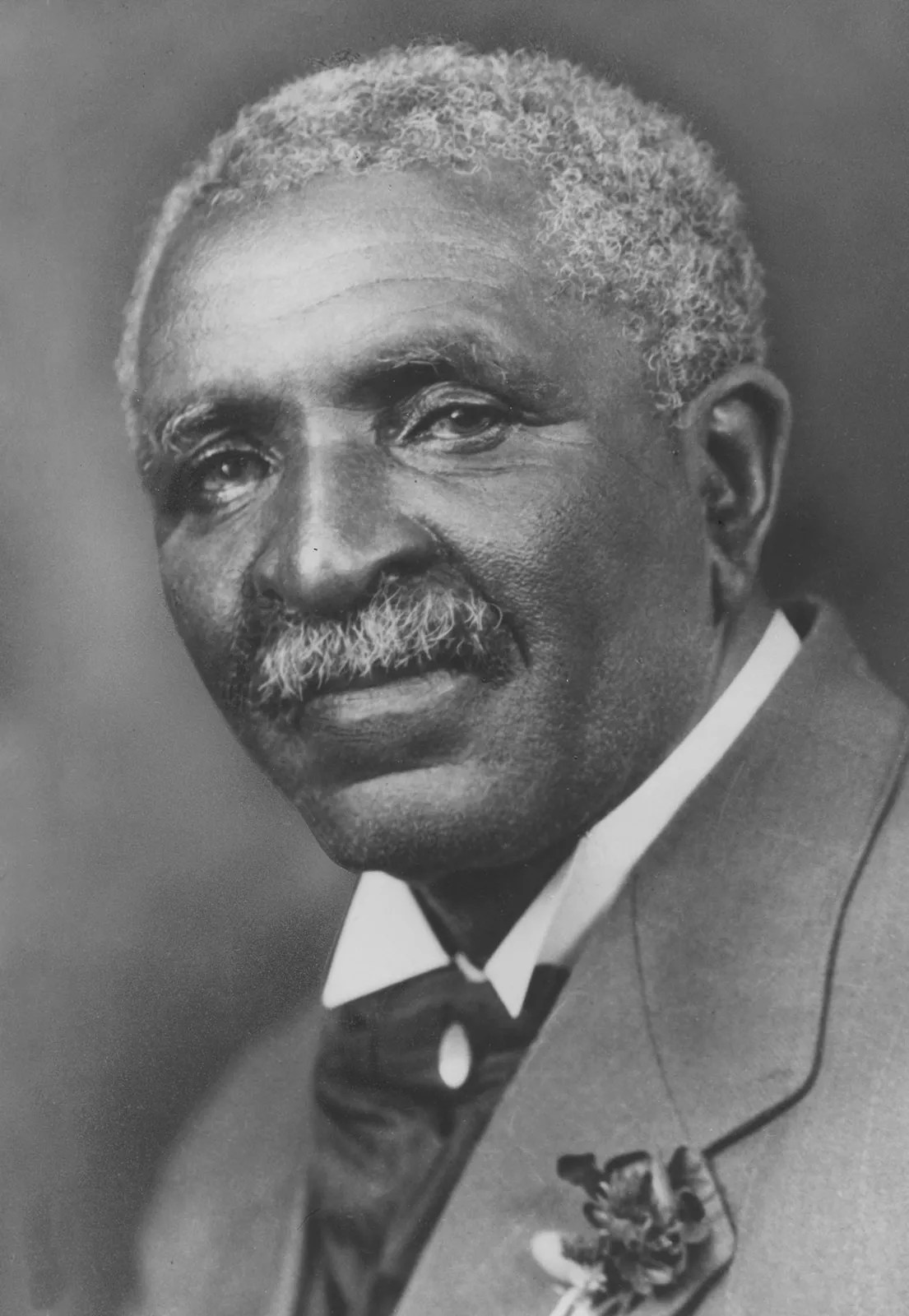
101 years ago today, George Washington Carver wrote a list of Eight Cardinal Virtues (from a letter to the senior class he taught, dated Jan. 9, 1922):
Be clean both inside and out.
Neither look up to the rich nor down on the poor.
Lose, if need be, without squealing.
Win without bragging.
Always be considerate of women, children, and older people.
Be too brave to lie.
Be too generous to cheat.
Take your share of the world and let others take theirs.
Way back in 2008, Timothy A. Main asked me the following question: “What do you think are the three steps to revival?”
He had an interesting list and shared it with me.
At the time I was in a rush and didn’t have time to adequately respond to him. It was later in the day that I remembered something the Lord showed me over a year ago concerning sustained growth in our local churches.
Since this is traditionally the time of year when we prepare for the coming New Year I thought I’d post those thoughts for you all today.
I think that there are four key steps to effective and prolonged growth (what some might call “revival”) in the local Church and its surrounding communities.
The psalmist wrote, “He that goeth forth and weepeth, bearing precious seed, shall doubtless come again with rejoicing, bringing his sheaves with him” (Ps. 126:6). In this verse we find four keys to
Four P’s of Perpetual Growth
1. Prayer
Prayer sets the stage for the miraculous. Prayer is inextricably tied to spiritual growth, whether it is in the individual’s life or in the Church. People who pray consistently and persistently with passion will see results from their time with the Lord. Prayer takes discipline and consecration (not to be confused with concentration) but it is the conduit through which Heaven is reached. When we pray we not only speak to God, but He speaks to us. Prayer sets the stage for the miraculous.
2. Preaching
Preaching is the anointed message of the miraculous Gospel of Jesus Christ. Truly anointed preaching presents Jesus in such a way that people ask the same question asked so long ago on the day of Pentecost and they receive that same anointed answer: “Now when they heard this, they were pricked in their heart, and said unto Peter and to the rest of the apostles, Men and brethren, what shall we do? Then Peter said unto them, Repent, and be baptized every one of you in the name of Jesus Christ for the remission of sins, and ye shall receive the gift of the Holy Ghost” (Acts 2:37-38).
3. Praise
Praise sets the atmosphere for the miraculous. Those who have learned to praise God in everything eventually attain a level of spiritual maturity found only in praise. There are various methods of praise but only one way to praise. We must praise God with our whole heart. A whole heart is one that’s affections are not divided. True praise is authentic and sold out to Christ alone.
4. Personal Evangelism
Personal evangelism is passion for the miraculous. Personal evangelism is that element of inner passion and expectation that propels people to go and tell others about Jesus and what He’s doing today. It is spiritually mature and excellent practice to be a witness of the oneness of God. It is not something that only new converts should be doing. The longer one is in the Church the more they should be going forth to bring in a harvest of souls.
There is more that I could write about for each of these, but the main point is that as we step out of 2022 and into 2023, let’s strive to be praying, preaching, praising and personally evangelizing our communities. If we follow these steps, I’m convinced (and 43 years of living for God has given me some understanding) that we will experience sustained perpetual growth in our personal lives, our churches, and our communities this coming year – perpetually!