Categories
The Sin Bucket -Harold Hoffman


Here’s a throwback sermon from January 3, 2016 I preached to the congregation of Bible Apostolic Church.
Text: “For I am jealous over you with godly jealousy: for I have espoused you to one husband, that I may present you as a chaste virgin to Christ” (2 Corinthians 11:2).
The book of Revelation is probably one of the most misunderstood and discussed books in the Bible.
Many, including myself, often read its pages attempting to figure out answers to questions we describe as the end times, or eschatology (the study of the end times).
In those pages, written by the apostle John – John the beloved – students of the Word of God try to figure out future events coming to this world.
My interest today is not about when, where or how the catching away of the Church will take place.
Nor am I going to discuss seals, vials, elders, or the four beasts sitting around the throne.
I’m not even interested in who the beast, false prophet, or antichrist are, and if they are alive right now.
I know that rockets are dropping all over Jerusalem and Israel even while I am in this podium, and that many are discussing the coming of the Lord for that very reason, but that is not why I have lifted this text to our attention today.
You see the Book of Revelation is primarily written to reveal Jesus to us. It is a disclosure of the everlasting Truth of who Jesus Christ is yesterday, today, and forever. And along with that is the unveiling of the Church in its relationship with our Lord Jesus Christ.
“The revelation of Jesus Christ, which God gave unto him, to show unto his servants things which must shortly come to pass; and he sent and signified it by his angel unto his servant John:” (Rev. 1:1).
It is a “Jesus” book, and in its pages we see Jesus Christ as:
It is also a book written to the church about the past, present, and future.
It is specifically addressed to seven churches: “What thou seest, write in a book, and send it unto the seven churches which are in Asia; unto Ephesus, and unto Smyrna, and unto Pergamos, and unto Thyatira, and unto Sardis, and unto Philadelphia, and unto Laodicea.”
Seven Churches of Asia:
Some believe that these seven churches are symbolic of various ages that the Church will have gone through from Acts until today:
Church~Name Defined~Time Period
Ephesus ~ Desirable ~ 100-200 A.D.
Smyrna ~ Myrrh ~ 200-300 A.D.
Pergamos ~ Marriage/Elevation ~ 300-500 A.D.
Thyatira ~ Continual Sacrifice ~ 500-1500 A.D.
Sardis ~ Remnant ~ 1500-1900 A.D.
Philadelphia ~ Brotherly Love ~ 1900-Rapture
Laodicea ~ People Rule ~ Present-Rapture[1]
I think it is referring to conditions evident in churches right now, spiritual conditions that exist in local assemblies and even in the lives of its individual members.
Today, as we enter a new year and a fresh start, you are at a threshold moment.
This moment can be your last step in a life of mediocrity, defeat, condemnation, insecurity, enslavement, abuse, addiction, hypocrisy, and self-hate as you step over the threshold of Divine mercy and grace into the life of righteousness, peace and joy Jesus has always had prepared for you.
TAKE THAT STEP.
There is conflict at the threshold. Your flesh has been in control and doesn’t want to take that step.
Satan does not want you to be victorious. He’ll appeal to you in anyway he can to keep you from crossing the threshold.
Three Tactics of the Devil at the Threshold (Bishop Norman L. Wagner):
1. Compromise
2. Change
3. Quit
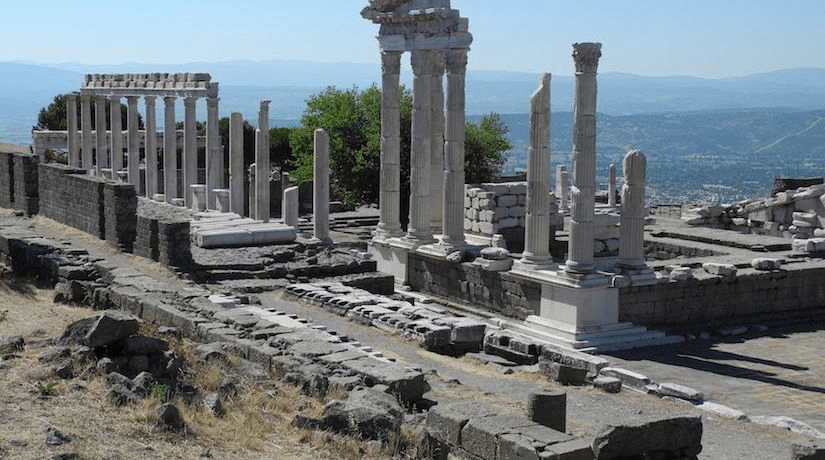
With that in mind, it is this third church mentioned in the Book of the Revelation of Jesus Christ that I am bringing to your attention today: Pergamos.
PERGAMOS[2]
Revelation 2:12-17
(12) And to the angel of the church in Pergamos write; These things saith he which hath the sharp sword with two edges;
(13) I know thy works, and where thou dwellest, even where Satan’s seat is: and thou holdest fast my name, and hast not denied my faith, even in those days wherein Antipas was my faithful martyr, who was slain among you, where Satan dwelleth.
(14) But I have a few things against thee, because thou hast there them that hold the doctrine of Balaam, who taught Balac to cast a stumblingblock before the children of Israel, to eat things sacrificed unto idols, and to commit fornication.
(15) So hast thou also them that hold the doctrine of the Nicolaitans, which thing I hate.
(16) Repent; or else I will come unto thee quickly, and will fight against them with the sword of my mouth.
(17) He that hath an ear, let him hear what the Spirit saith unto the churches; To him that overcometh will I give to eat of the hidden manna, and will give him a white stone, and in the stone a new name written, which no man knoweth saving he that receiveth it.
“Dearly beloved, I beseech you as strangers and pilgrims, abstain from fleshly lusts, which war against the soul; Having your conversation honest among the Gentiles: that, whereas they speak against you as evildoers, they may by your good works, which they shall behold, glorify God in the day of visitation” (1 Peter 2:11-12).
I ask you today:
Are you ready to be an overcomer, or are you content to live a compromised life married to this world and bound by your lust and pride?
Will you step through the threshold?
Your last step of defeat, pain, sorrow, heartache, and compromise can be today as your next step over the threshold becomes an entrance to a life of victory, righteousness, peace, joy, Divine Provision, Divine Favor, purity, innocence, and the Lord’s promise of eternal life.
Come on, leave that worldly compromise. Settle it once and for all.
Take advantage of this threshold moment offered by Jesus Christ to you today.
This Threshold Decision at Pergamos is a decision to once and for all divorce yourself from this wicked and perverse world and be truly espoused (married) to Christ.
[1] Purpose Institute. #5206 – The Book of Revelation. Lesson 1: The Church. 2014.
[2] Dustin L. Abbott. 2007. Revelation Unveiled. Pages 44-48.

Text: Ephesians 2:4-9
(4) But God, who is rich in mercy, for his great love wherewith he loved us, (5) Even when we were dead in sins, hath quickened us together with Christ, (by grace ye are saved;) (6) And hath raised us up together, and made us sit together in heavenly places in Christ Jesus: (7) That in the ages to come he might shew the exceeding riches of his grace in his kindness toward us through Christ Jesus. (8) For by grace are ye saved through faith; and that not of yourselves: it is the gift of God: (9) Not of works, lest any man should boast.
Luke 19:5-6, “(5) And when Jesus came to the place, he looked up, and saw him, and said unto him, Zacchaeus, make haste, and come down; for to day I must abide at thy house. (6) And he made haste, and came down, and received him joyfully.”
Grace that Saves[1]
Series Overview – Letters from Prison:
Paul penned Ephesians and Philippians from prison to minister to the church. These two short books contain principles that give you power to live godly, in an ungodly world.
Grace, Simple Grace[2]
James Wilhoit shared the story of the birth of his second daughter and her battle with jaundice during her early days. For treatment, the doctor prescribed sunlight.
Thinking there was most likely a complex and difficult treatment to cure his newborn, he asked the doctor what could be done.
The doctor patiently explained that jaundice is caused by too much bilirubin [billy-rubin] in a newborn’s red blood cells, and light helps break down the excess bilirubin into waste products the kidneys can eliminate.
The cure really was as simple as sunlight, and all that the parents had to do was just sit their newborn in the sun.
And that’s exactly what they did: they placed her their daughter on a pallet of blankets in her diaper in front of the living room windows that welcomed large amounts of sunlight.
As the day would progress, her attentive and loving parents adjusted her position to keep her in full view of the sun.
As James Wihoit later wrote, “The cure did not depend on her but on her being kept in the light.”
Simple Grace – Grace that Saves
A year and a half earlier, James and his wife were walking through their neighborhood and crossed paths with another couple strolling with their firstborn baby girl.
On the sunny but cool March day, their neighbor’s child lay in a stroller covered by a canopy while snugly wrapped head to toe with only a small portion of her face showing. The other couple explained she had jaundice and according to her doctors should be out in the sun. Yet here she was outdoors, but not in the sunlight.
James now watching his newborn lay on their living room floor in full view of the sun realized:
“So often I come to God only revealing the tiniest patch of skin for his healing light. For me, the clothing that blocks the healing light of Jesus most often is my pride, seen in the form of denial—I deny that I need cleansing.”[3]
The cure does not depend on you, but on you keeping yourself in the light of God’s grace.
Rather than deny and refuse—or worse, try to manufacture—our healing, we can simply receive it.
God’s Grace is Offered to You
God has made His grace available to you even though you “had your conversation [conduct] in times past in the lusts of your flesh, fulfilling the desires of the flesh and of the mind.”[4]
Paul was clear, “all have sinned, and come short of the glory of God,” but all who come to Jesus in faith and obedience are “justified freely by his grace through the redemption that is in Christ Jesus.”[5]
“For the grace of God that bringeth salvation hath appeared to all men, teaching us that, denying ungodliness and worldly lusts, we should live soberly, righteously, and godly, in this present world; looking for that blessed hope, and the glorious appearing of the great God and our Saviour Jesus Christ; who gave himself for us, that he might redeem us from all iniquity, and purify unto himself a peculiar people, zealous of good works.”[6]
Free – Undeserved – Unmerited Grace will save you from living a life governed by sin and a servant to satan.
God Grace is Extended to You Because of His Love
Paul told the Ephesians that Jesus has authority over “all principality, and power, and might, and dominion,”[7]
There is power in this world that exerts itself over you and draws you into an corrupt state, and while you have no natural power to defeat the devil and sin,
God does.
Because of “his great love wherewith he loved you,” He gives you the undeserved, unearned blessing (simple definition of grace) of His authority and power over the dominion of sin and the devil.
Grace that Saves is Free – Undeserved – Unmerited
God’s Grace Saves You
Because He loves you, He offers to rescue you and redeem you:
“But God, who is rich in mercy, for his great love wherewith he loved us, even when we were dead in sins, hath quickened us together with Christ, (by grace ye are saved;).”[8]
You may be hopeless and bound, but He offers you hope and freedom.
By yourself you are outmatched and incapable of conquering sin, the kingdom of darkness, and death.
Your religious activities can’t save you, and you don’t earn salvation by your good deeds.
Salvation is not extended to you because of how many hours you have prayed, meals you have fasted, money you have contributed.
Salvation is not achieved because of how many times you’ve read the Bible through, or how often you attend the church services.
These spiritual disciplines are indicators of a transforming disciple, but only God’s grace saves you.
Perhaps you have the mistaken notion that “I must do this particular spiritual activity to get God to love me.”
This type of mentality can turn God’s grace into something to be earned, yet this is entirely opposite of what grace means.
Grace is undeserved, unmerited and unearned.
Grace that Saves is a gift you receive.
It is simple grace, like setting a jaundiced baby in the sunlight so that she can receive the light.
Receive God’s Grace
The way to receive by faith the Grace that Saves is through the principle of humility.
1 Peter 5:5-7, “(5) Likewise, ye younger, submit yourselves unto the elder. Yea, all of you be subject one to another, and be clothed with humility: for God resisteth the proud, and giveth grace to the humble. (6) Humble yourselves therefore under the mighty hand of God, that he may exalt you in due time: (7) Casting all your care upon him; for he careth for you.”
There is a link between grace and humility:
Zacchaeus Received God’s Grace (Luke 19:1-10)
Luke alone of the Gospel writers records God’s grace extended to “a man named Zacchaeus, which was the chief among the publicans, and he was rich . . . and . . . little of stature” (Luke 19:2–3).
We quickly see how others around him knew him:
Jesus Spent Time with Zacchaeus
The crowd was not wrong in their assessment of Zacchaeus; the earthly labels were certainly true of him, but they were not the truest thing about him.
From a purely physical and tangible perspective, he was indeed a sinner.
Thankfully, God’s view of you is not from an earthly perspective; He sees your truest identity—God created you in His image, for His purpose, by His design.[12]
God’s actions toward you are not motivated by label you or others apply, but by His love.
The crowd responded to Zacchaeus through the lens of earthly labels, leading them to hatred and rejection.
Their view of Zacchaeus kept them from associating with him, accepting him, loving him, and acting in grace toward him.
Jesus chose a different way. He chose to view Zacchaeus from a heavenly perspective.
Jesus graciously invited Zacchaeus into a loving relationship.
Jesus chose to accept him, not reject him.
He chose Grace that Saves motivated by His great love.
When you receive God’s Grace you will cherish your time with Him:
Jesus offers you that same grace-filled invitation he offered to Zacchaeus.
He is inviting each of you into a deeper relationship with Him.
Daily He presents you with an invitation to spend time with Him.
He sees you through the lens of love and grace.
He sees your wholeness, despite your brokenness.
Such actions from Him are undeserved and unearned, but here He is inviting us anyway.
That’s Grace that Saves!
How do you respond to Grace? REPENT.
Zacchaeus climbed a tree in order to see Jesus, which was an outward demonstration of his willingness to do whatever it took to see Jesus.
Although he was living a life he may not have been proud of, he was willing to lay aside his pride, and humble himself, in a beautiful step toward repentance.[14]
“And Zacchaeus stood, and said unto the Lord; Behold, Lord, the half of my goods I give to the poor; and if I have taken any thing from any man by false accusation, I restore him fourfold” (Luke 19:8).
Zacchaeus’s statement was evidence of deep sorrow and a desire for change in his life and he was choosing to live life with a different attitude and mindset.
This deep inner change led to generosity instead of selfishness and restitution to the people he had wronged. For Zacchaeus, and often for us, true repentance requires restitution. The actions and behaviors that follow our repentance indicate we are now living differently.[15]
After Zach repented Jesus said, “This day is salvation come to this house, forsomuch as he also is a son of Abraham”[16]
Jesus knew he was the chief among the publicans and his exploitation of the poor had made him rich, but he repented and then Jesus identified Zacchaeus as a son of Abraham.
Zacchaeus, and the people watching, were reminded that God sees past your earthly defining labels. They do not define you.
Only God defines you, and He sees you through the lens of His grace.
Grace that Saves
[1]Source: God’s Word for Life. (Lesson 1.1) Series 1: Letters from Prison – By Grace Ye Are Saved. PPH. 3/2/2025.
[2] Ibid. (James Wilhoit. Spiritual Formation as if the Church Mattered).
[3] Ibid.
[4] Eph. 2:3. Personalized.
[5] Rom. 3:22-23.
[6] Titus 2:11-14.
[7] Ephesians 1:21.
[8] Ephesians 2:4–5.
[9] Albert Barnes Notes on the Bible. Luke 19:2.
[10] Eph. 2:2-3.
[11] Source: God’s Word for Life. (Lesson 1.1) Series 1: Letters from Prison – By Grace Ye Are Saved. PPH. 3/2/2025.
[12] Ibid.
[13] Ibid.
[14] Ibid.
[15] Ibid.
[16] Luke 19:9.
“The value of truth is never diminished because of repetition.” -Harold Hoffman
Text: John 14:15-18
(15) If ye love me, keep my commandments.
(16) And I will pray the Father, and he shall give you another Comforter, that he may abide with you for ever;
(17) Even the Spirit of truth; whom the world cannot receive, because it seeth him not, neither knoweth him: but ye know him; for he dwelleth with you, and shall be in you.
(18) I will not leave you comfortless: I will come to you.
Isaiah 55:10-11, “For as the rain cometh down, and the snow from heaven, and returneth not thither, but watereth the earth, and maketh it bring forth and bud, that it may give seed to the sower, and bread to the eater: So shall my word be that goeth forth out of my mouth: it shall not return unto me void, but it shall accomplish that which I please, and it shall prosper in the thing whereto I sent it.”
The Promise[1]
God keeps His promises.
Matthew 16:18, “And I say also unto thee, That thou art Peter, and upon this rock I will build my church; and the gates of hell shall not prevail against it.”
At no time on earth since Acts 2 has there been a moment when there wasn’t a Spirit-filled believer.
God’s Word is forever settled in Heaven and will accomplish its goal. There are generally, two types of promises God makes with man in the Bible:
Some ask, “Why Tongues?”[2]
T. F. Tenney asked, “Why not tongues?”
Virtually the entire third chapter of James is devoted to admonishing the church to beware of that little member that boasts of great things. James goes on to refer to the tongue as a fire, and says that it is capable of defiling the whole body. Did you ever hear of fighting fire with fire? This is exactly what happens when the fire of God’s Spirit enters a man and gains control of his tongue.[3]
James refers to the tongue as the most unruly and hard-to-tame member of the body. Is there any wonder that God has chosen this sign to indicate complete submission to Him. The overpowering blaze of the Holy Spirit neutralizes the burning embers of the carnal tongue. At last the most unruly member of the body is conquered, and the Holy Spirit declares through it in a language known only to God, that Christ has been enthroned in the heart of the believer.[4]
Supernatural? Of course! But when we rob Christianity of its supernatural impetus, we have destroyed its vitality and passion.[5]
Some say, “It’s just for the Apostles and Early Church…”
Irenaeus (died 202): “In like manner we do also hear many brethren in the Church, who possess prophetic gifts, and who through the Spirit speak all kinds of languages, and bring to light for the general benefit the hidden things of men, and declare the mysteries of God.”[6]
Hildegard of Bingen (1098-1179: “sang in unknown words with such facility and winsomeness that her utterances were known as ‘concerts in the Spirit’.”[7]
The Waldenses (c. 1217): these followers of Peter Waldo believed in visions and prophecies.[8] Both healing and speaking in tongues were manifested among these heavily persecuted Christians.[9]
Early Quakers: “We received often the pouring down of the Spirit upon us, and our hearts were made glad and our tongues loosed and our mouths opened, and we spake with new tongues as the Lord gave utterance, and as His Spirit led us.”[10]
John Wesley: People in Wesley’s meetings would be filled with the Holy Ghost while he preached.[11]
Thomas Walsh: (one of Wesley’s foremost preachers) made this entry in his diary; “This morning the Lord gave me a language that I knew not of, raising my soul to Him in a wonderful manner.”[12]
In England (1830) there was a revival under Edward Irving where gifts of the Spirit were manifested. One member of the congregations writes: “The moment I am visited with the Spirit, and carried out to God in a tongue which I know not… I am more conscious than ever of the presence of God. He and He alone is in my soul. I am filled with some form of the mind of God, be it joy or grief, desire, love, pity, compassion, or indignation; and I am made to utter it in words which are full of power over my spirit, but not being accessible to my understanding, my devotion is not interrupted by association of suggestions from the visible or intellectual world: I feel myself, as it were, shut in with God in His pavilion, and hidden close from the invasions of the world, the devil, and the flesh.”[13]
Charles G. Finney: “I received a mighty baptism in the Holy Ghost…No words can express the wonderful love that was shed abroad in my heart. I wept aloud with joy and love; and I do not know but I should say, I literally bellowed out the unutterable gushings of my heart.”[14]
D. L. Moody: “On the following Sunday night, when I got to the rooms of the Y.M.C.A. I found the meetings on fire. The young men were speaking in tongues and prophesying. What on earth did it all mean? Only that Moody had been addressing them that afternoon.”[15] At a meeting in Los Angeles, Dr. R.A. Torrey told of a service in London where Moody took the pulpit to preach and instead broke into another language. He tried again, with similar results. The third time, after prayer and praise, he was able to preach his message.[16]
Charles H. Spurgeon: A British preacher told how Spurgeon once asked his audience to forgive him that when he got especially happy in the Lord, “I break forth into a kind of gibberish which I do not myself understand.”[17]
How Do I Receive this Phenomenon of the Holy Ghost?[18]
Promise of Christ’s Return:
1 Corinthians 15:51-56, “51 Behold, I shew you a mystery; We shall not all sleep, but we shall all be changed, 52 In a moment, in the twinkling of an eye, at the last trump: for the trumpet shall sound, and the dead shall be raised incorruptible, and we shall be changed. 53 For this corruptible must put on incorruption, and this mortal must put on immortality. 54 So when this corruptible shall have put on incorruption, and this mortal shall have put on immortality, then shall be brought to pass the saying that is written, Death is swallowed up in victory. 55 O death, where is thy sting? O grave, where is thy victory? 56 The sting of death is sin; and the strength of sin is the law. 57 But thanks be to God, which giveth us the victory through our Lord Jesus Christ.”
Praying Someone Through to the Holy Ghost[19]
* Instruction in receiving Holy Ghost is NOT teaching someone to speak in tongues. It is the strategic practice of removing common roadblocks that keep people from receiving the Holy Ghost and speaking with tongues. *
Altar & Prayer Instructions[20]
Prayer 1—Focus on Talking to Jesus
Let’s close our eyes and invite Jesus to talk with us right now
<<Pray a simple prayer asking Jesus to speak and touch the hearts of everyone there>>
Jesus is here with us. The Bible says everyone has a bit of faith inside, and we can use that faith to talk to Jesus. Showing Jesus that we have faith makes Him happy.
We need Jesus. Life without Him is not good. We need Jesus to help us. We want Him to fill our hearts with His Spirit. We have faith, but His Spirit gives us the power to overcome.
When we are filled with the Holy Ghost, Jesus lives in our hearts. He gives us direction. He helps us do what is right. We are all special to God. When we worship Him with all our hearts, He can do special things in our lives.
Prayer 2—Repentance Prayer
For Jesus to live inside us, He has to clean out our hearts. Our faith helps us repent. It is time to tell Jesus we are sorry for the bad things we have thought and said and done. We are all going to ask Jesus to help us change and not do those things anymore.
<<After leading in a simple prayer of repentance,
invite children to the altar>>
Now our hearts are clean for Jesus to live in them, and it is time to ask Him to come into our hearts. If you are ready to use your faith and pray that right now, come to the altar
Prayer 3—At the Altar
Let me tell you three simple steps for praying:
Conclude every session with a time of thanks and praise to God. Also affirm children that they have done a good job of praying. Your prayers are very beautiful to God. He loves it when you reach out to Him. Your faith makes Him happy.
Encourage those who wanted to receive the Holy Ghost but did not that God loves them and is working in their lives. We will continue to pray, and God will continue to touch each of our lives as we continue to seek Him.
[1] This is an updated version of a sermon I originally preached on May 15, 2005, in Rockport, IN, to the congregation of Landmark Apostolic Bible Church, which was then pastored by the late and beloved James Denham.
[2] “Speaking In Tongues.” Various Authors. Retrieved 5-15-2005 from http://altupc.com/articles/tongues1.htm.
[3] T. F. Tenney. (1975). Pentecost-What’s That? ISBN 0-932581-83-8.
[4] Ibid.
[5] Ibid.
[6] Against Heresies, V,6,1, Ibid., vol 1, p. 531
[7] George H. Williams and Edith Waldvogel, “A History of Speaking in Tongues and Related Gifts,” in The Charismatic Movement, ed. by Michael P. Hamilton, p. 70
[8] R. Kissack, “Waldenses,” The New International Dictionary of the Christian Church, ed. by J.D. Douglas, revised edition, p. 1026
[9] Gordon F. Atter, The Third Force, p. 13
[10] Bresson, Studies in Ecstacy, pp. 48-52
[11] http://www.holyspiritinfo.net/ch_hist.htm
[12] Entry of March 8, 1750, quoted by Frodsham, With Signs following, p. 232
[13] A.L. Drummond, Edward Irving and His Circle, pp. 161-162
[14] Charles G. Finney, Autobiography, p. 20
[15] Boyd, Robert, The Lives and Labours of Moody and Sankey, p. 47
[16] Lennard Darbee, Tongues: The Dynamite of God, p. 24.
[17] Ibid. p.24
[18] Principles of Doctrine: Lesson 11. “Holy Spirit Baptism.” Parkersburg Bible College.
[19] Pastor Rob McKee. Ministers In Training Class.
[20] VBS Material. Pentecostal Publishing House. UPCI

Text: Acts 2:38
“Then Peter said unto them, Repent, and be baptized every one of you in the name of Jesus Christ for the remission of sins, and ye shall receive the gift of the Holy Ghost.”
2 Corinthians 7:10
“For godly sorrow worketh repentance to salvation not to be repented of: but the sorrow of the world worketh death.”
I am interested in the spirit of renewal and expectancy that has entered into the Body of Christ, and I’m thankful for the people who are rising up to say, “I see the Hand of God at work among us and want to be part of this end-time revival.”
To be renewed simply means to retrace our steps to the beginning of our walk with God making new those precious commitments we either let slip from us or that we forgot.
Paul wrote to us to “be renewed in the spirit of your mind” (Eph 4:23).
Tonight, I am fighting for your minds in order to re-establish a principle there, which if grasped will lead you to a fruitful life in Christ Jesus.
My subject:
“The Forgotten Commitment”
-OR-
“The Forgotten Message of Pentecost”
The first word that Jesus preached was not about the gifts of the Spirit, or how to receive your miracle, or seven steps to a prosperous life.
The first word of the Gospel preached by our Lord Jesus Christ is found in Mark 1:15 where He said, “The time is fulfilled, and the kingdom of God is at hand: repent ye, and believe the gospel.”
This is the first commitment our Lord requires of us – REPENT.
Repent = “to think differently or afterwards, that is, reconsider,”[1] and “to change one’s mind for better, heartily to amend with abhorrence of one’s past sins.”[2]
When we initially came to repent we wept, or at least we should have had some sort of sorrow. We sorrowed for the pain we had caused ourselves, others, and Jesus because of our sinful nature.
We were through with living lives of recklessness, and selfishness, and we abhorred the ways that we had treated others, and were appalled by the way our lifestyle had effected those around us.
We repented, we knelt, and we grieved.
Snot, sweat, and tears mixed at the altar as we searched our hearts for every sin and wrong deed we’d ever committed.
Then we made promises, and new commitments. We said, “Lord, I’ll never do that again.”
I look at this altar here in this church house.
I’ve come to ask you, “How many knees have bent at these altars to repent? How many tears have been shed in sincere grief and guilt for sin here on this floor? How many people have stood up and felt the overwhelming sense of joy that a clean conscience gives the repentant child of God?
John the Baptist preached loudly a message of repentance. He said, “Bring forth therefore fruits meet for repentance” (Matthew 3:8).
The Apostle Paul gave his testimony to Agrippa and said, “Whereupon, O king Agrippa, I was not disobedient unto the heavenly vision: But shewed first unto them of Damascus, and at Jerusalem, and throughout all the coasts of Judaea, and then to the Gentiles, that they should repent and turn to God, and do works meet for repentance” (Acts 26:19-20).
Repentance is accompanied by a certain conduct that people all around you can observe. That is the fruit, that change of action and behavior is the “works meet for repentance” Paul was speaking about.
When you repented you changed. Your friends noticed it, your spouse noticed, your kids, parents, siblings, co-workers, employees, employers, and acquaintances all noticed the new you.
You didn’t talk like you use to talk, or go where you use to go, or do what you use to do.
You were modest in speech and in dress.
And sin, the very presence of it, sickened you to your stomach.
So, I look at these altars and thank God for the many conversions and repentant hearts that have knelt here over the years that this church has been in this city. They’ve knelt by the hundreds, thousands, and tens of thousands.
What happened to them, where did they go? Why aren’t they here anymore?
Some have gone to their eternal reward and have become for us a great cloud of witnesses – Heroes of the Faith.
Others have walked away, fallen, died, or turned back to their former lives of sin.
It takes time for a person to walk away from God. Sometimes they become cold and indifferent to His Presence. So much so that they are even unaware that they’re drifting away from Jesus and turning back to the world of sin and carnality.
How many times did those same knees bend at the same place to repent of the same sin at these very altars?
Repentance is not a one-time thing. You cannot expect to live your entire life without living a lifestyle of repentance.
When you repented you made commitments. Every time you are tempted that commitment is tested. Your response to that testing determines how much your commitment to God really means to you.
Some here have repented & sinned, repented & sinned, repented & sinned for so long over the same things that you don’t even think you can be delivered.
You’ve gotten yourself into a cycle of behavior that is difficult to break.
BUT—you can overcome this trap that you’ve fallen into.
You’ve got remember:
Repentance becomes “The Forgotten Commitment” when we fail to keep our word.
Repentance becomes “The Forgotten Message of Pentecost” when we rush people through it just to pad our evangelistic numbers of souls filled with the Holy Ghost.
It is time we stop leading people through some sort of Spiritless prayer where no conviction resides and allow God Almighty to once again convict the heart and lead people to repentance.
I long to see bent knees and bodies draped across altars racked with the heaving great sighs of tears, grief, and repentance.
You, sitting there thinking, “This message isn’t for me, you’re preaching to the choir.”
There’s an old Indian Proverb that says, “Whatever you are overflowing with will spill out when you’re bumped.”
What bumps produce incorrect responses from you?
Listen to Romans 2:1-11 tonight:
(1) Therefore thou art inexcusable, O man, whosoever thou art that judgest: for wherein thou judgest another, thou condemnest thyself; for thou that judgest doest the same things. (2) But we are sure that the judgment of God is according to truth against them which commit such things. (3) And thinkest thou this, O man, that judgest them which do such things, and doest the same, that thou shalt escape the judgment of God? (4) Or despisest thou the riches of his goodness and forbearance and longsuffering; not knowing that the goodness of God leadeth thee to repentance? (5) But after thy hardness and impenitent heart treasurest up unto thyself wrath against the day of wrath and revelation of the righteous judgment of God; (6) Who will render to every man according to his deeds: (7) To them who by patient continuance in well doing seek for glory and honour and immortality, eternal life: (8) But unto them that are contentious, and do not obey the truth, but obey unrighteousness, indignation and wrath, (9) Tribulation and anguish, upon every soul of man that doeth evil, of the Jew first, and also of the Gentile; (10) But glory, honour, and peace, to every man that worketh good, to the Jew first, and also to the Gentile: (11) For there is no respect of persons with God.
Jesus is calling us tonight to renew our commitments of repentance we made at our conversion.
Remember what you told Him as you repented. You cried out for mercy and He granted it. You made promises and vows that you need to keep…that you must keep.
Some of you have been living a repented life for 20, 30, 40, & 50 years. I’m reminded of a prayer I read about a couple weeks ago: “Lord, let me not today ruin in anything what you have taken all these years to do in my heart and provide for my life”[3]
The late Apostolic preacher and Bible teacher, Bishop Morris E. Golder once said, “The badge of discipleship is a cross.”
This is a daily thing—this life of repentance. Paul said, “I die daily” (1 Cor. 15:31).
So, how can we make it? There are so many temptations and influences bombarding us from without and within. How can I keep my commitment of repentance when I’m attacked externally and internally?
Grace is the answer. Grace has always been the answer for the Body of Christ.
Repentance is a daily commitment one works at to maintain. Grace is the teacher helping us to maintain that commitment:
“(11) For the grace of God that bringeth salvation hath appeared to all men, (12) Teaching us that, denying ungodliness and worldly lusts, we should live soberly, righteously, and godly, in this present world; (13) Looking for that blessed hope, and the glorious appearing of the great God and our Saviour Jesus Christ; (14) Who gave himself for us, that he might redeem us from all iniquity, and purify unto himself a peculiar people, zealous of good works” (Titus 2:11-14).
ESV, “Godly grief produces a repentance that leads to salvation without regret, whereas worldly grief produces death”:
“(8) For though I made you sorry with a letter, I do not repent, though I did repent: for I perceive that the same epistle hath made you sorry, though it were but for a season. (9) Now I rejoice, not that ye were made sorry, but that ye sorrowed to repentance: for ye were made sorry after a godly manner, that ye might receive damage by us in nothing. (10) For godly sorrow worketh repentance to salvation not to be repented of: but the sorrow of the world worketh death. (11) For behold this selfsame thing, that ye sorrowed after a godly sort, what carefulness it wrought in you, yea, what clearing of yourselves, yea, what indignation, yea, what fear, yea, what vehement desire, yea, what zeal, yea, what revenge! In all things ye have approved yourselves to be clear in this matter” (2 Corinthians 7:8-11).
[1] Strong’s. G3340.
[2] Thayer’s. G3340.
[3] Billy Graham.
The Hidden Line (The Destiny of Men)
By: Joseph Addison Alexander (1809-1860)
There is a time, we know not when,
A point we know not where,
That marks the destiny of men
To glory or despair.
There is a line by us unseen,
That crosses every path;
The hidden boundary between
God’s patience and his wrath.
To pass that limit is to die–
To die as if by stealth;
It does not quench the beaming eye
Or pale the glow of health.
The conscience may be still at ease,
The spirit lithe and gay;
That which pleases still may please,
And care be thrust away
But on that forehead God has set,
Indelibly a mark
Unseen by men, for men as yet
Are blind and in the dark
And yet doomed man’s path below
May bloom as Eden bloomed;
He did not, does not, will not know,
Or feel that he is doomed
He knows, he feels that all is well,
And every fear is calmed;
He lives, he dies, he wakes in hell,
Not only doomed, but damned.
Oh, where is this mysterious bourn
By which our path is crossed;
Beyond which God himself hath sworn,
That he who goes is lost.
How far may we go on in sin?
How long will God forbear?
Where does hope end, and where begin
The confines of despair?
An answer from the skies is sent,
“Ye that from God depart,
While it is called today, repent,
And harden not your heart.”
Here are some more pictures of pamphlets written by Oneness Pentecostal / Apostolic writers, which I took at my Grandmother’s home in South Bend, IN several years ago.
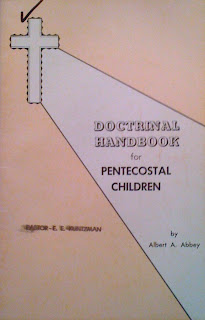
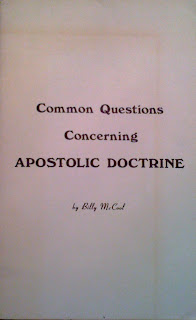

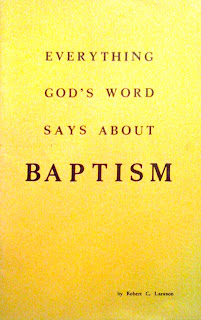





I read recently that if you want to change your generation you need to preach, but if you want to change future generations then write. I’m thankful these authors wrote these pamphlets.
Originally posted on https://thepillarandgroundoftruth.blogspot.com/2012/12/more-pamphlets-from-apostolic-writers.html

