There’s much to consider when we discuss what makes a good preacher.
My Uncle Mark talked about the importance of wrestling for the mind of the people when we stand behind the sacred desk and preach a message.
It is that space between the lips of the preacher and the ears of the listeners where the struggle intensifies and the anointing grapples with thoughts of sincere men and women.
Unfortunately, preachers sometimes are guilty of being out-of-touch with their generation, or as Carey Nieuwhof wrote: “Too many church leaders are perfectly equipped to reach a world that no longer exists.”
In his seminal work, J. T. Pugh addressed this issue by writing: “One of the secrets of David’s greatness was that he ‘served his generation.’ How sad and futile it is when a preacher persists in presenting the gospel in a format peculiar to another day. How useless it is to answer questions that a present, living generation is not asking. The key to deathly stagnation in any local assembly is a fervent Spirit-filled, God-called pastor, alert to the needs and hurts of this present age to, without compromise, present the healing word in communication that modern pagans can relate to.”
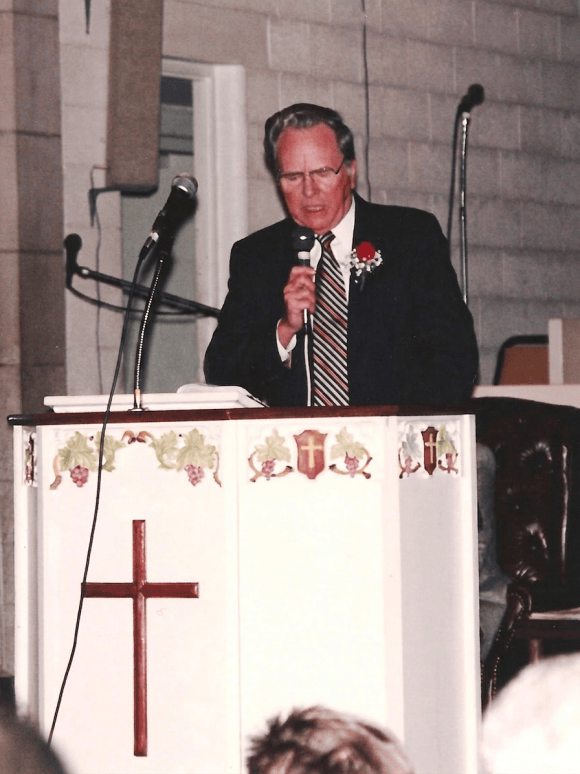
The following collection of notable quotes offer key insight for the preacher who is wrestling for the mind of the people and striving to serve their generation well.
Bishop James E. Tyson taught the “3 B’s of Preaching: 1. Be Anointed. – 2. Be Brief. – 3. Be Seated.”
J. T. Pugh: “Sermons that are not revealed to the preacher cannot be revealed to the people.”
J. T. Pugh: “You may learn how to preach sermons but you will never be a minister without suffering.”
I like this definition offered by Raymond Woodward: “Preaching is the anointed declaration of Truth. Teaching is the anointed explanation of Truth.”
Richard Baxter wrote, “I preached as never sure to preach again, and as a dying man to dying men.”
James Lumpkin, Sr. said, “A prayerless preacher builds a powerless pulpit and a troublesome pew.”
Vance Havner had a few things to say about the preacher and preaching:
- “A preacher should have the mind of a scholar, the heart of a child, and the hide of a rhinoceros. His problem is how to toughen his hide without hardening his heart.”
- “If we preach the whole counsel of God, we shall be accused of extremism, not only by the world but also by a professing church that cannot endure sound doctrine.”
- “We have suffered from the preaching of cheap grace. Grace is free, but it is not cheap. People will take anything that is free, but they are not interested in discipleship. They will take Christ as Savior but not as Lord.”
Leonard Ravenhill: “Prophets may have miracles, but they must have a message.”
T.F. Tenney left these two poignant thoughts:
- “No man with wet eyes will ever preach a dry sermon.”
- “Preach every sermon like your son was sitting on the back seat giving church one last chance.”
I heard Rex Johnson once time say that there are three things every minister needs to do: 1. Stay clean – 2. Love people – 3. Preach when necessary
There there is the inimitable Charles H. Spurgeon:
- “Preach Christ, and Christ, and Christ, and Christ, and nothing else but Christ.”
- “No Christ in your sermon, sir Then go home, and never preach again until you have something worth preaching.”
Alistair Begg: “Unfortunately, preachers who distort God’s Word are all too common today. Sometimes this springs from a sincere desire to soften hard hearts, but hearts aren’t changed by compromise.”
Alistair Begg: “The truth is that we are not good people who make mistakes; we are sinful people in need of mercy. Because it requires humility to accept what our hearts are truly like, those same hearts will tend to prefer to be deceived by preachers of self-esteem and self-confidence rather than listen to prophets such as Jeremiah.”
The beloved Lee Stoneking connects anointing to preaching: “Inspiration does not break the yoke of bondage. Only the anointing breaks the yoke of bondage.”
G. T. Haywood wrote the following in “Do All In Jesus’ Name” (1923):
“Preach in Jesus name, teach in Jesus name,
Heal the sick in His name and always proclaim
It was Jesus’ Name in which the power came;
Baptize in His Name, enduring the shame,
For there is vict’ry in Jesus’ name.”
Johnny James: “When preaching is done like it is supposed to be done, the sinner is evangelized, the saint is edified and the Lord is glorified.”
in Romans 10:13-15, the Apostle Paul emphasized the beauty of a true preacher of God’s Word:
“For whosoever shall call upon the name of the Lord shall be saved. How then shall they call on him in whom they have not believed? and how shall they believe in him of whom they have not heard? and how shall they hear without a preacher? And how shall they preach, except they be sent? as it is written, How beautiful are the feet of them that preach the gospel of peace, and bring glad tidings of good things!”
For me, a good preacher is one who follows what James Lumpkin, Sr. called the Prophet’s Creed (Micah 6:8): “He hath shewed thee, O man, what is good; and what doth the LORD require of thee, but to do justly, and to love mercy, and to walk humbly with thy God?”
Paul wanted Timothy to witness the eternal significance of good preaching: “(1) I charge thee therefore before God, and the Lord Jesus Christ, who shall judge the quick and the dead at his appearing and his kingdom; (2) Preach the word; be instant in season, out of season; reprove, rebuke, exhort with all longsuffering and doctrine. (3) For the time will come when they will not endure sound doctrine; but after their own lusts shall they heap to themselves teachers, having itching ears; (4) And they shall turn away their ears from the truth, and shall be turned unto fables”(2 Timothy 4:1-4).
Our Lord Jesus Christ is our example (Luke 4:14-31):
“(14) And Jesus returned in the power of the Spirit into Galilee: and there went out a fame of him through all the region round about. (15) And he taught in their synagogues, being glorified of all. (16) And he came to Nazareth, where he had been brought up: and, as his custom was, he went into the synagogue on the sabbath day, and stood up for to read. (17) And there was delivered unto him the book of the prophet Esaias. And when he had opened the book, he found the place where it was written, (18) The Spirit of the Lord is upon me, because he hath anointed me to preach the gospel to the poor; he hath sent me to heal the brokenhearted, to preach deliverance to the captives, and recovering of sight to the blind, to set at liberty them that are bruised, (19) To preach the acceptable year of the Lord. (20) And he closed the book, and he gave it again to the minister, and sat down. And the eyes of all them that were in the synagogue were fastened on him. (21) And he began to say unto them, This day is this scripture fulfilled in your ears. (22) And all bare him witness, and wondered at the gracious words which proceeded out of his mouth. And they said, Is not this Joseph’s son? (23) And he said unto them, Ye will surely say unto me this proverb, Physician, heal thyself: whatsoever we have heard done in Capernaum, do also here in thy country. (24) And he said, Verily I say unto you, No prophet is accepted in his own country. (25) But I tell you of a truth, many widows were in Israel in the days of Elias, when the heaven was shut up three years and six months, when great famine was throughout all the land; (26) But unto none of them was Elias sent, save unto Sarepta, a city of Sidon, unto a woman that was a widow. (27) And many lepers were in Israel in the time of Eliseus the prophet; and none of them was cleansed, saving Naaman the Syrian. (28) And all they in the synagogue, when they heard these things, were filled with wrath, (29) And rose up, and thrust him out of the city, and led him unto the brow of the hill whereon their city was built, that they might cast him down headlong. (30) But he passing through the midst of them went his way, (31) And came down to Capernaum, a city of Galilee, and taught them on the sabbath days.”
I believe Allan Oggs said that the greatest preacher in the world was not Peter, James, or John. The greatest preacher isn’t some world-famous pulpiteer whose name is known around the globe.
The greatest preacher in the world is a little short man who takes the pulpit of your mind and begins to preach to you like nobody else can.
That preacher is your conscience.
Your conscience can wrestle with your mind like no other preacher can. It knows your thoughts, motives, failures, compromises, and your spiritual condition.
He preaches a message of conviction calling you to renewal, crying for you to consecrate you heart and mind. He sees exactly where you are and his sermon somehow reaches when no one else’s can, because your conscience can reach you exactly where you are, and that is what is important in the making of a good preacher.
A good preacher is not merely someone who can get your attention to hear a sermon; a good preacher is someone who can get your conscience to hear from God and then make the changes necessary to come and submit your life to Jesus Christ.
That’s what makes a good preacher.