Categories
Consider this...

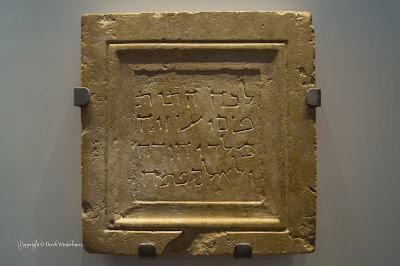
Uzziah’s Epitaph

Inscription:
“Hither were brought
The bones of Uzziah
King of Judah.
Do not open!”

Uzziah, also called Azariah, became king of Judah at the tender age of sixteen (2 Chronicles 26:1) and ruled for 52 years (2 Kings 15:2).

During his reign he made significant contributions to the realm and was successful in many endeavors, but his life ends with a mark upon him that history has not been able to erase – he died a leper.

If we take a look at Uzziah’s leadership style we will discover early influences that molded him into the leader he was, his positive and negative characteristics as a ruler, and the affect his leadership had on his son and grandson.

It would be impossible to reflect on the direction Uzziah took as a leader without first looking to his upbringing. The adage is still as true today as it was when originally penned, “Train up a child in the way he should go: and when he is old, he will not depart from it” (Pr. 22:6).

The closest and most influential people in anyone’s life will usually be their parents. Amaziah was Uzziah’s father and a great influence on his life. The Bible speaks of Amaziah as a man who “did that which was right in the sight of the LORD, yet not like David his father” (2 Kings 14:3).

Another passage records, “he did that which was right in the sight of the LORD, but not with a perfect heart” (2 Chronicles 25). The reason this is written is due to the fact that towards the end of his reign he turned to the idols of the people of Seir and because he decided to “turn away from following the LORD” the LORD decided to destroy him. It was this failure to recognize who was truly responsible for Judah’s victory over the Edomites that caused Amaziah’s downfall. He rejected the prophet of God and did as he wanted by worshipping other gods and hiring soldiers from Israel. His was a sin of pride, disobedience, and a divided heart.

As Uzziah enters the pages of the Scriptures we see him as a king to be admired. In fact, one writer informs us that, according to 2 Chronicles chapter 26, Azariah ruled “with God’s help (verse 7) he became very successful as a builder (verse 9), farmer (verse 10) and a military leader (verse 11). So much so, that his fame spread far and wide.

The Bible issues a statement that gives us an idea of why Uzziah began to fall when it states, “he was marvellously helped, till he was strong. But when he was strong, his heart was lifted up to his destruction: for he transgressed against the LORD his God, and went into the temple of the LORD to burn incense upon the altar of incense” (2 Chronicles 26:15-16).


John L. Kachelman, Jr. offers us an accounting of Uzziah’s characteristics and accomplishments before his downfall:

1. His respect for God’s messenger (2 Chron. 26:5). A key to Uzziah’s success is his desire to seek God. It seems that the influence for this is attributable to a prophet or priest named “Zachariah.” This unknown prophet was able to know, understand, and explain God’s will so the King (and others) would understand and obey. As long as Uzziah was influenced by these forces to follow God’s will, he knew success and happiness. It was a good time for Judah! 2. His role as STATESMAN (2 Chron. 26:6-15). No politician could dream of a better tenure as a chief executive of a nation. Prosperity was enjoyed in all areas of life.a. POLITICALLY Uzziah’s leadership resulted in amazing successes. His armies were victorious (v. 6-8). His projects and programs were successful (v. 9-10).b. MILITARILY Uzziah’s leadership was superb (v. 11-15). He was an amazing military mind – organized, prepared, and inventive. Everyone studied his maneuvers and learned brilliant strategies of warfare.c. PERSONALLY Uzziah’s fame spread throughout then entire known world. He was famous and recognized. His “strength” was envied by other Kings (v. 8b, 15b).

In the midst of all this success we find that Uzziah rebelled against his God when he failed to acknowledge the source of his strength, and in so doing he attempted to presumptuously and proudly take God’s glory by offering incense in the Temple instead of allowing the priests to do their duty. We would do well to steer clear of the sin of presumption and pride becasue the Bible clearly states “that no flesh should glory in His (God’s) presence” (1 Corinthians 1:29).

Uzziah failed to realize that you don’t own God’s glory or favor because it is a gift from Him to you.

Why this change in Uzziah? The qualities that he learned from his father manifested themselves when Uzziah took his eyes off of the LORD and allowed pride to rule him.

Kachelman writes that Uzziah’s rebellion appears when we read the word “until”. Many times it appears that people are doing well and serving God faithfully “until” they forget who the source of their strength is. The irony is that Uzziah’s very name – “my strength is Jehovah” – was not enough to remind him of God’s hand on his life because pride will always take your eyes off of God and onto self.

God cursed Uzziah with leprosy because of his pride. It is significant that we never read of Uzziah repenting for his sin and it is possible to become so wrapped up in self and in our own arrogancy that we, like Uzziah, find that we cannot turn from sin.

One writer, Wilbur Wright, says that “the antidote for pride is humility. Humility is the measure of a leader whom God can use and it should be an ever-growing quality in their life and ministry. God places a very high premium on humility and its close companion of meekness (Matthew 5:5) and lowliness (Matthew 11:29).”

All Uzziah had to do was obey a simple principle, but he did not and consequently he was not healed of his leprosy. “Humble yourselves therefore under the mighty hand of God, that he may exalt you in due time” (1 Peter 5:6).

It is interesting that Jotham, as king of Judah following his father Uzziah, never went to the Temple. He was a mighty man and “he did that which was right in the sight of the LORD, according to all that his father Uzziah did: howbeit he entered not into the temple of the LORD” (2 Chronicles 27:1-2). Perhaps this was due to a fear that he deveolped as a result of what happened to his father. Sometimes people see the Church as a place of wrath and fail to realize that sin is what brings judgment because God loves those who he chastens. In actuality, Uzziah’s judgment was an opportunity for mercy, but he failed to take advantage and passed onto his son a mistrust of God.

Jotham was a man who prepared, set-up, erected, established, and set forth his ways before God, but he allowed the people of Judah to continue in their corruption (idol worship and backsliding). Because of his father’s rebellion and judgment he did not see the house of God as a place of worship, but of wrath and attributed that to God instead of to his father’s self-glory.
As we follow the path of Uzziah’s faithlessness we come to his grandson Ahaz. The Bible informs us that Ahaz was a wicked an unjust king who “did not that which was right in the sight of the LORD” (2 Chronicles 28:1).

Ahaz not only sinned against God at every opportunity but he also sacrificed his children to other gods and “gathered together the vessels of the house of God, and cut in pieces the vessels of the house of God, and shut up the doors of the house of the LORD, and he made him altars in every corner of Jerusalem. And in every several city of Judah he made high places to burn incense unto other gods, and provoked to anger the LORD God of his fathers” (2 Chronicles 28:3, 24-25).

This then is the final end of all those who lift themselves up in pride against the LORD – destruction of self and others.

It mattered not how great Uzziah was or even how many accomplishments are attributed to him because his pride was a catalyst that spawned a family and a nation of rebellious backsliders. All he had to do to remove this possibility was repent, but he did not.

“But when he was strong, his heart was lifted up to his destruction: for he transgressed against the LORD his God, and went into the temple of the LORD to burn incense upon the altar of incense” (2 Chronicles 26:16).

Who do you attribute your strength to today?


Originally posted on 20 February 2007 on http://thepillarandgroundoftruth.blogspot.com/2007/02/uzziahs-epitaph.html

Categories
Consider this...

Stephen’s Defense (video)

Apostolic Life Cathedral | 8/14/2022, 10:00 AM
Categories
Consider this...

Paul’s Revelation of God’s Love

It seems to me that Paul caught a glimpse of God’s love in the moment that he is first introduced to us in Acts 7 because here we are told that he watched the coats of the men who stoned Stephen and the implication is that he had to have heard that man of faith as “he kneeled down, and cried with a loud voice, Lord, lay not this sin to their charge.” Much like Jesus before him, Stephen took a moment of horror and turned it into an eternal memorial of love and testimony. Stephen was so full of the Holy Ghost (Spirit of Christ) that he could only offer love in the face of hatred and violence. Perhaps this was the goad that Jesus referred to when He met Saul on the Road to Damascus. It’s possible that Saul was constantly reminded of that manifestation of God’s love and had to battle with his conscience over his part in that just man’s death.

​Paul’s first experience with God’s love was that a man could, under terrible circumstances, love everyone – even his tormentors.  This is only possible when one possesses that agape that Paul wrote of in 1 Corinthians 13.  Agape is defined as “brotherly love, affection, good will, love, benevolence, and charity.”  It is the ability to hold affection for others regardless of how they treat you and it is certainly modeled best by Christ and those who possess His Spirit.

​Having been involved in the persecution of the early Church and then being forgiven and placed in a position of leadership and caretaking of those he formally threatened and slaughtered must have been a humbling and awesome experience in the life of Paul.  It is no wonder that he could write, “Who shall separate us from the love [agape] of Christ? shall tribulation, or distress, or persecution, or famine, or nakedness, or peril, or sword?  As it is written, For thy sake we are killed all the day long; we are accounted as sheep for the slaughter.  Nay, in all these things we are more than conquerors through him that loved us.  For I am persuaded, that neither death, nor life, nor angels, nor principalities, nor powers, nor things present, nor things to come,  Nor height, nor depth, nor any other creature, shall be able to separate us from the love [agape]of God, which is in Christ Jesus our Lord.”  Paul had experienced the unconditional love of God and he was never the same.

​I’m sure that Paul went through the gamut of emotions and questions, like, “how could He love me,” or “why does He love me so much,” or “what is so different about this man Stephen?”  Yet, God took this mass of boiling humanity and turned him into the Apostle to the Gentiles and along the way he not only experienced the love of God, but he practiced it as well.

Paul’s revelation of God’s love was that it could only be received by the Holy Ghost. It is no wonder that he exhorted the Ephesians to “walk in love” because he knew the awesome power of love. Stephen was full of God’s love because he was a man full of the Holy Ghost and it was that fullness that Paul encouraged when he admonished the Ephesians to be “filled with the Spirit.” This was Paul’s revelation and it remains true – especially in our day. We need more “Stephens”, who have a fullness of the Holy Ghost, and more “Pauls,” who recognize that fullness as the love of God.

*First written on May 28, 2004*

Categories
Consider this...

Divine Interruption

Apostolic Life Cathedral | 8/29/2021, 7:00 PM
Categories
Consider this...

The Glory of a Strange Day

Tree of Life Church – Cincinnati, OH (11/17/2019)

Luke 5:17-26

“(17)  And it came to pass on a certain day, as he was teaching, that there were Pharisees and doctors of the law sitting by, which were come out of every town of Galilee, and Judaea, and Jerusalem: and the power of the Lord was present to heal them.  (18)  And, behold, men brought in a bed a man which was taken with a palsy: and they sought means to bring him in, and to lay him before him.  (19)  And when they could not find by what way they might bring him in because of the multitude, they went upon the housetop, and let him down through the tiling with his couch into the midst before Jesus.  (20)  And when he saw their faith, he said unto him, Man, thy sins are forgiven thee.  (21)  And the scribes and the Pharisees began to reason, saying, Who is this which speaketh blasphemies? Who can forgive sins, but God alone?  (22)  But when Jesus perceived their thoughts, he answering said unto them, What reason ye in your hearts?  (23)  Whether is easier, to say, Thy sins be forgiven thee; or to say, Rise up and walk?  (24)  But that ye may know that the Son of man hath power upon earth to forgive sins, (he said unto the sick of the palsy,) I say unto thee, Arise, and take up thy couch, and go into thine house.  (25)  And immediately he rose up before them, and took up that whereon he lay, and departed to his own house, glorifying God.  (26)  And they were all amazed, and they glorified God, and were filled with fear, saying, We have seen strange things to day.

“…and they glorified God, and were all filled with fear, saying, We have seen strange things to day.”

There’s a bright golden haze on the meadow, / There’s a bright golden haze on the meadow, / The corn is as high as an elephant’s eye, / An’ it looks like its climbin’ clear up to the sky.

Oh, what a beautiful mornin’ / Oh, what a beautiful day

I’ve got a beautiful feeling / Everything’s going my way[1]

Some mornings, moments, and even days come to us sun kissed and complete with joy, calm, peace, contentment…

The atmosphere around us seems filled with favor and good will.

But, what do you do when your morning isn’t beautiful?

What about the day, or days, when the glory isn’t there?

I wish I’d stayed In bed today. 

I’m ready for this day to end.

How many hours before I can come home and crawl into bed?

Is it always going to be like this?

When will this end?

Is this all there is to my life?

We sing, as a prayer, “What a day that will be when my Jesus I shall see…”

And really, we’re hoping it’ll be today because we just can’t take anymore.

I can’t handle one more bad doctor’s report

I can’t survive another fight with my spouse

I can’t afford bailing the kid out of trouble one more time

I can’t take one more day on this job

I can’t pay these bills

I don’t want to be lonely anymore

There are so many reasons why today might not seem all that glorious to you.

Psalm 30:5, “For his anger endureth but a moment; in his favour is life: weeping may endure for a night, but joy cometh in the morning.”

Weeping may endure for a night – Margin: “in the evening.” So the Hebrew. The word here rendered “endure” means properly “to lodge, to sojourn,” as one does for a little time. The idea is, that weeping is like a stranger – a wayfaring person – who lodges for a night only. In other words, sorrow will soon pass away to be succeeded by joy.

But joy cometh in the morning – Margin: “singing.” The margin expresses the force of the original word. There will be singing, shouting, exultation. That is, if we have the friendship of God, sorrow will always be temporary, and will always be followed by joy. The morning will come; a morning without clouds; a morning when the sources of sorrow will disappear. This often occurs in the present life; it will always occur to the righteous in the life to come. The sorrows of this life are but for a moment, and they will be succeeded by the light and the joy of heaven. Then, if not before, all the sorrows of the present life, however long they may appear to be, will seem to have been but for a moment; weeping, though it may have made life here but one unbroken night, will be followed by one eternal day without a sigh or a tear.[2]

Revelation 22:5, “And there shall be no night there; and they need no candle, neither light of the sun; for the Lord God giveth them light: and they shall reign for ever and ever.” – It will be one eternal day without a night.

2 Corinthians 4:17-18, “(17)  For our light affliction, which is but for a moment, worketh for us a far more exceeding and eternal weight of glory;  (18)  While we look not at the things which are seen, but at the things which are not seen: for the things which are seen are temporal; but the things which are not seen are eternal.”

I know you might be thinking, “it is easy to say, but you’re not going through what I’m going through, preacher.”

I’m going to tell: “This is the day which the LORD hath made; we will rejoice and be glad in it.”

You might be thinking, “I better not hear him say that one more time.”

But, really you need to hear it. It isn’t just some lofty platitude written by a psalmist wearing rose colored glasses, but a Messianic promise.

Psalms 118:19-26, “(19)  Open to me the gates of righteousness: I will go into them, and I will praise the LORD:  (20)  This gate of the LORD, into which the righteous shall enter.  (21)  I will praise thee: for thou hast heard me, and art become my salvation.  (22)  The stone which the builders refused is become the head stone of the corner.  (23)  This is the LORD’S doing; it is marvellous in our eyes.  (24)  This is the day which the LORD hath made; we will rejoice and be glad in it.  (25)  Save now, I beseech thee, O LORD: O LORD, I beseech thee, send now prosperity. (26) Blessed be he that cometh in the name of the LORD: we have blessed you out of the house of the LORD.”

Today, we can boldly approach the throne of grace through the gates of righteousness and worship our Lord Jesus Christ.

It is altogether fitting and proper to praise and worship our God, especially in the midst of a dark day.

1 Thessalonians 5:16-18, “(16) Rejoice evermore.  (17)  Pray without ceasing.  (18)  In every thing give thanks: for this is the will of God in Christ Jesus concerning you.”

We can rejoice, because no matter how dark the day, Jesus has provided a way through it. We can rejoice, pray, and give thanks.

Back to our text:

Tell the story again.

His power was present to heal them!

They brought in a man who illustrated physically what was wrong with them spiritually.

Spiritual paralysis: fear, intimidation, unpardoned sin, shame, feelings of worthlessness.

John Gill: “…we have seen strange things today; paradoxes, things wonderful, unthought of, unexpected, and incredible by carnal reason, and what were never seen, nor known before; as that a man, who was so enfeebled by the palsy, that he was obliged to be carried on a bed by four men, yet, on a sudden, by a word speaking, rose up, and carried his bed, on his back, home.”


[1] Richard Rogers & Oscar Hammerstein. Oklahoma! Oh, What a Beautiful Mornin’.

[2] Albert Barnes’ Notes on the Bible

Categories
Consider this...

The Necessary Maintenance of Barns

Took a drive today through the countryside and ended up at Remo’s Hotdogs in Gallipolis, OH (my new favorite hotdog joint).

During my meandering course through the hills of southeastern Ohio, I noticed the abundance of old barns on the farms along the way. I’ve always related, for some reason, to the weathered, and sometimes dilapidated, look of an old barn standing alone in a meadow, or beside an old country road, or on a hill near an old farmhouse.

Oftentimes, they look abandoned, and I’ve thought about what use they serve now sitting there empty or full of castaway items long forgotten and rejected by time.

There is a beauty in the way those old barns stand in stately ancestral pride, and, yet, in the same location we view a sad story of neglect.

The reality is, at some point their usefulness was no longer needed and for whatever reason they were left to stand as a testimony to the greatness that once was the American breadbasket.

Now, I don’t think those old faded barns were all intentionally left to fall into ruin, but over time each owner let down on some important area of maintenance.

Perhaps, one too many Summers went by without a fresh coat of paint.

Maybe, they intended to fix those hinges and broken window panes “soon.”

Or, the metal roof blown away in the storm exposing the rough hewn beams, rafters and trusses underneath were just too expensive and hopefully we’ll have the money next season, or after the harvest to fix it right.

I don’t know, I’m just speculating that those old beautiful haunted barns need not be neglected to the point of rejection, or abandonment.

I think relationships are often a lot like those once majestic barns. Their utility and usefulness are necessary and we really couldn’t do life properly without a well built and oft maintained relationship (with Jesus or friends or family or spouse).

Sometimes wistful thoughts of old friends, or even newer ones, come to mind and we realize that we’ve let up on maintaining healthy relationships. I’ve said it and I’ve heard it said, “Remember when…?”

I don’t think many relationships end overnight (it’s the rare occasion when a storm or fire destroys or burns down a barn). Instead, it’s the little areas of maintenance left undone that accumulate over time.

Things like, ignoring that inner voice that draws us to prayer; or to call someone; we engage in less and less one-on-one activity; miss events that we use to make time for and share with another; avoid real and meaningful conversations; diminish, or, God help us, eliminate prayer time; and so on.

So, today, not tomorrow or when you find the time, but right now, call that special loved one, or run by their house and sit on the porch with them. Turn off the cellphone and talk and listen and laugh and cry and dream and share and hope and pray and brush on that paint and tighten that hinge and glaze that pane and cover that roof.

-Stephen Kuntzman (6/6/2020)

Categories
Consider this...

The Journey

Imagine you’ve just been told that someone you loved and admired, who had died, was seen alive and you just don’t know what to think about it… https://youtu.be/gmYwry3sEAg

Categories
Consider this...

DOUBT — Fit For The King

Is it okay to struggle with doubt? This is a question that plagues my mind often. A lot of times I feel like a doubting Thomas. “Then Jesus told him, “Because you have seen me, you have believed; blessed are those who have not seen and yet have believed.” (John20:29) Jesus appeared unto the disciples […]

via DOUBT — Fit For The King