“…He must needs go through Samaria” (John 4:1-45).
The Jews in Jesus’ day would often take the long way around Samaria, but Jesus felt compelled to go through Samaria.
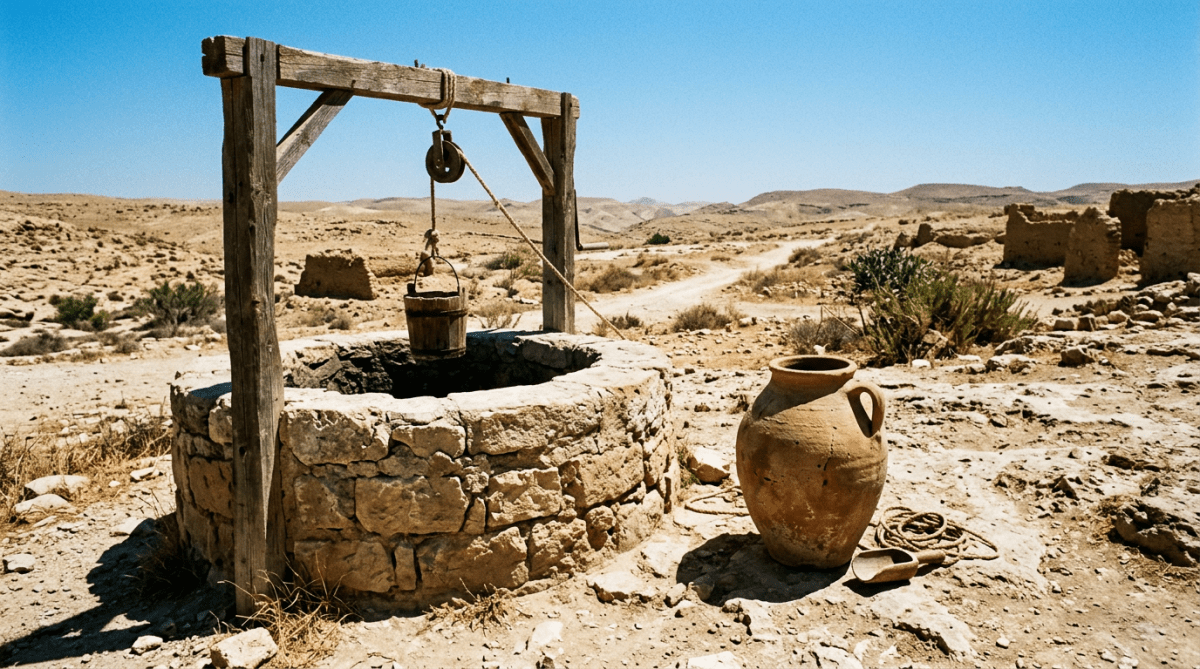
Then, near the village of Sychar, He sends His disciples into the village for food and sits on Jacob’s well at noon (the sixth hour).
And He waits for a woman of Samaria to come.
No name is mentioned, just her gender and her genealogical status – A Samaritan woman (half Jew and considered by the Jews to be “unclean.”
He begins a conversation with her — at noon
She initially resists and is mistrusting of this Jewish teacher’s intentions.
She has been rejected, marginalized and devalued for all her life by these Jews and now life’s choices and situations have in a real sense separated her even from her own people.
This is why she goes to the well at the hottest part of the day:
- To escape the judgmental glances
- To avoid hearing the condemning voices
- To protect her heart from witnessing happiness in others she doesn’t possess
Then this Jewish Rabbi, an interloper, sits on the well she needs to draw water from and has the audacity to cross a cultural divide and ask her for a drink of water — Who does he think he is?
She doesn’t respond positively. She might even be a little snippy with Jesus:
“You are a Jew,” she replied, “and I am a Samaritan woman. How can you ask me for a drink of water when Jews and Samaritans won’t have anything to do with each other?”
Jesus answered, “You don’t know what God wants to give you, and you don’t know who is asking you for a drink. If you did, you would ask me for the water that gives life.”
She doubles down: “Sir, you don’t even have a bucket, and the well is deep. Where are you going to get this life-giving water? Our ancestor Jacob dug this well for us, and his family and animals got water from it. Are you greater than Jacob?”
Thus begins a conversation at noon that changes her life and sets the stage for Jesus to tell her what He has never told anyone else before:
The woman saith unto him, “I know that Messias cometh, which is called Christ: when he is come, he will tell us all things.”
Jesus saith unto her, “I that speak unto thee am He.”
Who is he…He is Jesus, the Christ…the Messiah!
Points to Consider:[1]
- Confronting Reality Without Condemnation: Jesus revealed her personal history—having had five husbands and currently living with a man who was not her husband. Crucially, He did this to reveal himself, not to shame her. This “tender seeing” allowed her to move past her own guilt and recognize him as a prophet.
- Clarifying True Worship: When she attempted to pivot to a religious debate about the proper place to worship (Mount Gerizim vs. Jerusalem), Jesus responded that true worship is “in spirit and in truth,” making the location irrelevant.
- Full Revelation and Mission: Once she expressed hope for the coming Messiah, Jesus directly declared, “I who speak to you am He.”
- The Depth of Her Change: Seen in her immediate reaction: she left her water jar behind—symbolizing her move from physical thirst to spiritual fulfillment—and ran to her village to testify – “Come see a Man that told me all ever that I did.”
[1] SOURCE: GOOGLE AI MODE: Query- explain the way that Jesus initially overcome the resistance and mistrust of the woman at the well, and her change of heart. Italicized.

