
Categories
Golden Heart Foundation

Letting Go

Proverbs 3:5-6, “Trust in the LORD with all thine heart; and lean not unto thine own understanding. In all thy ways acknowledge him, and he shall direct thy paths.”

Ecclesiastes 3:1-8, “(1) To every thing there is a season, and a time to every purpose under the heaven:  (2)  A time to be born, and a time to die; a time to plant, and a time to pluck up that which is planted;  (3)  A time to kill, and a time to heal; a time to break down, and a time to build up;  (4)  A time to weep, and a time to laugh; a time to mourn, and a time to dance;  (5)  A time to cast away stones, and a time to gather stones together; a time to embrace, and a time to refrain from embracing;  (6)  A time to get, and a time to lose; a time to keep, and a time to cast away;  (7)  A time to rend, and a time to sew; a time to keep silence, and a time to speak;  (8)  A time to love, and a time to hate; a time of war, and a time of peace.”

I have a hard time letting go – but I, and you, are in good company:

  • Jacob wrestles with the Angel of the Lord (Ge. 32). At Jabbok, after a lifetime of trying to do it his way – ways that failed – Jacob lets go of his past, his control, his plans and grabs onto God for a new future, new trust, new life.
  • Moses at the burning bush. God commands Moses to move beyond his past failures in Egypt to embrace his future purpose.

Letting Go of the past.

  • You ARE NOT your past actions.
  • You ARE NOT your past failures. 
  • You ARE NOT how others treat you. 
  • You ARE who you think you are. 
  • You ARE who you choose to be.

Let it go. Stop worrying about the past and the things that you cannot change. Worrying accomplishes nothing, and it doesn’t help you change.

My Uncle, Mark Kuntzman, said to me one day. “Why worry when you can pray.”

Your past can make you stronger, if you will learn the lesson it offers. You are not required to remain in that situation. Let Go!

  • Proverbs 24:16, “For a just man falleth seven times, and riseth up again: but the wicked shall fall into mischief.”
  • Ephesians 4:31-32, “Let all bitterness, and wrath, and anger, and clamour, and evil speaking, be put away from you, with all malice: And be ye kind one to another, tenderhearted, forgiving one another, even as God for Christ’s sake hath forgiven you.”
  • “Remember ye not the former things, neither consider the things of old. Behold, I will do a new thing; now it shall spring forth; shall ye not know it? I will even make a way in the wilderness, and rivers in the desert” (Is. 43:18-19).

It’s your choice: Stop worrying, Ask for God’s help, Make a change.

  • “Create in me a clean heart, O God; and renew a right spirit within me” (Psalm 51:10).
  • “I can do all things through Christ who strengthens me” (Philippians 4:13).
  • John 8:32, “And ye shall know the truth, and the truth shall make you free.”
  • Philippians 3:12-14, “(12) Not as though I had already attained, either were already perfect: but I follow after, if that I may apprehend that for which also I am apprehended of Christ Jesus.  (13)  Brethren, I count not myself to have apprehended: but this one thing I do, forgetting those things which are behind, and reaching forth unto those things which are before,  (14)  I press toward the mark for the prize of the high calling of God in Christ Jesus.”
Categories
Golden Heart Foundation

A Conversation at Noon

“…He must needs go through Samaria” (John 4:1-45).

The Jews in Jesus’ day would often take the long way around Samaria, but Jesus felt compelled to go through Samaria.

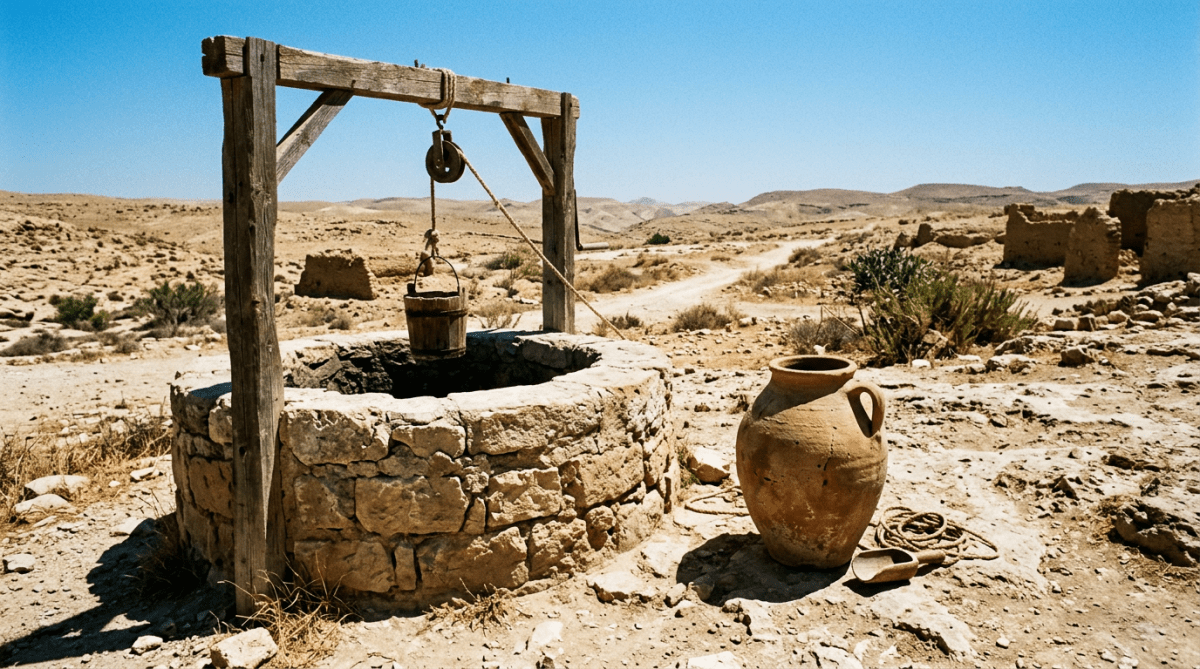
Then, near the village of Sychar, He sends His disciples into the village for food and sits on Jacob’s well at noon (the sixth hour).

And He waits for a woman of Samaria to come.

No name is mentioned, just her gender and her genealogical status – A Samaritan woman (half Jew and considered by the Jews to be “unclean.”

He begins a conversation with her — at noon

She initially resists and is mistrusting of this Jewish teacher’s intentions.

She has been rejected, marginalized and devalued for all her life by these Jews and now life’s choices and situations have in a real sense separated her even from her own people.

This is why she goes to the well at the hottest part of the day:

  • To escape the judgmental glances
  • To avoid hearing the condemning voices
  • To protect her heart from witnessing happiness in others she doesn’t possess

Then this Jewish Rabbi, an interloper, sits on the well she needs to draw water from and has the audacity to cross a cultural divide and ask her for a drink of water — Who does he think he is?

She doesn’t respond positively. She might even be a little snippy with Jesus:

“You are a Jew,” she replied, “and I am a Samaritan woman. How can you ask me for a drink of water when Jews and Samaritans won’t have anything to do with each other?” 

Jesus answered, “You don’t know what God wants to give you, and you don’t know who is asking you for a drink. If you did, you would ask me for the water that gives life.” 

She doubles down: “Sir, you don’t even have a bucket, and the well is deep. Where are you going to get this life-giving water? Our ancestor Jacob dug this well for us, and his family and animals got water from it. Are you greater than Jacob?” 

Thus begins a conversation at noon that changes her life and sets the stage for Jesus to tell her what He has never told anyone else before:

The woman saith unto him, “I know that Messias cometh, which is called Christ: when he is come, he will tell us all things.”

Jesus saith unto her, “I that speak unto thee am He.”

Who is he…He is Jesus, the Christ…the Messiah!

Points to Consider:[1]

  • Confronting Reality Without Condemnation: Jesus revealed her personal history—having had five husbands and currently living with a man who was not her husband. Crucially, He did this to reveal himself, not to shame her. This “tender seeing” allowed her to move past her own guilt and recognize him as a prophet.
  • Clarifying True Worship: When she attempted to pivot to a religious debate about the proper place to worship (Mount Gerizim vs. Jerusalem), Jesus responded that true worship is “in spirit and in truth,” making the location irrelevant.
  • Full Revelation and Mission: Once she expressed hope for the coming Messiah, Jesus directly declared, “I who speak to you am He.”
  • The Depth of Her Change: Seen in her immediate reaction: she left her water jar behind—symbolizing her move from physical thirst to spiritual fulfillment—and ran to her village to testify – “Come see a Man that told me all ever that I did.”

[1] SOURCE: GOOGLE AI MODE: Query- explain the way that Jesus initially overcome the resistance and mistrust of the woman at the well, and her change of heart. Italicized.

Categories
Golden Heart Foundation

When Jesus was told, “No.”

The three prayers of Jesus in Gethsemane represent the ultimate moment of human vulnerability and divine submission:[1]

Matthew 26:36-46, “(36) Then cometh Jesus with them unto a place called Gethsemane, and saith unto the disciples, Sit ye here, while I go and pray yonder.  (37)  And he took with him Peter and the two sons of Zebedee, and began to be sorrowful and very heavy.  (38)  Then saith he unto them, My soul is exceeding sorrowful, even unto death: tarry ye here, and watch with me.  (39)  And he went a little further, and fell on his face, and prayed, saying, O my Father, if it be possible, let this cup pass from me: nevertheless not as I will, but as thou wilt.  (40)  And he cometh unto the disciples, and findeth them asleep, and saith unto Peter, What, could ye not watch with me one hour?  (41)  Watch and pray, that ye enter not into temptation: the spirit indeed is willing, but the flesh is weak.  (42)  He went away again the second time, and prayed, saying, O my Father, if this cup may not pass away from me, except I drink it, thy will be done. (43)  And he came and found them asleep again: for their eyes were heavy.  (44)  And he left them, and went away again, and prayed the third time, saying the same words.  (45)  Then cometh he to his disciples, and saith unto them, Sleep on now, and take your rest: behold, the hour is at hand, and the Son of man is betrayed into the hands of sinners.  (46)  Rise, let us be going: behold, he is at hand that doth betray me.”

Mark 14:32-42, “(35) …fell on the ground, and prayed that, if it were possible, the hour might pass from him. (36)  And he said, Abba, Father, all things are possible unto thee; take away this cup from me: nevertheless not what I will, but what thou wilt…. (39) And again he went away, and prayed, and spake the same words…. (41)  And he cometh the third time…”

Luke 22:42-46, “…if thou be willing, remove this cup from me: nevertheless not my will, but thine, be done.  (43)  And there appeared an angel unto him from heaven, strengthening him.  (44)  And being in an agony he prayed more earnestly: and his sweat was as it were great drops of blood falling down to the ground.”

Jesus repeated the same petition three separate times:

  • He asked, “My Father, if it is possible, may this cup be taken from me.”
  • The “cup” symbolized the weight of human sin and God’s wrath He was about to endure.
  • Each time, He concluded with a statement of total submission: “Yet not as I will, but as you will”.

Key Features of the Prayer:

  • Anguish – Jesus’ soul was “overwhelmed with sorrow to the point of death.”
  • Physical Toll – His sweat became like “great drops of blood falling to the ground” (a rare condition known as hematohidrosis caused by extreme stress).
  • Relationship – Jesus used the intimate term “Abba, Father” (Mark 14:36). He kept His personal relationship with God.

God did not remove the “cup,” but by the end of His prayer, Jesus was at peace and ready to face betrayal, abandonment and the cross.

The prayer in Gethsemane is perhaps the most profound example of a “No” from God.

Jesus did not get what He wanted from the Father.

Even for Jesus, prayer was not some type of magical spell spoken to change His circumstance, but a test of relationship as He willingly aligned His human will with unwanted divine purpose of the Father.

The Prayers of Jesus display for us the genuine tension between his human desire to avoid suffering and His divine mission.

“Let this cup pass from me” = a natural, holy desire to avoid the physical and spiritual agony of the cross.

The Divine “No” — You would never expect Jesus to get a “NO” from the Father — NEVER, but here it is, “No.”

God did not grant the request to bypass the cross. This demonstrates that an unanswered prayer (in the way we want it) is not a sign of God’s absence or displeasure—after all, Jesus is God’s “Beloved Son.”

This moment establishes a model for how to handle “unanswered” prayers:

  • Honesty: Jesus was brutally honest about what he wanted (“Take this cup”).
  • Trust: He ended with “Not my will, but yours,” acknowledging that
    God’s perspective was greater than his immediate suffering.
  • Submission: He moved from the posture of a petitioner to the posture
    of a participant in God’s plan, eventually rising from prayer with the
    resolve to face his arrest.

Hebrews 4:14-16, “(14) Seeing then that we have a great high priest, that is passed into the heavens, Jesus the Son of God, let us hold fast our profession.  (15)  For we have not an high priest which cannot be touched with the feeling of our infirmities; but was in all points tempted like as we are, yet without sin.  (16) Let us therefore come boldly unto the throne of grace, that we may obtain mercy, and find grace to help in time of need.”

In order to know ALL that humanity experiences, Jesus had to learn what it was like to hear the Father say, “No.”

“…in all points tempted like as we are…”

Hebrews 12:1-2, “(1) Wherefore seeing we also are compassed about with so great a cloud of witnesses, let us lay aside every weight, and the sin which doth so easily beset us, and let us run with patience the race that is set before us,  (2)  Looking unto Jesus the author and finisher of our faith; who for the joy that was set before him endured the cross, despising the shame, and is set down at the right hand of the throne of God.”


[1] Italicized parts were done with the help of GOOGLE AI and/or Copilot.