Categories
The Miraculous Word
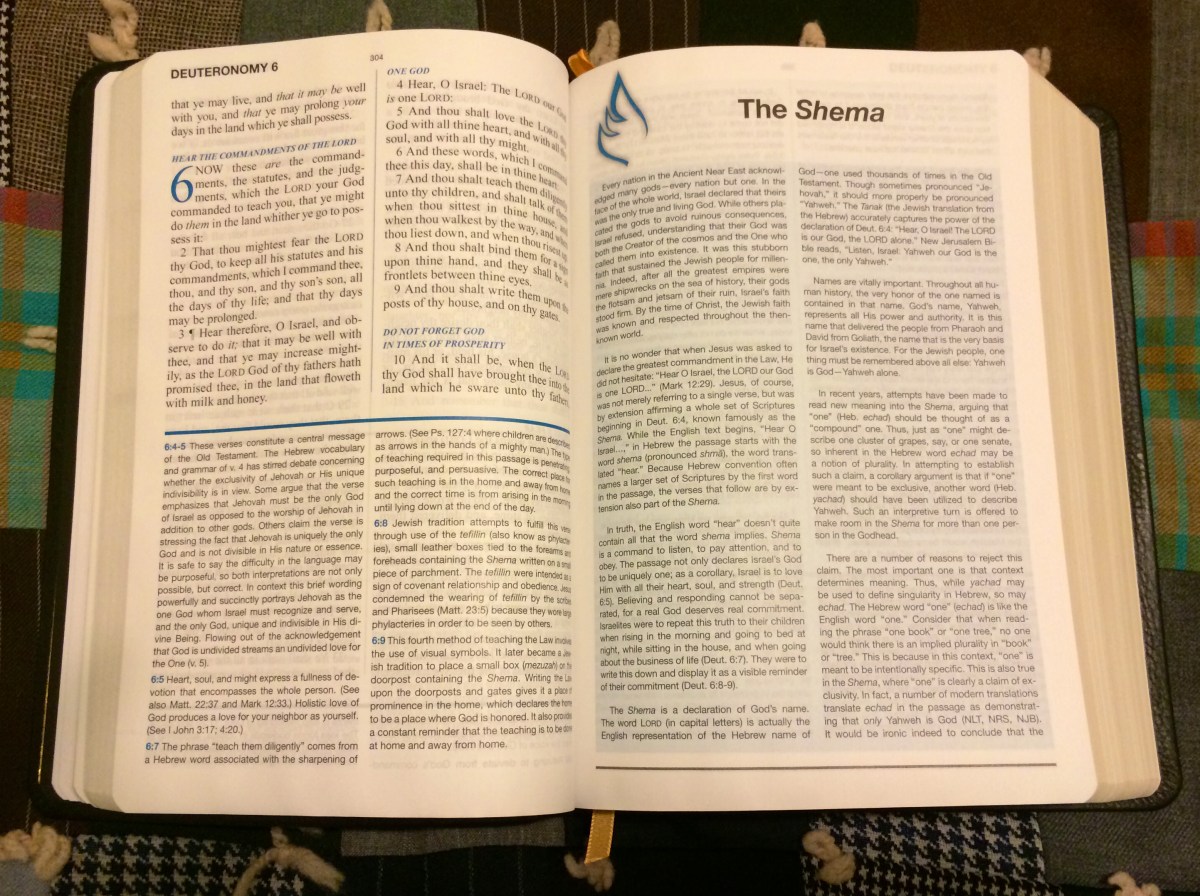
Text: Acts 10:34-48
(34) Then Peter opened his mouth, and said, Of a truth I perceive that God is no respecter of persons:
(35) But in every nation he that feareth him, and worketh righteousness, is accepted with him.
(36) The word which God sent unto the children of Israel, preaching peace by Jesus Christ: (he is Lord of all:)
(37) That word, I say, ye know, which was published throughout all Judaea, and began from Galilee, after the baptism which John preached;
(38) How God anointed Jesus of Nazareth with the Holy Ghost and with power: who went about doing good, and healing all that were oppressed of the devil; for God was with him.
(39) And we are witnesses of all things which he did both in the land of the Jews, and in Jerusalem; whom they slew and hanged on a tree:
(40) Him God raised up the third day, and shewed him openly;
(41) Not to all the people, but unto witnesses chosen before of God, even to us, who did eat and drink with him after he rose from the dead.
(42) And he commanded us to preach unto the people, and to testify that it is he which was ordained of God to be the Judge of quick and dead.
(43) To him give all the prophets witness, that through his name whosoever believeth in him shall receive remission of sins.
(44) While Peter yet spake these words, the Holy Ghost fell on all them which heard the word.
(45) And they of the circumcision which believed were astonished, as many as came with Peter, because that on the Gentiles also was poured out the gift of the Holy Ghost.
(46) For they heard them speak with tongues, and magnify God. Then answered Peter,
(47) Can any man forbid water, that these should not be baptized, which have received the Holy Ghost as well as we?
(48) And he commanded them to be baptized in the name of the Lord. Then prayed they him to tarry certain days.
The Miraculous Word
Bishop Harper made a statement, while teaching the Sunday Morning Adult Bible Class, that has remained on my mind and that I am going to teach on tonight. He said,
The secret of the followers of Jesus is that that they brought to Jesus the sick, the lame and the bound. Then those people were healed and delivered. This is also the secret of the church – bring them to Jesus.[1]
It is still true that word of mouth will either grow or destroy a business.
Not too long one of my favorite local restaurants failed their Cabell-Huntington Health Department restaurant inspections.
Their priority violations, reported in the Herald-Dispatch[2] and on social media, listed that they were “associated with foodborne illness.”[3]
Now, I’m not going to get into what all that means, but I definitely have not been back.
In fact, they corrected all the violations quickly, but still, I have not been back.
That negative report is stuck in my mind.
I’ve been needing a pair of shoes that give good foot and ankle support.
My wife heard about a particular brand of shoes that everyone is raving about, and she, being the wonderful wife she is took me out on Friday night and bought me a pair.
And, now, I’m telling you, those shoes are fantastic.
It’s the same thing in the Church, we tend to focus on the negative or positive reports that are broadcast about a local house of worship.
I’d like to say that every congregation, every pastor, every saint receives rave reviews.
I’d like to believe that I personally have never acted in some way that would result in a failed spiritual inspection.
We all, I’m sure, want to be the first place people in the tristate think about when they need a safe place to heal, hear the Word, be loved, trust and to find victory.
How did the fame of Jesus spread? There was no television, internet, radio. It was word-of-mouth:
Matthew 4:24, “And his fame went throughout all Syria: and they brought unto him all sick people that were taken with divers diseases and torments, and those which were possessed with devils, and those which were lunatick, and those that had the palsy; and he healed them.”
It is noteworthy that the people who heard about Jesus brought the needy to Him to receive their deliverance:
Mark 1:32-34, “And at even, when the sun did set, they brought unto him all that were diseased, and them that were possessed with devils. And all the city was gathered together at the door. And he healed many that were sick of divers diseases, and cast out many devils; and suffered not the devils to speak, because they knew him.”
Acts 10:34-48, “….(38) how God anointed Jesus of Nazareth with the Holy Ghost and with power: who went about doing good, and healing all that were oppressed of the devil; for God was with him….”
Yes, but how does this message to Cornelius begin?
Acts 10:34-35, “ Then Peter opened his mouth, and said [here comes the miraculous word], Of a truth I perceive that God is no respecter of persons: But in every nation he that feareth him, and worketh righteousness, is accepted with him.”
He is telling the Good News of Jesus Christ to people who are hungry and in need.
The result is a miraculous display of God’s salvation.
Maybe you went to school when they still required you to memorize that great poem The New Colossus, written by Emma Lazarus in 1883 and placed at the bottom of the Statue of Liberty:[4]
Not like the brazen giant of Greek fame,
With conquering limbs astride from land to land;
Here at our sea-washed, sunset gates shall stand
A mighty woman with a torch, whose flame
Is the imprisoned lightning, and her name
Mother of Exiles. From her beacon-hand
Glows world-wide welcome; her mild eyes command
The air-bridged harbor that twin cities frame.
“Keep, ancient lands, your storied pomp!” cries she
With silent lips. “Give me your tired, your poor,
Your huddled masses yearning to breathe free,
The wretched refuse of your teeming shore.
Send these, the homeless, tempest-tost to me,
I lift my lamp beside the golden door!“
Jesus said, “Come unto me, all ye that labour and are heavy laden, and I will give you rest.”[5]
We, the Church, are to go and share The Miraculous Word of the Gospel, and when we do…when we bring them to Jesus…they are healed, delivered, saved, reborn and renewed.
You see The Miraculous Word is the Gospel of Jesus Christ.
The Church needs to be out in the open broadcasting The Miraculous Word:
In his book, The Every Day Church, Missionary Allan Calhoun writes, “We Belong in the Open.”[6]
Mark 16:15-20 (KJV), “And he said unto them, Go ye into all the world, and preach the gospel to every creature. He that believeth and is baptized shall be saved; but he that believeth not shall be damned. And these signs shall follow them that believe; In my name shall they cast out devils; they shall speak with new tongues; they shall take up serpents; and if they drink any deadly thing, it shall not hurt them; they shall lay hands on the sick, and they shall recover. So then after the Lord had spoken unto them, he was received up into heaven, and sat on the right hand of God. And they went forth, and preached everywhere, the Lord working with them, and confirming the word with signs following. Amen.”
The focus of our understanding of these scriptures is based on two parts: “these signs” and “believe”. Because “I believe,” “these signs” should be demonstrated in the Church. I believe, so where are the miracles?
Two other phrases in this passage are often entirely missed: “go ye” and “follow them.” It is a physical impossibility to “follow” something that is stationary.
Considering myself a believer is not enough to release the ministry of the miraculous; the catalyst that releases the potential is “go ye.”
The Miraculous Word was shared by the early Church and the same miracles – even greater works – of Jesus continued through apostles. The Acts of the Holy Ghost working through the Apostles, Acts 5:12-16:
(12) And by the hands of the apostles were many signs and wonders wrought among the people; (and they were all with one accord in Solomon’s porch.
(13) And of the rest durst no man join himself to them: but the people magnified them.
(14) And believers were the more added to the Lord, multitudes both of men and women.)
(15) Insomuch that they brought forth the sick into the streets, and laid them on beds and couches, that at the least the shadow of Peter passing by might overshadow some of them.
(16) There came also a multitude out of the cities round about unto Jerusalem, bringing sick folks, and them which were vexed with unclean spirits: and they were healed every one.
If you want to see that response in our day, then you who believe need to go and share The Miraculous Word of the Gospel of Jesus Christ and you’ll witness what they witnessed.
[1] Edwin S. Harper. “Authority to Forgive” paraphrase. Sunday, June 4, 2023, 10:00 AM, ALC.
[2] Herald-Dispatch. (9/11/2022). Cabell County restaurant inspections. Accessed: https://www.herald-dispatch.com/features_entertainment/cabell-county-restaurant-inspections/article_f2eb2a07-d8fa-5e22-b5e4-b351997cf6a2.html
[3] Ibid.
[4] Emma Lazarus. (11/2/1883). The New Colossus. Accessed: https://www.nps.gov/stli/learn/historyculture/colossus.htm
[5] Mathew 11:28
[6] Allan Calhoun (2011). TheEvery Day Church. Self-published. p. 44-46
Categories
The Great Mountain

There are moments in life that we call, “mountain top experiences.”
Like a GPS (global positioning satellite), our minds can take us back to places and locations where we fought battles that effected our hearts and minds.
Sometimes, the struggles wrestled within our spirits, and barrages of attack where even our bodies were worn down to the point where we couldn’t see a way through the craggy pass.
There is a place on top the mountain for you.
God has established it there.
Text: Daniel 2:31-35
(31) Thou, O king, sawest, and behold a great image. This great image, whose brightness was excellent, stood before thee; and the form thereof was terrible.
(32) This image’s head was of fine gold, his breast and his arms of silver, his belly and his thighs of brass,
(33) His legs of iron, his feet part of iron and part of clay.
(34) Thou sawest till that a stone was cut out without hands, which smote the image upon his feet that were of iron and clay, and brake them to pieces.
(35) Then was the iron, the clay, the brass, the silver, and the gold, broken to pieces together, and became like the chaff of the summer threshingfloors; and the wind carried them away, that no place was found for them: and the stone that smote the image became a great mountain, and filled the whole earth.
I am preaching tonight from this thought:
The Great Mountain
It is 606 B.C., and four young men (teenagers really) have been forcibly taken from their homes in the nation Judah, and marched 880 miles into a land of exile to serve Nebuchadnezzar in the gentile city of Babylon, in the land of Shinar.
In Babylon, their captors try to rob them of their identity and these four Hebrew boys (Daniel, Hananiah, Mishael and Azariah) receive new Babylonian names (Belteshazzar, Shadrach, Meshach and Abednego).
It might seem simplistic to say this, but I rise to tell you once again that your adversary, the devil, seeks to devour you.
Jesus said, “The thief cometh not, but for to steal, and to kill, and to destroy: I am come that they might have life, and that they might have it more abundantly.”[1]
He wants to erase all identifying markers from your life that would remind you of your identity.
You are a child of the living God. Your Father is the One who created you and made you. You are part of His people and the sheep of His pasture.
You can rest sure tonight in your identity in Jesus.
This foe would love to put on you a name of shame that marks you as his possession, but we serve the only wise God – Jesus Christ.
There are places in Scripture where people received new names, either by the LORD or some loved one because they refused to allow some negative moniker be put on them for the rest of their life.
How would you like to go around with name “Ichabod” (“no glory”[2])? Why Ichabod? Why No Glory?
“And she named the child Ichabod, saying, The glory is departed from Israel: because the ark of God was taken, and because of her father in law and her husband. And she said, The glory is departed from Israel: for the ark of God is taken.”[3]
Every time Ichabod entered a room they all knew he was named for the day God’s presence left the children of Israel when the Philistines in battle took the Ark of the Covenant.
“…The glory is departed…”
There was no one there to say, “NO! We are not going to call him by that name.”
And he went his entire life with that name of shame upon him.
There is Rachel, she is dying, and she is getting ready to pass this life after giving birth to her second son with Israel.
“And it came to pass, as her soul was in departing, (for she died) that she called his name Benoni: but his father called him Benjamin.”[4]
Benoni = son of my sorrow[5]
Benjamin = son of the right hand[6](“right hand” symbolizing strength)
You have a name given to you, by the Lord. Do not let the enemy put a name on you that separates you from His presence, and hinders you from reaching your potential in Christ, and in life.
Names like: Loser, Failure, Liar, Thief, Addict, Useless – some of the many names the father of lies has tried to put on you.
But, Jesus, “the King eternal, immortal, invisible, the only wise God,” has a name for you.
What is that name?
Will you choose to wear it?
Isaiah 62:1-4
(1) For Zion’s sake will I not hold my peace, and for Jerusalem’s sake I will not rest, until the righteousness thereof go forth as brightness, and the salvation thereof as a lamp that burneth.
(2) And the Gentiles shall see thy righteousness, and all kings thy glory: and thou shalt be called by a new name, which the mouth of the LORD shall name.
(3) Thou shalt also be a crown of glory in the hand of the LORD, and a royal diadem in the hand of thy God.
(4) Thou shalt no more be termed Forsaken; neither shall thy land any more be termed Desolate: but thou shalt be called Hephzibah [my delight[7]], and thy land Beulah [to marry[8]]: for the LORD delighteth in thee, and thy land shall be married.
God has a great name for you. He wants to delight in you, you are the apple of His eye, and He loves you with an unfailing love.
The name of Jesus Christ is the name we take on when we are baptized in the name of Jesus Christ for the remission of sins.
That name is “a name which is above every name: That at the name of Jesus every knee should bow, of things in heaven, and things in earth, and things under the earth; And that every tongue should confess that Jesus Christ is Lord…”[9]
You became espoused to Jesus Christ the moment baptism took place. Why? Because you were baptized in His name.
If you have not been baptized in His name, then you have not taken on the family name.
You need to take on that name because in Jesus “dwelleth all the fulness of the Godhead bodily. And ye are complete in him, which is the head of all principality and power.”[10]
When you take on that name in water baptism all the characteristics of God are available to you.
Let’s talk about our Husband:
- Isaiah 54:5, “For thy Maker is thine husband; the LORD of hosts is his name; and thy Redeemer the Holy One of Israel; The God of the whole earth shall he be called.”
- Our secular culture today resists the Creation account in Genesis, but when you stop believing in the Creation then you lose contact with your Husband.
- You were made in the image of God.
- Matthew 28:18, “And Jesus came and spake unto them, saying, All power is given unto me in heaven and in earth.”
- 2 Corinthians 11:2, “…I have espoused you to one husband, that I may present you as a chaste virgin to Christ.”
- When were you espoused to the Husband? When you were born again of water and Spirit.
- When you went down in the waters of baptism and took on His name as the preacher said, “I now baptize you in the name of the Lord Jesus Christ for the remission of sins and you shall receive the gift of the Holy Ghost,” and you came up out of that water a new creature in Christ Jesus taking on His name.
- Ephesians 3:14-19, “(14) For this cause I bow my knees unto the Father of our Lord Jesus Christ, (15) Of whom the whole family in heaven and earth is named, (16) That he would grant you, according to the riches of his glory, to be strengthened with might by his Spirit in the inner man; (17) That Christ may dwell in your hearts by faith; that ye, being rooted and grounded in love, (18) May be able to comprehend with all saints what is the breadth, and length, and depth, and height; (19) And to know the love of Christ, which passeth knowledge, that ye might be filled with all the fulness of God.”
Our identity is complete in the Lord Jesus Christ, and we are filled with all the fullness of God, and He has a great love for you.
So, never allow satan the pleasure of calling you by some other name because you have been called by the only saving name that is above every name:
“Neither is there salvation in any other: for there is none other name under heaven given among men, whereby we must be saved.”[11]
“Jesus is the One, Yes, He’s the only One”[12]
We love the fight, the grit, the determination and the dedication of these four young men to Jehovah:
- Daniel and the lion’s den – he refused to stop praying
- The three Hebrew children and the fiery furnace (Hananiah, Mishael and Azariah) – they would not bow to an idol. They were told to bow, they were commanded to bow, but they refused to bow.
Don’t bow to an enemy who wants nothing but your destruction.
Do not compromise yourself for other people.
David Johnson & Jared Runck point out the parallels present in the time of Daniel and today:[13]
- People are allowed to believe anything at all so long as they don’t happen to believe their beliefs are right and the beliefs of others are wrong.
- There is only one way to be saved: you must be born again of water and Spirit to enter into the kingdom of God.[14]
- This is the Word of God, this is what Jesus said, “He that believeth and is baptized shall be saved; but he that believeth not shall be damned.”[15]
- Nebuchadnezzar didn’t care what Shadrach, Meshach and Abednego believed, or who they worshipped, as long as they bowed to his great image (Dan. 3:5-6).
- Martin Luther King, Jr: The most dangerous type of atheism is not theoretical atheism, but practical atheism —that’s the most dangerous type. And the world, even the church, is filled up with people who pay lip service to God and not life service. And there is always a danger that we will make it appear externally that we believe in God when internally we don’t. We say with our mouths that we believe in him, but we live with our lives like he never existed. That is the ever-present danger confronting religion. That’s a dangerous type of atheism.
- In our day, we feel the constant pressure to conform and to be accepted, but that only occurs if you worship their gods (small “g” gods) and cease to worship the One True God.
- To stand when everyone else bows…to pray when all others fall silent. You can do that because “we serve the God who delivers from fiery furnaces and lion’s dens.”[16]
These mountain experiences were also proving grounds for their faith: Daniel, Hananiah, Mishael and Azariah.
Do you think it was easy for these four men to face down everybody? The peer pressure must have been at least as intense as the heat of that furnace.
However, it all began a long time ago when they were teenage boys and the refused to eat the king’s meat.
Do you want to know how to be successful in God? It is in the consistent every day practices and disciplines of faith. Every day growing your faith by doing the right thing one day at a time.
Do not compromise yourself and give up the principles of the Word of God to be accepted by a society that simply wants to destroy you and count you unworthy of the Living God.
Do not allow yourself to turn back to the valley below while climbing the mountain.
You belong spot on top of The Great Mountain.
There is no time to preach about Mt. Horeb, Mt. Sinai. Mt. Moriah, Mt. Gilboa, Mt. Nebo, Mt. Tabor, Mt. Carmel, the Mount of Olives, or Mt. Zion.
No time to tell the stories related to those places where mighty men and women saw their faith’s reward.
Life will take you to a mountain.
We talk about how beautiful it is on the top of the mountain, but nobody wants to talks about the struggle to get to the top of the mountain. We like the valley, the well-watered plains, and we often sing:
When I’m low in spirit I cry Lord lift me up I want to go higher with Thee
But nothing grows high on a mountain so He picked out a valley for me
And He leads me beside still waters somewhere in the valley below
And He draws me aside to be tested and tried in the valley He restoreth my soul[17]
We like it there in the valley. It’s green and plush. The Shepherd has placed us by a stream where we can be restored, but you have to get up at some point and climb that mountain in your life.
It matters really matters what mountain you are climbing, and if you are going to give your all, or not.
Just make certain you make it to The Great Mountain
The Great Mountain
Isaiah 2:1-5
(1) The word that Isaiah the son of Amoz saw concerning Judah and Jerusalem.
(2) And it shall come to pass in the last days, that the mountain of the LORD’S house shall be established in the top of the mountains, and shall be exalted above the hills; and all nations shall flow unto it.
(3) And many people shall go and say, Come ye, and let us go up to the mountain of the LORD, to the house of the God of Jacob; and he will teach us of his ways, and we will walk in his paths: for out of Zion shall go forth the law, and the word of the LORD from Jerusalem.
(4) And he shall judge among the nations, and shall rebuke many people: and they shall beat their swords into plowshares, and their spears into pruninghooks: nation shall not lift up sword against nation, neither shall they learn war any more.
(5) O house of Jacob, come ye, and let us walk in the light of the LORD.
In our text, Daniel shares a vision of a great image.
That vision is a prophetic look at four major world powers that would rise and fall:[18]
- Head of gold = Babylon = Lion
- Breast and arms of silver = Media-Persia = Bear
- Belly and thighs of brass = Greece = Leopard
- Legs of iron = Roman empire = Dreadful and Terrible Beast[19]
These kingdoms, each in their own time, would become the dominating power in that part of the world, and would conquer the other kingdoms and territories near themselves.
Nevertheless, the Word of God tells us that there was a stone hewn out of the mountain that struck the feet of the great image and that stone became a Great Mountain.
That Great Mountain – The Great Mountain – The Stone, the Rock, the mountain, is the Lord Jesus Christ.
The “LORD’S house” that Isaiah told us would be “established in the top of the mountains,” which is going to fill the whole earth…
…Just prior to the coming of the Lord for His Bride, the whole earth will have heard of Jesus Christ, and The Great Mountain will have filled the whole earth.
That House, on The Great Mountain, is the Church.
The Great Mountain is the Lord Jesus Christ.
The Children of Israel (2 million of them with their animals) were wandering in the wilderness and had a water supply problem, and they murmured against Moses:
And Moses cried unto the LORD, saying, What shall I do unto this people? they be almost ready to stone me. And the LORD said unto Moses, Go on before the people, and take with thee of the elders of Israel; and thy rod, wherewith thou smotest the river, take in thine hand, and go. Behold, I will stand before thee there upon the rock in Horeb; and thou shalt smite the rock, and there shall come water out of it, that the people may drink. And Moses did so in the sight of the elders of Israel.[20]
Paul later tells us the identity of that Rock at Mt. Horeb:
Moreover, brethren, I would not that ye should be ignorant, how that all our fathers were under the cloud, and all passed through the sea; And were all baptized unto Moses in the cloud and in the sea; And did all eat the same spiritual meat; And did all drink the same spiritual drink: for they drank of that spiritual Rock that followed them: and that Rock was Christ.[21]
The Holy Ghost is a River tonight that comes out of the Rock.
…Jesus stood and cried, saying, If any man thirst, let him come unto me, and drink. He that believeth on me, as the scripture hath said, out of his belly shall flow rivers of living water.[22]
Jesus Christ is the Rock and the Stone
- Daniel 2:45, “Forasmuch as thou sawest that the stone was cut out of the mountain without hands, and that it brake in pieces the iron, the brass, the clay, the silver, and the gold; the great God hath made known to the king what shall come to pass hereafter: and the dream is certain, and the interpretation thereof sure.”
- Deuteronomy 32:31, “For their rock is not as our Rock, even our enemies themselves being judges.”
- Deuteronomy 32:3-4, “(3) Because I will publish the name of the LORD: ascribe ye greatness unto our God. (4) He is the Rock, his work is perfect: for all his ways are judgment: a God of truth and without iniquity, just and right is he.”
- Psalm 18:2, “The LORD is my rock, and my fortress, and my deliverer; my God, my strength, in whom I will trust; my buckler, and the horn of my salvation, and my high tower.”
- Psalm 18:31, “For who is God save the LORD? or who is a rock save our God?”
- Psalm 95:1, “O come, let us sing unto the LORD: let us make a joyful noise to the rock of our salvation.
- Isaiah 2:10, “Enter into the rock, and hide thee in the dust, for fear of the LORD, and for the glory of his majesty.”
How do you “Enter into the Rock?” How do you get in Jesus? Peter told us on the Day of Pentecost how to do that:
…God hath made that same Jesus, whom ye have crucified, both Lord and Christ. Now when they heard this, they were pricked in their heart, and said unto Peter and to the rest of the apostles, Men and brethren, what shall we do? Then Peter said unto them, Repent, and be baptized every one of you in the name of Jesus Christ for the remission of sins, and ye shall receive the gift of the Holy Ghost. For the promise is for you and for your children and for all who are far off, everyone whom the Lord our God calls to himself.[23]
The answer is simple.
Obey the plan of salvation and be born again of water and Spirit.
That is how to enter into the Rock.
Upon this Rock
Matthew 16:13-18
(13) When Jesus came into the coasts of Caesarea Philippi, he asked his disciples, saying, Whom do men say that I the Son of man am?
(14) And they said, Some say that thou art John the Baptist: some, Elias; and others, Jeremias, or one of the prophets.
(15) He saith unto them, But whom say ye that I am?
(16) And Simon Peter answered and said, Thou art the Christ, the Son of the living God.
(17) And Jesus answered and said unto him, Blessed art thou, Simon Barjona: for flesh and blood hath not revealed it unto thee, but my Father which is in heaven.
(18) And I say also unto thee, That thou art Peter, and upon this rock I will build my church; and the gates of hell shall not prevail against it.
“Thou art Peter” = Petros – “a (piece of) rock.”[24]
You are a small pebble, Peter, I’m not going to build My church on you…
“And upon this Rock” = Petra – “a (mass of) rock.”[25]
I am going to build My church on this massive boulder, this Stone hewn out of the mountain, which is going to come and crush the feet of this worldly governmental system…
…and establish an eternal Spiritual kingdom that cannot be destroyed.”
That is what Isaiah was prophesying about: “And it shall come to pass in the last days, that the mountain of the LORD’S house shall be established in the top of the mountains…”[26]
Jesus declared it: “Upon this rock I will build my church; and the gates of hell shall not prevail against it.”[27]
You are the Church; you are God’s House sitting in the top of the mountain – The Great Mountain – Our Lord Jesus Christ.
No foe can defeat Him; nothing can overcome Him, or supersede Him.
You can be like the foolish man who builds his house upon the sand, if you want to, or you can be like the wise man who says, “I’m going to build my house upon the Rock.
I am going to build my life upon Jesus. I am going to trust in the words of the Master and know that He is going to be with me no matter where I go.
God is with me.”
God is with you.
What have you built upon?
Have you built upon the Rock? The Rock is here to touch, heal, save, deliver and redeem you, if you will simply turn your heart to Him.
The New Testament tells us about that Rock, the Stone, and we understand who Jesus is: And the Word was made flesh, and dwelt among us, (and we beheld his glory, the glory as of the only begotten of the Father,) full of grace and truth.[28]
In the Old Testament, the Lord wrote the Ten Commandments on stone:
- Exodus 31:18, “And he gave unto Moses, when he had made an end of communing with him upon mount Sinai, two tables of testimony, tables of stone, written with the finger of God.”
- Exodus 32:15-16, “And Moses turned, and went down from the mount, and the two tables of the testimony were in his hand: the tables were written on both their sides; on the one side and on the other were they written. And the tables were the work of God, and the writing was the writing of God, graven upon the tables.”
Moses came down from Mt. Sinai with the Law written on tables of stone by the finger of God.
He sees the children of Israel doing what they should not be doing and he destroys those tables of stone in exasperation.
You would think that destroying those stone tablets is what stopped Moses from entering the Promise Land.
The reason was that he disobeyed God’s Word, not because he broke stones tablets, but because he broke God’s Word.
Do not break the Word of God through disobedience.
It is established on the Rock, because those stones are a type of Jesus Christ.
That was the Word of God, given to the people of God in the wilderness, and the Bible is says that “Word was with God, and the Word was God. The same was in the beginning with God. All things were made by him; and without him was not any thing made that was made.”[29]
God hewed the tables of stone out of the mountain, and God’s Word was inscribed on them.
Jesus Christ is that Word made flesh – the Stone hewn out of the mountain.
The Church is established upon the Rock.
We stand upon the firm foundation of who Jesus is.
So, no enemy, no foe, can defeat you, or put a name on you that is not identified with Jesus Christ
Unless you allow it.
You have been baptized in His name. You have been established upon the Rock, and wherever you go, you take the Rock with you because you are in mountain of the Lord’s House on the top of the mountain – The Great Mountain – an ever-growing mountain.
“Of the increase of his government and peace there shall be no end….”[30]
How and when does the Stone destroy the image?
How and when does it destroy the godless system of this carnal world?[31]
Through the preaching of the Word, the preaching of Jesus Christ – The Great Mountain – the spreading of the Gospel destroys the kingdoms of this world.
That is how the stone in Daniel’s vision broke the great image.
Daniel 2:34-35, “Thou sawest till that a stone was cut out without hands, which smote the image upon his feet that were of iron and clay, and brake them to pieces. Then was the iron, the clay, the brass, the silver, and the gold, broken to pieces together, and became like the chaff of the summer threshingfloors; and the wind carried them away, that no place was found for them: and the stone that smote the image became a great mountain, and filled the whole earth.”
The Great Mountain is the Lord Jesus Christ; on top of that mountain is the Church, the kingdom of God.
In addition, we, the Church, will preach Jesus until the Gospel is preached throughout the whole earth.
The message of Jesus Christ is filling the whole earth right now.
When that happens then Daniel’s vision is fulfilled: “and the stone that smote the image became a great mountain, and filled the whole earth.[32]
“And this gospel of the kingdom shall be preached in all the world for a witness unto all nations; and then shall the end come.”[33]
[1] John 10:10
[2] Brown-Driver-Briggs’ Hebrew Definitions. H350
[3] 1 Samuel 4:21-22
[4] Genesis 35:18.
[5] Strong’s Hebrew and Greek Dictionaries. H1126.
[6] Strong’s Hebrew and Greek Dictionaries. H1144.
[7] Strong’s Hebrew and Greek Dictionaries. H2657.
[8] Strong’s Hebrew and Greek Dictionaries. H1166.
[9] Philippians 2:9-11
[10] Colossians 2:9-10
[11] Acts 4:12
[12] Otis Wright. Jesus is the One, Yes, He’s the Only One.
[13] David P. Johnson & Jared S. Runck. (2017). Handbook on the Prophets. Word Aflame Press: Weldon Springs, MO. p. 84-85
[14] John 3:1-8
[15] Mark 16:16
[16] David P. Johnson & Jared S. Runck. (2017). Handbook on the Prophets. Word Aflame Press: Weldon Springs, MO. p. 84-85
[17] Dottie Rambo. (In the Valley) He Restoreth My Soul.
[18] Purpose Institute. (2019). Old Testament Studies. #6104 – Major Prophets. Lesson 4: The Book of Daniel. p. 5.
[19] Daniel 7:1-28
[20] Exodus 17:4-6
[21] 1 Corinthians 10:1-4
[22] John 7:37-38
[23] Acts 2:36-39
[24] Strong’s Hebrew and Greek Dictionaries. G4074.
[25] Strong’s Hebrew and Greek Dictionaries. G4073.
[26] Isaiah 2:2
[27] Matthew 16:18
[28] John 1:14
[29] John 1:1-3
[30] Isaiah 9:7
[31] Ibid.
[32] Daniel 2:35
[33] Matthew 24:14
Matthew 26:1-2
(1) And it came to pass, when Jesus had finished all these sayings, he said unto his disciples,
(2) Ye know that after two days is the feast of the passover, and the Son of man is betrayed to be crucified.
In this passage we see
The Christ – The Chosen – The Crucified
The Christ
Ezekiel 34:11-12, 16
(11) For thus saith the Lord GOD; Behold, I, even I, will both search my sheep, and seek them out.
(12) As a shepherd seeketh out his flock in the day that he is among his sheep that are scattered; so will I seek out my sheep, and will deliver them out of all places where they have been scattered in the cloudy and dark day.
(16) I will seek that which was lost, and bring again that which was driven away, and will bind up that which was broken, and will strengthen that which was sick: but I will destroy the fat and the strong; I will feed them with judgment.
An absolutely oneness view of the Messiah. He came Himself to save His people:
Luke 4:18-19, “The Spirit of the Lord is upon me, because he hath anointed me to preach the gospel to the poor; he hath sent me to heal the brokenhearted, to preach deliverance to the captives, and recovering of sight to the blind, to set at liberty them that are bruised, To preach the acceptable year of the Lord.”
Ezekiel 37:24-25
(24) And David my servant shall be king over them; and they all shall have one shepherd: they shall also walk in my judgments, and observe my statutes, and do them.
(25) And they shall dwell in the land that I have given unto Jacob my servant, wherein your fathers have dwelt; and they shall dwell therein, even they, and their children, and their children’s children for ever: and my servant David shall be their prince for ever.
“…David shall be their prince for ever.” = God manifest in the flesh
1 Timothy 3:16, “And without controversy great is the mystery of godliness: God was manifest in the flesh, justified in the Spirit, seen of angels, preached unto the Gentiles, believed on in the world, received up into glory.”
It was this Christ, this Messiah, This One True God in flesh, that gave Himself on the Cross for you.
The Chosen
John 15:15-19
(15) Henceforth I call you not servants; for the servant knoweth not what his lord doeth: but I have called you friends; for all things that I have heard of my Father I have made known unto you.
(16) Ye have not chosen me, but I have chosen you, and ordained you, that ye should go and bring forth fruit, and that your fruit should remain: that whatsoever ye shall ask of the Father in my name, he may give it you.
(17) These things I command you, that ye love one another.
(18) If the world hate you, ye know that it hated me before it hated you.
(19) If ye were of the world, the world would love his own: but because ye are not of the world, but I have chosen you out of the world, therefore the world hateth you.
When God Wants to Drill a Man[1]
By: Angela Morgan[2]
| When God wants to drill a man | Watch His methods, watch His ways! | And he lifts beseeching hands! |
| And thrill a man | How He ruthlessly perfects | How He bends but never breaks |
| And skill a man, | Whom He royally elects! | When his good He undertakes; |
| When God wants to mold a man | How He hammers him and hurts him, | How He uses whom He chooses |
| To play the noblest part; | And with mighty blows converts him | And with every purpose fuses him; |
| When He yearns with all His heart | Into trial shapes of clay which | By every act induces him |
| To create so great and bold a man | Only God understands; | To try His splendour out– |
| That all the world shall be amazed, | While his tortured heart is crying | God knows what He’s about! |
You have been chosen
Your present struggle awaits a perfected future
God knows what He’s about!
He knows what He is doing.
Jas_2:5, “Hearken, my beloved brethren, Hath not God chosen the poor of this world rich in faith, and heirs of the kingdom which he hath promised to them that love him?”
1 Peter 2:9, “But ye are a chosen generation, a royal priesthood, an holy nation, a peculiar people; that ye should shew forth the praises of him who hath called you out of darkness into his marvellous light:”
Rev. 17:14, “These shall make war with the Lamb, and the Lamb shall overcome them: for he is Lord of lords, and King of kings: and they that are with him are called, and chosen, and faithful.”
The Crucified
See paper: The Crucifixion Fulfills the Passover
Romans 6:6, “Knowing this, that our old man is crucified with him, that the body of sin might be destroyed, that henceforth we should not serve sin.”
Gal. 2:20, “I am crucified with Christ: nevertheless I live; yet not I, but Christ liveth in me: and the life which I now live in the flesh I live by the faith of the Son of God, who loved me, and gave himself for me.”
Mat. 10:38, “And he that taketh not his cross, and followeth after me, is not worthy of me.”
Mat. 16:24, “Then said Jesus unto his disciples, If any man will come after me, let him deny himself, and take up his cross, and follow me.”
The Christ – The Chosen – The Crucified
Ezekiel 36:26-27
(26) A new heart also will I give you, and a new spirit will I put within you: and I will take away the stony heart out of your flesh, and I will give you an heart of flesh.
(27) And I will put my spirit within you, and cause you to walk in my statutes, and ye shall keep my judgments, and do them.
[1] https://marbaniang.wordpress.com/2017/09/07/origin-of-the-poem-when-god-wants-to-drill-a-man/
[2] Believed to be an anonymously “Christianized” form of her 1918 poem When Nature Wants a Man.
Categories
Battle Ready
Categories
Reporters at the Gate
It is a breath of fresh air then you read a positive news report.
In ancient times, the city gate was the busiest place in the city:[1]
A place where the social, business, and legal interaction of the city took place
Where the Torah was read and proclamations were declared
Where justice was served
News exchanged and discussed
Local gossip spread
2 Samuel 15:1-6 (KJV)
(1) And it came to pass after this, that Absalom prepared him chariots and horses, and fifty men to run before him. (2) And Absalom rose up early, and stood beside the way of the gate: and it was so, that when any man that had a controversy came to the king for judgment, then Absalom called unto him, and said, Of what city art thou? And he said, Thy servant is of one of the tribes of Israel. (3) And Absalom said unto him, See, thy matters are good and right; but there is no man deputed of the king to hear thee. (4) Absalom said moreover, Oh that I were made judge in the land, that every man which hath any suit or cause might come unto me, and I would do him justice! (5) And it was so, that when any man came nigh to him to do him obeisance, he put forth his hand, and took him, and kissed him. (6) And on this manner did Absalom to all Israel that came to the king for judgment: so Absalom stole the hearts of the men of Israel.
2 Samuel 15:1-6 (NET)
(1) Some time later Absalom managed to acquire a chariot and horses, as well as fifty men to serve as his royal guard. (2) Now Absalom used to get up early and stand beside the road that led to the city gate. Whenever anyone came by who had a complaint to bring to the king for arbitration, Absalom would call out to him, “What city are you from?” The person would answer, “I, your servant, am from one of the tribes of Israel.” (3) Absalom would then say to him, “Look, your claims are legitimate and appropriate. But there is no representative of the king who will listen to you.” (4) Absalom would then say, “If only they would make me a judge in the land! Then everyone who had a judicial complaint could come to me and I would make sure he receives a just settlement.” (5) When someone approached to bow before him, Absalom would extend his hand and embrace him and kiss him. (6) Absalom acted this way toward everyone in Israel who came to the king for justice. In this way Absalom won the loyalty of the citizens of Israel.
Markets and trading centers flourished in certain gates in the city:
Nehemiah 3:1, “Then Eliashib the high priest rose up with his brethren the priests, and they builded the sheep gate; they sanctified it, and set up the doors of it; even unto the tower of Meah they sanctified it, unto the tower of Hananeel.”
Nehemiah 3:3, “But the fish gate did the sons of Hassenaah build, who also laid the beams thereof, and set up the doors thereof, the locks thereof, and the bars thereof.”
It was at the gates where prophets and priests delivered God’s admonitions and Divine pronouncements
Sovereign attention was attracted at the gate, because “there is no power but of God: the powers that be are ordained of God.”[2]
The most vulnerable place in the walls surrounding a city were the gates, which were well-guarded and designed to deter enemy soldiers.
Such a place of distinction would also be a place where any “new arrivals” would be seen, noticed and counted.
It was an honor for an elder to be chosen to sit at the gate of the city and viewed as a place of authority.
Lot, somehow, was an elder at the gate of Sodom where he was vexed with the wickedness of that city and his own compromises made there:
“And there came two angels to Sodom at even; and Lot sat in the gate of Sodom: and Lot seeing them rose up to meet them; and he bowed himself with his face toward the ground;”[3]
Though vexed and compromised, Lot still had enough in him to recognize the angels of the Lord.
Those same angels were the means of Lot’s salvation from the destruction of Sodom and Gomorroh:
Peter tells us how that God “delivered just Lot, vexed with the filthy conversation of the wicked:”[4]
But the damage was done: his wife was dead and his two daughters, overcome by their situation reverted to what Sodom had taught them.
The Gate Signifies Authority[5]
- The gate represents a place of authority
- To “possess the gates” meant one possessed the city
- Jesus spoke of the “gates of Hell” (Matthew 16:18, “And I say also unto thee, That thou art Peter, and upon this rock I will build my church; and the gates of hell shall not prevail against it.”)
- While we may not be privy to the dark counsels of Hell was have no worries when we have the Rock – Jesus Christ.
- We are on a missional journey and Hell Cannot Stop the Church.
- “To be within the gates” meant to be under the authority of the elders of the city presiding in the gates
- Deuteronomy 15:7, “If there be among you a poor man of one of thy brethren within any of thy gates in thy land which the LORD thy God giveth thee, thou shalt not harden thine heart, nor shut thine hand from thy poor brother:”
The gates are a place where plans are made, tactics designed, strategies implemented, and counsel sought.
Absalom understood the importance of the gate and exploited that knowledge to turn the heart of the people from King David with an Evil Report.
It is the Evil Report, spread at your gate and attended to by you that defiles you.
Defile = to make profane, call common, defile, pollute, dirty, or unclean.
Jacob spoke of the “gate of Heaven” (Genesis 28:17, “And he was afraid, and said, How dreadful is this place! this is none other but the house of God, and this is the gate of heaven.”)
He called that place Bethel – the house of God.
You are Bethel today – You are the House of God and you have gates of access that to need to be well guarded.
Isaiah 33:15-17
(15) He that walketh righteously, and speaketh uprightly; he that despiseth the gain of oppressions, that shaketh his hands from holding of bribes, that stoppeth his ears from hearing of blood, and shutteth his eyes from seeing evil;
If you Shun the Evil Report
(16) He shall dwell on high: his place of defence shall be the munitions of rocks: bread shall be given him; his waters shall be sure.
(17) Thine eyes shall see the king in his beauty: they shall behold the land that is very far off.
Your ears, eyes and mouth are gates to either shun or share evil reports.
Your ear is a gate and listening to an evil report can defile you.
Evil Report: Distortion of Facts – Incomplete Facts – False Information
The wrongful motivation of an evil report causes the hearer to be defiled by drawing wrong conclusions based on that report.
Mat 15:17-20, “(17) Do not ye yet understand, that whatsoever entereth in at the mouth goeth into the belly, and is cast out into the draught? (18) But those things which proceed out of the mouth come forth from the heart; and they defile the man. (19) For out of the heart proceed evil thoughts, murders, adulteries, fornications, thefts, false witness, blasphemies: (20) These are the things which defile a man: but to eat with unwashen hands defileth not a man.”
Dr. Joe Nelson of Parkersburg Bible College listed various ways an evil reporter operates:
- A Whisperer – one who secretly passes an evil report:
- Psalms 41:7, “All that hate me whisper together against me: against me do they devise my hurt.”
- A Gossip (rumor) – magnifies and sensationalizes rumors of partial information:
- Ezekiel 7:26, “Mischief shall come upon mischief, and rumour shall be upon rumour; then shall they seek a vision of the prophet; but the law shall perish from the priest, and counsel from the ancients.
- A Slanderer – One who speaks to destroy credibility by using evil facts:
- Numbers 14:36-37, “(36) And the men, which Moses sent to search the land, who returned, and made all the congregation to murmur against him, by bringing up a slander upon the land, (37) Even those men that did bring up the evil report upon the land, died by the plague before the LORD.
- A Busybody – one who digs up evil reports and information with the express purpose of spreading them by any of the three methods above:
- 1 Peter 4:15, “But let none of you suffer as a murderer, or as a thief, or as an evildoer, or as a busybody in other men’s matters.”
Nelson taught that an evil report is motivated by:
- Bitterness – reacting because of personal hurts
- Rebellion – justifying an independent spirit
- Deception – believing that the evil report is one’s “right” to give
- Pride – wanting to exalt self
- Guilt – justifying past actions or attitudes
- Envy – desiring what others have (jealousy)
Evil Reporters often think that they are getting by: “Because sentence against an evil work is not executed speedily, therefore the heart of the sons of men is fully set in them to do evil” (Ecclesiastes 8:11).
5 QUESTIONS THAT WILL UNCOVER AN EVIL REPORT (DR. JOE NELSON):
- WHAT IS YOUR REASON FOR TELLING ME THIS?
- WHERE DID YOU GET THE INFORMATION?
- HAVE YOU GONE DIRECTLY TO THOSE INVOLVED?
- HAVE YOU PERSONALLY CHECKED OUT ALL THE FACTS?
- CAN I QUOTE YOU IF I CHECK THIS OUT?
Defilement takes place when you receive an evil report and believe it to be true.
Our True Spiritual Battle is not with people, but with spirits that motivate people.
Ephesians 6:12, “For we wrestle not against flesh and blood, but against principalities, against powers, against the rulers of the darkness of this world, against spiritual wickedness in high places.”
Spirits of lust, deceit, envy, rebellion, perversion, jealousy, pride…
God has elected not to tell us about the plans of these evil rulers & authorities of the unseen world.
He has not given us a seat at their gate listening to their strategies and wicked plans.
But we see the result of these evil authorities.
2 Corinthians 10:3-6
(3) For though we walk in the flesh, we do not war after the flesh:
(4) (For the weapons of our warfare are not carnal, but mighty through God to the pulling down of strong holds;)
(5) Casting down imaginations, and every high thing that exalteth itself against the knowledge of God, and bringing into captivity every thought to the obedience of Christ;
(6) And having in a readiness to revenge all disobedience, when your obedience is fulfilled.
How?
Philippians 4:8, “Finally, brethren, whatsoever things are true, whatsoever things are honest, whatsoever things are just, whatsoever things are pure, whatsoever things are lovely, whatsoever things are of good report; if there be any virtue, and if there be any praise, think on these things.”
You get to choose what you allow into your gate, what you heed, hearken, obey.
[1] **See Notes from Dr. Nelson’s Class & Lesson “Defilement: Absalom’s Curse on 7-13-2010**
[2] Rom 13:1
[3] Genesis 19:1
[4] 2 Peter 2:7
[5] Clarence H. Wagner Jr., Guarding Your Gates
Categories
Victory
Categories
Rollo May’s Love & Will
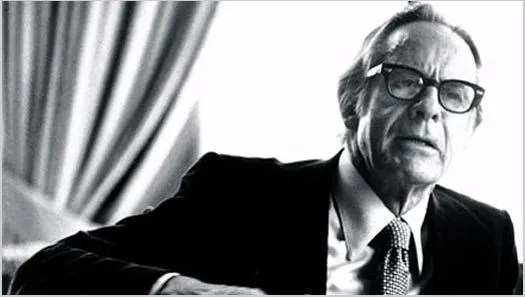

My interest in Rollo May began when I read that he received training in divinity as well as psychoanalysis. At that time I began to think that he might have something to say that I’d be interested in. The more I read about May the more I was intrigued by his views. He makes sense on a number of issues that face our modern society. Although his book, Love and Will, was published in 1969, it is clear that most of the concepts remain accurate and can be applied to the twenty-first century. I found his ideas to be hopeful and focused on a bright future. While May spent many pages dealing with the anxiety, alienation, and the vacuous expression of society today, he ends his book on a positive note when he writes about how “we may embrace the future” (May, 1969). His book left me with the understanding that with a combination of love and will one can wrap their arms around the future without anxiety or loneliness haunting their days. With that in mind, the purpose of this paper is to give a brief history of Rollo May’s life, to recount the various concepts in existential and humanistic psychology that May is credited with defining, to briefly explain May’s views on love and will, and to discuss what I think is a key element missing in May’s aspect of love.
According to Paul Minnillo (n.d.), of the University of Georgia, “Rollo May introduced European existential thought into American psychology.” Minnillo (n.d.) explains the difference between humanism and existentialism by writing, “Humanists see people as basically good; existentialists see human nature as neutral. Whether the person becomes good or evil is a matter of personal choice. One can decide to be good or evil.”
While it is nice to know that May played such an influential part in the development of existential psychology in the US, it is needful that we take a closer look at May’s background before falling headlong into a discussion of contributions and definitions.
In a brief biographical sketch, Dr. C. George Boeree (1998), a professor of psychology at Shippensburg University, writes:
“Rollo May was born April 21, 1909, in Ada, Ohio. His childhood was not particularly pleasant: His parents didn’t get along and eventually divorced, and his sister had a psychotic breakdown. After a brief stint at Michigan State (he was asked to leave because of his involvement with a radical student magazine), he attended Oberlin College in Ohio, where he received his bachelors degree. After graduation, he went to Greece, where he taught English at Anatolia College for three years. During this period, he also spent time as an itinerant artist and even studied briefly with Alfred Adler.
When he returned to the US, he entered Union Theological Seminary and became friends with one of his teachers, Paul Tillich, the existentialist theologian, who would have a profound effect on his thinking. May received his BD in 1938.
May suffered from tuberculosis, and had to spend three years in a sanatorium. This was probably the turning point of his life. While he faced the possibility of death, he also filled his empty hours with reading. Among the literature he read were the writings of Soren Kierkegaard, the Danish religious writer who inspired much of the existential movement, and provided the inspiration for May’s theory. He went on to study psychoanalysis at White Institute, where he met people such as Harry Stack Sullivan and Erich Fromm.
And finally, he went to Columbia University in New York, where in 1949 he received the first PhD in clinical psychology that institution ever awarded. After receiving his PhD, he went on to teach at a variety of top schools. In 1958, he edited, with Ernest Angel and Henri Ellenberger, the book Existence, which introduced existential psychology to the US. He spent the last years of his life in Tiburon, California, until he died in October of 1994.”
While this seems to be quite a long excerpt it is necessary to point out the various influences combined in the mind of May that would eventually become part of his theory. When reading Love and Will (1969), it is easy to become overwhelmed by the vast amount of knowledge that May presents. He writes, quite capably, about a wide range of subjects, which include (but are not limited to) Greek mythology, Judaism, Sigmund Freud, Alfred Adler, Carl Jung, Gestalt, William Shakespeare, Goethe, Dante, Hugh Hefner, Cezanne, Epicurus, Henrik Ibsen, and Soren Kierkegaard. This eclectic taste appeals to the philosophical nature, and yet he uses that knowledge to support a significant amount of his arguments. This would not have been the case if he had not had those years of travel, study, or sickness. At any rate, by the time May published Love and Will (1969) he was 60 years old and had gathered 6 decades of knowledge, experience, and wisdom.
Like many psychologists before him, May developed an assortment of key concepts to define his aspect of Existential psychology. It is important to note that while some of these are mentioned in Love and Will others are not. It is also important that we recognize that many of May’s ideas build upon those of earlier psychologists while taking on a definite Existential tone. The following are those concepts and definitions as briefly defined as possible.
Dr. Boeree (1998) points out the four nontraditional stages that May used in his Existential model:
- Innocence — the pre-egoic, pre-self-conscious stage of the infant. The innocent is premoral, i.e. is neither bad nor good. Like a wild animal who kills to eat, the innocent is only doing what he or she must do. But an innocent does have a degree of will in the sense of a drive to fulfill their needs!
- Rebellion — the childhood and adolescent stage of developing one’s ego or self-consciousness by means of contrast with adults, from the “no” of the two year old to the “no way” of the teenager. The rebellious person wants freedom, but has as yet no full understanding of the responsibility that goes with it. The teenager may want to spend their allowance in any way they choose — yet they still expect the parent to provide the money, and will complain about unfairness if they don’t get it!
- Ordinary — the normal adult ego, conventional and a little boring, perhaps. They have learned responsibility, but find it too demanding, and so seek refuge in conformity and traditional values.
- Creative — the authentic adult, the existential stage, beyond ego and self-actualizing. This is the person who, accepting destiny, faces anxiety with courage!
While May did use these stages to explain his philosophical view of Existential psychology, we need to be careful not to think of these stages as following a specific path like Sigmund Freud’s Psychosexual Stages or Erik Erikson’s Stage Theory.
According to Paul Minnillo (n.d.), “The following terms and concepts relate to May’s specific applications of existential philosophy to psychology:”
- Human Dilemma: the fact that humans can view themselves as both the subject and the object at the same time. Humans can see themselves as an object to which things happen; we are continually influenced by stimuli presented to us (Skinner’s theory); whether we respond or not to the stimuli depends on our rationality (Rogers’ theory); our ability to self-relate is what distinguishes us from the rest of nature; “man’s ability to stand outside himself”; we can view ourselves viewing, a metacognitive skill.
- Intentionality: the means by which the dichotomy between subject and object is partially overcome; all emotional and mental experiences must relate to (intend) object or events outside the person; the human capacity to perceive selectively and to assign meaning to objects and events in the world; the relationship between the thinking person and the outside world. Both the individual’s will (movement in a certain direction to fulfill specific goals) and wish (the imaginative playing with the possibility of future courses of action) are related to his/her intentionality. Intentionality, will, and wish are three of the most important concepts in May’s theory. Through these three cognitive constructs the person experiences his identity, exercises his freedom and senses his being.
- Normal and Neurotic Anxiety: anxiety and freedom always go together. Anxiety is defined as the resulting response to anything that threatens our freedom. May’s definition of normal anxiety: “the apprehension cued off by a threat to some value which the individual holds essential to his existence as a self.” Anxiety is necessary for growth and expansion of self; moving forward into the unknown is anxiety producing, an unfortunate companion of freedom of choice. Healthy anxiety should be recognized and accepted as inevitable. Neurotic anxiety is the feeling that comes when one decides to conform, accept conditions of worth of others, and give up possible personal growth, all in the name of safety and security. Neurotic anxiety, leading to psychological stagnation and intense feelings of guilt, is the subject of therapy.
- Normal and Neurotic Guilt: normal guilt comes when one doesn’t live up to his/her potential as a human being; it is part of the human condition, like anxiety; normal guilt can be used constructively when it is recognized and consciously reduced by appropriate action; neurotic guilt is the result of giving up and taking no risks for growth and expansion of self.
- Values: what we deem important and meaningful. In infancy: love, care, nourishment; in childhood and adolescence: approval, success, status among peers and autonomy from parents; in adulthood: those which transcend the immediate situation in time and encompass past and future, extending outward toward the good of the community and the larger world; holding mature values is more important than satisfying those values, i.e. search for beauty and truth is more important that actually finding it. Without functional values, we are alienated from the world and lose our sense of identity, worth, and significance; there is a sense of helplessness and aimlessness….mature values allow a person to deal effectively with reality, to empathize with others, and to form meaningful interpersonal relationships, and to be future-oriented; without an adequate system of values, people depend on things outside themselves to indicate worth and significance—status, income, possessions, prestige.
- Daimonic: from Greek, meaning both divine and diabolic; any natural function that has the power to take over the whole person—sex, eros, anger, rage, craving for power or achievement; may be either creative and healthy or destructive, or usually both. The desire to achieve is a kind of affirmation of self, but if it becomes an obsession, it takes over the whole person without regard for the person’s well-being or the well-being of others; all of life is a constant search for the optimal level of each of our personality traits.
- Psychotherapy: the goal is to convert neurotic anxiety and guilt to normal anxiety and guilt; to help the client actualize his/her potentialities. What is the client trying to express by the presenting problems? To help the client find meaning in circumstances s/he would otherwise find meaningless or hopeless. Therapy should be an encounter between two selves coming together and sharing their existence; empathy for the client is a key ingredient.
- Importance of Myth: May agreed with Jung that myths give expression to the universal truths of human nature, and guide human existence; these are narratives that make sense in a senseless world; myths provide universal themes to the individual regarding birth, death, love, marriage, good (Christ), evil (Satan), freedom, independence’ memory and myth are inseparable; our earliest memories become our personal myths, that influence our perceptions about the world, others and self.
Perhaps the greatest contribution that Rollo May gives us is his position on the five types of love. May begins chapter two of Love and Will (1969) with this paragraph:
“There are four kinds of love in Western tradition. One is sex, or what we call lust, libido. The second is eros, the drive of love to procreate or create – the urge, as the Greeks put it, toward higher forms of being and relationship. A third is philia, or friendship, brotherly love. The fourth is agape or caritas as the Latins called it, the love which is devoted to the welfare of the other, the prototype of which is the love of God for man. Every human experience of authentic love is a blending, in varying proportions, of these four” (p. 37-8).
After this paragraph May spends the next 139 pages dealing exclusively with sex and eros. He only mentions philia and agape two more times. However, May (1969) makes the argument that each type of love is progressive in nature. Thus, sex needs eros, eros needs philia, and “philia, in turn, needs agape” (p. 319).
The striking thing about this progression to me is the claim that each aspect of love is necessary for one to be fulfilled, and a person needs aspects of all four to reach that state of authenticity mentioned earlier in May’s creative stage.
For example, sex is purely lustful and completely about gratifying the body. There is nothing wrong or evil about sex (within marriage), but when the daimonic of sex overwhelms a person they begin to think only about their performance and this brings about alienation or anxiety, and could end in violence or some type of destructive behavior if left unchecked.
On page 40 May (1969) even mentions that in our own supposedly enlightened age there is “so much sex and so little meaning or even fun in it!” The reason for this is that people are more interested in the mechanics of sex than in the devotion of eros. May puts it better by writing, “We fly to the sensation of sex in order to avoid the passion of eros” (p. 65).
Why this flight from eros? May responds, “Sex can be defined fairly adequately in physiological terms as consisting of the building up of bodily tensions and their release. Eros, in contrast, is the experiencing of the personal intentions and meaning of the act. Whereas sex is a rhythm of stimulus and response, eros is a state of being” (p. 73). This ontological concept – “the science of being” – is what causes the escape from eros (p. 112). It is at this point of sharing our being with another where we learn what love is while experiencing love in its most vulnerable and unprotected state. May wrote that “love means to open ourselves to the negative as well as the positive – to grief, sorrow, and disappointment as well as to joy, fulfillment, and an intensity of consciousness we did not know was possible before” (p. 100). Therefore, it may be this lack of courage (authenticity) which causes so many to run away from eros.
May reminds us that the act of love is unique because “man is the only creature who makes love face to face…looking at his/her partner” (p. 311). However, as “sex is saved from self-destruction by eros,” so eros is made bearable by philia (May, 1969, p. 317). According to May (1969), philia is being able to relax with someone else. It is the ability to be and to appreciate the being of that significant other. There is no requirement for action on the part of philia because it is simply accepting the companionship of someone you love to be with (p. 317).
Agape is needed by philia because it is that love which requires nothing in return. May (1969) declares that agape contains “within it the element of selfless giving” (p. 319). It is a spiritual love transcending the physical.
Since people need to be loved physically and spiritually, and not just one or the other, May pronounces, “In normal human relations, each kind of love has an element of the other three, no matter how obscured it may be” (p. 320). This means that in order for love to truly be authentic it needs will. According to Howard Friedman and Miriam Schustack (1999, 2003), May’s concept of will is effort and volition (p. 502). Thus, authentic love is a decision – a choice – to determine to love courageously and to cast aside those anxieties that hold us back.
The strength of May’s theory lies in its ability for each individual to experience their struggles with courage and to celebrate the uniqueness of their existence. As mentioned earlier, May’s form of psychotherapy gives the client the opportunity to express their problems to an empathetic therapist. This meeting then allows the client to face those daunting situations with the aid of another and to find meaning out of situations that seem to be bleak or pointless.
The weakness of May’s theory, in my opinion, is that he fails to adequately explain the role of the family in the types of love. There is another Greek word for love that he never mentions in his book. This word, storge, is defined by C.S. Lewis (1994) as that affection one finds among family members and is part of the “maternal instinct.” At any rate, Lewis (1970, 1994) calls storge the “humblest of loves” simply because it is there by virtue of one’s birth, or adoption, into a family. In my opinion, by ignoring the love that is found between family members, May misses a key ingredient in his theory of love. If I were to incorporate May’s theory into my own theory I’d add this final element of storge.
_____________________________________________
References
Boeree, C. George. (1998). Rollo May 1909-1994. Personality Theories. Retrieved: December, 2004. http://www.ship.edu/~cgboeree/may.html
Friedman, Howard S., & Schustack, Miriam W. (1999, 2003). Personality: Classic Theories and Modern Research. 2nd edition. Boston: Allyn & Bacon. 502.
Lewis, C. S. (1970, 1994) The Four Loves. (Cassette Recording). Dallas: Word Publishing.
May, Rollo. (1969). Love and Will. New York: W. W .Norton & Company, Inc. 37-8, 40, 65, 73, 100, 112, 311, 317, 319, 320, 325
Minnillo, Paul R. (n.d.). Existential Psychology in Context. Retrieved: December 2, 2004. http://www.arches.uga.edu/~minnillo/
Research Paper (edited)
Love & Will | Stephen E. Kuntzman | West Virginia University Parkersburg | 3 December 2004 | Instructor: Dr. Phil McClung
Categories
Pure Religion
Do you practice religion?
This question put a smile on my face when I read it because it reminded me of Paul Rudd’s final reply to Zach Galifianakis after he had asked him a series of uncomfortable questions on the comedy sketch/movie Between Two Ferns: The Movie:
ZG: “What advice would you give to a young actor who wants to hide his Jewishness as well as you have?”
PR: “I’ve never really tried to hide my Jewishness.”
ZG: “Jesus was Jewish and he didn’t hide it.”
PR: “No, he put it out there for everybody to see. He’s one of our best.”
ZG: “Are you practicing?”
PR: “No, I’m not a practicing Jew…”
Paul Rudd then says with a wry smile, “I perfected it.”
Makes me smile every time I watch that clip.
Unfortunately, perfection and religion are not always congruent terms. In fact, of the five times “religion” is used in the KJV it is only used positively one time and it is qualified with the adjective “pure.”
While we are working and practicing the command to “be perfect,” which is found eight times in the KJV, let’s also endeavor to perfect the “pure religion” James wrote about.
“If any man among you seem to be religious, and bridleth not his tongue, but deceiveth his own heart, this man’s religion is vain. Pure religion and undefiled before God and the Father is this, To visit the fatherless and widows in their affliction, and to keep himself unspotted from the world” (James 1:26-27, KJV).
“If anyone thinks he is religious and does not bridle his tongue but deceives his heart, this person’s religion is worthless. Religion that is pure and undefiled before God the Father is this: to visit orphans and widows in their affliction, and to keep oneself unstained from the world” (James 1:26-27, ESV).
“If you claim to be religious but don’t control your tongue, you are fooling yourself, and your religion is worthless. Pure and genuine religion in the sight of God the Father means caring for orphans and widows in their distress and refusing to let the world corrupt you” (James 1:26-27, NLT).
“Anyone who sets himself up as “religious” by talking a good game is self-deceived. This kind of religion is hot air and only hot air. Real religion, the kind that passes muster before God the Father, is this: Reach out to the homeless and loveless in their plight, and guard against corruption from the godless world” (James 1:26-27, MSG).
Categories
Stephen’s Defense

Whenever an anointed man of God hits a nerve in individuals, or groups, when preaching, there is usually a positive or a negative response. We call this “being convicted,” or, simply, “conviction.”
We observe these opposing responses in two passages in the Book of Acts:
1. Those who respond positively – Acts 2:37, “Now when they heard this, they were pricked in their heart, and said unto Peter and to the rest of the apostles, Men and brethren, what shall we do?”
2. Those who respond negatively – Acts 5:33, “When they heard that, they were cut to the heart, and took counsel to slay them.”
One hears and obeys, the other hears and rebels.
One hears the message and desires to hear more from the messenger, the other hears the message and then seeks to destroy the messenger.
Unfortunately, whenever there is a desire to silence the voice of God’s messenger many actions take place that are often dishonorable and that was the way the unbelieving Jews acted towards Stephen.
His defense against the accusations of blasphemy towards God and the Temple shows us that he had an advanced understanding of Judaism and Christ that was on the cutting edge of Divine revelation.
Stephen hit a nerve with the unbelieving Jews of his day and they sought a way to shut him up.
Pastor and author Mark Copeland provides the following outline of Stephen’s Defense before the Sanhedrin:
STEPHEN’S DEFENSE (Acts 7:1-53)
A. GOD’S DEALINGS WITH ABRAHAM (7:1-8)
1. The call to leave Mesopotamia
2. The sojourn in Canaan
3. The promise of possession to his descendants
4. The covenant of circumcision
5. His descendants: Isaac, Jacob, the twelve patriarchs
B. THE PATRIARCHS SOJOURN IN EGYPT (7:9-16)
1. Joseph sold into Egypt, becomes governor
2. Jacob and his sons move to Egypt during the famine
3. The patriarchs buried in Canaan
C. GOD’S DELIVERANCE OF ISRAEL BY MOSES (7:17-36)
1. The children Israel in Egypt become slaves
2. The work of Moses, deliverer of Israel
a. Raised by Pharaoh’s daughter
b. Kills an Egyptian, but despised by his brethren
c. Flees to Midian where he lives for forty years
d. The Lord appears to Moses in a burning bush at Mount Sinai
e. Returns to Egypt, delivers Israel and brings them into the wilderness
D. ISRAEL’S REBELLION AGAINST GOD AND MOSES (7:37-43)
1. Moses is the person:
a. Who said God would raise up another prophet like him
b. Who spoke to the Angel on Mount Sinai
c. Who received living oracles to give to Israel
d. Whom the fathers would not obey but rejected
2. Israel is the nation:
a. Who turned back into Egypt in their hearts
b. Who pressured Aaron to make a golden calf
c .Whom God gave up to worship the host of heaven for 40 yrs in the wilderness:
1) They may have offered sacrifices to the Lord
2) They also worshiped Moloch and Remphan – cf. Amos 5:25-27
E. GOD’S TRUE TABERNACLE (7:44-50)
1. The fathers of Israel had the tabernacle of witness
a. In the wilderness, built according to the pattern shown Moses
b. Brought into the promised land by Joshua
2. They also had the temple
a. Asked for by David, who found favor before God
b. Built by his son Solomon
3. Yet the Most High does not dwell in temples made with hands
a. For heaven is His throne and earth is His footstool
b. His hand has made all these things – cf. Isaiah 66:1-2
F. ISRAEL’S RESISTANCE OF THE HOLY SPIRIT (7:51-53)
1. Stephen charges the council of resisting the Holy Spirit, as their fathers did
2. Their fathers persecuted & killed the prophets, and they killed the Just One
3. They received the law, but did not keep it
As Stephen ended his defense, the men present were convicted: “When they heard these things, they were cut to the heart, and they gnashed on him with their teeth” (Acts 7:54, KJV).
This episode ends with the men stoning Stephen as he looks to heaven and sees a vision from heaven’s throne room while a young man named Saul watched over the coats of the men who stoned Stephen.
Many would consider Stephen’s defense and death a sign of failure, but I like to think that this event was a catalyst (a prick) for change in the life of Saul, who would later be called Paul and became the Apostle to the Gentiles.
Saul’s persecution of the early church might just have been his rebellion against the conviction of the message Stephen delivered.
How else could he drown out the voice of that first martyr of the way who lovingly forgave and sought God for the forgiveness of those complicit in his death?
Jesus knew that Saul was convicted, which is why He came to him on the road to Damascus, and, finally, Paul responded positively:
“And as he journeyed, he came near Damascus: and suddenly there shined round about him a light from heaven: and he fell to the earth, and heard a voice saying unto him, Saul, Saul, why persecutest thou me? And he said, Who art thou, Lord? And the Lord said, I am Jesus whom thou persecutest: it is hard for thee to kick against the pricks. And he trembling and astonished said, Lord, what wilt thou have me to do? And the Lord said unto him, Arise, and go into the city, and it shall be told thee what thou must do” (Acts 9:3-6, KJV).
The best response to anointed preaching and conviction is: “Lord, what do you want me to do?”
So, if someone tries to destroy you for the Word of God you are preaching, or because you are simply obeying the Holy Spirit, don’t take it personally, they are not attacking you…they are attacking Jesus.
Because they’re attacking the message and attempting to destroy the messenger it is a sign of hope that they will eventually turn to Jesus and say, “Ok, Lord, it’s too hard and I can’t resist anymore, what must I do to be saved?”
God’s requirement for success is different from ours and on that last day of Stephen’s life God took a moment that appeared to be a failure and turned it into a future victory of eternal significance.
How do you respond when God’s Word preached by God’s messenger convicts you?
 The Pillar and Ground of Truth