Categories
Bridges

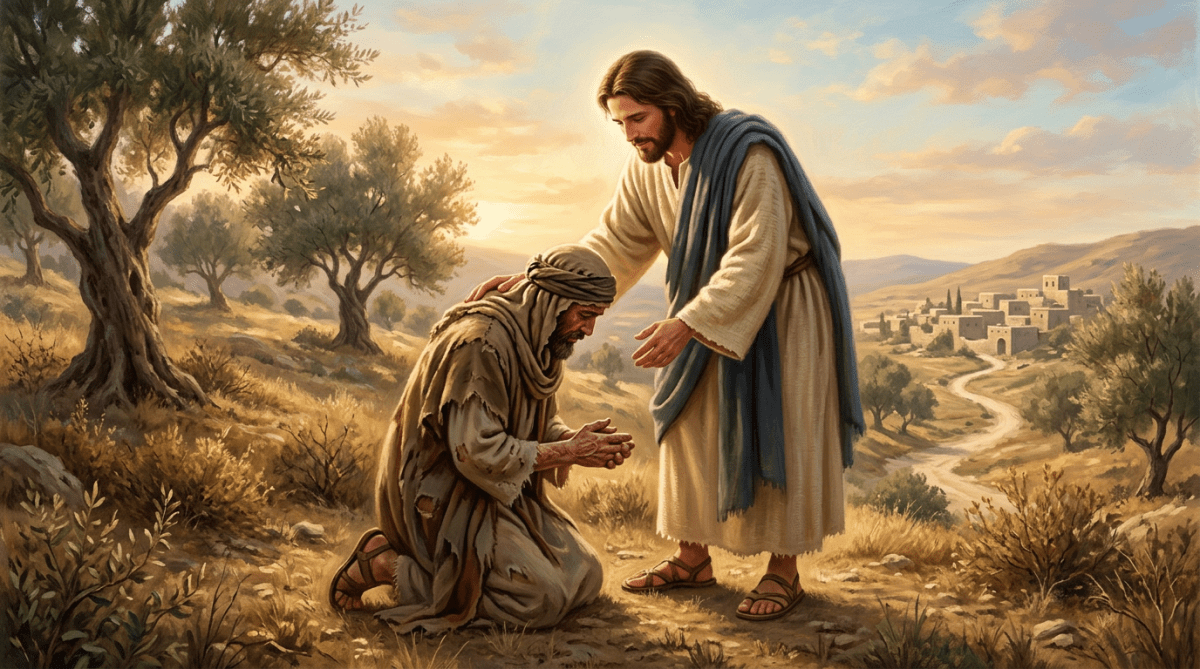
Jesus Heals the Leper

One of the first miracles of Jesus’ ministry is found in Mark 1:40-45, “(40) And there came a leper to him, beseeching him, and kneeling down to him, and saying unto him, If thou wilt, thou canst make me clean.  (41)  And Jesus, moved with compassion, put forth his hand, and touched him, and saith unto him, I will; be thou clean.  (42)  And as soon as he had spoken, immediately the leprosy departed from him, and he was cleansed.  (43)  And he straitly charged him, and forthwith sent him away;  (44)  And saith unto him, See thou say nothing to any man: but go thy way, shew thyself to the priest, and offer for thy cleansing those things which Moses commanded, for a testimony unto them.  (45)  But he went out, and began to publish it much, and to blaze abroad the matter, insomuch that Jesus could no more openly enter into the city, but was without in desert places: and they came to him from every quarter.”

Jesus Heals the Leper[1]

In Leviticus 13 & 14 (the two longest chapters in the book), “leprosy” is treated not just as a medical issue, but also as a spiritual defilement that manifests physically. It teaches us about the nature and consequences of sin.

Leprosy is a symbol of sin:

  • Sin is Deep-Rooted: In Leviticus 13:3 the infection must be “deeper than the skin.”
    • Why? Sin is a condition of the heart, not just outward behavior.
    • Man looks on the outwards, but God on the heart.
  • Sin Spreads and Corrupts: Leprosy spreads across the body, and sin is an infectious spiritual disease that grows like leaven and corrupts a person’s entire life.
  • Sin Numbs, Desensitizes and Disfigures: Leprosy (Hansen’s Disease) numbs the nerves.
    • This is akin to someone who has a “seared conscience” A person’s conscience is seared when they lose their sensitivity and become unfeeling and unaware of their own spiritual decay.
    • Because of the numbness the leper feels no pain until too late, and the result is missing appendages, lesions, open sores, etc.
  • Sin Alienates and Isolates: The requirement for lepers to be “put out of the camp” represents the separation from God and people caused by sin.
    • “Command the children of Israel, that they put out of the camp every leper…” (Num. 5:2).
    • Infected individuals were required to wear torn clothes, keep their hair unkempt, cover their mouths, and shout “Unclean, unclean” to warn others in their vicinity to keep away.

Jesus Heals the Leper

How?

He roots out sin through justification and sanctification.

  1. The New Birth – A New Heart – Justification
    • Ezekiel 36:24-27; Jeremiah 31:33-34; John 3:3-8; Acts 2:38; 1 Cor. 6:9-11
    • New Creature – new nature – new desires
  2. Conviction – the Sword of the Spirit – the Teacher – Sanctification
    • 2 Cor. 7:9-11; Hebrews 4:12; 2 Tim. 3:16-17; Titus 2:11-14; 1 Thess. 4:3-7
    • Conviction – clean conscience – sensitivity
  3. Your Contribution – Mortify (kill) the Deeds of the Body.
    • Romans 8:12
    • Colossians 3:5-10, “(5) So put to death the sinful, earthly things lurking within you. Have nothing to do with sexual immorality, impurity, lust, and evil desires. Don’t be greedy, for a greedy person is an idolater, worshiping the things of this world.  (6)  Because of these sins, the anger of God is coming.  (7)  You used to do these things when your life was still part of this world.  (8)  But now is the time to get rid of anger, rage, malicious behavior, slander, and dirty language.  (9)  Don’t lie to each other, for you have stripped off your old sinful nature and all its wicked deeds.  (10)  Put on your new nature, and be renewed as you learn to know your Creator and become like him.”
  4. Daily Cleansing – Relationsip
    • 1 Jn. 1:9; Ps. 51:10; Lk. 9:23; Pr. 28:13; Ps. 32:5; Jn. 13:10; Ja. 4:8; Ja.5:16
    • Psalms 139:23-24, “(23) Search me, O God, and know my heart: try me, and know my thoughts:  (24)  And see if there be any wicked way in me, and lead me in the way everlasting.”

Conclusion

Jesus healing the leper teaches us that He does not merely cover sin’s symptoms—He reaches into the heart, touches what is unclean, and makes the person completely new.

“Therefore, if any man be in Christ, he is a new creature: old things are passed away; behold, all things are become new” (2 Cor. 5:17).

Jesus restores relationships, reverses isolation, renews our  conscience

All we need to do is receive His touch, mortify daily the sin that tempts us, and walk in the newness of life.

Like the leper who was sent to the priest as a testimony, our transformed lives are meant to point others to Jesus – the Cleanser.

Jesus Heals the Leper – We are all lepers.

The Tailor and the Stained Coat

Imagine a man who has worn a once-fine coat until it is stained, threadbare, and reeking of neglect.

His neighbors avoid him because the coat announces his ruin.

A master tailor sees him, takes the coat, and does three things:

  1. He washes it until the grime is gone
  2. He repairs the torn seams and replaces the lining so the coat will keep its shape
  3. He presses it daily and teaches the man how to care for it so the repairs last.

The tailor’s work is not a one-time cosmetic fix but a complete restoration requiring the owner’s willingness to be helped and to maintain what has been given.

Jesus cleanses, mends, and trains us in our new lifestyle so that the healing endures and becomes a testimony to others.

Jesus Heals the Leper


[1] Italicized parts were done with the help of GOOGLE AI and/or Copilot.
Categories
Consider this...

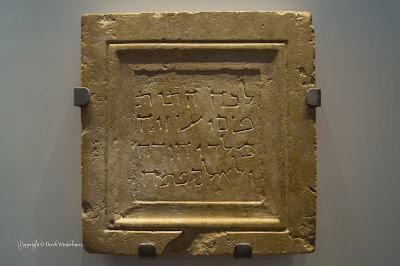
Uzziah’s Epitaph

Inscription:
“Hither were brought
The bones of Uzziah
King of Judah.
Do not open!”

Uzziah, also called Azariah, became king of Judah at the tender age of sixteen (2 Chronicles 26:1) and ruled for 52 years (2 Kings 15:2).

During his reign he made significant contributions to the realm and was successful in many endeavors, but his life ends with a mark upon him that history has not been able to erase – he died a leper.

If we take a look at Uzziah’s leadership style we will discover early influences that molded him into the leader he was, his positive and negative characteristics as a ruler, and the affect his leadership had on his son and grandson.

It would be impossible to reflect on the direction Uzziah took as a leader without first looking to his upbringing. The adage is still as true today as it was when originally penned, “Train up a child in the way he should go: and when he is old, he will not depart from it” (Pr. 22:6).

The closest and most influential people in anyone’s life will usually be their parents. Amaziah was Uzziah’s father and a great influence on his life. The Bible speaks of Amaziah as a man who “did that which was right in the sight of the LORD, yet not like David his father” (2 Kings 14:3).

Another passage records, “he did that which was right in the sight of the LORD, but not with a perfect heart” (2 Chronicles 25). The reason this is written is due to the fact that towards the end of his reign he turned to the idols of the people of Seir and because he decided to “turn away from following the LORD” the LORD decided to destroy him. It was this failure to recognize who was truly responsible for Judah’s victory over the Edomites that caused Amaziah’s downfall. He rejected the prophet of God and did as he wanted by worshipping other gods and hiring soldiers from Israel. His was a sin of pride, disobedience, and a divided heart.

As Uzziah enters the pages of the Scriptures we see him as a king to be admired. In fact, one writer informs us that, according to 2 Chronicles chapter 26, Azariah ruled “with God’s help (verse 7) he became very successful as a builder (verse 9), farmer (verse 10) and a military leader (verse 11). So much so, that his fame spread far and wide.

The Bible issues a statement that gives us an idea of why Uzziah began to fall when it states, “he was marvellously helped, till he was strong. But when he was strong, his heart was lifted up to his destruction: for he transgressed against the LORD his God, and went into the temple of the LORD to burn incense upon the altar of incense” (2 Chronicles 26:15-16).


John L. Kachelman, Jr. offers us an accounting of Uzziah’s characteristics and accomplishments before his downfall:

1. His respect for God’s messenger (2 Chron. 26:5). A key to Uzziah’s success is his desire to seek God. It seems that the influence for this is attributable to a prophet or priest named “Zachariah.” This unknown prophet was able to know, understand, and explain God’s will so the King (and others) would understand and obey. As long as Uzziah was influenced by these forces to follow God’s will, he knew success and happiness. It was a good time for Judah! 2. His role as STATESMAN (2 Chron. 26:6-15). No politician could dream of a better tenure as a chief executive of a nation. Prosperity was enjoyed in all areas of life.a. POLITICALLY Uzziah’s leadership resulted in amazing successes. His armies were victorious (v. 6-8). His projects and programs were successful (v. 9-10).b. MILITARILY Uzziah’s leadership was superb (v. 11-15). He was an amazing military mind – organized, prepared, and inventive. Everyone studied his maneuvers and learned brilliant strategies of warfare.c. PERSONALLY Uzziah’s fame spread throughout then entire known world. He was famous and recognized. His “strength” was envied by other Kings (v. 8b, 15b).

In the midst of all this success we find that Uzziah rebelled against his God when he failed to acknowledge the source of his strength, and in so doing he attempted to presumptuously and proudly take God’s glory by offering incense in the Temple instead of allowing the priests to do their duty. We would do well to steer clear of the sin of presumption and pride becasue the Bible clearly states “that no flesh should glory in His (God’s) presence” (1 Corinthians 1:29).

Uzziah failed to realize that you don’t own God’s glory or favor because it is a gift from Him to you.

Why this change in Uzziah? The qualities that he learned from his father manifested themselves when Uzziah took his eyes off of the LORD and allowed pride to rule him.

Kachelman writes that Uzziah’s rebellion appears when we read the word “until”. Many times it appears that people are doing well and serving God faithfully “until” they forget who the source of their strength is. The irony is that Uzziah’s very name – “my strength is Jehovah” – was not enough to remind him of God’s hand on his life because pride will always take your eyes off of God and onto self.

God cursed Uzziah with leprosy because of his pride. It is significant that we never read of Uzziah repenting for his sin and it is possible to become so wrapped up in self and in our own arrogancy that we, like Uzziah, find that we cannot turn from sin.

One writer, Wilbur Wright, says that “the antidote for pride is humility. Humility is the measure of a leader whom God can use and it should be an ever-growing quality in their life and ministry. God places a very high premium on humility and its close companion of meekness (Matthew 5:5) and lowliness (Matthew 11:29).”

All Uzziah had to do was obey a simple principle, but he did not and consequently he was not healed of his leprosy. “Humble yourselves therefore under the mighty hand of God, that he may exalt you in due time” (1 Peter 5:6).

It is interesting that Jotham, as king of Judah following his father Uzziah, never went to the Temple. He was a mighty man and “he did that which was right in the sight of the LORD, according to all that his father Uzziah did: howbeit he entered not into the temple of the LORD” (2 Chronicles 27:1-2). Perhaps this was due to a fear that he deveolped as a result of what happened to his father. Sometimes people see the Church as a place of wrath and fail to realize that sin is what brings judgment because God loves those who he chastens. In actuality, Uzziah’s judgment was an opportunity for mercy, but he failed to take advantage and passed onto his son a mistrust of God.

Jotham was a man who prepared, set-up, erected, established, and set forth his ways before God, but he allowed the people of Judah to continue in their corruption (idol worship and backsliding). Because of his father’s rebellion and judgment he did not see the house of God as a place of worship, but of wrath and attributed that to God instead of to his father’s self-glory.
As we follow the path of Uzziah’s faithlessness we come to his grandson Ahaz. The Bible informs us that Ahaz was a wicked an unjust king who “did not that which was right in the sight of the LORD” (2 Chronicles 28:1).

Ahaz not only sinned against God at every opportunity but he also sacrificed his children to other gods and “gathered together the vessels of the house of God, and cut in pieces the vessels of the house of God, and shut up the doors of the house of the LORD, and he made him altars in every corner of Jerusalem. And in every several city of Judah he made high places to burn incense unto other gods, and provoked to anger the LORD God of his fathers” (2 Chronicles 28:3, 24-25).

This then is the final end of all those who lift themselves up in pride against the LORD – destruction of self and others.

It mattered not how great Uzziah was or even how many accomplishments are attributed to him because his pride was a catalyst that spawned a family and a nation of rebellious backsliders. All he had to do to remove this possibility was repent, but he did not.

“But when he was strong, his heart was lifted up to his destruction: for he transgressed against the LORD his God, and went into the temple of the LORD to burn incense upon the altar of incense” (2 Chronicles 26:16).

Who do you attribute your strength to today?


Originally posted on 20 February 2007 on http://thepillarandgroundoftruth.blogspot.com/2007/02/uzziahs-epitaph.html