1 Timothy 3:15, "...that thou mayest know how thou oughtest to behave thyself in the house of God, which is the church of the living God, the pillar and ground of the truth."
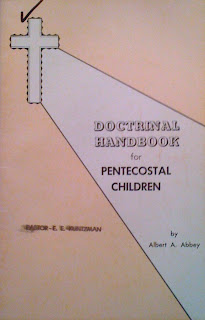
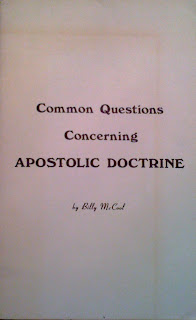
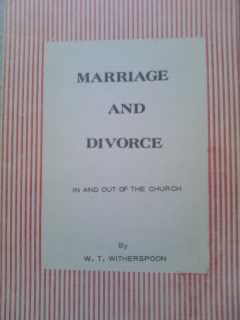
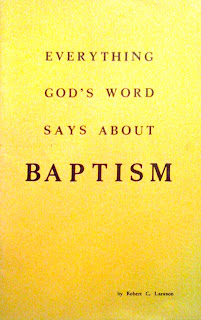
Here are some more pictures of pamphlets written by Oneness Pentecostal / Apostolic writers, which I took at my Grandmother’s home in South Bend, IN several years ago.
I read recently that if you want to change your generation you need to preach, but if you want to change future generations then write. I’m thankful these authors wrote these pamphlets.
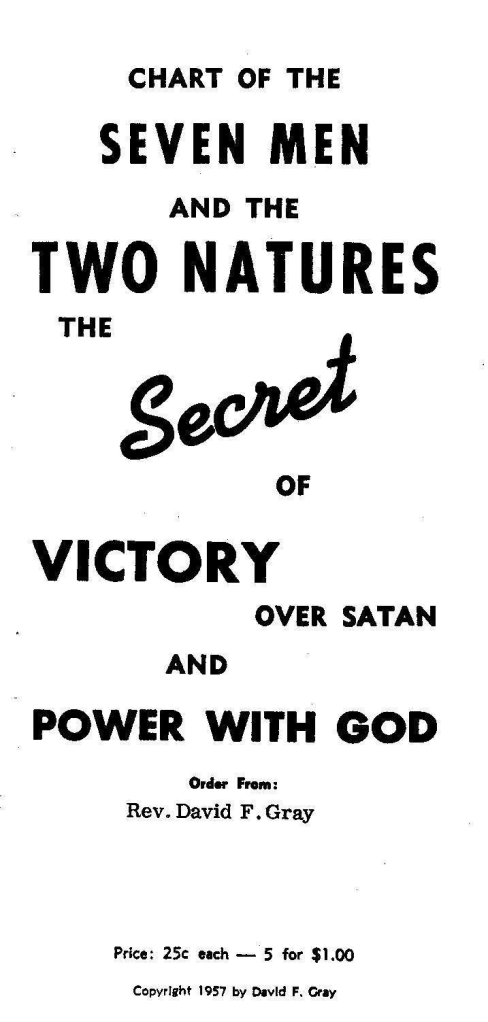
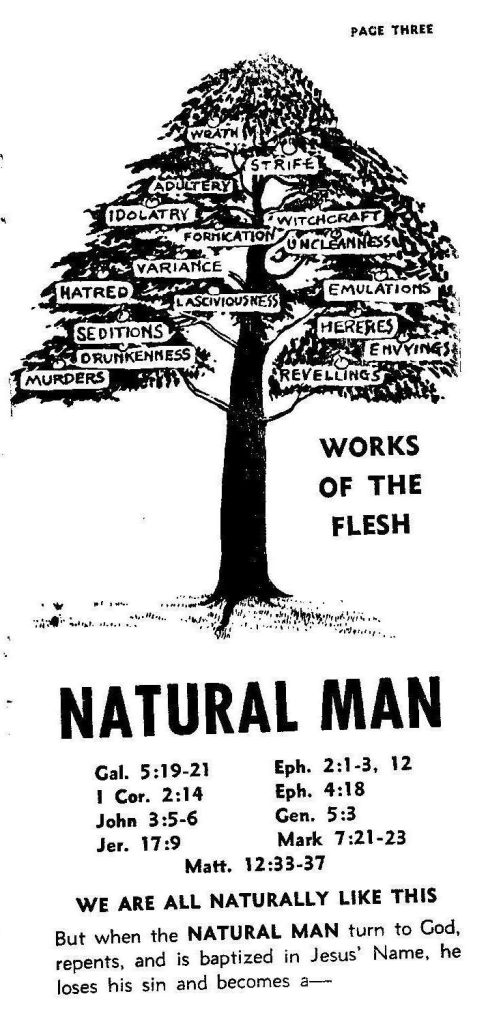
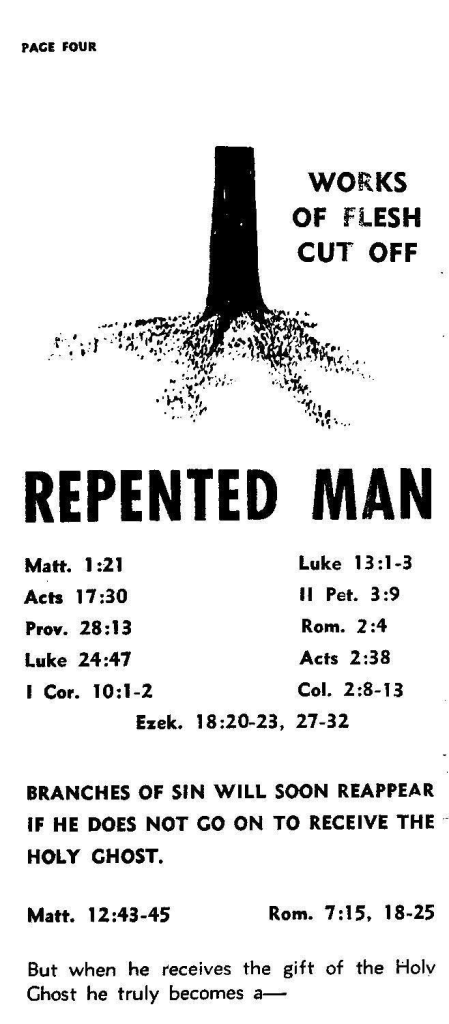
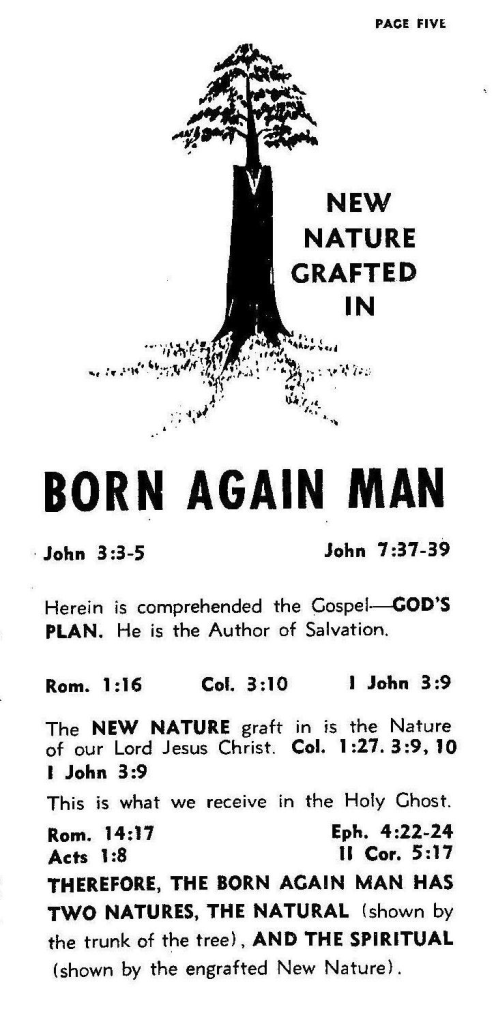
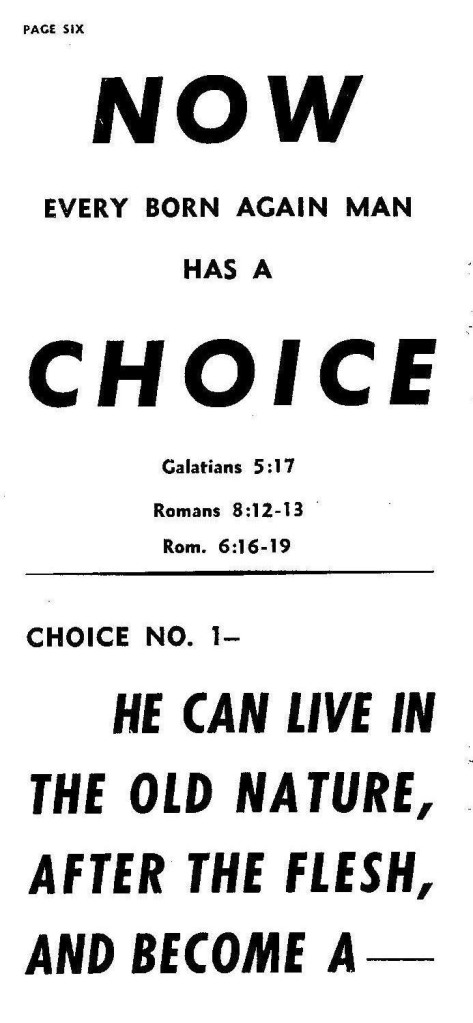
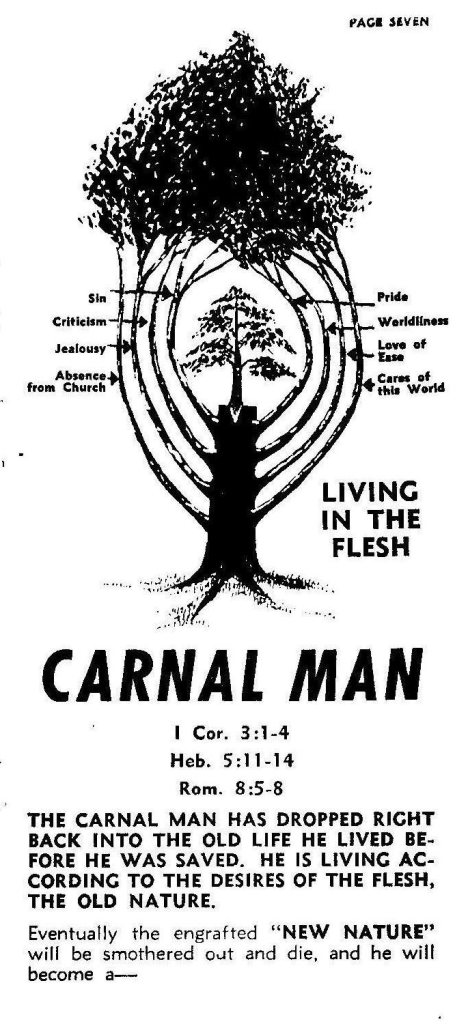
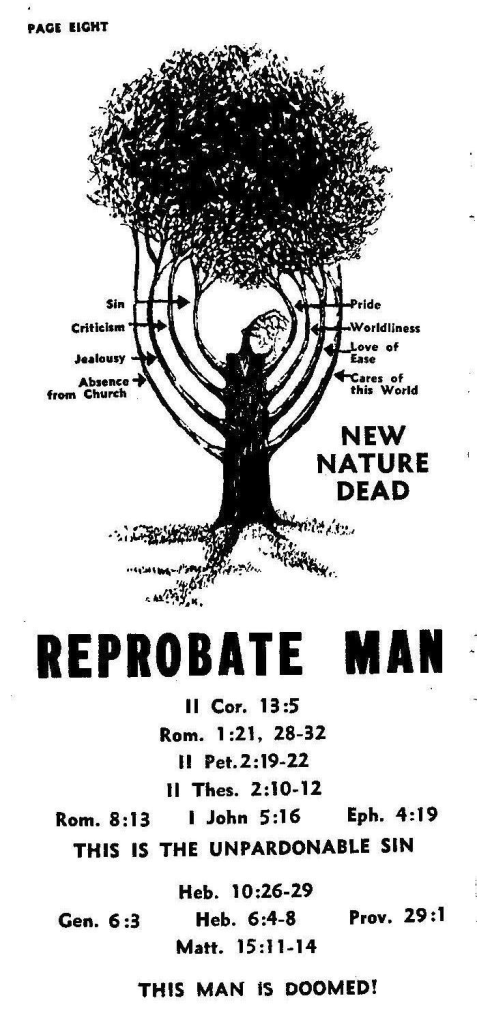
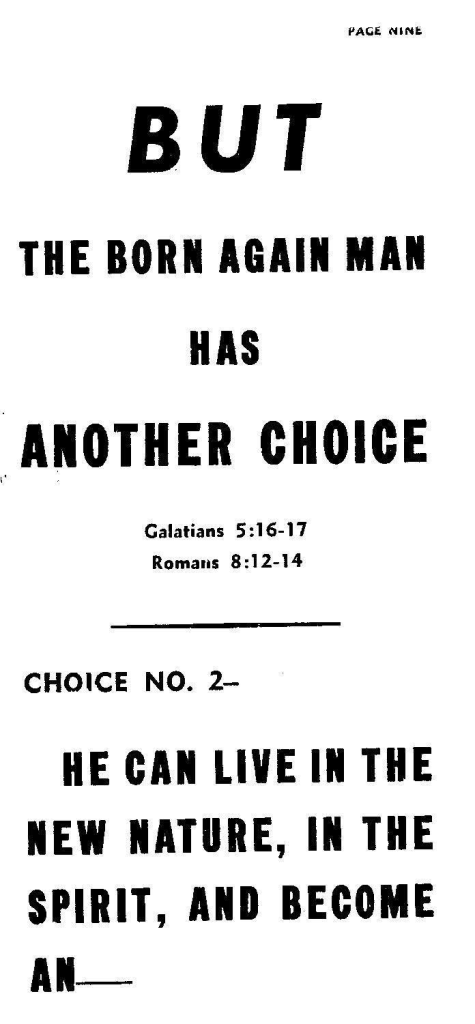
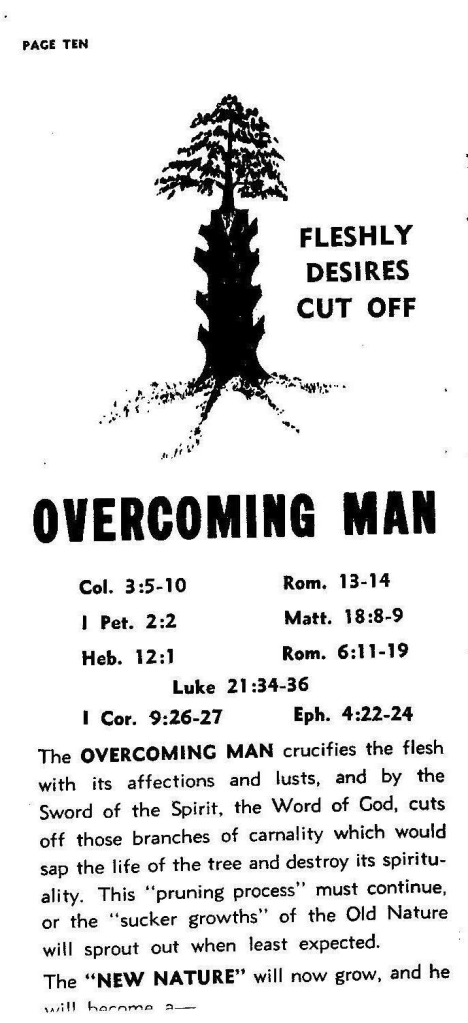
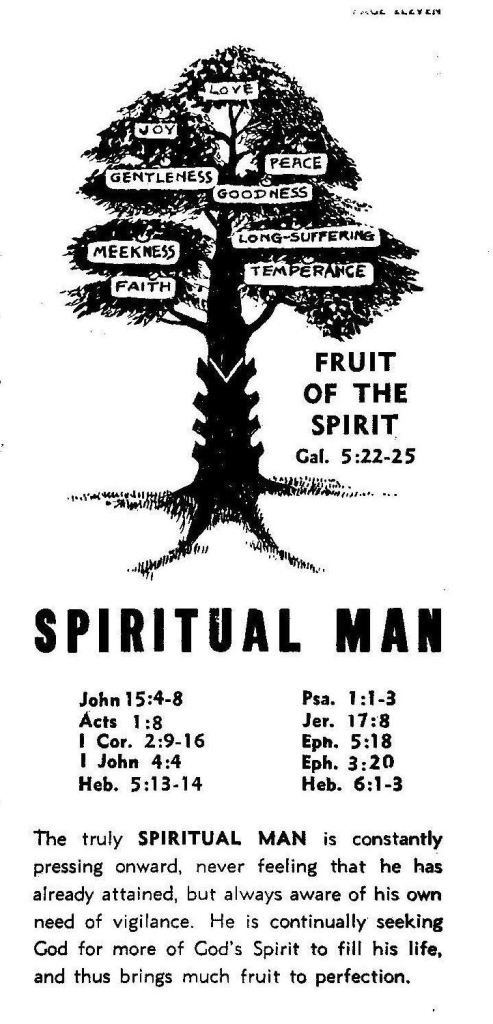
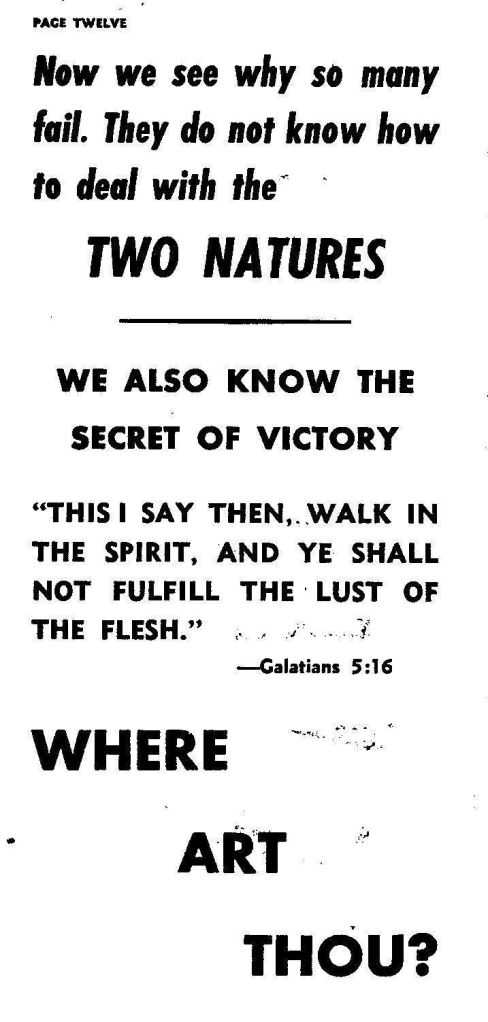
Here is an excellent pamphlet written by the late David F. Gray, entitled “Chart of the Seven Men and the Two Natures the Secret of Victory Over satan and Power with God,” which he wrote and published in 1957.
Read and enjoy!
Title: Chart of the Seven Men and the Two Natures
Author: David F. Gray
Publisher: David F. Gray
Year: 1957
Description: The secret of victory over satan and power with God.
I spent some time in South Bend, IN at my grandmother’s home (Helen Virginia Kuntzman) back in March 2009.
As is my custom when I’m there, I spent a considerable amount of time in my grandfather’s library looking, reading, and studying his collection.
Edwin Eugene Kuntzman
My grandfather (Pastor E. E. Kuntzman) was an Apostolic preacher and went to his eternal reward many years ago. I treasure the library he left behind and the notes he jotted in books, pamphlets, Bibles, and sermons. They are always a blessing to me and their truths are ageless.
My grandparents have several books and pamphlets written by, or about, some of our early pioneers and proponents of the Oneness Pentecostal message. While I didn’t take pictures of them all, the ones below I read this weekend.
What evidence is there that the Bible is in fact God’s Word?[1]
By: Adrian Rogers
I want to give you five reasons to affirm the Bible is the Word of God.
First, I believe the Bible is the Word of God because of its scientific accuracy. The Truth of the Word of God tells us that God “hangeth the earth upon nothing” (Job 26:7). How did Job know that the earth hung in space before the age of modern astronomy and space travel? The Holy Spirit told him. The scientists of Isaiah’s day didn’t know the topography of the earth, but Isaiah said, “It is [God] that sitteth upon the circle of the earth” (Isaiah 40:22). The word for “circle” here means a globe or sphere. How did Isaiah know that God say upon the circle of the earth? By divine inspiration.
Secondly, the Bible is affirmed through historical accuracy. Do you remember the story about the handwriting on the wall that is found in the fifth chapter of Daniel? Belshazzar hosted a feast with a thousand of his lords and ladies. Suddenly, a gruesome hand appeared out of nowhere and began to write on a wall. The king was disturbed and asked for someone to interpret the writing. Daniel was found and gave the interpretation. After the interpretation, “Then commanded Belshazzar, and they clothed Daniel with scarlet, and put a chain of gold about his neck, and made a proclamation concerning him, that he should be the third ruler in the kingdom.” (Daniel 5:29). Basing their opinion on Babylonian records, the historians claim this never happened. According to the records, the last king of Babylon was not Belshazzar, but a man named Nabonidas. And so, they said, the Bible is in error. There wasn’t a record of a king named Belshazzar. Well, the spades of archeologists continued to do their work. In 1853, an inscription was found on a cornerstone of a temple built by Nabonidas, to the god Ur, which read: “May I, Nabonidas, king of Babylon, not sin against thee. And may reverence for thee dwell in the heart of Belshazzar, my first-born favorite son.” From other inscriptions, it was learned that Belshazzar and Nabonidas were co-regents. Nabonidas traveled while Belshazzar stayed home to run the kingdom. Now that we know that Belshazzar and Nabonidas were co-regents, it makes sense that Belshazzar would say that Daniel would be the third ruler. What a marvelous nugget of truth tucked away in the Word of God!
Third, from Genesis to Revelation, the Bible reads as one book. And there is incredible unity to the Bible. The Bible is one book, and yet it is made up of 66 books, was written by at least 40 different authors over a period of about 1600 years, in 13 different countries and on three different continents. It was written in at least three different languages by people in all professions. The Bible forms one beautiful temple of truth that does not contradict itself theologically, morally, ethically, doctrinally, scientifically, historically, or in any other way.
Fourth, did you know the Bible is the only book in the world that has accurate prophecy?When you read the prophecies of the Bible, you simply have to stand back in awe. There are over 300 precise prophecies that deal with the Lord Jesus Christ in the Old Testament that are fulfilled in the New Testament. To say that these are fulfilled by chance is an astronomical impossibility.
Finally, the Bible is not a book of the month, but the Book of the ages.First Peter 1:25 says: “But the word of the Lord endureth for ever. And this is the Word which by the gospel is preached unto you.” No book has ever had as much opposition as the Bible. Men have laughed at it, scorned it, burned it, ridiculed it, and made laws against it. But the Word of God has survived. And it is applicable today as much as it was yesterday and will be tomorrow.
It’s so majestically deep that scholars could swim and never touch the bottom. Yet so wonderfully shallow that a little child could come and get a drink of water without fear of drowning. That is God’s precious, holy Word. The Word of God. Know it. Believe it. It is True.
“A gift, to be a gift, has to be accepted. Otherwise it lies like a burden between people.” –Robert Fisher, The Knight In Rusty Armor
I think that we are too casual in explaining the present of the Holy Ghost. Since it is in fact the Spirit of Christ in us, it is no wonder that He would be grieved by those who would not want Him in them. I think of those in the nominal church world who have the same access to the Holy Ghost as all of us in this age of grace and Holy Ghost outpouring, but who merely put it on a shelf and never unwrap it. The gift then lies unwrapped, unaccepted, and a burden.
My first date occurred at a banquet on February 14th, when I was twelve years old. I gave the young lady a present that night, which she accepted. However, later that evening, as she was preparing to go home, I misunderstood something she said. She wanted to go get her present, but I thought that she was saying something else. Consequently, she thought that I was refusing to let her keep the gift. To this day I think she still has little time for me and that event is a burden between two individuals.
LOL!! What a catastrophe!?!?
God is not like that. He not only gives a gift, but He never takes it back and He always knows exactly what we communicate – even when we don’t know how or what to say.
My grandfather began his journey towards God in the late 1940s. He had such an experience in repentance that he received the joy that the Samaritans had in Acts 8, but he had not received the Holy Ghost. His wife then met some Pentecostals and received the Holy Spirit. Grandpa would get upset with her at night because she spoke in tongues before going to bed at night and insisted that he needed more than what he had. It lay as a burden between them. Finally, Grandpa prayed to God and said that he knew he had all that God had for him, but to make his wife happy, would God let him speak in tongues. Instantly, the presence of God that he’d felt since his repentance left him. This was when he knew that God had more for him – it lay as a burden between him and God. He then cried out in repentance for His pride and God filled him with the Holy Ghost speaking in tongues.
Salvation is a gift that unless received in totality will be forfeit no matter who we are. Paul wrote about receiving the abundance of grace and the gift of righteousness, which is only accessible through Jesus Christ, who is our portion and free gift through grace (Ro. 5:21). Refusal of this gift, in this particular text, results in the refusal of eternal life.
Paul also wrote of the gift he was given charge of by the churches of Macedonia, who gave it to bless the Corinthian church (2 Cor. 8). I imagine that if this gift had been refused that there would have been ought among these two groups.
Unrequited love is often mentioned in literature and even God Himself is mentioned by some as a jilted lover covering His eyes in grief as His Jewish bride rejects Him and He then turns to the Gentiles for succor. I only know that He wept at their obtuseness and they became a people who had eyes but did not see. This rejection of Jesus still lies as a burden between God and the nation of Israel as a whole, but, praise God, Israel did not stumble to fall. I believe that the burden will be lifted when they look on Him whom they pierced and acknowledge Him as Messiah.
We call it the gift of the Holy Ghost and it is, by one man’s estimation, being received by 35,000 people a day throughout the world. Why wouldn’t people want to receive this phenomenon that Christ has paid for with His blood and made available to all people?
I’m reminded of the Andre Crouch song “Take Me Back” (1975). So often in my life it’s been the older songs that I grew up hearing and singing, which resonate deep in my spirit. Here are the words that still speak to me:
Take me back, Take me back, dear Lord, To the place, Where I first received You. Take me back, Take me back, dear Lord, Where I first believed.
I feel that I’m so far from You Lord, But still I hear You calling me. Those simple things, That I once knew, The memories are drawing me.
I must confess, Lord, I’ve been blessed, But yet, my soul’s not satisfied. Renew my faith, Restore my joy, Then dry my weeping eyes.
I tried so hard To make it all alone I need Your help Just to make it home.
Zion Tabernacle Kokomo, IN
Today, and every day, we need to renew our relationship with God. He is looking for an authenticity from us based on a continuing renewal of the fervor we first had at our initial conversion. The simplicity of our faith and our humility combined with the simplicity of the Gospel resulted in an authentic conversion.
The words “renew my faith, renew my joy, then dry my weeping eyes” is a call get back to the place where we first gave our will to God.
What is it about us that having first come to Jesus with empty hands and totally dependent upon him we now, after being “in the Church” for some time, think we can somehow do it all on our own?
I think that there are many people, especially in their 20s and 30s, that received an initial conversion experience at a young age (6-10), but did not really get converted until later, when they were more mature. This may be why we have trouble as young adults. We “got” the Holy Ghost at a young age, but the Holy Ghost did not “get” get us until later.
It is amazing to me to witness the blessing of God on us and yet we are not satisfied in our relationship with Him because of our own self-sufficiency, pride, and vain living. It is a crutch – a trap of the enemy and the flesh to alienate us from intimacy with Jesus Christ, not a “Jesus is my boyfriend” type of intimacy that we are constantly barraged with in this self-absorbed culture we live in, but a closeness that comes from a genuine relationship with our Savior – a relationship that is deepened every day in the good and the bad that life throws at us.
Paul wrote of a desire to know our Lord Jesus Christ in every facet of life in order that he might one day be resurrected from the dead: “I want to know Christ and experience the mighty power that raised him from the dead. I want to suffer with him, sharing in his death, so that one way or another I will experience the resurrection from the dead!” (Philippians 3:10, NLT).
C. S. Lewis addressed the purpose of suffering in his book The Problem of Pain in this way:
My own experience is something like this. I am progressing along the path of life in an ordinary contentedly fallen and godless condition, absorbed in a merry meeting with my friends for the morrow or a bit of work that tickles my vanity to-day, a holiday or a new book, when suddenly a stab of abdominal pain that threatens serious disease, or a headline in the newspapers that threatens us all with destruction, sends this whole pack of cards tumbling down.
At first I am overwhelmed, and all my little happinesses look like broken toys. Then, slowly and reluctantly, bit by bit, I try to bring myself into the frame of mind that I should be in at all times. I remind myself that all these toys were never intended to possess my heart, that my true good is in another world and my only real treasure is Christ. And perhaps, by God’s grace, I succeed, and for a day or two become a creature consciously dependent on God and drawing its strength from the right sources. But the moment the threat is withdrawn, my whole nature leaps back to the toys: I am even anxious, God forgive me, to banish from my mind the only thing that supported me under the threat because it is now associated with the misery of those few days. Thus the terrible necessity of tribulation is only too clear. God has had me for but forty-eight hours and then only by dint of taking everything else away from me.
Let Him but sheathe that sword for a moment and I behave like a puppy when the hated bath is over – I shake myself as dry as I can and race off to reacquire my comfortable dirtiness, if not in the nearest manure heap, at least in the nearest flower bed. And that is why tribulations cannot cease until God either sees us remade or sees that our remaking is now hopeless.
Our problem is that we become desensitized to those “Take Me Back” moments and even brush them aside when God calls us to some personal time with Him. Jesus wants us to give ourselves to Him and surrender our will to His will. One way we can do that is to take the time to go back to those simpler times when all we had was our faith in Him and all we wanted was His presence in our lives guiding, keeping, and sustaining us.
Gal. 6:7-10 7 Be not deceived; God is not mocked: for whatsoever a man soweth, that shall he also reap. 8 For he that soweth to his flesh shall of the flesh reap corruption; but he that soweth to the Spirit shall of the Spirit reap life everlasting. 9 And let us not be weary in well doing: for in due season we shall reap, if we faint not. 10 As we have therefore opportunity, let us do good unto all men, especially unto them who are of the household of faith.
The Law of Harvest: Gal. 6:7, “…Whatsoever a man soweth, that shall he also reap.”
Consider your seed: What are you sowing, or planting in your life? What habits are you developing? What behavior do you manifest outwardly to others on a day-to-day basis? What are the secret thoughts that you consider in the privacy of your mind? What types of music, television programming, movies, and Internet sites do you allow to enter your spirit being through your sense gates? What kind of conversations do you entertain?
Whatever answers you may have to these questions, one thing is certain; you will reap what you’ve sown: Sow love and you’ll receive love Sow hate and you’ll receive the same Sow kindness and you will receive it in turn Sow cynicism and others will mistrust you as well
The Apostle is clear on this one issue: You get what you sow. You can’t plant an orange tree and expect apples. You can’t alter the inevitable law of harvest – – like begets like.
Romans 6 1 What shall we say then? Shall we continue in sin, that grace may abound? 2 God forbid. How shall we, that are dead to sin, live any longer therein? 3 Know ye not, that so many of us as were baptized into Jesus Christ were baptized into his death? 4 Therefore we are buried with him by baptism into death: that like as Christ was raised up from the dead by the glory of the Father, even so we also should walk in newness of life. 5 For if we have been planted together in the likeness of his death, we shall be also in the likeness of his resurrection: 6 Knowing this, that our old man is crucified with him, that the body of sin might be destroyed, that henceforth we should not serve sin. 7 For he that is dead is freed from sin. 8 Now if we be dead with Christ, we believe that we shall also live with him: 9 Knowing that Christ being raised from the dead dieth no more; death hath no more dominion over him. 10 For in that he died, he died unto sin once: but in that he liveth, he liveth unto God. 11 Likewise reckon ye also yourselves to be dead indeed unto sin, but alive unto God through Jesus Christ our Lord. 12 Let not sin therefore reign in your mortal body, that ye should obey it in the lusts thereof. 13 Neither yield ye your members as instruments of unrighteousness unto sin: but yield yourselves unto God, as those that are alive from the dead, and your members as instruments of righteousness unto God. 14 For sin shall not have dominion over you: for ye are not under the law, but under grace. 15 What then? shall we sin, because we are not under the law, but under grace? God forbid. 16 Know ye not, that to whom ye yield yourselves servants to obey, his servants ye are to whom ye obey; whether of sin unto death, or of obedience unto righteousness? 17 But God be thanked, that ye were the servants of sin, but ye have obeyed from the heart that form of doctrine which was delivered you. 18 Being then made free from sin, ye became the servants of righteousness. 19 I speak after the manner of men because of the infirmity of your flesh: for as ye have yielded your members servants to uncleanness and to iniquity unto iniquity; even so now yield your members servants to righteousness unto holiness. 20 For when ye were the servants of sin, ye were free from righteousness. 21 What fruit had ye then in those things whereof ye are now ashamed? for the end of those things is death. 22 But now being made free from sin, and become servants to God, ye have your fruit unto holiness, and the end everlasting life. 23 For the wages of sin is death; but the gift of God is eternal life through Jesus Christ our Lord.
The inevitable law of harvest declares that you will end up in one of two places. You Choose: Heaven or Hell
The choice of Hell, which designates you as a servant of sin, will reveal certain undeniable indicators in your life (i.e. the works of the flesh: adultery, fornication, uncleanness, lasciviousness, Idolatry, witchcraft, hatred, variance, emulations, wrath, strife, seditions, heresies, envyings, murders, drunkenness, revellings, and such like [Gal. 5:19-21]). When you yield yourself to these you are making a decision to do so.
The choice of Heaven, designating you as a servant of righteousness, will be seen by the presence of the Fruit of the Spirit: love, joy, peace, longsuffering, gentleness, goodness, faith, meekness, temperance (Gal. 5:22-23). Yielding to the Holy Ghost is also a conscious decision that you make.
The Law of Distribution: Gal. 6:10, “…let us do good unto all men…”
1 Cor. 7:1-24 1 Now concerning the things whereof ye wrote unto me: It is good for a man not to touch a woman. 2 Nevertheless, to avoid fornication, let every man have his own wife, and let every woman have her own husband. 3 Let the husband render unto the wife due benevolence: and likewise also the wife unto the husband. 4 The wife hath not power of her own body, but the husband: and likewise also the husband hath not power of his own body, but the wife. 5 Defraud ye not one the other, except it be with consent for a time, that ye may give yourselves to fasting and prayer; and come together again, that Satan tempt you not for your incontinency. 6 But I speak this by permission, and not of commandment. 7 For I would that all men were even as I myself. But every man hath his proper gift of God, one after this manner, and another after that. 8 I say therefore to the unmarried and widows, It is good for them if they abide even as I. 9 But if they cannot contain, let them marry: for it is better to marry than to burn. 10 And unto the married I command, yet not I, but the Lord, Let not the wife depart from her husband: 11 But and if she depart, let her remain unmarried, or be reconciled to her husband: and let not the husband put away his wife. 12 But to the rest speak I, not the Lord: If any brother hath a wife that believeth not, and she be pleased to dwell with him, let him not put her away. 13 And the woman which hath an husband that believeth not, and if he be pleased to dwell with her, let her not leave him. 14 For the unbelieving husband is sanctified by the wife, and the unbelieving wife is sanctified by the husband: else were your children unclean; but now are they holy. 15 But if the unbelieving depart, let him depart. A brother or a sister is not under bondage in such cases: but God hath called us to peace. 16 For what knowest thou, O wife, whether thou shalt save thy husband? or how knowest thou, O man, whether thou shalt save thy wife? 17 But as God hath distributed to every man, as the Lord hath called every one, so let him walk. And so ordain I in all churches. 18 Is any man called being circumcised? let him not become uncircumcised. Is any called in uncircumcision? let him not be circumcised. 19 Circumcision is nothing, and uncircumcision is nothing, but the keeping of the commandments of God. 20 Let every man abide in the same calling wherein he was called. 21 Art thou called being a servant? care not for it: but if thou mayest be made free, use it rather. 22 For he that is called in the Lord, being a servant, is the Lord’s freeman: likewise also he that is called, being free, is Christ’s servant. 23 Ye are bought with a price; be not ye the servants of men. 24 Brethren, let every man, wherein he is called, therein abide with God.
According to my former Pastor, Michael Seebaugh, of Parkersburg, WV, the beauty of this passage on marriage is that it reveals to us a beautiful present that is best described as the Gift of Perspective:
1. Your experiences prior to conversion and the subsequent ones afterwards give you a particular point-of-view that is unique to you.
2. Paul’s writing concerning marriage gives us insight into the fact that married couples, single individuals, divorced people, widows, and widowers all have various experiences that can benefit others.
3. Couples married for 50 years have wisdom in their perspective that the young married couples would be wise to heed.
4. The Church body is full of people who have many types of experiences and these are necessary for the distribution of the Gospel to the whole world.
What has God given to you that has been vitally important in your continual walk with Him?
Something He gave to you that you couldn’t have made it without?
These examples of God’s gift to you are the very things that He desires you to distribute to others. We need to learn how to distribute to others what God has produced in our lives.
Heed these words of wisdom: “The mercy you show is the mercy you’ll know.” – LouAnne Kuntzman
Rev. Seebaugh also suggests the following as Principles of Distribution:
1. You can’t distribute (give, divide, disperse, administer, bestow) what you don’t have. Look at the seven sons of Sceva (Acts 19:13-20). God will bring exponential growth to what you do have if you give it to Him (John 6:1-14)
2. You don’t have to produce the product, but you do need to be able to access it for yourself and for distribution. God is Love. You don’t produce that, but you do possess it, and can access it. You need seed if you intend to sow.
3. You need to be located where people can access your product easily. Are you approachable? Don’t hide behind your “shyness.”
4. You should be focused on how to get the product to the client. Are you “soul conscious?” Do you look for opportunities to distribute?
5. You need to have lots of room for your product. Your product is the testimony of God’s goodness in your life – – It is like seed to the sower. Sow seed by distributing it anywhere and everywhere you possibly can.
The diversity of gifts and offices were distributed for the purpose of Christian maturity in the Body of Christ – – the Church.
Eph. 4:11-16 11 And he gave some, apostles; and some, prophets; and some, evangelists; and some, pastors and teachers; 12 For the perfecting of the saints, for the work of the ministry, for the edifying of the body of Christ: 13 Till we all come in the unity of the faith, and of the knowledge of the Son of God, unto a perfect man, unto the measure of the stature of the fulness of Christ: 14 That we henceforth be no more children, tossed to and fro, and carried about with every wind of doctrine, by the sleight of men, and cunning craftiness, whereby they lie in wait to deceive; 15 But speaking the truth in love, may grow up into him in all things, which is the head, even Christ: 16 From whom the whole body fitly joined together and compacted by that which every joint supplieth, according to the effectual working in the measure of every part, maketh increase of the body unto the edifying of itself in love.
The law of harvest and the law of distribution are cyclic — they are similar to the law of cause and effect (causality).
Eph. 6:8, “Knowing that whatsoever good thing any man doeth, the same shall he receive of the Lord, whether he be bond or free.”
Luke 6:35-36 35 But love ye your enemies, and do good, and lend, hoping for nothing again; and your reward shall be great, and ye shall be the children of the Highest: for he is kind unto the unthankful and to the evil. 36 Be ye therefore merciful, as your Father also is merciful. 37 Judge not, and ye shall not be judged: condemn not, and ye shall not be condemned: forgive, and ye shall be forgiven: 38 Give, and it shall be given unto you; good measure, pressed down, and shaken together, and running over, shall men give into your bosom. For with the same measure that ye mete withal it shall be measured to you again.
This passage (verse 35) is the ultimate test for some: “…love ye your enemies…do good, and lend, hoping for nothing…”
You cannot hold back from sowing into others for any reason.
Verse 38 is significant because it contains the promise of harvest for those who distribute what they have to others, and your level of harvest is directly linked to your level of distribution.
Don’t distribute as rich people do, but as the certain poor widow: “For all they did cast in of their abundance; but she of her want did cast in all that she had, even all her living” (Mark 12:44).
Jesus Christ has distributed to you the Holy Ghost, which is Christ in you, and you are responsible to distribute the Gospel of Jesus Christ to others, in order that they can experience the same phenomenon.
This is why you are commanded by Jesus to “go ye into all the world, and preach the gospel to every creature.” It is here where we plainly see the law of distribution working in tandem with the law of harvest: “He that believeth and is baptized shall be saved; but he that believeth not shall be damned. And these signs shall follow them that believe; In my name shall they cast out devils; they shall speak with new tongues; They shall take up serpents; and if they drink any deadly thing, it shall not hurt them; they shall lay hands on the sick, and they shall recover” (Mark 16:15-18).
You are not told that every one will believe and obey the Gospel, but you are told that those who do receive what you distribute will receive an unprecedented harvest.
Refuse the excuse, “I have nothing to give.” Distribute what God has already given freely to you and you will witness a harvest. It is inevitable.
The following essay is from a wonderful and revelatory book written by Bishop Garfield Thomas (G.T.) Haywood, who was the Presiding Bishop of the Pentecostal Assemblies of the World from 1925-1931. Haywood was a pioneer of truth and an influential leader of the Oneness Pentecostal movement in the early years of its restoration in North America. I thank God for men of his high caliber.
Man is a threefold creature, consisting of Spirit, soul, and body. All that is visible is the body. Man is the masterpiece of God’s workmanship, and is “wonderfully and fearfully” made. Nothing like him has ever been brought into being.
The body was formed from the dust of the ground. God breathed into his nostrils the breath (spirit) of life, and he became a living soul. The union of the Spirit and the body apparently produced the soul. (Gen 2:7.)
The soul is never separated from the body. It is the seat of affections. It is the subconscious realm of human activity. On it is impressed the desires, or affections gathered by the spirit through the mental realm, and afterwards carried into actions by the body. The soul is to the body what the records are to the phonograph. (See Rom. 1:20.) Whatever is imprinted on the soul will be acted out unconsciously by the body.
When the spirit of man begins to reach out after evil things, evil impressions are stamped upon the soul, thus resulting in evil deeds, wicked works and practices. The Psalmist says man is “estranged from the womb; they go astray as soon as they are born, speaking lies.” Psa. 58:3. The soul is often spoken of as the “heart”. (Gen. 6:5; Psa. 51:10; 84:2.)
The preaching of the gospel stirs one’s spirit to seek after righteousness. Though the spirit may be inclined towards righteousness, yet it cannot do the things they desire to do on the account of the soul being, as it were, filled with evil engravings of past affections. Hence there is a struggle between the spirit and the body, because the body is inclined to fulfill deeds recorded on the soul, while the spirit endeavors to perform the works of righteousness. (Rom. 7:9-24.) This is genuine conviction unto godly sorrow, working repentance unto salvation.
There is nothing that can remove those evil records engraved upon the soul, or heart, but faith in the blood of Jesus, the Bishop of our souls. The true cry of a penitent spirit is, “0 wretched man that I am! who shall deliver me from the body of this death?” “Create in me a clean heart, 0 God; and renew a right spirit within me!” “What must I do to be saved?” When a soul reaches that state he should be taught full faith and obedience in the command of God, “Repent and be baptized in the name of Jesus Christ for the remission of sins, and ye shall receive the gift of the Holy Spirit,” and God will confirm His word.
When the soul is cleansed the Holy Spirit comes in to help the spirit to place new records on the soul, that the body might perform the will of God, walking in the newness of life. Through the Holy Spirit He will “put My laws in their minds (spirit), and write them upon their hearts” (soul). See John 14:26; 16:13; Heb. 8:10. The mind is the realm of the spirit’s activity, while the heart is the seat of the soul’s affections. Thus by having new records on the soul it becomes as easy for a man to walk and live righteous as it was for him to live wickedly in his former life. Many are cleansed and filled with the Spirit, but fail to get God’s truth hidden, or engraved in their hearts. Psa. 119:11; Hos. 4:6. They need the TRUTH, and not tradition! John 8:32; 17:17.
The modern purchasing plan beautifully illustrates the purpose of spirit, soul, and body, and their final disposition. Whenever an article is purchased the salesman writes out the price, date, and description of the article on two bills at one writing,—an original and a duplicate bill. When the goods are delivered the duplicate goes with the article purchased, while the original is signed and returned to the Company that gave it. Should any question arise over the goods they are returned with the duplicate, which is immediately compared with the original, and judgment is rendered according to the records of the two bills. Thus it is with the spirit, soul and body.
The body is the article of purchase. The spirit and the soul are the two bills,—original and duplicate, respectively. The records of bodily action originate with the spirit, and are duplicated on the soul. When the body is delivered up to death and the grave, the deeds of the body are still imprinted on the soul. The soul and body enter the grave together. (Job 33:18, 22, 28, 30; Psa. 16:10, and Acts 2:27, 31. Psa. 49:14, 15.) But the spirit returns to the God that gave it. (Ecc. 3:21; 12:7; Lu. 23:14, and Acts 2:31; Acts 7:59, 60.) The dead know not anything that is transpiring in this life after their departure, but they do know what is transpiring in the realm wherein they are confined. The spirit of the wicked is tormented by remorse, being conscious of his future destiny. His soul is harassed while sleeping, like a man with wicked, horrible, tormenting dreams, but unable to awake. And when he awakes on the morning of the second resurrection (Rev. 20:10-15), he will awake expecting relief, but will find that his punishment has in reality just begun. (See Luke 16:22-31.)
As for the righteous their spirit departs to be with Christ in Paradise (Phil. 1:23), while the soul is at rest sweetly sleeping in Christ like “one who has folded the drapery of his couch about him and laid down to pleasant dreams.” And in the resurrection morning he “shall be satisfied when he awakes with His likeness.” His spirit and soul will be united in “a glorious body” and shall enter into that realm of life eternal, where there shall be no death, no night, no sleep, no sorrow to break in on the feast of unending joy in the presence of the Lord. (See Psa. 17:15; Isa. 26:19; Dan. 12:1-3; 1 Cor. 15:49-55; 1 Thes. 4:13-17.)
[1] Haywood, G.T. (n.d.). The Finest of the Wheat. “God’s Masterpiece.” Christ Temple Book Store:Indianapolis, IN. Ch. IV. P. 12-15.
Matthew 5:21-22, “Ye have heard that it was said by them of old time, Thou shalt not kill; and whosoever shall kill shall be in danger of the judgment: But I say unto you, That whosoever is angry with his brother without a cause shall be in danger of the judgment: and whosoever shall say to his brother, Raca, shall be in danger of the council: but whosoever shall say, Thou fool, shall be in danger of hell fire.”
Raca comes from an old Chaldean word meaning “O empty one, that is, thou worthless (as a term of utter vilification).”[1]
In a time of prayer, I heard the Voice of God speaking to me these words:
Raca. I said, “Don’t call that word on anyone’s life. My children are not Raca. My children are not cast away. My children are not forgotten just because they are not present. Pursue the absent as you sow for new.”
I believe that we are being reminded and called to once again go to the loved ones of God, and the Church, who’ve fallen and restore them.
As we plant seed hoping for a new harvest of souls it is important that we not forget those among us who are weaker, or have been injured. Just as we put up stakes in a tomato patch to strengthen the plant and keep it from falling, or breaking, we also must remember that what may appear to be a falling member is really a fellow planting of the Lord that we who are spiritual need to edify and reinforce.
The safest place in town should be with the saints of Jesus Christ, and the safest place is with the saints of Jesus Christ. His love compels us to not only fulfill the great commission, but to also make sure that everyone in the body of Christ makes the trip.
We don’t cutoff a leg because it is broken, or pluck out an eye because it has an irritant in it, and we don’t marginalize people who may be weak among us. In fact, it is in our weakness, the weakness of the body, that our strength is realized for “we then that are strong ought to bear the infirmities of the weak, and not to please ourselves” (Romans 15:1).
It is the will of God that we pursue and then bear the infirmities of the weak as we restore the fallen among us.
What rights have we to condemn, judge, or to cast aside the children of our Lord, when He came into the world, not to condemn His children in it, but to save them? He has provided Himself a ransom for many. He has shown us His mercy, and having believed we walk in grace being patiently taught how to live a sober and godly life. So, pass those lessons of love on to others who have fallen.
Who among us will strive to not only win a new soul to Jesus, but to also look for our missing brothers and sisters and speak words of love and restoration to them? They’re missing, but not forgotten, and just as the father looked for the return of his beloved younger son, we elder brothers should go with the same fervency and intensity that we put into the work of the field to find and bring our missing home.
Determine today, with me, that you will pursue the beloved of the Lord.
[1] According to Strong’s Hebrew & Greek Dictionaries (Entry # G4469)
Ex. 29:38-46, “38 Now this is that which thou shalt offer upon the altar; two lambs of the first year day by day continually. 39 The one lamb thou shalt offer in the morning; and the other lamb thou shalt offer at even: 40 And with the one lamb a tenth deal of flour mingled with the fourth part of an hin of beaten oil; and the fourth part of an hin of wine for a drink offering. 41 And the other lamb thou shalt offer at even, and shalt do thereto according to the meat offering of the morning, and according to the drink offering thereof, for a sweet savour, an offering made by fire unto the LORD. 42 This shall be a continual burnt offering throughout your generations at the door of the tabernacle of the congregation before the LORD: where I will meet you, to speak there unto thee. 43 And there I will meet with the children of Israel, and the tabernacle shall be sanctified by my glory. 44 And I will sanctify the tabernacle of the congregation, and the altar: I will sanctify also both Aaron and his sons, to minister to me in the priest’s office. 45 And I will dwell among the children of Israel, and will be their God. 46 And they shall know that I am the LORD their God, that brought them forth out of the land of Egypt, that I may dwell among them: I am the LORD their God.”
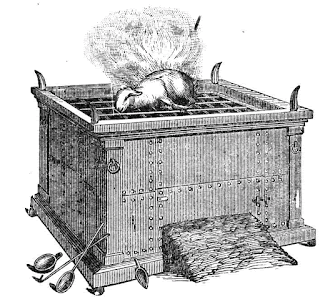
Altar of Sacrifice / Brazen Altar
The Word of God contains specifications for how the Hebrews could go about fulfilling a perpetual/continual sacrifice unto God (Numbers 28 & 29).
Altars play a central role in the Word of God. It is the place where man meets his Maker. It is a hallowed place necessary for the relationship between the man and his God to flourish.
The Law of Sacrifice is that we are to be in constant communication and prayer with God. Altars play an important role in fulfilling this law.
Exodus 20:24, “An altar of earth thou shalt make unto me, and shalt sacrifice thereon thy burnt offerings, and thy peace offerings, thy sheep, and thine oxen: in all places where I record my name I will come unto thee, and I will bless thee.”
According to Walter L. Wilson, “It is called an altar of earth because it belongs strictly to this earth. God makes no provision for forgiveness and salvation after death. No sacrifice of any kind is available to the lost sinner after he dies. There is no altar in hell.”[1]
There is no altar in hell! In hell you become totally and eternally cut-off from God.
There can be no relationship without communication.
Psalm 66:18-20, “18 If I regard iniquity in my heart, the Lord will not hear me: 19 But verily God hath heard me; he hath attended to the voice of my prayer. 20 Blessed be God, which hath not turned away my prayer, nor his mercy from me.”
To paraphrase this passage in a more common vernacular: “If I hold with affection an evil or unjust act, God will not listen to me.” God is not going to listen to my prayer when He knows that I am insincere about my relationship with Him and that I enjoy sin.
The Apostle Paul put it another way when writing of those who “did not like to retain God in their knowledge” and were “full of all unrighteousness,” by stating: “Who knowing the judgment of God, that they which commit such things are worthy of death, not only do the same, but have pleasure in them that do them” (See: Romans 1:18-32).
These regarders of iniquity and seekers of sinful pleasures will not be heard by God when they pray to Him in their insincerity, but for the sincere the psalmist did write, “But verily God hath heard me; he hath attended to the voice of my prayer” (Ps. 66:19). Why? Because the psalmist cried out to God and extolled Him (Ps. 66:17). He was retaining God in his knowledge – – acknowledging God and prioritizing Him above all else.
Ps. 84:1-4, “1 How amiable are thy tabernacles, O LORD of hosts! 2 My soul longeth, yea, even fainteth for the courts of the LORD: my heart and my flesh crieth out for the living God. 3 Yea, the sparrow hath found an house, and the swallow a nest for herself, where she may lay her young, even thine altars, O LORD of hosts, my King, and my God. 4 Blessed are they that dwell in thy house: they will be still praising thee. Selah.”
Vs. 3 = A Deserted Altar
Again, Wilson writes, “God’s people had forsaken both the worship and the service of the Lord to such an extent that the fires had gone out, the altar was cold, and no priest was near. The birds felt so much at home around these altars that they built their nests where the priests should have been serving, and the fires should have been burning.”[2]
The people of the Name failed to make Him the true Lord and King of their life and lost their intimacy with Him.
They allowed idols to replace their time at the altar of God. When do you pray? Where do you pray? How often do you pray? Have you a specific place of prayer? Is your daily and continual desire to be in constant communion with the Lord? What is the constant in your daily affairs?
You can’t hear God clearly if you are not listening to Him.
Active Listening is part and parcel of continual prayer, which is why the Apostle admonished the early Church to “pray without ceasing” (1 Thess. 5:17).
However, it is often too true that we allow the cares and troubles of life to gather in the place we once dedicated to God and now those birds and nests live in the place where once we came regularly for fellowship, repentance, communication, and relationship with God.
2 Cor. 10:3-6 contains what should be our response to the nesting birds that attempt to lodge themselves into our lives: “3 For though we walk in the flesh, we do not war after the flesh: 4 (For the weapons of our warfare are not carnal, but mighty through God to the pulling down of strong holds;) 5Casting down imaginations, and every high thing that exalteth itself against the knowledge of God, and bringing into captivity every thought to the obedience of Christ; 6 And having in a readiness to revenge all disobedience, when your obedience is fulfilled.
Two men in the Old Testament found themselves in opposite positions of relationship to God due entirely upon their habits regarding the altar and the law of sacrifice.
ABRAHAM:
Gen. 19:27, “And Abraham gat up early in the morning to the place where he stood before the LORD.”
Do you have a place where you daily stand before the Lord? A lifestyle of faithfulness in communion with the Lord?
The Akedah (binding of Isaac) & The Seven-Fold Blessing of Abraham (Gen. 22). Abraham prioritized his relationship with God above all things, and the Lord revealed to him an attribute of His character – Jehovah-jireh (“Jehovah sees”).[3]
Abraham is known in Scripture as the friend of God.
JOAB:
1 Kings 2:28, “Then tidings came to Joab: for Joab had turned after Adonijah, though he turned not after Absalom. And Joab fled unto the tabernacle of the LORD, and caught hold on the horns of the altar.”
There is no other passage in the OT where a pattern of prayer and sacrifice was established by Joab.
He had no resources to pull from because he had no relationship with God. He attempted to gain the mercy and the authority of the altar without first building a foundation of relationship with God.
God was not his priority.
Joab’s first allegiance was to himself.
Jesus Christ has paved the way for our access to the Divine with His sacrifice on the altar of Calvary. He said, “And I, if I be lifted up from the earth, will draw all men unto me” (Jn. 12:32). This “lifting” refers to the lifting up of the sacrifice upon the brazen altar by the priests. Because of Christ’s sacrifice we have been granted an avenue of access to God that Man lost in the Garden of Eden.
Hebrews 4:14-16, “14 Seeing then that we have a great high priest, that is passed into the heavens, Jesus the Son of God, let us hold fast our profession. 15 For we have not an high priest which cannot be touched with the feeling of our infirmities; but was in all points tempted like as we are, yet without sin. 16 Let us therefore come boldly unto the throne of grace, that we may obtain mercy, and find grace to help in time of need.”
Heb. 13:15-16, “By him therefore let us offer the sacrifice of praise to God continually, that is, the fruit of our lips giving thanks to his name. But to do good and to communicate forget not: for with such sacrifices God is well pleased.”
The continual faithfulness of Abraham carried eternal significance for himself, his lineage, and the rest of mankind. Our prayer habits also carry eternal weight, not only for ourselves but for others as well. When we begin to comprehend this truth we can understand the wisdom of that great missionary Billy Cole, who espoused the following ideology: “The reward for sacrifice is more sacrifice.” He also opined that “Until Jesus Christ comes there is no end to sacrifice,” which is, in this author’s opinion, the definition of the law of sacrifice because it contains the necessary ingredient of constancy.[4]
__________________
SOURCE: [1] Wilson, Walter L. (1957, 1999). A Dictionary of Bible Types. Peabody, MA: Hendrickson Publishers, Inc. p. 9-11.








 The Pillar and Ground of Truth