Categories
Bible Teaching

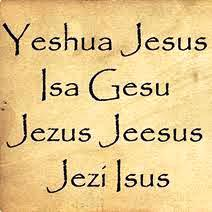
Saying the Name of Jesus

According to the late T. W. Barnes, many people pronounce the name of Jesus without really knowing how to say it. He specified four ways to say the name of Jesus:

  1. Say His name with love; the early church had great success, because they loved not their lives, they loved that Name. Love is powerful. Their love gave them reverence for the Name.
  2. Say His name with vision. Say it seeing the invisible. A woman said, “I resist the devil and he doesn’t leave.” Bro. Barnes asked her, “What do you look for? The Bible doesn’t say resist him and see him sitting on your shoulder; when you resist him you should see him running. The devil no doubt left you when you said in Jesus Name, but since you did not expect him to go, your thinking made you as miserable as if he stayed with you.”
  3. Say His name with faith. Religious leaders in Israel asked the disciples, “How did you heal the man crippled from his mother’s womb?” Peter answered, “…by the name of Jesus Christ…”
  4. Say His name while living a life of sacrifice. The disciples sacrificed everything for that name. We need to love it enough that no sacrifice is too great to make for Jesus.

-Nona Freeman, A Prophet in our Time (2007)

********************************

Why is there so much power in the Name of Jesus?  T. W. Barnes attributed it to the following reasons: 

  1. His Word is in it – John 1:1, “In the beginning was the Word…”
  2. His Blood is in it – Jesus is a blood name that redeems all people from sin and the effects of sin (sickness, disease, mental disorders, etc.).
  3. His Spirit is in it – The Holy Ghost that you received when you spoke in tongues the first time is that Spirit of Christ in you.
  4. The authority of heaven is in it – All power in Heaven and earth belongs to Jesus Christ.
  5. His faith is in it – He made everything by the power of His own Word; He spoke it and it happened.

Nona Freeman, A Prophet In Our Time (2007)


T. W. Barnes’ website: https://www.twbarnes.com/index.html

T. W. Barnes Memorial Page: https://www.leestoneking.com/T%20W%20Barnes%20Memorial.htm

Originally posted on 2 June 2010 on https://thepillarandgroundoftruth.blogspot.com/2010/06/tw-barnes-saying-name-of-jesus.html

Categories
Consider this...

Revitalization Movements

In the middle of the last century (1900s) Anthony F. C. Wallace, the historian and anthropologist, developed the concept of “Revitalization Movements.” Here are a few of his ideas:

  • A revitalization movement is defined as a deliberate, organized, conscious effort by members of a society to construct a more satisfying culture. Revitalization is thus, from a cultural standpoint, a special kind of culture change phenomenon: the persons involved in the process of revitalization must perceive their culture, or some major areas of it, as a system (whether accurately or not); they must feel that this cultural system is unsatisfactory; and they must innovate not merely discrete items, but a new cultural system, specifying new relationships as well as, in some cases, new traits.
  • …Cultures can change within one generation; and the process…is the revitalization process.
  • The term “revitalization” implies an organismic analogy.
  • “Stress is defined as a condition in which some part, or the whole, of the social organism is threatened with more or less serious damage.”
  • “Messianic Movements” emphasize the participation of a divine savior in human flesh in the mazeway transformation.

The presence of these movements are seen throughout history, and it can even be argued that the Scriptures make reference to language and events that are Revitalistic in nature. For example, Isaiah 30:19-23 (vs. 21, “…the is the way, walk ye in it, when ye turn to the right hand, and when ye turn to the left”).

Wallace coined the term “revitalization movements” to explain some particular historical phenomena that have taken place in the past, and according to Wallace, revitalization movements have specific identifiers:

  1. When a culture has reached its lowest point a prophet/statesman will arise to help the people gain what has been lost.
  2. This leader makes a plea and call to return to the conservative and fundamentalist ideas of the past.
  3. The result is the formation of a religious method that renews the culture and continues to grow even after the prophet dies.

Some examples would be:

  • Handsome Lake, the Seneca Prophet (1799), called for an end on reliance of European goods, and a return to traditional ways.
  • Jonathan Edwards preached “Sinners in the Hands of an Angry God” at a normal tone of voice at a wicked and perverse time in New England and universal repentance erupted in the audience.
  • John Wesley and his methodism was a call to renewed holiness.
  • Jesus Christ formed a new method that hearkened back to some of the principles and spirit of the Old Testament (i.e. Golden Rule) and boldly declared, “I am the way, the truth, and the life…” (John 14:6) while establishing Himself as the only “divine savior in human flesh.”

Moses reminded the Hebrews of Jehovah’s directive to them concerning their responsibility to Him and their reward for obedience and faithfulness: “Ye shall observe to do therefore as the LORD your God hath commanded you: ye shall not turn aside to the right hand or to the left. Ye shall walk in all the ways which the LORD your God hath commanded you, that ye may live, and that it may be well with you, and that ye may prolong your days in the land which ye shall possess” (Deut. 5:32-33).

Unfortunately, Jewish history is rife with stories of their backsliding and falling headlong into idolatry and depravity. They did not cherish their faith, not wholly, which is why the Lord said, “All day long I have stretched forth my hands unto a disobedient and gainsaying people” (Ro. 10:21).

The Old Testament prophets even took pains to draw the backslidden people of the Divided Kingdom back to Jehovah through language that echoes the idea of what Wallace called “a religious revival.” Jeremiah does so with this portion of text: “…stand ye in the ways, and see, and ask for the old paths, where is the good way, and walk therein, and ye shall find rest for your souls. But they said, We will not walk therein” (Jer. 6:16). the problem here was that the call was made for revitalization but the people did not want it. The result for their rebellion was captivity and dispersion.

Thankfully, God had another plan and through His prophets prepared a way out of captivity and a return to Jerusalem for a remnant, who would help to usher in the arrival of the only true Savior of Mankind — Jesus Christ. This God-man divested Himself of His Heavenly glory to manifest Himself in flesh and become the Savior, but even He spoke out when he addressed Jerusalem and said (Matt. 23:37), “O Jerusalem, Jerusalem, thou that killest the prophets, and stonest them which are sent unto thee, how often would I have gathered thy children together, even as a hen gathereth her chickens under her wings, and ye would not!”

In today’s society it is vital that we continue to move forward without letting loose of core faith values. This can only take place when each generation of Oneness Pentecostals has a first generation experience, which, I think, will continue the march of revitalization and revival in our movement and the world.

The modern Apostolic Movement is more than a subculture. It is a counter-culture – – a new culture based on the teachings of our Messiah – the Lord Jesus Christ.


SOURCE: http://www.garfield.library.upenn.edu/classics1990/A1990EL74700001.pdf

[Originally posted on 21 July 2007 at http://thepillarandgroundoftruth.blogspot.com/2007/07/fyi-revitalization-movements.html]

Categories
Bible Teaching

The Recovery of Purity

Romans 5:12-21
12  Wherefore, as by one man sin entered into the world, and death by sin; and so death passed upon all men, for that all have sinned:
13 (For until the law sin was in the world: but sin is not imputed when there is no law.
14 Nevertheless death reigned from Adam to Moses, even over them that had not sinned after the similitude of Adam’s transgression, who is the figure of him that was to come.
15 But not as the offence, so also is the free gift. For if through the offence of one many be dead, much more the grace of God, and the gift by grace, which is by one man, Jesus Christ, hath abounded unto many.
16 And not as it was by one that sinned, so is the gift: for the judgment was by one to condemnation, but the free gift is of many offences unto justification.
17 For if by one man’s offence death reigned by one; much more they which receive abundance of grace and of the gift of righteousness shall reign in life by one, Jesus Christ.)
18 Therefore as by the offence of one judgment came upon all men to condemnation; even so by the righteousness of one the free gift came upon all men unto justification of life.
19 For as by one man’s disobedience many were made sinners, so by the obedience of one shall many be made righteous.
20 Moreover the law entered, that the offence might abound. But where sin abounded, grace did much more abound:
21 That as sin hath reigned unto death, even so might grace reign through righteousness unto eternal life by Jesus Christ our Lord.

In the beginning God made Man perfect and complete in His image and after His likeness (Gen. 1:26).

Man (Adam & Eve) was absolute in his spirit, soul, & body.

ABSOLUTE = “Perfect in quality or nature; complete. Not mixed; pure. Something regarded as the ultimate basis of all thought and being.” [1]

Synonyms include “unadulterated, undiluted, uncontaminated, total, unconditional, unquestionable finality, unequivocal, definite, sure.”[2]

There are absolutes of truth, which are held by all true orthodox Christians (Christians who follow the teachings of Jesus, first century Apostles, and the prophets), and these truths include:

  1. The eternality of the Word of God: “For Ever, O LORD, thy word is settled in heaven” (Ps. 119:89).
  2. One God
  3. The Bible standard of salvation: “…Repent, and be baptized every one of you in the name of Jesus Christ for the remission of sins, and ye shall receive the gift of the Holy Ghost” (Acts 2:38).
  4. The necessity of the “born again” experience: “Jesus answered…Except a man be born again, he cannot see the kingdom of God” (Jn. 3:3).

With the existence of these (and other) absolutes, there is also another truth. The devil wishes to pervert the beauty of Man’s original design and separate him completely from his Maker.

The spirit of perversion is at work today and began with Lucifer and his rebellion against God, moved to the Garden of Eden and the serpent’s tactic of questioning and corrupting the relationship between Man and God.

PERVERSION in 1388 was defined as “action of turning aside from truth, corruption, distortion (originally of religious beliefs).”[3]

This is the devil’s tactic; to subvert, corrupt, bend, misshape, and distort what God calls “good” into something perverse. Perversion is not, of necessity sexual in connotation, but it is the turning of something pure into a wrong use.

The Fall of Man resulted in the perversion of our original state into a nature – – the Adamic nature. Because Man has fallen so far from his original state we find examples in the bible of many types of perverseness (one such illustration is the Jezebel spirit found in 1 Kings 16:31-21:252 Kings 9:7-37; & Rev. 2:20-23). Trinitarianism, cessationism, & the Jezebel spirit are all perversions, but Jesus has given the Church the power and authority to help bring those stuck in error back to completeness in God and in truth.

Sin is the state of perversion from the original design and purpose of Man. The account of the Good Samaritan can be viewed as Jesus’ attempt to warn the Apostles and Church of the dangers of perversion.

Jesus came to return what was once perverted back to its original state, by His love: “For when we were yet without strength, in due time Christ died for the ungodly. For scarcely for a righteous man will one die: yet peradventure for a good man some would even dare to die. But God commendeth his love toward us, in that, while we were yet sinners, Christ died for us” (Ro. 5:6-8).

Because of Jesus Christ we now have the opportunity to walk in right relationship with Him. You’ve never met a man like Jesus. He never withdrew Himself from the lost sinners of the world (as many in the church do once they are “saves”). Instead, He went to the perverted (in spirit, soul, and body) who were looking for a change and a return to purity. He did not condemn the world, but He saved it through the work of redemption and reconciliation. He did not revile the perverse, but He removed the crookedness in them and returned them to a state of completeness. He, as the Potter, took the misshapen clay and created vessels of honor. Jesus heals, delivers, sets the captive free, restores broken homes, and places His love into right relationships.

Although tempted in all things, Jesus is our perfect example of a sinless life, and His obedience is what has reconciled Man to God. This ministry of reconciliation is the recovery of purity in our relationship with God.

“Therefore if any man be in Christ, he is a new creature: old things are passed away; behold, all things are become new. And all things are of God, who hath reconciled us to himself by Jesus Christ, and hath given to us the ministry of reconciliation; To wit, that God was in Christ, reconciling the world unto himself, not imputing their trespasses unto them; and hath committed unto us the word of reconciliation. Now then we are ambassadors for Christ, as though God did beseech you by us: we pray you in Christ’s stead, be ye reconciled to God. For he hath made him to be sin for us, who knew no sin; that we might be made the righteousness of God in him” (2 Cor. 5:17-21).

[Originally Posted on 27 October 2007. http://thepillarandgroundoftruth.blogspot.com/2007/10/recovery-of-purity.html]
____________
SOURCES:
[1] Absolute. (n.d.). The American Heritage® Dictionary of the English Language, Fourth Edition. Retrieved October 26, 2007, from Dictionary.com website: http://dictionary.reference.com/browse/absolute
[2] Absolute. (n.d.). Dictionary.com Unabridged (v 1.1). Retrieved October 26, 2007, from Dictionary.com website: http://dictionary.reference.com/browse/absolute
[3] Perversion. (n.d.). Online Etymology Dictionary. Retrieved October 26, 2007, from Dictionary.com website: http://dictionary.reference.com/browse/perversion