Categories
Bible Teaching

Dynamic Duo

Stephen Kuntzman | July 27, 2025 | 10:00 AM

Text: James 2:14

What doth it profit, my brethren, though a man say he hath faith, and have not works? can faith save him?

The Dynamic Duo[1]

Ancillary Text: Genesis 22:1–14

(1) And it came to pass after these things, that God did tempt Abraham, and said unto him, Abraham: and he said, Behold, here I am. [availability]  (2)  And he said, Take now thy son, thine only son Isaac, whom thou lovest, and get thee into the land of Moriah; and offer him there for a burnt offering upon one of the mountains which I will tell thee of.  (3)  And Abraham rose up early in the morning, and saddled his ass, and took two of his young men with him, and Isaac his son, and clave the wood for the burnt offering, and rose up, and went unto the place of which God had told him. [faith in preparation]  (4)  Then on the third day Abraham lifted up his eyes, and saw the place afar off.  [faith tested with time] (5)  And Abraham said unto his young men, Abide ye here with the ass; and I and the lad will go yonder and worship, and come again to you.  [hope] (6)  And Abraham took the wood of the burnt offering, and laid it upon Isaac his son; and he took the fire in his hand, and a knife; and they went both of them together.  [faith in action] (7)  And Isaac spake unto Abraham his father, and said, My father: and he said, Here am I, my son. And he said, Behold the fire and the wood: but where is the lamb for a burnt offering? [Isaac is no mere boy, but a man of 37]  (8)  And Abraham said, My son, God will provide himself a lamb for a burnt offering: so they went both of them together. [a messianic prophecy, but also a rhema word for that moment] (9)  And they came to the place which God had told him of; and Abraham built an altar there, and laid the wood in order, and bound Isaac his son, and laid him on the altar upon the wood.  [faith and works] (10)  And Abraham stretched forth his hand, and took the knife to slay his son. [dynamic duo of Abraham and Isaac – trust in God and trust in the man of God]  (11)  And the angel of the LORD called unto him out of heaven, and said, Abraham, Abraham: and he said, Here am I.  (12)  And he said, Lay not thine hand upon the lad, neither do thou any thing unto him: for now I know that thou fearest God, seeing thou hast not withheld thy son, thine only son from me.  [God saw his faith and rewarded it] (13)  And Abraham lifted up his eyes, and looked, and behold behind him a ram caught in a thicket by his horns: and Abraham went and took the ram, and offered him up for a burnt offering in the stead of his son.  (14)  And Abraham called the name of that place Jehovahjireh: as it is said to this day, In the mount of the LORD it shall be seen. [God will see – or – God sees and provides]

Lesson Text: James 2:14–26

(14) What doth it profit, my brethren, though a man say he hath faith, and have not works? can faith save him?  (15)  If a brother or sister be naked, and destitute of daily food,  (16)  And one of you say unto them, Depart in peace, be ye warmed and filled; notwithstanding ye give them not those things which are needful to the body; what doth it profit?  (17)  Even so faith, if it hath not works, is dead, being alone.  (18)  Yea, a man may say, Thou hast faith, and I have works: shew me thy faith without thy works, and I will shew thee my faith by my works.  (19)  Thou believest that there is one God; thou doest well: the devils also believe, and tremble.  (20)  But wilt thou know, O vain man, that faith without works is dead?  (21)  Was not Abraham our father justified by works, when he had offered Isaac his son upon the altar?  (22)  Seest thou how faith wrought with his works, and by works was faith made perfect?  (23)  And the scripture was fulfilled which saith, Abraham believed God, and it was imputed unto him for righteousness: and he was called the Friend of God.  (24)  Ye see then how that by works a man is justified, and not by faith only.  (25)  Likewise also was not Rahab the harlot justified by works, when she had received the messengers, and had sent them out another way?  (26)  For as the body without the spirit is dead, so faith without works is dead also.

God calls us to put our faith into action, and so we demonstrate our faith through our works.

INTRODUCTION

Topeka, Kansas, is well known in American history for multiple reasons. In Topeka the events that led to the famous Brown v. Board of Education case occurred, which resulted in the desegregation of American schools.

Topeka was also the location of the Bible school where Charles Fox Parham and his students believed and taught that speaking in tongues was the initial sign of Holy Ghost baptism, helping to spark the modern Pentecostal movement.

Also, the city where Pastor Charles Sheldon, in 1896, decided to try something different during the Sunday night services.

Instead of a traditional sermon, he began reading a novel he was writing by presenting one chapter each week to the congregation. The story became so popular that soon the church was full of people wanting to find out about what would happen next.

Eventually the book would be published with the title In His Steps, and it remains a popular book to this day.

The story is set in fictional Raymond, a railroad town in the Eastern United States. It opens with the main character, Reverend Henry Maxwell, pastor of First Church of Raymond, sitting in his home on Friday afternoon preparing his Sunday sermon. When his efforts to concentrate are interrupted by a panhandler, the pastor brushes him aside and gets back to what he considers a more important activity.

On Sunday morning the same man shows up to service and addresses the congregation. He then immediately collapses and dies a few days later.

Reverend Maxwell is affected deeply by these events and begins to question his selfish behavior.

He challenges his congregation with a question that causes a revival in the lives of virtually everyone in the town: what would Jesus do?

Inspired by this simple, yet profound question, the members of Central Congregational Church begin to look for ways to use their position in the community to bring about changes that will form Raymond into a place God desires it to be.

What would Jesus do?

We would still do well to consider that provoking question because one of the essential components of true biblical theology should focus on what we believe and what we do.

Living for God is much more than simply listening to the preached Word of God on Sunday mornings; we must respond and follow what the Word of God calls us to do.

When God’s Word calls us to repent, we must repent.

When God’s Word calls us to love our neighbor and forgive those who hurt us, we must hear and heed.

We would do well to enter every service asking ourselves two questions:

  1. What does God want me to know?
  2. What does God want me to do?

THE DYNAMIC DUO OF FAITH AND WORKS

The Danger of Faith without Works

Peanut butter and jelly. Coffee and donuts. Rest and relaxation. Batman and Robin. Some things seem destined to always go together.

The same should be true of faith and works.

Bernard of Clairvaux wrote, “Hell is full of good wishes or desires.” Today, we say, “The road to Hell is paved with good intentions.”

Neither of these quotes are from the Word of God because they are not exactly accurate.

Being cast into outer darkness and eternally separated from God is not simply the end result of good intentions – it is the direct result of sin.

Likewise, we understand that good works alone cannot earn us entrance into heaven.

You will never be good enough to purchase your own salvation because, even on your best day, the Bible declares all your righteousness as nothing more than “filthy rags” (Isaiah 64:6).

It is impossible to do enough good deeds to erase the stain of one single sin.

You must apply the gospel to your life through the new-birth experience because neither good works nor good intentions are enough to save you.

This simple fact is demonstrated throughout the Word of God:

If Noah had the faith to believe it was going to rain but refused to build the ark, he would have drowned.

If Peter had answered the question, “Men and brethren, what shall we do?” by explaining that simply changing their mind about Jesus was enough for salvation, the people may have gone home with a repentance experience, but they would not have been born again. (See Acts 2:36–39.)

The Power of Faith with Works

When faith is combined with works the power of God is released.

Faith and works are both involved in all elements of obeying the gospel of Jesus Christ:

  • 2 Thessalonians 1:8, “In flaming fire taking vengeance on them that know not God, and that obey not the gospel of our Lord Jesus Christ”
  • 1 Peter 4:17, “For the time is come that judgment must begin at the house of God: and if it first begin at us, what shall the end be of them that obey not the gospel of God?” 

You must do more than have a change of mind about your sinful state; you must repent of your sins by turning from your old life. It is not enough to feel sorry for past mistakes; you must quit sinning.

For those who gathered to be baptized by John the Baptist, he demanded they “bring forth therefore fruits worthy of repentance” (Luke 3:8).

Jesus taught the same doctrine when He instructed the woman caught in adultery to “go, and sin no more” (John 8:11).

Repentance is how you obey the death of Jesus. You must have faith to believe that His death on the cross of Calvary was sufficient to pay your debt to sin, and then you must do the work of turning from sin.

After you repent of your sin, you respond to Jesus’ burial by being baptized in the name of Jesus Christ:

“Therefore we are buried with him by baptism into death: that like as Christ was raised up from the dead by the glory of the Father, even so we also should walk in newness of life.”[2]

When the first Gentiles were brought into the New Testament church in Acts 10, Peter did not just suggest they be baptized; rather, he “commanded them to be baptized in the name of the Lord” (Acts 10:48).

Your new birth is not complete without Spirit baptism. In His supreme wisdom, God provided you an undeniable sign that you have been filled with His Spirit.

Multiple experiences in life can make the hair stand up on your neck or give you moments of joy or a sense of peace.

However, only the baptism of the Holy Ghost allows you to worship God in a language you have never learned as you declare “the wonderful works of God” (Acts 2:11).

That experience involves a level of faith in the Word of God combined with surrendering your whole self to Him.

Faith without works is dead, but the combination of faith and works produces the new birth.

I Will Demonstrate My Faith through My Works

Just as faith apart from obedience will not result in salvation, your walk with God after the new birth is equally dependent upon the marriage of faith and works.

If Jesus had only declared His identity with words, the statements He made would have been true, but the opportunity to prove their accuracy may have been lost. The Bible declares: “Jesus . . . went about doing good” (Acts 10:38).

When John the Baptist sent messengers asking whether Jesus really was the Messiah, Jesus offered the works He had done as evidence:

“Go your way, and tell John what things ye have seen and heard; how that the blind see, the lame walk, the lepers are cleansed, the deaf hear, the dead are raised, to the poor the gospel is preached” (Luke 7:22).

Why do you think the majority of Jewish society rejected Jesus even after witnessing so many marvelous miracles?

The Book of James contains the most notable commentary on this subject. James asked these rhetorical questions: “What doth it profit, my brethren, though a man say he hath faith, and have not works? can faith save him?” (James 2:14).

James then gave a very practical example to illustrate his point. If we encounter a brother or sister needing clothing and food and say, “Depart in peace, be ye warmed and filled” without offering practical help, it is of no use (James 2:16).

“Even so faith, if it hath not works, is dead, being alone” (James 2:17).

THE FAITHFULNESS OF ABRAHAM

God Challenged Abraham’s Faith

To see faith in real life, let us look at the “father of the faithful” based on Paul’s description of Abraham as “the father of all them that believe” (Romans 4:11).

The first eleven chapters of the Book of Genesis chronicle approximately two thousand years. In those chapters we read about Adam and Eve, the story of Noah and the Flood, and how God confused the languages because of humanity’s disobedience in building the Tower of Babel.

We see some detail, but the Bible paints in rather broad brushstrokes until we reach chapter twelve where we are introduced to a man named Abram and his wife Sarai. The next fourteen chapters are devoted exclusively to that one man and his family. If we add in the portion of the Bible dedicated to Abraham’s son, grandson, and great-grandson, we see a total of thirty-nine chapters devoted to this one extended family.

Abraham is celebrated in God’s Hall of Faith in Hebrews 11: “By faith Abraham, when he was called to go out into a place which he should after receive for an inheritance, obeyed; and he went out, not knowing whither he went” (Hebrews 11:8).

Abraham was called, and then he obeyed.

Abraham combined faith with works.

If he had sat around his entire life bragging about God speaking to him and explaining how much he believed God’s promise without ever leaving his hometown, his spoken faith would have been dead words.

But to be proven faithful required more than one action. Abraham left his hometown, separated from his entire family (including his nephew Lot), and received the promised son named Isaac. Then the Lord challenged Abraham’s faith yet again with a call that must have been incredibly difficult to hear:

“Take now thy son, thine only son Isaac, whom thou lovest, and get thee into the land of Moriah; and offer him there for a burnt offering upon one of the mountains which I will tell thee of” (Genesis 22:2).

Abraham Proved to Be Faithful

No one can truly understand the anguish he felt to offer up his own son to God as a sacrifice. Abraham must have thought, God, this did not make sense. Is this really Your plan? Your nature? Yet Abraham’s response may be one of the most impressive examples of faith in God we read in the entire Bible.

Consider the test of Abraham’s faith. He had waited approximately twenty-five years for his promised son to be miraculously born. He had received the promise from God that through Isaac all nations of the earth shall be blessed. Then God said to sacrifice his promised son, Isaac.

Do not underestimate what this means: Abraham would have to lay his 37-year-old son on an altar and kill him as a sacrifice to God.

Can you think of any reason it would make sense for God to call Abraham to offer Isaac?

How could Abraham do something so barbaric? Offering Isaac directly conflicted with the promises God had given him. But there are two reasons for those concerns:

  • First, Abraham loved Isaac, but he loved God more. One of the main issues for Abraham was whether he loved the promise (Isaac) more than the promise keeper (God). Abraham passed the test by his willingness to sacrifice his son unto the one who gave him his son.
  • Secondly, Abraham had enough faith and trust that if he followed what God told him to do, the Lord was able to prove Himself faithful. Again we discover insight in the Book of Hebrews that helps explain Abraham’s thought process. The Bible explains Abraham reasoned that if God had promised all the nations of the earth would be blessed through Isaac, then when he followed God’s instructions and sacrificed his son, “God was able to raise him up, even from the dead” (Hebrews 11:19).

That is certainly faith with works.

But that resurrection miracle was unnecessary because as Abraham lifted the knife to sacrifice Isaac, the Lord stopped him and provided a ram as a sacrifice in place of Isaac, a beautiful Old Testament foreshadowing of our Savior, the Lord Jesus Christ.

I Will Seek to Be Found Faithful When Tested

Today we are faced with the same choice as every saint of God who has come before us. Unlike Noah, we will probably not be asked to build a large boat out of gopher wood, and we certainly should not expect God to call us to sacrifice our children. However, we must be mindful that living for God always has and always will require some level of sacrifice.

Only by a combination of faith with works is it possible to please God. The Book of James is often called the New Testament companion to the Old Testament Book of Proverbs. We are encouraged to be “doers of the word, and not hearers only.” If we only hear the word without taking proper action, we are guilty of deceiving our own selves (James 1:22).

This same principle can be applied to believing without taking action—faith without works.

You must daily decide to allow the Word of God to be the mirror through which you evaluate your actions and motives to ensure you are not guilty of Jesus’ warning in Luke 9:62, “No man, having put his hand to the plough, and looking back, is fit for the kingdom of God.”

A proper combination of faith and works will ensure we endure to the end and obtain salvation.

CONCLUSION

The year 1955 was significant. America had endured the Great Depression, experienced the thrill of victory in World War II, and found itself one decade into the Cold War with what was then known as the Soviet Union. President Eisenhower sent the first military advisors to Vietnam, and in that same year, a woman named Rosa Parks refused to give up her seat on a bus in Montgomery, Alabama, an event that sparked the Civil Rights Movement and inspired Martin Luther King, Jr.

Also in 1955 a recently retired man sat on his front porch and watched as his Social Security check was delivered to his mailbox. His life had been difficult. When Harland was only six years old, his father had died, causing young Harland to take the lead in caring for his younger brothers and sisters when their mother entered the workforce. He had dropped out of school in the sixth grade and held a wide variety of jobs since then: a railroad worker, a tire salesman, an unsuccessful politician, and others.

At the age of sixty-five, all he seemed to have to show for his efforts was the promise of another Social Security check being delivered. He went to the mailbox, retrieved his check, and thought to himself, Is this all my life is going to be, just sitting on the front porch waiting for my next check to arrive?

The thought was discouraging. Harland decided to pause and write down all the blessings in his life, listing everything, even the small things. You could say he was counting his blessings, naming them one by one. He wrote that he was the only person in the world who knew his mother’s recipe for fried chicken, which included eleven different herbs and spices. That day he decided to become a doer. He visited a local restaurant and asked if he could get a job cooking chicken. Soon his chicken became the most popular item on the menu.

Later Harland opened his own restaurant, which soon became a string of restaurants we now know as Kentucky Fried Chicken. He sold to a national organization for millions of dollars and served as their public representative until his death in 1980 at the age of ninety. All this became possible when “Colonel Sanders” refused to simply sit on the porch waiting to receive; he decided to do something with what he already had.

If Colonel Sanders realized his recipe and his fried chicken were gifts, and if his decision to do something with that knowledge allowed him to achieve fame in our society, what can the church of the living God do if we will become doers of the Word instead of hearers only?

Let’s Pray:

  • For God to help us become doers of the Word and not hearers only.
  • For God to give us the confidence to stand when life challenges our faith.
  • What types of sacrifice has God required from you in your walk with Him?

[1] SOURCE: God’s Word for Life Adult Lesson Guide Summer 2025. Pentecostal Publishing House. Lesson 2.4 – A Dynamic Duo.

[2] Romans 6:4
Categories
Bible Teaching

How are People Saved? -Harold Hoffman

“The value of truth is never diminished because of repetition.” -Harold Hoffman

Categories
Bible Teaching

Reason, Foundation & Eternity

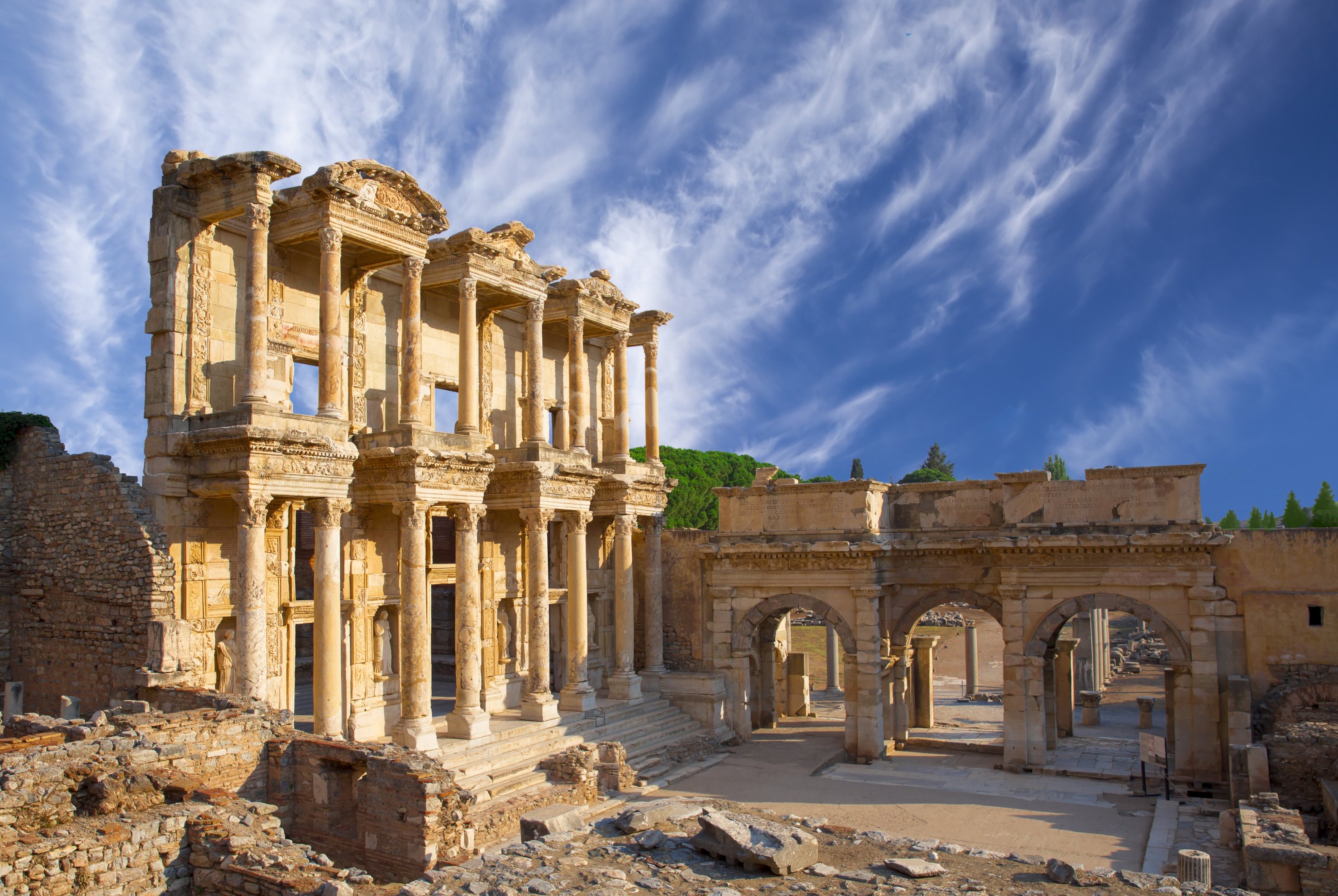
The Library of Celsus (Getty Images)

A Sure Foundation[1]

The New Testament Church is built on a sure foundation whose reason for existence is that the Creator would have a relationship with His creation, and the final state of that relationship is the eternal communion of Man with God – – Eternal Life. It is imperative for the Church to constantly reassess the integrity of its walls and foundation as it looks forward to everlasting life:

  • 2 Timothy 2:19-21, “(19) Nevertheless the foundation of God standeth sure, having this seal, The Lord knoweth them that are his. And, Let every one that nameth the name of Christ depart from iniquity.  (20)  But in a great house there are not only vessels of gold and of silver, but also of wood and of earth; and some to honour, and some to dishonour.  (21)  If a man therefore purge himself from these, he shall be a vessel unto honour, sanctified, and meet for the master’s use, and prepared unto every good work.

Time unfolds for Man the special arrangement that God has made in continuing the spread of His Word and Gospel, and it has successfully grown in scope and magnitude for over 6,000 years with each dispensation, each covenantal period, adding a particular stone or brick to relevant to its age and purpose with special emphasis on Man’s obedience or disobedience to the plan.

The ending of one dispensation didn’t necessarily indicate a failure, but rather a finishing of a specific step in the continuation and completion of the plan of God that began with the foundation of the World and a Lamb slain for the procurement of eternal life:

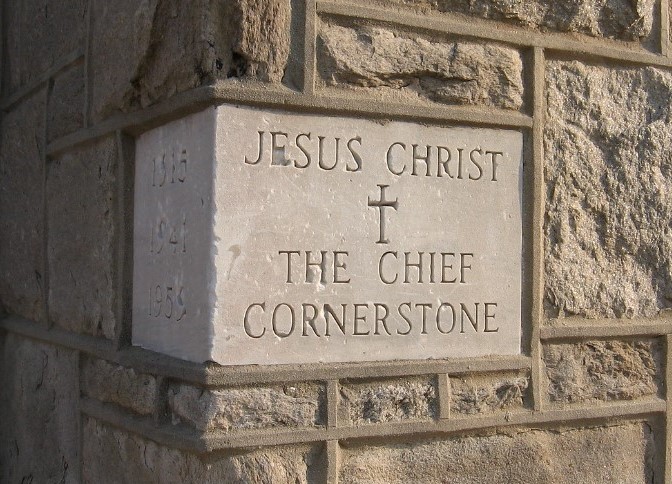
  • Ephesians 2:19-22, “(19) Now therefore ye are no more strangers and foreigners, but fellowcitizens with the saints, and of the household of God;  (20)  And are built upon the foundation of the apostles and prophets, Jesus Christ himself being the chief corner stone;  (21)  In whom all the building fitly framed together groweth unto an holy temple in the Lord:  (22)  In whom ye also are builded together for an habitation of God through the Spirit.”
  • Revelation 13:8, “And all that dwell upon the earth shall worship him, whose names are not written in the book of life of the Lamb slain from the foundation of the world.”

God placed Man into a position where he had complete authority and dominion over all God’s creation on earth and the only way Adam could jeopardize his position in this new structure was by proving himself unfaithful to God’s architectural plan, which he did:

  • “And God said, Let us make man in our image, after our likeness: and let them have dominion over the fish of the sea, and over the fowl of the air, and over the cattle, and over all the earth, and over every creeping thing that creepeth upon the earth. So God created man in his own image, in the image of God created he him; male and female created he them. And God blessed them, and God said unto them, Be fruitful, and multiply, and replenish the earth, and subdue it: and have dominion over the fish of the sea, and over the fowl of the air, and over every living thing that moveth upon the earth. And God said, Behold, I have given you every herb bearing seed, which is upon the face of all the earth, and every tree, in the which is the fruit of a tree yielding seed; to you it shall be for meat. And to every beast of the earth, and to every fowl of the air, and to every thing that creepeth upon the earth, wherein there is life, I have given every green herb for meat: and it was so” (Genesis 1:26-30).

In the Old Testament you will observe God continually working and establishing a better operation whereby the overall purpose of God could be realized – – reconciliation between Himself and Man.  Since sin is the line of demarcation between Creator and creation a bridge was needed to span that gap, and that bridge is Jesus Christ:

  • Romans 5:12-21, “(12) Wherefore, as by one man sin entered into the world, and death by sin; and so death passed upon all men, for that all have sinned:  (13)  (For until the law sin was in the world: but sin is not imputed when there is no law.  (14)  Nevertheless death reigned from Adam to Moses, even over them that had not sinned after the similitude of Adam’s transgression, who is the figure of him that was to come.  (15)  But not as the offence, so also is the free gift. For if through the offence of one many be dead, much more the grace of God, and the gift by grace, which is by one man, Jesus Christ, hath abounded unto many.  (16)  And not as it was by one that sinned, so is the gift: for the judgment was by one to condemnation, but the free gift is of many offences unto justification.  (17)  For if by one man’s offence death reigned by one; much more they which receive abundance of grace and of the gift of righteousness shall reign in life by one, Jesus Christ.)  (18)  Therefore as by the offence of one judgment came upon all men to condemnation; even so by the righteousness of one the free gift came upon all men unto justification of life.  (19)  For as by one man’s disobedience many were made sinners, so by the obedience of one shall many be made righteous.  (20)  Moreover the law entered, that the offence might abound. But where sin abounded, grace did much more abound:  (21)  That as sin hath reigned unto death, even so might grace reign through righteousness unto eternal life by Jesus Christ our Lord.”

The New Testament establishes the plan for mankind and God to be in communion again and reconciled to each other and it is a better in all points than the Old Testament plan.  The writer of Hebrews wrote that this new covenant was just better:

  • 1:4, “Being made so much better than the angels, as he hath by inheritance obtained a more excellent name than they.”[2]
  • 6:9, “But, beloved, we are persuaded better things of you, and things that accompany salvation, though we thus speak.”
  • 7:7, “And without all contradiction the less is blessed of the better.”
  • 7:19, “For the law made nothing perfect, but the bringing in of a better hope did; by the which we draw nigh unto God.”
  • 7:22, “By so much was Jesus made a surety of a better testament.”
  • 8:6, “But now hath he obtained a more excellent ministry, by how much also he is the mediator of a better covenant, which was established upon better promises.”
  • 9:23, “It was therefore necessary that the patterns of things in the heavens should be purified with these; but the heavenly things themselves with better sacrifices than these.”
  • 10:34, “For ye had compassion of me in my bonds, and took joyfully the spoiling of your goods, knowing in yourselves that ye have in heaven a better and an enduring substance.
  • 11:16, “But now they desire a better country, that is, an heavenly: wherefore God is not ashamed to be called their God: for he hath prepared for them a city.”
  • 11:35, “Women received their dead raised to life again: and others were tortured, not accepting deliverance; that they might obtain a better resurrection:”
  • 11:40, “God having provided some better thing for us, that they without us should not be made perfect.”
  • 12:24, “And to Jesus the mediator of the new covenant, and to the blood of sprinkling, that speaketh better things than that of Abel.”

Without the organization of this better plan, this better covenant, you would have not received such a super great salvation.  Your obedience and faith is necessary to receive its reward – – eternal life:

Hebrews 2:1-4, “(1) Therefore we ought to give the more earnest heed to the things which we have heard, lest at any time we should let them slip.  (2)  For if the word spoken by angels was stedfast, and every transgression and disobedience received a just recompence of reward;  (3)  How shall we escape, if we neglect so great salvation; which at the first began to be spoken by the Lord, and was confirmed unto us by them that heard him;  (4)  God also bearing them witness, both with signs and wonders, and with divers miracles, and gifts of the Holy Ghost, according to his own will?”

The Logos (word, decree, mandate, reason)[3] of God became flesh and when you believe on Him (Jesus Christ) you have the promise of everlasting (eternal) life, and it all started with a plan, an organized plan of salvation that would put Man back in right relationship with His Creator and the creation he was to have dominion over:

  • In the beginning was the Word, and the Word was with God, and the Word was God. The same was in the beginning with God. All things were made by him; and without him was not any thing made that was made. In him was life; and the life was the light of men. And the light shineth in darkness; and the darkness comprehended it not…. And the Word was made flesh, and dwelt among us, (and we beheld his glory, the glory as of the only begotten of the Father,) full of grace and truth” (John 1:1-5, 14).
  • “For God so loved the world, that he gave his only begotten Son, that whosoever believeth in him should not perish, but have everlasting life. For God sent not his Son into the world to condemn the world; but that the world through him might be saved” (John 3:16-17).

It is God’s plan for you to have eternal life by turning towards Him in faith and obeying the blueprint He has established for all mankind – – The New Birth:

  • “There was a man of the Pharisees, named Nicodemus, a ruler of the Jews: The same came to Jesus by night, and said unto him, Rabbi, we know that thou art a teacher come from God: for no man can do these miracles that thou doest, except God be with him. Jesus answered and said unto him, Verily, verily, I say unto thee, Except a man be born again, he cannot see the kingdom of God. Nicodemus saith unto him, How can a man be born when he is old? can he enter the second time into his mother’s womb, and be born? Jesus answered, Verily, verily, I say unto thee, Except a man be born of water and of the Spirit, he cannot enter into the kingdom of God. That which is born of the flesh is flesh; and that which is born of the Spirit is spirit. Marvel not that I said unto thee, Ye must be born again. The wind bloweth where it listeth, and thou hearest the sound thereof, but canst not tell whence it cometh, and whither it goeth: so is every one that is born of the Spirit” (John 3:1-8).
  • “Now when they heard this, they were pricked in their heart, and said unto Peter and to the rest of the apostles, Men and brethren, what shall we do? Then Peter said unto them, Repent, and be baptized every one of you in the name of Jesus Christ for the remission of sins, and ye shall receive the gift of the Holy Ghost. For the promise is unto you, and to your children, and to all that are afar off, even as many as the Lord our God shall call” (Acts 2:37-39).

There is also the necessity of looking after the house and keeping it in proper working order through a life of holiness. To do otherwise will result in the destruction of that house:

  • “Know ye not that ye are the temple of God, and that the Spirit of God dwelleth in you? If any man defile the temple of God, him shall God destroy; for the temple of God is holy, which temple ye are” (1 Corinthians 3:16-17).
  • 1 Corinthians 6:19-20, “(19) What? know ye not that your body is the temple of the Holy Ghost which is in you, which ye have of God, and ye are not your own?  (20)  For ye are bought with a price: therefore glorify God in your body, and in your spirit, which are God’s.”

When you adhere to the plan of God for Man’s salvation; continue building on the sure foundation of Jesus Christ, the apostles and prophets; and, move ever closer to your eternal reward while maintaining a holy house, you will know the Word that became flesh and who is in fact “the true God and eternal life,” our Lord Jesus Christ:

  • 1 John 5:13-20, “(13) I write these things to you who believe in the name of the Son of God, that you may know that you have eternal life.  (14)  And this is the confidence that we have toward him, that if we ask anything according to his will he hears us.  (15)  And if we know that he hears us in whatever we ask, we know that we have the requests that we have asked of him.  (16)  If anyone sees his brother committing a sin not leading to death, he shall ask, and God will give him life—to those who commit sins that do not lead to death. There is sin that leads to death; I do not say that one should pray for that.  (17)  All wrongdoing is sin, but there is sin that does not lead to death.  (18)  We know that everyone who has been born of God does not keep on sinning, but he who was born of God protects him, and the evil one does not touch him.  (19)  We know that we are from God, and the whole world lies in the power of the evil one.  (20)  And we know that the Son of God has come and has given us understanding, so that we may know him who is true; and we are in him who is true, in his Son Jesus Christ. He is the true God and eternal life.”

[1] Originally written as an assignment for the Church Government course taught by Allen McMillan at Parkersburg Bible College (WV) on 10/6/2001 (“Why Organization Is Important”), edited on 9/3/2005, and revised on 10/24/2023.

[2] Jesus Christ, our Mediator and Savior, the Word of God made flesh, is the only begotten Son of God and therefore “so much better than the angels.”

[3] G3056. Logos. Thayer’s Greek Definitions.

Featured Image: Jesus Christ The Chief Cornerstone (Tyree AME Church, Philadelphia, PA, est. 1870)

Categories
Bible Teaching

Anchored In Hope

Apostolic Life Cathedral | 1/22/2023 10:00 AM

Text: Hebrews 6:13-20

(13)  For when God made promise to Abraham, because he could swear by no greater, he sware by himself,

(14)  Saying, Surely blessing I will bless thee, and multiplying I will multiply thee.

(15)  And so, after he had patiently endured, he obtained the promise.

(16)  For men verily swear by the greater: and an oath for confirmation is to them an end of all strife.

(17)  Wherein God, willing more abundantly to shew unto the heirs of promise the immutability of his counsel, confirmed it by an oath:

(18)  That by two immutable things, in which it was impossible for God to lie, we might have a strong consolation, who have fled for refuge to lay hold upon the hope set before us:

(19)  Which hope we have as an anchor of the soul, both sure and stedfast, and which entereth into that within the veil;

(20)  Whither the forerunner is for us entered, even Jesus, made an high priest for ever after the order of Melchisedec.

Hope, in the New Testament, is generally defined as “anticipation, expectation, confidence, faith.”[1]

However, in this passage it is best defined as that which we “have, hold, own, or possess.”[2]

Another way to view hope in our text today is “to hold one’s self to a thing, to lay hold of a thing, to adhere or cling to.”[3]

George Beverly Shea wrote “In Times Like These,” and it contains these words:

In times like these you need a Savior

In times like these you need an anchor

Be very sure, be very sure

Your anchor holds and grips the Solid Rock!

This Rock is Jesus, Yes He’s the One

This Rock is Jesus, the only One

Be very sure, be very sure

Your anchor holds and grips the Solid Rock!

With all the uncertainty of our day, it is abundantly clear that we need something, or someone to hold on to.

Something, or someone, to cling to.

That Rock is Jesus, He is the one we anchor our hope upon.

My hope is built on nothing less

Than Jesus’ blood and righteousness

I dare not trust the sweetest frame

But wholly lean on Jesus’ name

On Christ the solid rock I stand

All other ground is sinking sand

All other ground is sinking sand

At some point everyone will have a testing of their faith.

When those tribulations come, you need to be anchored in Jesus.

You need to anchor into Jesus from several points.

Six anchor points are suggested when you moor a boat.[4]

We need multiple mooring/anchor points in our lives.

Approach truth from every angle.

You have scripture and an experience to match the Word of God.

Anchor points that help you to hold on to your faith.

Truth comes by revelation from the Word of God.

Reason is not the final authority, but God is the final authority.

Postmodernism = the idea that there is no absolute truth and what works for me “in the moment” is my truth, but it’s relative and may change at any time.

When you don’t have a personal experience with the Lord Jesus Christ all you have is theology.

Always choose the side of truth, righteousness, & holiness.

How we choose to obey and follow Jesus in our relationship with Him is key to a life of holiness.

When we don’t have a long term goal we often fall short ofour potential.

Live with an awareness of eternity.

What if Jesus were coming today.

Live for today and live for that Day when He comes for us.

Six Anchor Points

Hebrews 6:1-3, “(1) Therefore leaving the principles of the doctrine of Christ, let us go on unto perfection; not laying again the foundation of repentance from dead works, and of faith toward God,  (2)  Of the doctrine of baptisms, and of laying on of hands, and of resurrection of the dead, and of eternal judgment.  (3)  And this will we do, if God permit.”

Six Anchor Points:

  1. We must believe there is a God.
    • Hebrews 11:6, “But without faith it is impossible to please him: for he that cometh to God must believe that he is, and that he is a rewarder of them that diligently seek him.”
    • Jesus is the one true God manifest in the flesh to be our Savior.
  2. The Bible is the Word of God.
    • 2 Timothy 3:16-17, “(16) All scripture is given by inspiration of God, and is profitable for doctrine, for reproof, for correction, for instruction in righteousness:  (17)  That the man of God may be perfect, throughly furnished unto all good works.”
  3. We must believe, obey, and experience the New Birth.
    • Faith, Repentance, Water Baptism in the Name of Jesus Christ, and the Infilling of the Holy Ghost Speaking in Tongues.John 3:5-8, “(5) Jesus answered, Verily, verily, I say unto thee, Except a man be born of water and of the Spirit, he cannot enter into the kingdom of God.  (6)  That which is born of the flesh is flesh; and that which is born of the Spirit is spirit.  (7)  Marvel not that I said unto thee, Ye must be born again.  (8)  The wind bloweth where it listeth, and thou hearest the sound thereof, but canst not tell whence it cometh, and whither it goeth: so is every one that is born of the Spirit.”
    • Acts 2:38, “Then Peter said unto them, Repent, and be baptized every one of you in the name of Jesus Christ for the remission of sins, and ye shall receive the gift of the Holy Ghost.”
  4. Life in the Spirit.
    • Laying on of Hands = Operation of the Spirit and its Fruit and Gifts.
    • Romans 8:12-15, “(12) Therefore, brethren, we are debtors, not to the flesh, to live after the flesh.  (13)  For if ye live after the flesh, ye shall die: but if ye through the Spirit do mortify the deeds of the body, ye shall live.  (14)  For as many as are led by the Spirit of God, they are the sons of God.  (15)  For ye have not received the spirit of bondage again to fear; but ye have received the Spirit of adoption, whereby we cry, Abba, Father.”
  5. Life of Holiness.
    • Acts 2:40, “And with many other words did he testify and exhort, saying, Save yourselves from this untoward generation.”
    • How? Living a life of holiness.
    • 1 Peter 1:13-16, “(13) Wherefore gird up the loins of your mind, be sober, and hope to the end for the grace that is to be brought unto you at the revelation of Jesus Christ;  (14)  As obedient children, not fashioning yourselves according to the former lusts in your ignorance:  (15)  But as he which hath called you is holy, so be ye holy in all manner of conversation;  (16)  Because it is written, Be ye holy; for I am holy.
  6. The Life to Come.
    • Jesus is coming.
    • 1 Thessalonians 4:13-18, “(13) But I would not have you to be ignorant, brethren, concerning them which are asleep, that ye sorrow not, even as others which have no hope.  (14)  For if we believe that Jesus died and rose again, even so them also which sleep in Jesus will God bring with him.  (15)  For this we say unto you by the word of the Lord, that we which are alive and remain unto the coming of the Lord shall not prevent them which are asleep.  (16)  For the Lord himself shall descend from heaven with a shout, with the voice of the archangel, and with the trump of God: and the dead in Christ shall rise first:  (17)  Then we which are alive and remain shall be caught up together with them in the clouds, to meet the Lord in the air: and so shall we ever be with the Lord.  (18)  Wherefore comfort one another with these words.”

If you feel adrift today then you need to go back and secure the lines of your hope and reattach your anchor on the Lord Jesus Christ, the Rock.

When you have made sure these six anchor points are secure, then you can weather any storm.


[1] Strong’s.

[2] Thayer’s

[3] Ibid.

[4] David K. Bernard, “Anchor Points (In Our Lives),” May 14, 2015

Categories
Bible Preaching

A Gospel Message of Hope – G. T. Haywood

A Gospel Message of Hope[1]
Bishop G. T. Haywood[2]
(April, 1922)

We wish to call your attention to the third chapter of Romans, beginning at verse 1, “What advantage then hath the Jew? or what profit is there of circumcision? Much every way: chiefly, because that unto them were committed the oracles of God.” That is, the first opportunity to know God. The law of the Ten Commandments was given to them. God had committed unto their trust the oracles of God, and gave them that they might bring the light of God to the world. And although they failed their God, yet His purpose went forward. Even though some did not believe, “shall their unbelief make the faith of God without effect?” Man’s unbelief does not change God’s word, nor stop Him from working out His purpose.

The word of God is true whether the people believe it or not. God will bring Salvation near. It makes no difference what you say, or what I may say, because, “God hath said.” Our God can work while we are sleeping. And when we are folded away like a garment in our graves, God will still be working. If one man, or one people, fails God, He will take up another and move on. God brought Israel out and made them a great people through a man who was only a shepherd of the plains of Midian and not a warrior, but could speak words of wisdom by the spirit of God. Words, which, even to this day, have astonished the world. God sent His Word from heaven unto this people, and walked in the midst of them with mighty signs and wonders showing His mighty arm. And yet they failed God through their unbelief.

The Lord had no people He could trust. So He declared He would “take a people who are not a people and make them a people of God.” He did this to prove that He does not have to depend on any nation or individual. God Himself never failed, and could not fail. Even the prophets He ordained became weak at points along the line and were filled with fear, or took honor to themselves. “The priest and the prophet have erred through strong drink, they are swallowed up of wine, they are out of the way through strong drink; they err in vision, they stumble in judgment” (Isa. 28:7). 

What if man does not believe the Gospel as it is laid, down in the Book? The Gospel is true regardless of his unbelief. I believe in the Blood of JESUS CHRIST, and that without shedding of blood there is no remission of sins. But the question is: how shall I get the remission? One may say, “I will just believe,” but to “believe” means more than to just say, “I believe.” Matt. 26:28 says, “For this is my blood of the new testament, which is shed for many for the remission of sins.”

If any people start out with the power of God in their midst and become full of pride and lose their spirituality, God will put them aside and take up another. And if the latter fails, He will set them aside and take up still another. I am satisfied that God does not depend upon any of us to carry His work through, but we are compelled to depend upon Him for without Him we can do nothing.

“For this is My blood of the New Testament, which is shed for many for the remission of sins.” Jesus was the greatest preacher the world has ever known, and turned the preaching of the Gospel over to Peter as if to say, “You are next, Peter. You shall begin where I leave off.” Then that preacher in Acts 2:38 said, “Then Peter said unto them, Repent, and be baptized every one of you in the name of Jesus Christ for the remission of sins, and ye shall receive the gift of the Holy Ghost.” That is the way the Holy Spirit gave it out on the day of Pentecost. In those days the people were always baptized in the name of Jesus Christ for the remission of sins that they might receive the Holy Spirit, which was God’s witness to their faith.  

What is the Holy Ghost? He is a witness to your having received remission of sins. That is what the Apostle said: “There are three that bear witness in earth, the Spirit, and the water, and the blood: and these three agree in one” (1 Jn. 5:8).  He did not say one was any greater than the other. All three of them are required to make one witness. Many people look at water alone, but the proper thing to do is to see the name in which it is administered. Take away the blood, and you have nothing but faith. Take away the water and you make Jesus a liar. The Bible, in the first epistle of John, tells us plainly, “This is he that came by water and blood, even Jesus Christ; not by water only, but by water and blood. And it is the Spirit that beareth witness, because the Spirit is truth” (1 Jn. 5:6). I do take notice of this much, there was so much authority in the command of JESUS to baptize, that nearly all the churches (with a few exceptions) try in some way to administer it, if it only be the dipping of the finger in the water. But if it is worth doing at all, it is worth doing rightly. However, a man’s failure to believe and obey does not change the Word of God. You can scarcely join a church in the city without some mode of baptism. There are about as many ways as there are human minds, and all for the lack of following the mind of the Spirit.

The reason some people do not live holy is because they have not been taught it and have been brought up wrongly. But you start a man or woman believing the Word of God and you can bring them out on the Word. Our experiences are so varied that it does not pay to attempt to tell others about it, for they will try to get our experience instead of what is written in the Book. I do not want anybody to be able to rise and say the Word of God is not true. There has always been somebody filled with the Spirit, ever since the day of Pentecost. God has never left Himself without witness. No doubt some did not know just what they had. Luther had it. Wesley, Finney and Fox had it; and they had a hard, severe trial in their days.

We want God to be justified. We have not a thing to boast of this day. There is false holiness and true holiness. The true, is the Holy Ghost in you; and the false, is human efforts without God; self-righteousness. If we acknowledge our own failures God will give us His power to overcome day by day. God does not get behind a man with a whip and drive him to heaven, but He fixes it up so you will follow Him because you love Him.

Who is it that never did sin? Paul shows the whole human family had sinned, and if all sinned, all were condemned. But God had mercy. We could not help but sin. We were born that way. But God said, “You must be born again.” And no newborn child walks perfectly at once. First they crawl, then they totter and fall, but they do not keep falling. By this I mean, when a man or woman is filled with the Holy Ghost and starts out to walk with Jesus Christ, they may stumble and fall at first, but don’t get discouraged. If the devil tries to trip you up God will help you. He is able to keep you from falling, says Jude. I am talking about those who have it in their hearts to live for Christ. Do not let any failure daunt your courage. You know God is able to carry you through. Many have found it to be so.

If God brings judgment upon a sinner for his wrongdoing, some will charge Him with injustice. But how can God then judge the world? God said He would give us a light for our path, and put His angels around us, and give us a pattern in Jesus, and place His Spirit within us. Brother, I would be ashamed to tell God I could not live right with all that help! Then folks will try to tell you, “You can’t make it, Brother!” So we are going to commend the righteousness of God, by acknowledging: “O Lord, we are all failures?”  

It is the grace of God that is able to sustain and uphold any man or woman who desires to be kept by the Power of God. There are people who desire to boast of themselves and never have had a change of heart. And some even go so far as to say, “I am all right. I am good enough. I don’t need that Holy Ghost.” I don’t care if you did not steal, drink, or commit adultery: it is in your heart anyhow! Everybody needs the power of God. Good works never did save anybody. It takes the “power of God unto salvation” (Ro. 1:16). I am not telling a moral man to get worse in order to get saved. No! I am telling him there is no condition so bad but that God has grace to save us from it. 

You cannot make men righteous by legislation for “ye must be born again.” God says to the church, “preach the word,” and makes a fertile spot in the terrible desert of sin, that men may see the water of life along the side of the road. No law can make you live right. God Almighty tried it Himself with the children of Israel, and the Word says, “For what the law could not do, in that it was weak through the flesh, God sending his own Son in the likeness of sinful flesh, and for sin, condemned sin in the flesh” (Ro. 8:3). Did you know that when a man becomes saved he will keep the spirit of the law? There is no law against attending to your own business, paying all your debts, and no law against praying.  Do right, and bless God, and pray without ceasing. No law is against doing that which is just and good (Gal. 5:22-23). 

Many homes have been torn asunder. Sorrow and mourning drapes the human heart because of sin. I dislike hearing some people talk because of their disgraceful utterances. But let God get into their hearts and then note the change. Everybody without Christ is guilty. Had God Almighty demanded justice, every living person would have been dead, and brought before the judgment bar to give an account of their misspent lives. The only thing that is going to save a man is the power of God. I am talking about genuine salvation, too! You can go any place and hear everything else but the Gospel of salvation. But men shall be saved. That is our whole service: to save men. The church is ordained for that purpose. 

God sums up the whole human family and declares that it is full of “wounds, and bruises, and putrifying sores” (Is. 1:6). To tell a man he should not steal, or covet, or commit adultery is not enough. Tell him how to get saved so he will not do those things. The power of God can save anybody that will believe. The god of carnality has certainly got some folks fast, but, 0, I am so glad I am saved! Saved by the power of God! It is wonderful to be God’s free man, delivered from the power of the pride of life, the lust of the eyes, and the lust of the flesh. It does not make any difference whether a man is old or young, rich or poor, black or white, or brown, just so he believes. If you have never been to school to learn a letter, you can believe. I am satisfied that you do not have to have eyes to believe. You do not have to be able to speak to believe. You may have both hands cut off, but still you can believe. If you cannot hear, somebody will write, or make signs and you can believe. You do not have to weigh so many hundred pounds or write letters, or understand the Bible to get saved. All God said was to believe. Why? Jesus paid it all! The people that are saved today are people that believed the Gospel. And you do not believe God if you do not obey Him! I will prove it to you, too. “Yea, a man may say, Thou hast faith, and I have works: shew me thy faith without thy works, and I will shew thee my faith by my works” (James 2:18).  I will show you my faith (without saying a word) by my works! It is not merely saying, “I believe” it is proving your belief. If you actually believe then you know what Jesus was talking about when He said, “He that believeth and is baptized shall be saved,” and prove it by your actions (Mk. 16:16). Jesus declared, “Except a man be born again, he cannot see the kingdom of God” (Jn. 3:3). If you do not obey, then you do not believe. 

God has fixed the matter so you need make no mistake about it, either. Too many jump over the fifth verse of the third chapter of John’s Gospel: “Jesus answered, Verily, verily, I say unto thee, Except a man be born of water and of the Spirit, he cannot enter into the kingdom of God.” Moreover, Jesus stated emphatically that He “testified of that which He had seen; and spake that which He did know” (John 3:11), and this is what He spoke: “I know that if a man be not born of water and the Spirit, he cannot enter into the Kingdom of God.” If you have never been baptized in the name of JESUS CHRIST, you have never been immersed properly. This is the only name under heaven given among men whereby they must be saved. If you repent deeply enough in your heart, and be baptized in the name of Jesus Christ, I will guarantee that you shall receive the baptism of the Holy Ghost as you come up out of the water.[3] If people do not believe God’s Word they never get His best. Even if you do not understand, you must believe, before you can see the Glory of God.[4]


[1] SOURCE: http://www.greateremmanuelchurch.com/drsmith/haywood.htm. Accessed: 5/3/2012. (Link no longer works).

[2] Elder G. T. Haywood at the Apostolic Faith Assembly, Indianapolis, Ind., delivered this sermon during a Sunday morning service in April, 1922.

[3] At the end of this sermon seven persons accepted the word, came forward immediately for baptism. Four of them received the Holy Ghost while coming out of the water, and another soon after changing clothes.

[4] Edited by Stephen E. Kuntzman. 5/3/2012.