Categories
Bible Teaching

The Purpose of Holiness

Text: Daniel 3:13-18

(13)  Then Nebuchadnezzar in his rage and fury commanded to bring Shadrach, Meshach, and Abednego. Then they brought these men before the king.

(14)  Nebuchadnezzar spake and said unto them, Is it true, O Shadrach, Meshach, and Abednego, do not ye serve my gods, nor worship the golden image which I have set up?

(15)  Now if ye be ready that at what time ye hear the sound of the cornet, flute, harp, sackbut, psaltery, and dulcimer, and all kinds of musick, ye fall down and worship the image which I have made; well: but if ye worship not, ye shall be cast the same hour into the midst of a burning fiery furnace; and who is that God that shall deliver you out of my hands?

(16)  Shadrach, Meshach, and Abednego, answered and said to the king, O Nebuchadnezzar, we are not careful to answer thee in this matter.

(17)  If it be so, our God whom we serve is able to deliver us from the burning fiery furnace, and he will deliver us out of thine hand, O king.

(18)  But if not, be it known unto thee, O king, that we will not serve thy gods, nor worship the golden image which thou hast set up.

The example of these three Hebrew men – Shadrach, Meshach, and Abednego – tugs at our heart, penetrates our mind, and attaches to our soul because it calls to something greater and nobler within ourselves.

The notion, the belief, the conviction to stand in holiness for Jesus Christ no matter what threats, attacks, and fiery darts, seen or unseen, the adversary brings our way.

These three stood their ground BEFORE the pouring out of the promise of the Holy Spirit, and their example of holiness and faithfulness gives us great hope to stand in this evil day.

Today, we have the added benefit of Holy Ghost empowerment to face, as they did, persecution and martyrdom:

“But ye shall receive power, after that the Holy Ghost is come upon you: and ye shall be witnesses [Greek: martus[1]] unto me…” (Acts 1:8a)

“Those who after His example have proved the strength and genuineness of their faith in Christ by undergoing a violent death.”[2]

It was their total commitment to God that wouldn’t allow them to compromise their faith and holiness — They Would Not Bow.

Because they refused to set aside their principles of faith and holiness:

  • Nebuchadnezzar got mad – the adversary always gets angry when his plans are thwarted.
  • A fiery furnace was heated up seven times hotter than normal
  • The Three Hebrews were thrown bound into the fiery furnace by the king’s mighty men
  • Those same mighty men died from the heat of the furnace
  • But there still standing, are Shadrach, Meshach, and Abednego unbound, unharmed, and not alone.
    • Don’t ever think that The Purpose of Holiness goes unseen and unaccounted for by God.
    • He sees, hears, understands and knows all things: “The eyes of the LORD are upon the righteous, and his ears are open unto their cry” (Psalms 34:15).
    • “Behold, the eye of the LORD is upon them that fear him, upon them that hope in his mercy; To deliver their soul from death…” (Psalms 33:18-19a).
    • Psalms 147:5, “Great is our Lord, and of great power: his understanding is infinite.”
    • Isaiah 40:28, “Hast thou not known? hast thou not heard, that the everlasting God, the LORD, the Creator of the ends of the earth, fainteth not, neither is weary? there is no searching of his understanding.
    • Romans 11:33, “O the depth of the riches both of the wisdom and knowledge of God! how unsearchable are his judgments, and his ways past finding out!”
    • Hebrews 4:13, “Neither is there any creature that is not manifest in his sight: but all things are naked and opened unto the eyes of him with whom we have to do.”
  • Yes, the LORD saw Shadrach, Meshach, and Abednego stand.
  • Yes, He heard their declaration of faith and their commitment to remain holy, even if they were not delivered.
  • Yes, “The Lord knoweth how to deliver the godly out of temptations” (2 Peter 2:9).

They were not alone, the Lord showed up, just in time (Dan. 3:24-28):

(24)  Then Nebuchadnezzar the king was astonied, and rose up in haste, and spake, and said unto his counsellors, Did not we cast three men bound into the midst of the fire? They answered and said unto the king, True, O king.

(25)  He answered and said, Lo, I see four men loose, walking in the midst of the fire, and they have no hurt; and the form of the fourth is like the Son of God.

(26)  Then Nebuchadnezzar came near to the mouth of the burning fiery furnace, and spake, and said, Shadrach, Meshach, and Abednego, ye servants of the most high God, come forth, and come hither. Then Shadrach, Meshach, and Abednego, came forth of the midst of the fire.

(27)  And the princes, governors, and captains, and the king’s counsellors, being gathered together, saw these men, upon whose bodies the fire had no power, nor was an hair of their head singed, neither were their coats changed, nor the smell of fire had passed on them.

  • When you understand The Purpose of Holiness you will know that you can walk in faith and holiness untouched, unharmed, unscathed by the adversary’s attack.
  • You will not be burnt, singed, or even carry the stench of hell on you.

(28)  Then Nebuchadnezzar spake, and said, Blessed be the God of Shadrach, Meshach, and Abednego, who hath sent his angel, and delivered his servants that trusted in him, and have changed the king’s word, and yielded their bodies, that they might not serve nor worship any god, except their own God.

  • That is the The Purpose of Holiness: The willingness to die, to become a martyr if necessary, rather than serve or worship any god except the Lord Jesus Christ and to become His witness to this world.

The Purpose of Holiness

David K. Bernard on Holiness:

  • “God is holy; holiness is an essential attribute of His nature. With respect to Him, it means absolute purity and moral perfection. With respect to man, holiness means conformity to the character of God. We must be holy because God is holy (I Peter 1:15-16). It means thinking as God thinks, loving what He loves, hating what He hates, and acting as Christ would act.”[3]
  • “The essence of true holiness is to be Christlike, to live as He lived and, in any given situation, to act as He would act.”[4]
  • “Inward holiness will produce outward holiness, but the outward appearance of holiness is worthless without inward holiness. For example, a modest spirit will produce modest dress, but modest dress is of little value if it conceals a lustful heart.”[5]

Righteousness and holiness are inseparable (Romans 6:16-23):

(16)  Know ye not, that to whom ye yield yourselves servants to obey, his servants ye are to whom ye obey; whether of sin unto death, or of obedience unto righteousness?

(17)  But God be thanked, that ye were the servants of sin, but ye have obeyed from the heart that form of doctrine which was delivered you.

(18)  Being then made free from sin, ye became the servants of righteousness.

(19)  I speak after the manner of men because of the infirmity of your flesh: for as ye have yielded your members servants to uncleanness and to iniquity unto iniquity; even so now yield your members servants to righteousness unto holiness.

(20)  For when ye were the servants of sin, ye were free from righteousness.

(21)  What fruit had ye then in those things whereof ye are now ashamed? for the end of those things is death.

(22)  But now being made free from sin, and become servants to God, ye have your fruit unto holiness, and the end everlasting life.

(23)  For the wages of sin is death; but the gift of God is eternal life through Jesus Christ our Lord.

The Purpose of Holiness is realized when you allow the Holy Spirit of Christ to abide in you and submit to His influence in your life

Our Jesus lived a life of holiness with the purpose of saving you from being beat down by the self-destructive lifestyle of sin.

He purposed to redeem you from the enslavement of sin by breaking every chain and fetter to it when He condemned sin in His flesh.

The Son’s life of holiness delivers you from the wages of sin (Death) by granting you the gift of God (Eternal Life).

Jesus’ purposeful life of holiness has inexorably, inevitably, and most certainly empowered you to live a holy life, even to the point where the threat of death will lead you so say, as those three Hebrew men of Daniel’s day said to a heathen king:

“…we will not try to defend ourselves. If the God whom we serve is able to save us from the blazing furnace and from your power, then He will. But even if he doesn’t…we will not worship your god, and we will not bow down to the gold statue that you have set up” (Dan. 3:16-18).

2 Cor. 5:21, “For he hath made him to be sin for us, who knew no sin; that we might be made the righteousness of God in him.”

Jesus was not just a substitutionary sin offering for you and I, and He certainly did not become a sinful person on the cross.

But, He became the Sin-Bearer for all of humanity: you, and I, and all that have lived, are living, and shall ever live.

“He has made Him to be sin for us!”

When we consider Jesus and The Purpose of Holiness:

  • It was “for this purpose the Son of God was manifested, that He might destroy the works of the devil” (1 John 3:8b).
  • Surely He hath borne our griefs, and carried our sorrows: yet we did esteem [another word they could have used was purpose[6]] Him stricken, smitten of God, and afflicted. But
    • He was wounded for our transgressions,
    • He was bruised for our iniquities:
    • the chastisement of our peace was upon Him;
    • and with His stripes we are healed.
  • All we like sheep have gone astray; we have turned every one to his own way; and the LORD hath laid on Him the iniquity of us all” (Isaiah 53:4-6).

Doesn’t Jesus deserve your praise right now?

This moment right here is the perfect time for you to lift, or clap, your hands in praise to the One who bore your sins and your iniquity.

Right now, raise your voice in a victorious shout to the One who has healed you, delivered you, and given you peace.

Right now, let the love for the One who is your Savior break forth in a symphony of praise and worship.

Right now, Let’s all praise our Jesus together!


[1] Thayer’s Greek Definitions. G3144.

[2] Ibid.

[3] David K. Bernard. Practical Holiness: A Second Look

[4] Ibid.

[5] Ibid.

[6] Strong’s. H2803

Categories
Bible Teaching

The Life of Holiness

Apostolic Life Cathedral | 12/12/2023 | 7:00 PM

Categories
Bible Teaching

Heart Attack – Harold Hoffman

Another highly recommended series taught by Pastor Harold Hoffman of First Church (Stirling Heights, MI).

Heart Attack | Lesson 1 | Harold Hoffman
Heart Attack | Lesson 2 | Harold Hoffman
Heart Attack | Lesson 3 | Harold Hoffman
Heart Attack | Lesson 4 | Harold Hoffman
Categories
Bible Teaching

The Bride of Christ

Apostolic Life Cathedral | 8/27/23 | 10:00 AM

Ephesians 5:25-28, “(25) Husbands, love your wives, even as Christ also loved the church, and gave himself for it;  (26) That he might sanctify and cleanse it with the washing of water by the word,  (27) That he might present it to himself a glorious church, not having spot, or wrinkle, or any such thing; but that it should be holy and without blemish.  (28) So ought men to love their wives as their own bodies. He that loveth his wife loveth himself.”

We’re going to a wedding…

Categories
Bible Preaching

God In the Midst of You

Apostolic Life Cathedral | 7/2/2023 | 7:00 PM

Zephaniah 3:14, “Sing, O daughter of Zion; shout, O Israel; be glad and rejoice with all the heart, O daughter of Jerusalem. The LORD hath taken away thy judgments, he hath cast out thine enemy: the king of Israel, even the LORD, is in the midst of thee: thou shalt not see evil any more. In that day it shall be said to Jerusalem, Fear thou not: and to Zion, Let not thine hands be slack. The LORD thy God in the midst of thee is mighty; he will save, he will rejoice over thee with joy; he will rest in his love, he will joy over thee with singing.”

Categories
Bible Teaching

Victory

Apostolic Life Cathedral | May 7, 2023 | 10:00 AM
Categories
Consider this...

Pure Religion

Do you practice religion?

This question put a smile on my face when I read it because it reminded me of Paul Rudd’s final reply to Zach Galifianakis after he had asked him a series of uncomfortable questions on the comedy sketch/movie Between Two Ferns: The Movie:

ZG: “What advice would you give to a young actor who wants to hide his Jewishness as well as you have?”

PR: “I’ve never really tried to hide my Jewishness.”

ZG: “Jesus was Jewish and he didn’t hide it.”

PR: “No, he put it out there for everybody to see. He’s one of our best.”

ZG: “Are you practicing?”

PR: “No, I’m not a practicing Jew…”

Paul Rudd then says with a wry smile, “I perfected it.”

Makes me smile every time I watch that clip.

Unfortunately, perfection and religion are not always congruent terms. In fact, of the five times “religion” is used in the KJV it is only used positively one time and it is qualified with the adjective “pure.”

While we are working and practicing the command to “be perfect,” which is found eight times in the KJV, let’s also endeavor to perfect the “pure religion” James wrote about.

“If any man among you seem to be religious, and bridleth not his tongue, but deceiveth his own heart, this man’s religion is vain. Pure religion and undefiled before God and the Father is this, To visit the fatherless and widows in their affliction, and to keep himself unspotted from the world” (‭‭James‬ ‭1‬:‭26‬-‭27,‬ ‭KJV).

‬‬“If anyone thinks he is religious and does not bridle his tongue but deceives his heart, this person’s religion is worthless. Religion that is pure and undefiled before God the Father is this: to visit orphans and widows in their affliction, and to keep oneself unstained from the world” (‭‭James‬ ‭1‬:‭26‬-‭27‬, ESV).‬‬

“If you claim to be religious but don’t control your tongue, you are fooling yourself, and your religion is worthless. Pure and genuine religion in the sight of God the Father means caring for orphans and widows in their distress and refusing to let the world corrupt you” (James 1:26-27, NLT).

“Anyone who sets himself up as “religious” by talking a good game is self-deceived. This kind of religion is hot air and only hot air. Real religion, the kind that passes muster before God the Father, is this: Reach out to the homeless and loveless in their plight, and guard against corruption from the godless world” (‭‭James‬ ‭1‬:‭26‬-‭27‬, MSG‬‬).

Categories
Bible Preaching

Religious, But Lost

Apostolic Life Cathedral | 3/19/2023

Text: Jeremiah 1:4-10

(4)  Then the word of the LORD came unto me, saying,

(5)  Before I formed thee in the belly I knew thee; and before thou camest forth out of the womb I sanctified thee, and I ordained thee a prophet unto the nations.

(6)  Then said I, Ah, Lord GOD! behold, I cannot speak: for I am a child.

(7)  But the LORD said unto me, Say not, I am a child: for thou shalt go to all that I shall send thee, and whatsoever I command thee thou shalt speak.

(8)  Be not afraid of their faces: for I am with thee to deliver thee, saith the LORD.

(9)  Then the LORD put forth his hand, and touched my mouth. And the LORD said unto me, Behold, I have put my words in thy mouth.

(10)  See, I have this day set thee over the nations and over the kingdoms, to root out, and to pull down, and to destroy, and to throw down, to build, and to plant.

Ancillary: Jeremiah 29:11

(11)  For I know the thoughts that I think toward you, saith the LORD, thoughts of peace, and not of evil, to give you an expected end.

Moses

He is walking one day along a path when he turns to inspect something he has noticed for some time, but never investigated…

A bush that burns but is not consumed…

There, in that holy place, he meets the I AM and receives a calling that changed his life and resulted in the formation of a nation.

Here, in the The Exodus, we meet God as Savior.[1]

400 years in Egypt have turned a small tribe of 70 Hebrews into a mighty tribe of 2-7 million.

They have become, through no fault of their own, a threat to Egypt and so the Pharaoh of that day, forgetting the salvation brought by the hand of Joseph, enslaves these children of Abraham, Isaac and Jacob.

Children of promise enslaved.

You know the story, Moses comes to Pharaoh and delivers the Word from the I AM, “Let My People Go.”

Refusals and plagues ensue until eventually the Egyptian ruler let’s God’s people go.

When they leave, they make a journey, over the Red Sea, on dry ground, and their enemies are never seen again – Water Baptism.

On Mount Sinai God gives Moses the Ten Commandments and these Hebrew descendants of Jacob become a nation and take on his new name – Israel.

The Law – The Torah – 613 Commandments containing “248 Positive Commandments (do’s) and 365 Negative Commandments (do not’s).” [2]

The Ten Commandments (Exodus 20:3-17):

  1. Thou shalt have no other gods before me.
  2. Thou shalt not make unto thee any graven image…
  3. Thou shalt not take the name of the LORD thy God in vain…
  4. Remember the sabbath day, to keep it holy.
  5. Honour thy father and thy mother: that thy days may be long upon the land which the LORD thy God giveth thee.
  6. Thou shalt not kill.
  7. Thou shalt not commit adultery.
  8. Thou shalt not steal.
  9. Thou shalt not bear false witness against thy neighbour.
  10. Thou shalt not covet…

Then they travel the wilderness for forty years

Why? An evil report…

After those long years, God sends Moses to Mount Nebo where he views the Land Promise and dies.

Moses introduced Israel to God as Savior and as the God of their Exodus who brought them out of bondage and made them into a nation.

God has done that for you tonight, He has put into place a way for you to exit sin, addiction, bondage, wickedness and given you a new name and put you into a holy nation:

(9) But ye are a chosen generation, a royal priesthood, an holy nation, a peculiar people; that ye should shew forth the praises of him who hath called you out of darkness into his marvellous light: (10) Which in time past were not a people, but are now the people of God: which had not obtained mercy, but now have obtained mercy” (1 Peter 2:9-10).

Israel rejoiced in this identity, but in time they lost sight of something important – Relationship.

They had the covenant, but they lost the relationship.

Jeremiah

Over the course of 800 years, from Moses and The Exodus to Jeremiah’s day, these Israelites had turned away from and back to Jehovah – their Savior – untold times.

They would fall away and God would allow an enemy to rise up to chastise them and they would repent.

They would backslide and same process would take place again…

It became a cycle that denigrated the relationship God wanted with them to mere ritual and religion.

Would you want a relationship with someone who treated you like that?

They were Religious, But Lost.

These covenant people would sin, eventually feel guilty, offer the required sacrifice, go on their way forgiven — until they sinned again.

They had covenant with God, but no companionship with Him.

Into this atmosphere of sin, repent, sin, repent, sin, repent, we are introduced to Jeremiah. God knew and had a plan for him before he was ever conceived by his parents:

Before I formed thee in the belly I knew thee; and before thou camest forth out of the womb I sanctified thee, and I ordained thee a prophet unto the nations.”[3]

That passage alone is a primer on God’s view on the sanctity of life…

Jeremiah then tries to get out of his calling, much like Moses before him, and he tells God, “I cannot speak: for I am a child.”[4]

And the Lord replied, Don’t say, ‘I’m too young,’ for you must go wherever I send you and say whatever I tell you.[5]

You see, Jeremiah had a job to do

While Moses introduced the people to God as Savior, Jeremiah’s job was to introduce Him as God the Judge.[6]

So, The Exile of Judah becomes the main message of this young prophet as he begins his prophetic ministry at the age of 20.

He sorrows, laments, grieves, lives in depression at times as he deals with the loss that he witnesses over the course of 40-50 years.

Why? Because somewhere along the way these covenant people lost sight of their relationship with God and simply did not follow Him

WHEN THEY DID FOLLOW HIM it was with mere formalism, religiosity and ritual.

They knew what to do, but not how to do.

“He that knoweth to do good…”

Jerusalem falls, the Temple is destroyed, all the best and brightest young men and women are gathered by the Babylonian king and sent into exile.

And adding insult to injury, every time Jeremiah would open his mouth to speak the Word of God he was horribly mistreated. He prefigures Christ as a Suffering Servant with both his lamentations and his mistreatment.[7]

He was mistreated, imprisoned, beaten, lied on and abused – FOR THE WORD OF GOD – by kings, prophets, friends and even family.

This “son of Hilkiah” could have been a priest, but God ordained Him to be a Prophet.[8]

As such, he was mistreated, to the point where he said, “O LORD, thou hast deceived me, and I was deceived: thou art stronger than I, and hast prevailed: I am in derision daily, every one mocketh me. For since I spake, I cried out, I cried violence and spoil; because the word of the LORD was made a reproach unto me, and a derision, daily. Then I said, I will not make mention of him, nor speak any more in his name. But his word was in mine heart as a burning fire shut up in my bones, and I was weary with forbearing, and I could not stay” (Jeremiah 20:7-9).

In this environment of destruction and disappointment, heartache and hurt, fear and frustration, Jeremiah writes a prophecy of Hope and healing from the Lord (Jeremiah 29:4-14):

(4)  Thus saith the LORD of hosts, the God of Israel, unto all that are carried away captives, whom I have caused to be carried away from Jerusalem unto Babylon<<Marduk v. Jehovah = no match. Jehovah did this>>

(5)  Build ye houses, and dwell in them; and plant gardens, and eat the fruit of them;

(6)  Take ye wives, and beget sons and daughters; and take wives for your sons, and give your daughters to husbands, that they may bear sons and daughters; that ye may be increased there, and not diminished.

(7)  And seek the peace of the city whither I have caused you to be carried away captives, and pray unto the LORD for it: for in the peace thereof shall ye have peace.

(8)  For thus saith the LORD of hosts, the God of Israel; Let not your prophets and your diviners, that be in the midst of you, deceive you, neither hearken to your dreams which ye cause to be dreamed.

(9)  For they prophesy falsely unto you in my name: I have not sent them, saith the LORD.

(10)  For thus saith the LORD, That after seventy years be accomplished at Babylon I will visit you, and perform my good word toward you, in causing you to return to this place.

(11)  For I know the thoughts that I think toward you, saith the LORD, thoughts of peace, and not of evil, to give you an expected end.

(12)  Then shall ye call upon me, and ye shall go and pray unto me, and I will hearken unto you.

(13)  And ye shall seek me, and find me, when ye shall search for me with all your heart.

(14)  And I will be found of you, saith the LORD: and I will turn away your captivity, and I will gather you from all the nations, and from all the places whither I have driven you, saith the LORD; and I will bring you again into the place whence I caused you to be carried away captive.

Deliverance and return is on the way. Even for the Religious, But Lost

You who love and want a relationship with the Lord Jesus Christ.

Jesus still desires to dwell in the midst of His people.

He still wants relationship with you.

The Danger of Religion is that you lose relationship with Jesus and become religious, but lost:

  • Repentance is not about confession to change, but you just want to relieve guilt.
  • Your clean robe of righteousness (bag of sins is full) becomes dirty with sin and you pray, “I’m sorry, Lord. Please forgive me.”
  • The routine of repentance has nothing to do with change, but in just “feeling” better.
  • You feel better now, since you confessed, you’ll be ok until you forget what the guilt felt like and then you sin again. Why not? Your robe of righteousness is clean now anyways (your bag of sins is empty now).
  • How can you maintain a relationship with someone who treat you like that?
  • God is not into religion, but He loves relationship![9]

The People of Judah has lost that connection of relationship with God. Their behavior towards one another and their worship of God was addressed by Jeremiah (Jeremiah 7:9-11):

(9)  Will ye steal, murder, and commit adultery, and swear falsely, and burn incense unto Baal, and walk after other gods whom ye know not; (10) And come and stand before me in this house, which is called by my name, and say, We are delivered to do all these abominations? (11)  Is this house, which is called by my name, become a den of robbers in your eyes? Behold, even I have seen it, saith the LORD.

It appears that Jeremiah is listing the Ten Commandments in reverse order to show that God is more interested in righteous behavior (right relationship) than in covenantal position.[10]

How you treat your neighbor is more important and a more clear indicator of your relationship with God than if you are born again and speak in tongues all the time.

If you speak in tongues all day long and don’t know how to treat your neighbor right then you are Religious, But Lost.

“He is a God of completion, not competition.” –Harold Hoffman

Come to Jesus – Get to Know Him – treat each other right

It’s all about relationship


[1] Runck, Jared S. and David P. Johnson. (2017). Handbook on the Prophets. Weldon Spring, MO: Pentecostal Publishing House.

[2] Hecht, Mendy. The 613 Commandments (Mitzvot). Accessed: 3/20/2023. https://www.chabad.org/library/article_cdo/aid/756399/jewish/The-613-Commandments-Mitzvot.htm

[3] Jer. 1:5

[4] Jer. 1:6

[5] Jer. 1:7, NLT

[6] Runck, Jared S. and David P. Johnson. (2017). Handbook on the Prophets. Weldon Spring, MO: Pentecostal Publishing House.

[7] Purpose Institute. (2019). #6104 – Major Prophets – Lesson 2: Jeremiah and Lamentations.

[8] Jeremiah 1:1

[9] Partially derived from Harold Hoffman’s teaching on 1/16/2022. Heart Attack (Lesson 3). https://www.youtube.com/live/GrCM32v1haA.

[10] Runck, Jared S. and David P. Johnson. (2017). Handbook on the Prophets. Weldon Spring, MO: Pentecostal Publishing House.

Picture Credit: Rembrandt Harmensz van Rijn. (1606-1669). Jeremiah Lamenting the Destruction of Jerusalem. Accessed: 3/30/2023. http://www.rembrandtpainting.net/complete_catalogue/storia/jeremiah.htm.

Categories
Consider this...

Be a Risk Taker & Trust the Riskbreaker

Psalm 20:7-8, “Some trust in chariots, and some in horses: but we will remember the name of the LORD our God. They are brought down and fallen: but we are risen, and stand upright.”

There are some who have traded their trust in God for that which they’ve made with their own hands. They trust in chariots and are more confident in human talent, philosophy, and ability than in the provision and strength of the Lord.

They trust in human sufficiency and abort God’s will by their doubt and forgetfulness. They trust in their own ideas and manufacture scenarios thinking their finite understanding is better than the infinite wisdom of the LORD.

They use the policies of the world to obtain that which can only come by the proven principles of the Word of God. They invent strategies without prayer and forget (or ignore) to call upon God. They’ve forgotten His name, fame, and reputation. What He’s done and what He wants takes a backseat to what these purveyors of self foist onto the good and trusting flock of God.

Lack of trust is evident by their preoccupation with what they can form, cultivate, or influence. Afraid to show faith in something outside of themselves they resist what they don’t understand and grasp onto that which is temporal, known, and comfortable.

Isaiah 31:1, “Woe to them that go down to Egypt for help; and stay on horses, and trust in chariots, because they are many; and in horsemen, because they are very strong; but they look not unto the Holy One of Israel, neither seek the LORD!”

Some have forgotten the freedom and liberty that comes with trust in God and have traded that assurance for the illusion of control. They’ve trusted in horses. They trust in what they think they can direct. Their attempt at control and manipulation is a mirage. The only control they have is the choice to trust in God, or to trust in their own frail human ways.

I was with Pastor Edwin S. Harper for a few days this week. He asked me this question (once asked of him), “How do you spell faith?” My first thought was the predictable one, “F-A-I-T-H,” but he said, “Faith is spelled R-I-S-K.”

RISK! You get nowhere in life without taking a risk. The four bearers of the Ark of the Covenant took a risk by stepping out into the Jordan, but their risk was rewarded with the miraculous parting of the waters, and, as I heard Buddy Buie say recently, “When they stepped into the Jordan their feet kicked up the dust in the dry riverbed.” God doesn’t just answer prayer, He goes the extra mile in displaying His majesty as He works on your behalf.

It is easy to sometimes be paralyzed by the need to know for sure what a decision will bring to pass before we do something, but this is not faith. Faith is taking God at His Word and risking everything of comfort for uncertainty.

The wonderful thing about taking a risk on God is that it’s not really a risk. Remember and trust in His reputation, fame, and power. Recall the authority resident in His name, the name of Jesus.

Next time you are thinking of taking a risk remember the true Riskbreaker and personalize these words: “Be strong and of a good courage, fear not, nor be afraid of them: for the LORD thy God, he it is that doth go with thee; he will not fail thee, nor forsake thee” (Deut. 31:6).

Vagrant Story

Shout out to my good friend, Stewart A. Bertram: Happy Birthday!

Originally posted on 24 May 2009 on https://thepillarandgroundoftruth.blogspot.com/2009/04/be-risk-taker-trust-riskbreaker.html

Categories
Consider this...

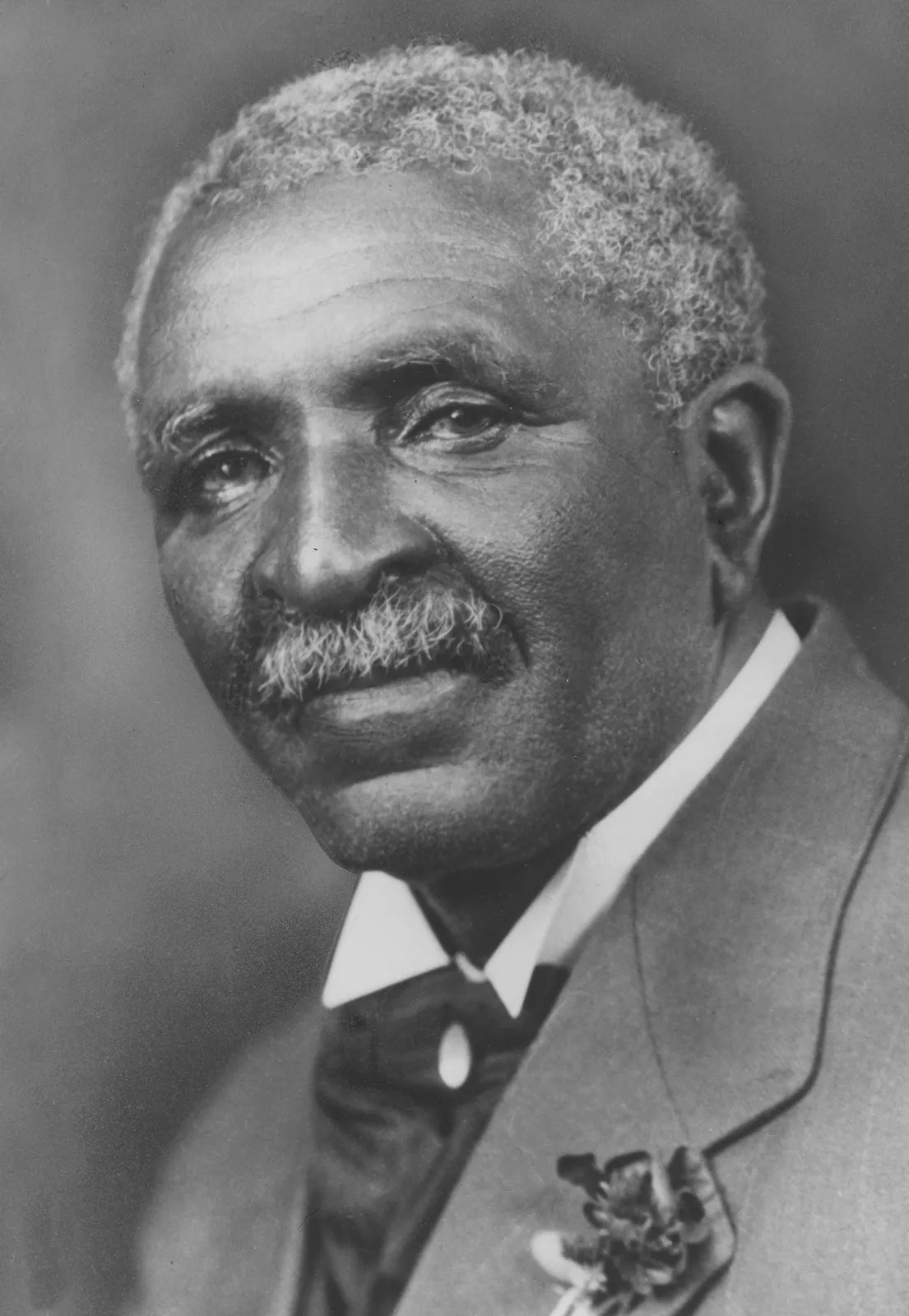
George Washington Carver’s Eight Cardinal Virtues

101 years ago today, George Washington Carver wrote a list of Eight Cardinal Virtues (from a letter to the senior class he taught, dated Jan. 9, 1922):

  1. Be clean both inside and out.
  2. Neither look up to the rich nor down on the poor.
  3. Lose, if need be, without squealing.
  4. Win without bragging.
  5. Always be considerate of women, children, and older people.
  6. Be too brave to lie.
  7. Be too generous to cheat.
  8. Take your share of the world and let others take theirs.