Categories
Bible Teaching

Anchored In Hope

Apostolic Life Cathedral | 1/22/2023 10:00 AM

Text: Hebrews 6:13-20

(13)  For when God made promise to Abraham, because he could swear by no greater, he sware by himself,

(14)  Saying, Surely blessing I will bless thee, and multiplying I will multiply thee.

(15)  And so, after he had patiently endured, he obtained the promise.

(16)  For men verily swear by the greater: and an oath for confirmation is to them an end of all strife.

(17)  Wherein God, willing more abundantly to shew unto the heirs of promise the immutability of his counsel, confirmed it by an oath:

(18)  That by two immutable things, in which it was impossible for God to lie, we might have a strong consolation, who have fled for refuge to lay hold upon the hope set before us:

(19)  Which hope we have as an anchor of the soul, both sure and stedfast, and which entereth into that within the veil;

(20)  Whither the forerunner is for us entered, even Jesus, made an high priest for ever after the order of Melchisedec.

Hope, in the New Testament, is generally defined as “anticipation, expectation, confidence, faith.”[1]

However, in this passage it is best defined as that which we “have, hold, own, or possess.”[2]

Another way to view hope in our text today is “to hold one’s self to a thing, to lay hold of a thing, to adhere or cling to.”[3]

George Beverly Shea wrote “In Times Like These,” and it contains these words:

In times like these you need a Savior

In times like these you need an anchor

Be very sure, be very sure

Your anchor holds and grips the Solid Rock!

This Rock is Jesus, Yes He’s the One

This Rock is Jesus, the only One

Be very sure, be very sure

Your anchor holds and grips the Solid Rock!

With all the uncertainty of our day, it is abundantly clear that we need something, or someone to hold on to.

Something, or someone, to cling to.

That Rock is Jesus, He is the one we anchor our hope upon.

My hope is built on nothing less

Than Jesus’ blood and righteousness

I dare not trust the sweetest frame

But wholly lean on Jesus’ name

On Christ the solid rock I stand

All other ground is sinking sand

All other ground is sinking sand

At some point everyone will have a testing of their faith.

When those tribulations come, you need to be anchored in Jesus.

You need to anchor into Jesus from several points.

Six anchor points are suggested when you moor a boat.[4]

We need multiple mooring/anchor points in our lives.

Approach truth from every angle.

You have scripture and an experience to match the Word of God.

Anchor points that help you to hold on to your faith.

Truth comes by revelation from the Word of God.

Reason is not the final authority, but God is the final authority.

Postmodernism = the idea that there is no absolute truth and what works for me “in the moment” is my truth, but it’s relative and may change at any time.

When you don’t have a personal experience with the Lord Jesus Christ all you have is theology.

Always choose the side of truth, righteousness, & holiness.

How we choose to obey and follow Jesus in our relationship with Him is key to a life of holiness.

When we don’t have a long term goal we often fall short ofour potential.

Live with an awareness of eternity.

What if Jesus were coming today.

Live for today and live for that Day when He comes for us.

Six Anchor Points

Hebrews 6:1-3, “(1) Therefore leaving the principles of the doctrine of Christ, let us go on unto perfection; not laying again the foundation of repentance from dead works, and of faith toward God,  (2)  Of the doctrine of baptisms, and of laying on of hands, and of resurrection of the dead, and of eternal judgment.  (3)  And this will we do, if God permit.”

Six Anchor Points:

  1. We must believe there is a God.
    • Hebrews 11:6, “But without faith it is impossible to please him: for he that cometh to God must believe that he is, and that he is a rewarder of them that diligently seek him.”
    • Jesus is the one true God manifest in the flesh to be our Savior.
  2. The Bible is the Word of God.
    • 2 Timothy 3:16-17, “(16) All scripture is given by inspiration of God, and is profitable for doctrine, for reproof, for correction, for instruction in righteousness:  (17)  That the man of God may be perfect, throughly furnished unto all good works.”
  3. We must believe, obey, and experience the New Birth.
    • Faith, Repentance, Water Baptism in the Name of Jesus Christ, and the Infilling of the Holy Ghost Speaking in Tongues.John 3:5-8, “(5) Jesus answered, Verily, verily, I say unto thee, Except a man be born of water and of the Spirit, he cannot enter into the kingdom of God.  (6)  That which is born of the flesh is flesh; and that which is born of the Spirit is spirit.  (7)  Marvel not that I said unto thee, Ye must be born again.  (8)  The wind bloweth where it listeth, and thou hearest the sound thereof, but canst not tell whence it cometh, and whither it goeth: so is every one that is born of the Spirit.”
    • Acts 2:38, “Then Peter said unto them, Repent, and be baptized every one of you in the name of Jesus Christ for the remission of sins, and ye shall receive the gift of the Holy Ghost.”
  4. Life in the Spirit.
    • Laying on of Hands = Operation of the Spirit and its Fruit and Gifts.
    • Romans 8:12-15, “(12) Therefore, brethren, we are debtors, not to the flesh, to live after the flesh.  (13)  For if ye live after the flesh, ye shall die: but if ye through the Spirit do mortify the deeds of the body, ye shall live.  (14)  For as many as are led by the Spirit of God, they are the sons of God.  (15)  For ye have not received the spirit of bondage again to fear; but ye have received the Spirit of adoption, whereby we cry, Abba, Father.”
  5. Life of Holiness.
    • Acts 2:40, “And with many other words did he testify and exhort, saying, Save yourselves from this untoward generation.”
    • How? Living a life of holiness.
    • 1 Peter 1:13-16, “(13) Wherefore gird up the loins of your mind, be sober, and hope to the end for the grace that is to be brought unto you at the revelation of Jesus Christ;  (14)  As obedient children, not fashioning yourselves according to the former lusts in your ignorance:  (15)  But as he which hath called you is holy, so be ye holy in all manner of conversation;  (16)  Because it is written, Be ye holy; for I am holy.
  6. The Life to Come.
    • Jesus is coming.
    • 1 Thessalonians 4:13-18, “(13) But I would not have you to be ignorant, brethren, concerning them which are asleep, that ye sorrow not, even as others which have no hope.  (14)  For if we believe that Jesus died and rose again, even so them also which sleep in Jesus will God bring with him.  (15)  For this we say unto you by the word of the Lord, that we which are alive and remain unto the coming of the Lord shall not prevent them which are asleep.  (16)  For the Lord himself shall descend from heaven with a shout, with the voice of the archangel, and with the trump of God: and the dead in Christ shall rise first:  (17)  Then we which are alive and remain shall be caught up together with them in the clouds, to meet the Lord in the air: and so shall we ever be with the Lord.  (18)  Wherefore comfort one another with these words.”

If you feel adrift today then you need to go back and secure the lines of your hope and reattach your anchor on the Lord Jesus Christ, the Rock.

When you have made sure these six anchor points are secure, then you can weather any storm.


[1] Strong’s.

[2] Thayer’s

[3] Ibid.

[4] David K. Bernard, “Anchor Points (In Our Lives),” May 14, 2015

Categories
Bible Teaching

A Need for Seed

Apostolic Life Cathedral | 12/11/2022 | 10:00 AM

Genesis 1:11-12

(11)  And God said, Let the earth bring forth grass, the herb yielding seed, and the fruit tree yielding fruit after his kind, whose seed is in itself, upon the earth: and it was so.

(12)  And the earth brought forth grass, and herb yielding seed after his kind, and the tree yielding fruit, whose seed was in itself, after his kind: and God saw that it was good.

Genesis 3:15

(15)  And I will put enmity between thee and the woman, and between thy seed and her seed; it shall bruise thy head, and thou shalt bruise his heel.

Galatians 3:16-29


(16)  Now to Abraham and his seed were the promises made. He saith not, And to seeds, as of many; but as of one, And to thy seed, which is Christ.
(17)  And this I say, that the covenant, that was confirmed before of God in Christ, the law, which was four hundred and thirty years after, cannot disannul, that it should make the promise of none effect.
(18)  For if the inheritance be of the law, it is no more of promise: but God gave it to Abraham by promise.
(19)  Wherefore then serveth the law? It was added because of transgressions, till the seed should come to whom the promise was made; and it was ordained by angels in the hand of a mediator.
(20)  Now a mediator is not a mediator of one, but God is one.
(21)  Is the law then against the promises of God? God forbid: for if there had been a law given which could have given life, verily righteousness should have been by the law.
(22)  But the scripture hath concluded all under sin, that the promise by faith of Jesus Christ might be given to them that believe.
(23)  But before faith came, we were kept under the law, shut up unto the faith which should afterwards be revealed.
(24)  Wherefore the law was our schoolmaster to bring us unto Christ, that we might be justified by faith.
(25)  But after that faith is come, we are no longer under a schoolmaster.
(26)  For ye are all the children of God by faith in Christ Jesus.
(27)  For as many of you as have been baptized into Christ have put on Christ.
(28)  There is neither Jew nor Greek, there is neither bond nor free, there is neither male nor female: for ye are all one in Christ Jesus.
(29)  And if ye be Christ’s, then are ye Abraham’s seed, and heirs according to the promise.

1 Peter 1:22-23

(22)  Seeing ye have purified your souls in obeying the truth through the Spirit unto unfeigned love of the brethren, see that ye love one another with a pure heart fervently:

(23)  Being born again, not of corruptible seed, but of incorruptible, by the word of God, which liveth and abideth for ever.

Romans 9:7, “Neither, because they are the seed of Abraham, are they all children: but, In Isaac shall thy seed be called.”

Luke 8:11-15

(11)  Now the parable is this: The seed is the word of God.

(12)  Those by the way side are they that hear; then cometh the devil, and taketh away the word out of their hearts, lest they should believe and be saved.

(13)  They on the rock are they, which, when they hear, receive the word with joy; and these have no root, which for a while believe, and in time of temptation fall away.

(14)  And that which fell among thorns are they, which, when they have heard, go forth, and are choked with cares and riches and pleasures of this life, and bring no fruit to perfection.

(15)  But that on the good ground are they, which in an honest and good heart, having heard the word, keep it, and bring forth fruit with patience.

Categories
Bible Teaching

A Time of Preparation

Esther experienced a time of preparation (purification) before she was introduced to the king and subsequently gained his love and was made queen:

Esther 2:2-18 (KJV), “(1) Then said the king’s servants that ministered unto him, Let there be fair young virgins sought for the king:  (3)  And let the king appoint officers in all the provinces of his kingdom, that they may gather together all the fair young virgins unto Shushan the palace, to the house of the women, unto the custody of Hege the king’s chamberlain, keeper of the women; and let their things for purification be given them:  (4)  And let the maiden which pleaseth the king be queen instead of Vashti. And the thing pleased the king; and he did so.  (5)  Now in Shushan the palace there was a certain Jew, whose name was Mordecai, the son of Jair, the son of Shimei, the son of Kish, a Benjamite;  (6)  Who had been carried away from Jerusalem with the captivity which had been carried away with Jeconiah king of Judah, whom Nebuchadnezzar the king of Babylon had carried away.  (7)  And he brought up Hadassah, that is, Esther, his uncle’s daughter: for she had neither father nor mother, and the maid was fair and beautiful; whom Mordecai, when her father and mother were dead, took for his own daughter.  (8)  So it came to pass, when the king’s commandment and his decree was heard, and when many maidens were gathered together unto Shushan the palace, to the custody of Hegai, that Esther was brought also unto the king’s house, to the custody of Hegai, keeper of the women.  (9)  And the maiden pleased him, and she obtained kindness of him; and he speedily gave her her things for purification, with such things as belonged to her, and seven maidens, which were meet to be given her, out of the king’s house: and he preferred her and her maids unto the best place of the house of the women.  (10)  Esther had not shewed her people nor her kindred: for Mordecai had charged her that she should not shew it.  (11)  And Mordecai walked every day before the court of the women’s house, to know how Esther did, and what should become of her.  (12)  Now when every maid’s turn was come to go in to king Ahasuerus, after that she had been twelve months, according to the manner of the women, (for so were the days of their purifications accomplished, to wit, six months with oil of myrrh, and six months with sweet odours, and with other things for the purifying of the women;)  (13)  Then thus came every maiden unto the king; whatsoever she desired was given her to go with her out of the house of the women unto the king’s house.  (14)  In the evening she went, and on the morrow she returned into the second house of the women, to the custody of Shaashgaz, the king’s chamberlain, which kept the concubines: she came in unto the king no more, except the king delighted in her, and that she were called by name.  (15)  Now when the turn of Esther, the daughter of Abihail the uncle of Mordecai, who had taken her for his daughter, was come to go in unto the king, she required nothing but what Hegai the king’s chamberlain, the keeper of the women, appointed. And Esther obtained favour in the sight of all them that looked upon her.  (16)  So Esther was taken unto king Ahasuerus into his house royal in the tenth month, which is the month Tebeth, in the seventh year of his reign.  (17)  And the king loved Esther above all the women, and she obtained grace and favour in his sight more than all the virgins; so that he set the royal crown upon her head, and made her queen instead of Vashti.  (18)  Then the king made a great feast unto all his princes and his servants, even Esther’s feast; and he made a release to the provinces, and gave gifts, according to the state of the king.”

Apostolic Life Cathedral | 2/12/2023

This time of purification was a time of instruction and examining for these young ladies. They learned what their role was to be and how to act and please the king. It was more than just cleaning and preparing the body, but also the decorum and grace of the maiden.

Hadassah? Well, she excelled and her time of preparation resulted in great success.

The psalmist David wrote, “The LORD trieth the righteous: but the wicked and him that loveth violence his soul hateth.”[1] 

In this passage, when we read that God “trieth” it simply means that this is God’s way of “examining, scrutinizing, proving, and testing” the hearts of those who are His people.[2]  These tests are for the sole purpose of preparing us for greater responsibility and spiritual growth. 

The apostle Paul makes it quite clear that the process of being approved by God follows a particular process: “Therefore being justified by faith, we have peace with God through our Lord Jesus Christ: By whom also we have access by faith into this grace wherein we stand, and rejoice in hope of the glory of God. And not only so, but we glory in tribulations also: knowing that tribulation worketh patience; And patience, experience; and experience, hope: And hope maketh not ashamed; because the love of God is shed abroad in our hearts by the Holy Ghost which is given unto us.”[3] 

As this process takes place we witness the varying degrees of preparation God places us in as they accomplish. Work out, and achieve God’s purpose for our lives.

So, what we think of as pressure, stress, or trial God uses as a means to bring about a patient, enduring, sustaining, perseverant, and steadfast quality to our Christian character.  These times of preparation are purifying our motives and actions through the teaching of grace in our lives.

When this quality is part of our spiritual nature we have become God proven because our character has been tried and found worthy.  This experience results in the establishment of hope in our lives, which is the “joyful and confident expectation of eternal salvation” and the understanding that because I came through previous trials intact then I’ll make it through this one as well because God is with me.”[4]

This is why, when Esther, as queen, had to go before the King to deal with the threat of genocide her people faced because of Haman’s jealous treachery, she did to with complete faith and hope.

Esther was prepared beforehand “for such a time as this” (Esther 4:4). It likely never crossed her mind in her time of purification that she was actually being prepared to be more than a queen, she was being readied for a role of mediation and deliverance.

Right now you are being prepared through trial and tests and difficulties for a greater work than you can imagine. Let those tribulations purify and prepare you for your own God designed moment.


[1] Psalm 11:5

[2] Brown, Driver, Briggs and Gesenius. “Hebrew Lexicon entry for Bachan”. “The KJV Old Testament Hebrew Lexicon”. https://www.studylight.org/lexicons/eng/hebrew/974.html.

[3] Romans 5:1-5

[4] Thayer and Smith. “Greek Lexicon entry for Elpis”. “The KJV New Testament Greek Lexicon”. https://www.biblestudytools.com/lexicons/greek/kjv/elpis.html.

Categories
Bible Teaching

Rahab’s Faith

Faith is a conviction or belief that one holds.  To be convicted of something is to be convinced, and to have a belief is the “mental act, condition, or habit of placing trust or confidence in another.”[1] 

Rahab showed her complete faith in the God of the Hebrews by her statement, “The LORD your God, he is God in heaven above, and in earth beneath.”[2]  This is why she could hide the two spies and then put out the red cord. 

She did it in faith and because of this the scripture states, “And Joshua saved Rahab the harlot alive, and her father’s household, and all that she had; and she dwelleth in Israel even unto this day; because she hid the messengers, which Joshua sent to spy out Jericho.”[3] 

The action on Rahab’s part was a response to the fact that she was convinced of the omnipresence and complete deity of God because she believed that He was the only God of heaven and earth.  This is why James wrote, “Likewise also was not Rahab the harlot justified by works, when she had received the messengers, and had sent them out another way?”[4] 

When we have faith, we will also have a response to that faith.  Rahab’s response to her complete faith in Jehovah was in helping the spies.  Thus, “…faith without works is dead.”[5]


[1] Dictionary.com. http://dictionary.reference.com/search?q=belief.

[2] Joshua 2:9-11

[3] Joshua 6:25

[4] James 2:25

[5] James 2:20

Categories
Bible Teaching

Progressive Revelation

Progressive Revelation[1]

Revelation of Truth is progressive and is best explained by this passage:

“For the earth bringeth forth fruit of herself; first the blade, then the ear, after that the full corn in the ear” (Mark 4:28).

Notice Albert Barnes’ note on the progression of maturity in Mark 4:28[2]:

1.    For the earth bringeth forth fruit of herself – That is, it is done without the power of man. It is done while man is engaged in other things. God gives it its power.

2.    First the blade – The green, tender shoot, that first starts out of the earth before the stalk is formed.

3.    Then the ear – The original means the stalk or spire of wheat or barley, as well as the ear.

4.    The full corn in the ear – The ripe wheat. The grain swollen to its proper size. By this is denoted, undoubtedly, that grace or religion in the heart is of gradual growth.

a.    It is at first tender, feeble, perhaps almost imperceptible, like the first shootings of the grain in the earth. Perhaps also,

b.    Like grain, it often lies long in the earth before there are signs of life.

c.    Like the tender grain, also, it needs care, kindness, and culture. A frost, a cold storm, or a burning sun alike injure it.

d.    So tender piety in the heart needs care, kindness, culture. It needs shelter from the frosts and storms of a cold, unfeeling world. It needs the genial dews and mild suns of heaven;

e.    In other words, it needs instruction, prayer, and friendly counsel from parents, teachers, ministers, and experienced Christians, that it may grow, and bring forth the full fruits of holiness.

f.      Like the grain, also, in due time it will grow strong; it will produce its appropriate fruit – a full and rich harvest – to the praise of God.

Hebrews 12:29, “For our God is a consuming fire.”

It would appear at first glance that these two verses oppose each other, but when we take into account the progressive nature of revelation we see a parallel between plant growth and the spread of fire.

2018 California Wildfires:[3]

The 2018 wildfire season was the deadliest and most destructive wildfire season on record in California, with a total of 8,527 fires burning an area of 1,893,913 acres (766,439 ha), the largest amount of burned acreage recorded in a fire season….as of December 21. The fires have caused more than $3.5 billion (2018 USD) in damages, including $1.792 billion in fire suppression costs. Through the end of August 2018, Cal Fire alone spent $432 million on operations. The Mendocino Complex Fire burned more than 459,000 acres (186,000 ha), becoming the largest complex fire in the state’s history, with the complex’s Ranch Fire surpassing the Thomas Fire and the Santiago Canyon Fire of 1889 to become California’s single-largest recorded wildfire.

On August 4, 2018, a national disaster was declared in Northern California, due to the extensive wildfires burning there.

In November 2018, strong winds aggravated conditions in another round of large, destructive fires that occurred across the state. This new batch of wildfires includes the Woolsey Fire and the Camp Fire, the latter of which killed at least 86 people with 3 still unaccounted for as of 4 December 2018. It destroyed more than 18,000 structures, becoming both California’s deadliest and most destructive wildfire on record.

Humans have been recorded as the main cause of wildfires in California. Various causes, both intentional and accidental, such as arson, unattended campfires, fireworks, cigarettes, cars, and power lines have contributed to this increase in the number of fires.

A direct contributor to the 2018 California wildfires was an increase in dead tree fuel. By December 2017, there was a record 129 million dead trees in California.

Wildfire defined: “A wildfire or wildland fire is a fire in an area of combustible vegetation occurring in rural areas.”[4]

Wildfire types can be generally characterized by their fuels as follows:

1.    Ground fires are fed by subterranean roots, duff and other buried organic matter. This fuel type is especially susceptible to ignition due to spotting. Ground fires typically burn by smoldering, and can burn slowly for days to months.

2.    Crawling or surface fires are fueled by low-lying vegetation on the forest floor such as leaf and timber litter, debris, grass, and low-lying shrubbery. This kind of fire often burns at a relatively lower temperature than crown fires (less than 400 °C (752 °F)) and may spread at slow rate, though steep slopes and wind can accelerate the rate of spread.

3.    Ladder fires consume material between low-level vegetation and tree canopies, such as small trees, downed logs, and vines. Kudzu, Old World climbing fern, and other invasive plants that scale trees may also encourage ladder fires.

4.    Crown, canopy, or aerial fires burn suspended material at the canopy level, such as tall trees, vines, and mosses. The ignition of a crown fire, termed crowning, is dependent on the density of the suspended material, canopy height, canopy continuity, sufficient surface and ladder fires, vegetation moisture content, and weather conditions during the blaze. Stand-replacing fires lit by humans can spread into the Amazon rain forest, damaging ecosystems not particularly suited for heat or arid conditions.[5]

A true revelation is an unveiling of existing truth of which the individual was previously unaware.  Others may already know that truth, but the revelation is a personal opening of biblical truth.

Romans 16:25-26, “Now to him that is of power to stablish you according to my gospel, and the preaching of Jesus Christ, according to the revelation of the mystery, which was kept secret since the world began, But now is made manifest, and by the scriptures of the prophets, according to the commandment of the everlasting God, made known to all nations for the obedience of faith.”

This concerns the revelation of the Church, which was spoken of in the Old Testament but not revealed in its entirety until the birth of the Church in Acts 2. Now, today, we read the Old Testament and see parallels, types and shadows which reveal the Church. These truths were always present in the Word of God, but not understood, unveiled, and revealed until the Church’s nativity.

According to David P. Johnson and Jared S. Runck, “progressive revelation indicates that divine revelation unfolds across the story of Scripture with ever-increasing detail and dimension; later revelation always and only adds to prior revelation and never detracts or overturns it.”[6]

Galatians 1:10-24 speaks of Paul’s travel through the Word of God and how Christ revealed the message of the Gospel to Him.  Then he met certain Apostles and found that the same revelation he had received from the Lord was the same Gospel they received and preached:

“For do I now persuade men, or God? or do I seek to please men? for if I yet pleased men, I should not be the servant of Christ. But I certify you, brethren, that the gospel which was preached of me is not after man. For I neither received it of man, neither was I taught it, but by the revelation of Jesus Christ. For ye have heard of my conversation in time past in the Jews’ religion, how that beyond measure I persecuted the church of God, and wasted it: And profited in the Jews’ religion above many my equals in mine own nation, being more exceedingly zealous of the traditions of my fathers. But when it pleased God, who separated me from my mother’s womb, and called me by his grace, To reveal his Son in me, that I might preach him among the heathen; immediately I conferred not with flesh and blood: Neither went I up to Jerusalem to them which were apostles before me; but I went into Arabia, and returned again unto Damascus. Then after three years I went up to Jerusalem to see Peter, and abode with him fifteen days. But other of the apostles saw I none, save James the Lord’s brother. Now the things which I write unto you, behold, before God, I lie not. Afterwards I came into the regions of Syria and Cilicia; And was unknown by face unto the churches of Judaea which were in Christ: But they had heard only, That he which persecuted us in times past now preacheth the faith which once he destroyed. And they glorified God in me” (Galatians 1:10-24).

A true unveiling of revelatory truth will be “line upon line” and “precept upon precept” (see Isaiah 28:10). In other words, progressive revelation builds upon what you already know.

Sometimes God gives clear, sudden and supernatural insight, which Paul identified as either the gift of the Word of Knowledge, or the gift of the Word of Wisdom (1 Corinthians 12:8).

Things to remember:

Scripture interprets Scripture.

1.    Out of the mouth of two or three witnesses let every word be established:

a.    Deuteronomy 17:6, “At the mouth of two witnesses, or three witnesses, shall he that is worthy of death be put to death; but at the mouth of one witness he shall not be put to death.”

b.    Deuteronomy 19:15, “One witness shall not rise up against a man for any iniquity, or for any sin, in any sin that he sinneth: at the mouth of two witnesses, or at the mouth of three witnesses, shall the matter be established.”

c.    Matthew 18:16, “But if he will not hear thee, then take with thee one or two more, that in the mouth of two or three witnesses every word may be established.”

d.    2 Corinthians 13:1, “This is the third time I am coming to you. In the mouth of two or three witnesses shall every word be established.”

e.    1 Timothy 5:19, “Against an elder receive not an accusation, but before two or three witnesses.”

2.    Your revelation will never contradict biblical truth – the old illustration of a man who said God told him to divorce one woman to marry another – this contradicts all biblical precedent.  Only one reason in the New Testament for divorce (adultery, fornication).

3.    If it’s “too good to be true” it probably is.

Deut. 29:29, “The secret things belong unto the LORD our God: but those things which are revealed belong unto us and to our children for ever, that we may do all the words of this law.”

1 Sam. 3:7-21, “(7) Now Samuel did not yet know the LORD, neither was the word of the LORD yet revealed unto him….(21) And the LORD appeared again in Shiloh: for the LORD revealed himself to Samuel in Shiloh by the word of the LORD.” 

This implies that the revelation of God’s Word is a matter of maturity.  As we grow in the wisdom and stature of God’s Word we will receive (be entrusted with) more truth.

Truth is multilayered like an onion.

When we realize that God is revealing truth to us we are humbled and need to realize that while others may not know the truth – yet – we are responsible for the manner in which we share it.

With regard to Spiritual gifts, some people think that they are more Spiritual than others because of their gifting, but this is not true. Truly spiritual people are into the ministry of:

·       Reconciliation – 2 Corinthians 5:18-20, “(18) And all things are of God, who hath reconciled us to himself by Jesus Christ, and hath given to us the ministry of reconciliation;  (19) To wit, that God was in Christ, reconciling the world unto himself, not imputing their trespasses unto them; and hath committed unto us the word of reconciliation.  (20) Now then we are ambassadors for Christ, as though God did beseech you by us: we pray you in Christ’s stead, be ye reconciled to God.”

·       Restoration – Galatians 6:1, “Brethren, if a man be overtaken in a fault, ye which are spiritual, restore such an one in the spirit of meekness; considering thyself, lest thou also be tempted.”

The more of the Word of God you read and hide in your heart (by memorization and meditation) the greater opportunity you give God to reveal deeper truth to you.  As God reveals more truth you will hunger more and more for His continual revelation: “Deep calleth unto deep at the noise of thy waterspouts: all thy waves and thy billows are gone over me” (Ps. 42:7).

“…The Spirit searcheth all things, yea, the deep things of God” (1 Cor. 2:10).  A balance of God’s Word and living in the power of the Holy Ghost will reveal Spiritual truth as well.  Simply put, there are some things people never see in the Bible because they are not Spirit led (1 Corinthians 2:14).

Amos 3:7-8, “Surely the Lord GOD will do nothing, but he revealeth his secret unto his servants the prophets. The lion hath roared, who will not fear? the Lord GOD hath spoken, who can but prophesy?”

When God speaks or reveals truth to His servant they can’t help but be filled with a desire to speak it, regardless of the positive or negative consequences.

Jeremiah 20:9, “Then I said, I will not make mention of him, nor speak any more in his name. But his word was in mine heart as a burning fire shut up in my bones, and I was weary with forbearing, and I could not stay.”

Fire spreads and as long as there is fuel it will grow. Our hungry heart searching for more of Jesus Christ is the fuel that ignites the fire of progressive revelation, and when our hearts can no longer contain the fire the compulsion, a drive, to share the flame of the progressive revelation of truth that our Lord has revealed to us.


[1] Notes from an email to Dave Martin regarding progressive revelation dated 9/11/2006.

[2] Albert Barnes’ Notes on the Bible, Mark 4:28.

[3] 2018 California Wildfires. https://en.wikipedia.org/wiki/2018_California_wildfires. Accessed: 2/26/19.

[4]  Cambridge Advanced Learner’s Dictionary (Third ed.). Cambridge University Press. 2008. ISBN 978-0-521-85804-5. Archived from the original on 13 August 2009.

[5] Wildfire. https://en.wikipedia.org/wiki/Wildfire#Spread. Accessed: 2/26/19.

[6] David P. Johnson & Jared S. Runck. (2017). Handbook of the Prophets, p. 8-9.

Categories
Bible Teaching

The Weapon of Prayer – E. M. Bounds

E. M. Bounds on the necessity of constant prayer, from his book The Weapon of Prayer:

GOD’S great plan for the redemption of mankind is as much bound up to prayer for its prosperity and success as when the decree creating the movement was issued from the Father, bearing on its frontage the imperative, universal and eternal condition, “Ask of me, and I will give thee the heathen for thy inheritance and the uttermost part of the earth for thy possession.” In many places an alarming state of things has come to pass, in that the many who are enrolled in our churches are not praying men and women. Many of those occupying prominent positions in church life are not praying men. It is greatly to feared that much of the work of the Church is being done by those who are perfect strangers to the closet. Small wonder that the work does not succeed. While it may be true that many in the Church say prayers, it is equally true that their praying is of the stereotyped order. Their prayers may be charged with sentiment, but they are tame, timid, and without fire or force. Even this sort of praying is done by a few straggling men to be found at prayer-meetings. Those whose names are to be found bulking large in our great Church assemblies are not men noted for their praying habits. Yet the entire fabric of the work in which they are engaged has, perforce, to depend on the adequacy of prayer. This fact is similar to the crisis which would be created were a country to have to admit in the face of an invading foe that it cannot fight and have no knowledge of the weapons whereby war is to be waged. In all God’s plans for human redemption, He proposes that men pray. The men are to pray in every place, in the church, in the closet, in the home, on sacred days and on secular days. All things and everything are dependent on the measure of men’s praying. Prayer is the genius and mainspring of life. We pray as we live; we live as we pray. Life will never be finer than the quality of the closet. The mercury of life will rise only by the warmth of the closet. Persistent non-praying eventually will depress life below zero.

Categories
Bible Teaching

The Turning Point

The Turning Point

Stephen. Kuntzman

(7/16/19)

Text: 2 Timothy 2:15-21

(15)  Study to shew thyself approved unto God, a workman that needeth not to be ashamed, rightly dividing the word of truth.

(16)  But shun profane and vain babblings: for they will increase unto more ungodliness.

(17)  And their word will eat as doth a canker: of whom is Hymenaeus and Philetus;

(18)  Who concerning the truth have erred, saying that the resurrection is past already; and overthrow the faith of some.

(19)  Nevertheless the foundation of God standeth sure, having this seal, The Lord knoweth them that are his. And, Let every one that nameth the name of Christ depart from iniquity.

(20)  But in a great house there are not only vessels of gold and of silver, but also of wood and of earth; and some to honour, and some to dishonour.

(21)  If a man therefore purge himself from these, he shall be a vessel unto honour, sanctified, and meet for the master’s use, and prepared unto every good work.

Ancillary: 1 Timothy 1:18-20, “This charge I commit unto thee, son Timothy, according to the prophecies which went before on thee, that thou by them mightest war a good warfare; Holding faith, and a good conscience; which some having put away concerning faith have made shipwreck: Of whom is Hymenaeus and Alexander; whom I have delivered unto Satan, that they may learn not to blaspheme [defame, rail on, revile, speak evil].”

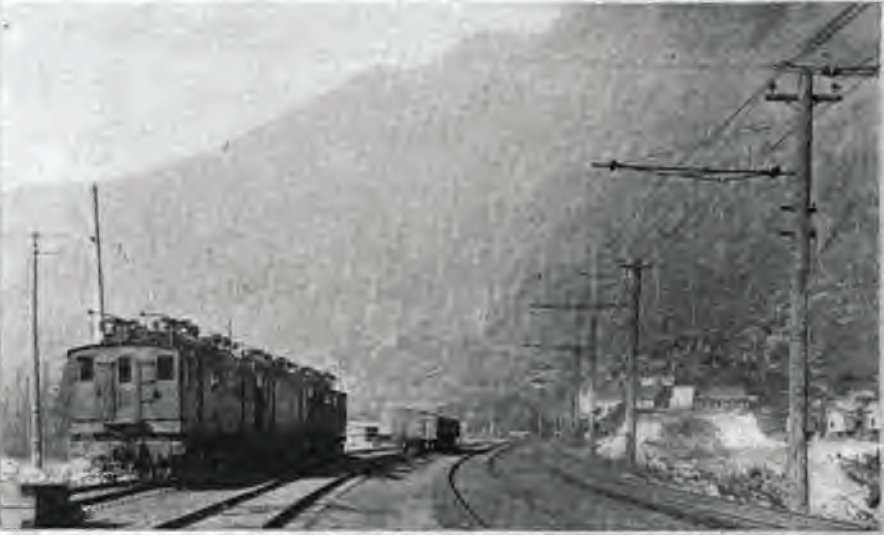
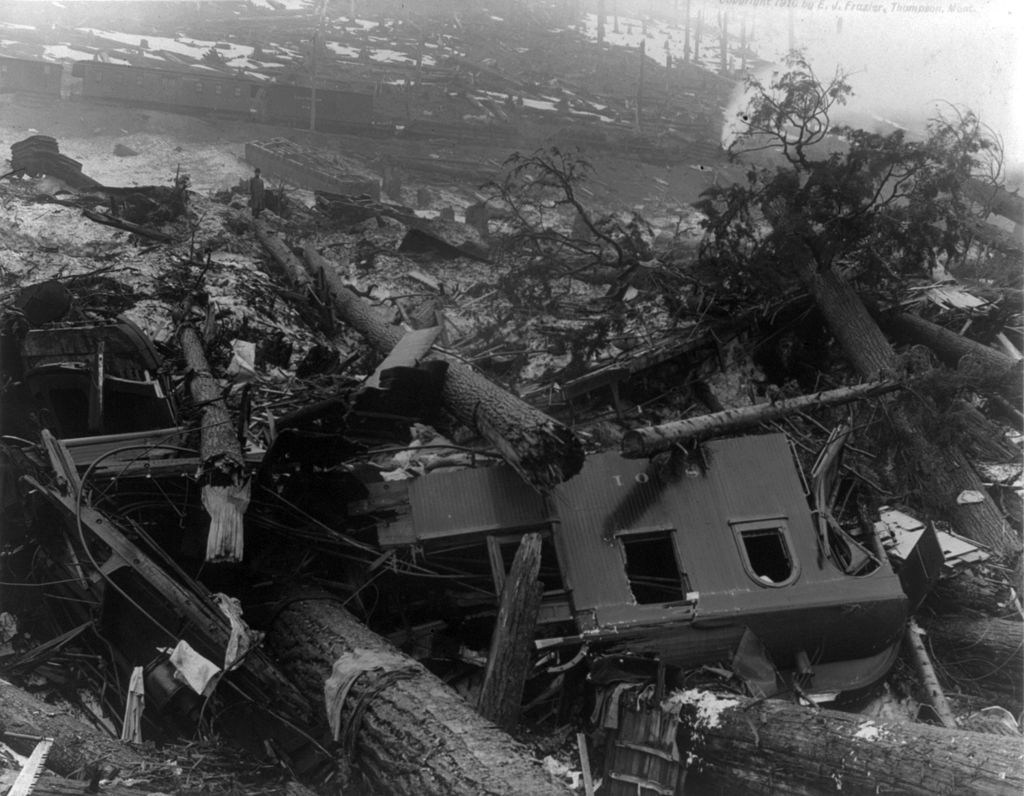
It is known as “The Wellington Avalanche,” and it occurred on March 1, 1910, in Wellington, WA.

It “was the worst avalanche in the history of the United States, marked by the total death count, which numbered to 96.[2]

For nine days at the end of February 1910, Wellington was assailed by a terrible blizzard. Up to a foot (30 cm) of snow fell every hour, and, on the worst day, eleven feet (340 cm) of snow fell. Two trains, a passenger train and a mail train, both bound from Spokane to Seattle, were trapped in the depot.”[1]

“Late on February 28, the snow stopped and was replaced by rain and a warm wind. Just after 1 a.m. on March 1, as a result of a lightning strike, a slab of snow broke loose from the side of Windy Mountain during a violent thunderstorm. A ten-foot high mass of snow, half a mile long and a quarter of a mile wide, fell toward the town. A forest fire had recently ravaged the slopes above the town, leaving very little to impede the avalanche.”[2]

“The avalanche missed the Bailets Hotel (which also housed the town’s general store and post office), but hit the railroad depot. Most of the passengers and crew were asleep aboard their trains. The impact threw the trains 150 feet (45 m) downhill and into the Tye River valley. Ninety six people were killed, including 35 passengers, 58 Great Northern employees on the trains, and three railroad employees in the depot.”[3]

 One witness, Charles Andrews, a Great Northern engineer, said it looked like:

“White Death moving down the mountainside above the trains.  Relentlessly it advanced, exploding, roaring, rumbling, grinding, snapping – a crescendo of sound that might have been the crashing of ten thousand freight trains.

It descended to the ledge where the side tracks lay, picked up cars and equipment as though they were so many snow-draped toys, and swallowing them up, disappeared like a white, broad monster into the ravine below.”[4]


I remember reading the writer and commentator George Will years ago, and in his essay he quoted these words from the Polish poet, Stanislaw J. Lec, “Each snowflake in an avalanche pleads not guilty.”

There is power in accumulation.

Things don’t just happen overnight, but there is a buildup of either positive or negative amounts that produce a point of no return.

Paul was warning his son in the gospel of the dangers of “the little foxes, that spoil the vines.”[5]

Just as in the days of Jude, there are “…certain men crept in unawares, who were before of old ordained to this condemnation, ungodly men, turning the grace of our God into lasciviousness, and denying the only Lord God, and our Lord Jesus Christ.”[6]

These false teachers come into the church from time to time and little by little they feed on the tender grapes who have not fully grown to maturity, and destroy them.

It is time to do as the Apostle directed Timothy, “(1) This know also, that in the last days perilous times shall come.  (2)  For men shall be lovers of their own selves, covetous, boasters, proud, blasphemers, disobedient to parents, unthankful, unholy,  (3)  Without natural affection, trucebreakers, false accusers, incontinent, fierce, despisers of those that are good,  (4)  Traitors, heady, highminded, lovers of pleasures more than lovers of God;  (5)  Having a form of godliness, but denying the power thereof: from such turn away.”[7]

FROM SUCH TURN AWAY

Isaiah was clear about the issues of his time and fallen human nature is still the same today (Isaiah 28:9-13):

(9)  Whom shall he teach knowledge? and whom shall he make to understand doctrine? them that are weaned from the milk, and drawn from the breasts.

(10)  For precept must be upon precept, precept upon precept; line upon line, line upon line; here a little, and there a little:

(11)  For with stammering lips and another tongue will he speak to this people.

(12)  To whom he said, This is the rest wherewith ye may cause the weary to rest; and this is the refreshing: yet they would not hear.

(13)  But the word of the LORD was unto them precept upon precept, precept upon precept; line upon line, line upon line; here a little, and there a little; that they might go, and fall backward, and be broken, and snared, and taken.

They scoffed at the prophet and the Word of God.

They mocked the words spoken by prophets who had been “moved on by the Holy Ghost” to write and speak what they divinely uttered. 

Doing so, these mockers and blasphemers continued on into a total backslidden state, were broken by the breaking of that Word, and were bound and placed in captivity.

Too many are bound today, by these false teachers, scoffers, mockers, and spoilers.

It is the devil’s plan to do so and he’ll use false teachers, as he did in Paul’s day, to deny truth and overthrow the faith of some.

2 Timothy 2:15-17

(15)  Study to shew thyself approved unto God, a workman that needeth not to be ashamed, rightly dividing the word of truth.

(16)  But shun profane and vain babblings: for they will increase unto more ungodliness.

(17)  And their word will eat as doth a canker: of whom is Hymenaeus and Philetus;

They were profane and vain words because they were not based on the Word of God. Their words, their teachings, were blasphemous, and every one that heard them unwittingly were eaten up spiritually like a cancer, like gangrene setting in.

It is almost impossible to expunge false doctrine because it accumulates like snowflakes on a mountain until one day – WHITE DEATH pushes everyone in its patch into the cold abyss.

FROM SUCH TURN AWAY

2 Timothy 2:19-21

(19)  Nevertheless the foundation of God standeth sure, having this seal, The Lord knoweth them that are his. And, Let every one that nameth the name of Christ depart from iniquity.

(20)  But in a great house there are not only vessels of gold and of silver, but also of wood and of earth; and some to honour, and some to dishonour.

(21)  If a man therefore purge himself from these, he shall be a vessel unto honour, sanctified, and meet for the master’s use, and prepared unto every good work.

 v. 21 – “purge himself from these” = the corrupting influence of false teachers and blasphemers

 It didn’t happen overnight, but it was years (and sometimes centuries).

 “FROM SUCH TURN AWAY”

 The foundation of God standeth sure:

Ephesians 2:19-22, “(19)  Now therefore ye are no more strangers and foreigners, but fellowcitizens with the saints, and of the household of God; (20)  And are built upon the foundation of the apostles and prophets, Jesus Christ himself being the chief corner stone; (21)  In whom all the building fitly framed together groweth unto an holy temple in the Lord: (22)  In whom ye also are builded together for an habitation of God through the Spirit.”
The Word of God is sure:

·        Every word of God is pure: he is a shield unto them that put their trust in him.  (Proverbs 30:5)

·        And Jesus answered him, saying, It is written, That man shall not live by bread alone, but by every word of God.  (Luke 4:4)

·        “…The seed of the word of God.” (Luke 8:11) – [It’s incorruptible and full of life]

·        So then faith cometh by hearing, and hearing by the word of God.  (Romans 10:17)

·        Heb. 4:12, “For the word of God is quick, and powerful, and sharper than any two-edged sword, piercing even to the dividing asunder of soul and spirit, and of the joints and marrow, and is a discerner of the thoughts and intents of the heart.”

·        1 Peter 1:22-25, “(22)  Seeing ye have purified your souls in obeying the truth through the Spirit unto unfeigned love of the brethren, see that ye love one another with a pure heart fervently: (23)  Being born again, not of corruptible seed, but of incorruptible, by the word of God, which liveth and abideth for ever. (24)  For all flesh is as grass, and all the glory of man as the flower of grass. The grass withereth, and the flower thereof falleth away: (25)  But the word of the Lord endureth for ever. And this is the word which by the gospel is preached unto you.”

In conclusion, Wellington, WA, changed its name soon after that horrible avalanche to Tye, WA.

Changed their name and redirected their future.

Someone needs to redirect their future and turn away from false teachers and blasphemers: “…Let every one that nameth the name of Christ depart from iniquity” (2 Timothy 2:19b)

This Is Your Turning Point


[1] https://en.wikipedia.org/wiki/Wellington,_Washington

[2] Ibid.

[3] Ibid.

[4] https://www.awesomestories.com/asset/view/Wellington-Disaster-America-s-Worst-Avalanche

[5] Song of Solomon 2:15

[6] Jude 1:4

[7] 2 Timothy 3:1-5 

Categories
Bible Teaching

So, You Want To Be Like Jesus?

Sermon: So, You Want To Be Like Jesus? (VIDEO:25:00-1:15:48) | Stephen Kuntzman | 7/8/2018 | Apostolic Life Cathedral – Facebook Page (Huntington, WV)

Categories
Bible Teaching

Mysteries That Reveal the End of the Age – G. T. Haywood

Mysteries That Reveal the End of the Age[1]

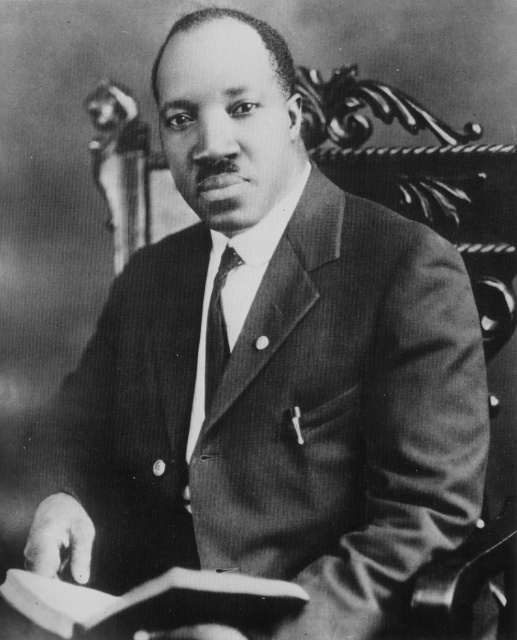
Bishop G. T. Haywood[2]

In the third chapter of Revelations, it is said: “These things saith the Amen, the faithful and true witness, the beginning of the creation of God; I know they works, that thou art neither cold nor hot; I would thou wert cold or hot. So then because thou art lukewarm, and neither cold nor hot, I will spue thee out of my mouth.” Verses 14 to 16. We are living in this day now, when men need to be anointed with eye-salve. It is the last period of the Church. From Adam to Christ 4,000 years rolled away into eternity; then from Christ’s time to the pouring out of His Spirit in seven-fold measure, that is, the fulness of the Spirit poured out to go through the entire Gospel age, and on through the same, almost 2,000 years have flown by, and we are found in the end of the age.

The Career of the Church

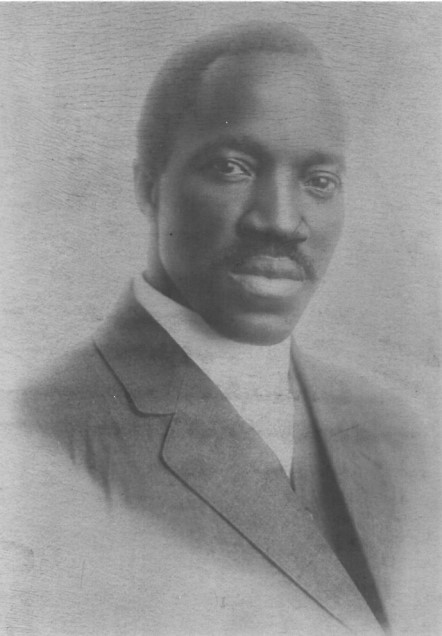
Garfield Thomas Haywood

The first period of the Church following the day of Pentecost was the Ephesian days; then followed the Smyrna, Pergamos, Thyatira, Sardis, Philadelphia, and Laodicea periods in turn. There are seven of them. The seven branched candlestick which is shown in the first chapter of Revelation, refers to the seven-fold dispensation of the one church on earth throughout the gospel age.

Jesus, moreover, spake seven parables in the 13th chapter of Matthew, which are, in order, the parable of the sower, the wheat and tares; the grain of mustard seed; the leaven; the treasure hid in a field; the pearl of great price, and lastly, that of the net cast into the sea.

The same Jesus that spoke on the Isle of Patmos to seven churches is the same one who spake the seven parables in the days of His flesh, when in human form. When He spake the seven messages to the Church, He was in glorified form. And so when He spake the parables, he referred to the career of the Church on earth; and when He spoke of the seven candlesticks, He referred to the Seven periods of the Church in its spiritual relationship.

Truly the Word of God is like the bread with which Jesus fed the multitude: the more your break it the more there is to it. You can never exhaust the word of God. It is not possible to get to the place where you can truly say, “l am familiar with the whole Word,” for the true Word is God himself.

And so we find the parable of the sower compares with the Ephesian age; and the parable of the wheat and the tares corresponds to the Smyrnian age; the parable of the mustard seed to the Pergamite time; the parable of the leavened meal to the Thyatiran dispensation; the hid treasure compares to the Sardian period; the costly pearl to the Philadelphian age; and lastly the dragnet parable to the Laodicean, or lukewarm age, in which we are living. People neither call themselves saints nor sinners. You ask them if they are saints and they will say, “Why, no; that is foolishness.” They don’t feel a bit condemned about dancing, stealing and telling lies, playing cards, poker, chewing and smoking. But any man upon whom God has really put His seal, feels sorry at the least thing done contrary to God’s word. Let us take Ephesians 1:16, 17; and read, “Cease not to give thanks for you, making mention of you in my prayers; That the God of our Lord Jesus Christ, the Father of Glory, may give unto you the Spirit of wisdom and revelation in the knowledge of him.” That is, to know God, comes by revelation. It is not what you can study, neither what I can explain to you, but is what God can impress upon your heart by His Spirit.

“The eyes of your understanding being enlightened; that ye may know what is the hope of his calling, and what the riches of the glory of his inheritance in the saints.”-Eph. 1:18. Now I cannot tell to save my life just what He has got in us. He has not made a bad bargain when He bought us! I used to think the rag man was the most foolish man, but I found later he could make more money out of those things than I could with my hard labor. Say, we were such a ragged pack of old bones; but God bought us with His own precious blood! There is something rich in glory about this purchasing our unworthy selves by the Lord. God could not be fooled. He knew His business. God says, “Why they are going to praise Me!” (And I am beginning it now!)

God desires that our eyes be anointed in these last days but it takes God to anoint our eyes. He is going to show us something, even beautiful things to come. I wish to give you the likeness of the parable of the Sower with the Church of Ephesus; and each of the other parables with each of the other Churches in turn. The word “Ephesus” refers to the “moon” and has the sense of the “beginning of the season.” So it was in the beginning of the season of the Gospel, that the Sower went forth to sow the word of God. The parable of the wheat and tares corresponds with the Church of Smyrna. There was a mixture of tares and wheat. So we find in Smyrna, “I know the blasphemy of them which say they are Jews, and are not, but are the synagogue of Satan.”-Rev. 2:9. The wheat and the tares in the field are hypocrites mingling with the saints in the Church through tradition. Then we have the mustard seed, which when grown, became the greatest among herbs and becomes a tree, insomuch that the birds of the air came and lodged in the branches thereof. And to correspond with this, in the church of Pergamos Satan gained a seat; for God said: “I know where Satan’s seat is.”–Rev. 2:13.

Then we have a woman mentioned in both the parables of the leaven and the corresponding church in Thyatira. This woman taught them to commit fornication, which God calls the worshipping of more than one God.–Ex. 34:15, 16. Did not He accuse Israel of harlotry because she went after Baal? And that church of Thyatira taught them to worship three gods by hiding the doctrine in three persons in the Godhead, and leavened the whole religious world.

Next there is the hidden treasure parable. You read the parable and the letter to the Church of Sardis, and you have an exact picture of the life of the people of the Reformation. They did not have the “life” for they only had a name as being alive, but were dead.–Rev. 3:1. But Luther did have faith, though he gave them no life. That hid treasure was “faith.” He sold out all his future prospects with Catholicism so he could get this treasure. The world is the field.

The Philadelphian age of the church is the great age of holiness which began to be preached all over the world. A pearl is a gem which you might term as “brought about by the death of another.” For an oyster has to die to bring forth a pearl. It is a type of oneness and unity. Christ had to die to bring forth the Church, that true “Pearl.” Holiness truth is a wonderful pearl!

And God said, “Don’t cast your pearl before swine.” The parable of the Pearl and the Philadelphian period of the church are one and the same.

And the Church of the Laodiceans is the last church period; and the dragnet parable is the last parable, showing we are living in the lukewarm age of the church, in the end of the age, when God is dragging the gospel dragnet throughout the world. I believe that net is water baptism in Jesus’ name which has come forth “in the end of the Gospel Age.” The pen-photo of the nominal Church today is graphically portrayed in the letter to the Church of Laodicea. And it is at this same time that the net is being cast into the water in Jesus’ name. When one man came to me with the argument that some were going beck on the baptism in Jesus’ name, I went to the Lord and the Lord said, “Look at the parable.” I read it again and it says, He “cast the bad away.”-Matt. 13:48. Thank God that them who come unto Him with a good and honest heart He will in no wise case out.

One of the things we really need to know, is something on the dispensations. Jesus said, “The time is fulfilled. Repent and believe the Gospel.” And I say to you, the time is fulfilled. Repent and believe ye the Gospel! The coming of the Lord is at hand. Let thy kingdom come!


[1] SOURCE: https://www.apostolic.edu/mysteries-that-reveal-the-end-of-the-age-by-bishop-g-t-haywood/. Accessed: 12/09/2022. THE ABOVE MATERIAL WAS TAKEN FROM EARNEST CONTENDERS FOR THE FAITH BY ELDER JAMES L. TYSON AND PUBLISHED BY PENTECOSTAL PUBLICATIONS, 1982, PAGES 7-11. THIS MATERIAL IS COPYRIGHTED AND MAY BE USED FOR STUDY & RESEARCH PURPOSES ONLY.

[2] BIOGRAPHICAL SKETCH: Bishop Garfield Thomas Haywood was born July 15, 1880, in Greencastle, Indiana. His parents were Ben and Penn Ann Haywood. In 1883 he and his family moved to Indianapolis where he would reside the remainder of his life. Bishop Haywood never finished high school, but was nonetheless a great scholar, artist, composer of songs, and author, which became evident in his later life. On February 11, 1902, he married Ida Howard of Owensboro, Kentucky. To this union was born one daughter, Fannie Haywood (Ellis). Bishop Haywood received the Holy Ghost in February of 1908. He assumed the pastorate of a disorganized group of 13 people in 1909, and built it into one of the most outstanding churches of the generation. Christ Temple of Indianapolis, Indiana, still stands as a monument to the feats done under the leadership of this warrior of the Gospel. Bishop Haywood, from about 1910-1914, was a viable force in the Assemblies of God. He came under conviction of the “Jesus Name” baptism in 1915 and from that time established himself as a proponent of the deity of Christ. He rose through the ranks of the Pentecostal Assemblies of the World, serving as general presbyter, and finally as its first Presiding Bishop. He held that office for six years until his untimely death. Bishop Haywood left this earthly abode at 10:40 AM Sunday morning, April 12, 1931, at the age of 51.

Categories
Bible Teaching

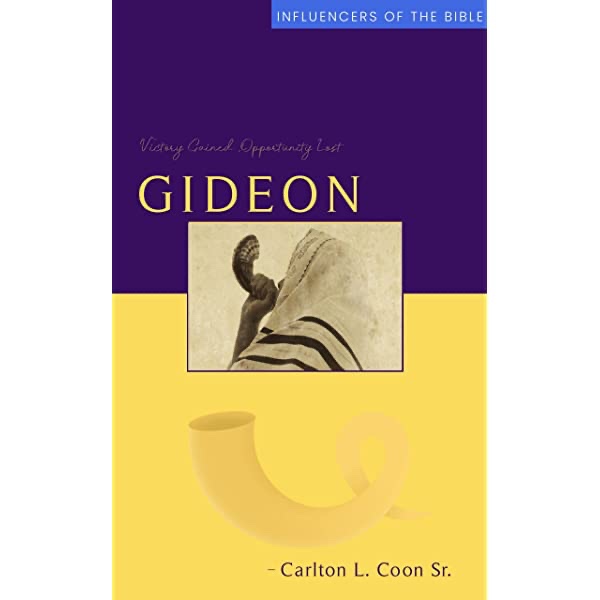
Gideon: Victory Won, Opportunity Lost

“No person should ever feel that their lack inhibits them from being an influence for the Lord Jesus Christ.
Nothing:
Not a lack of education.
Not a lack of Christian pedigree.
Nor a lack of money.
Not the lack of a polished personality
Or being an introvert in a world drawn to extroverts.
The evidence is clear. Almighty God uses unexpected people to influence the outcome of human history.
You can be one of those He uses.
Moreover, you should be one of those He uses.”
-Carlton Coon, https://a.co/c4igeQs