Categories
Bible Teaching

The Weapon of Prayer – E. M. Bounds

E. M. Bounds on the necessity of constant prayer, from his book The Weapon of Prayer:

GOD’S great plan for the redemption of mankind is as much bound up to prayer for its prosperity and success as when the decree creating the movement was issued from the Father, bearing on its frontage the imperative, universal and eternal condition, “Ask of me, and I will give thee the heathen for thy inheritance and the uttermost part of the earth for thy possession.” In many places an alarming state of things has come to pass, in that the many who are enrolled in our churches are not praying men and women. Many of those occupying prominent positions in church life are not praying men. It is greatly to feared that much of the work of the Church is being done by those who are perfect strangers to the closet. Small wonder that the work does not succeed. While it may be true that many in the Church say prayers, it is equally true that their praying is of the stereotyped order. Their prayers may be charged with sentiment, but they are tame, timid, and without fire or force. Even this sort of praying is done by a few straggling men to be found at prayer-meetings. Those whose names are to be found bulking large in our great Church assemblies are not men noted for their praying habits. Yet the entire fabric of the work in which they are engaged has, perforce, to depend on the adequacy of prayer. This fact is similar to the crisis which would be created were a country to have to admit in the face of an invading foe that it cannot fight and have no knowledge of the weapons whereby war is to be waged. In all God’s plans for human redemption, He proposes that men pray. The men are to pray in every place, in the church, in the closet, in the home, on sacred days and on secular days. All things and everything are dependent on the measure of men’s praying. Prayer is the genius and mainspring of life. We pray as we live; we live as we pray. Life will never be finer than the quality of the closet. The mercury of life will rise only by the warmth of the closet. Persistent non-praying eventually will depress life below zero.

Categories
Bible Teaching

The Turning Point

“The Turning Point”

Stephen. Kuntzman

(7/16/19)

Text: 2 Timothy 2:15-21

(15)  Study to shew thyself approved unto God, a workman that needeth not to be ashamed, rightly dividing the word of truth.

(16)  But shun profane and vain babblings: for they will increase unto more ungodliness.

(17)  And their word will eat as doth a canker: of whom is Hymenaeus and Philetus;

(18)  Who concerning the truth have erred, saying that the resurrection is past already; and overthrow the faith of some.

(19)  Nevertheless the foundation of God standeth sure, having this seal, The Lord knoweth them that are his. And, Let every one that nameth the name of Christ depart from iniquity.

(20)  But in a great house there are not only vessels of gold and of silver, but also of wood and of earth; and some to honour, and some to dishonour.

(21)  If a man therefore purge himself from these, he shall be a vessel unto honour, sanctified, and meet for the master’s use, and prepared unto every good work.

Ancillary: 1 Timothy 1:18-20, “This charge I commit unto thee, son Timothy, according to the prophecies which went before on thee, that thou by them mightest war a good warfare; Holding faith, and a good conscience; which some having put away concerning faith have made shipwreck: Of whom is Hymenaeus and Alexander; whom I have delivered unto Satan, that they may learn not to blaspheme [defame, rail on, revile, speak evil].”

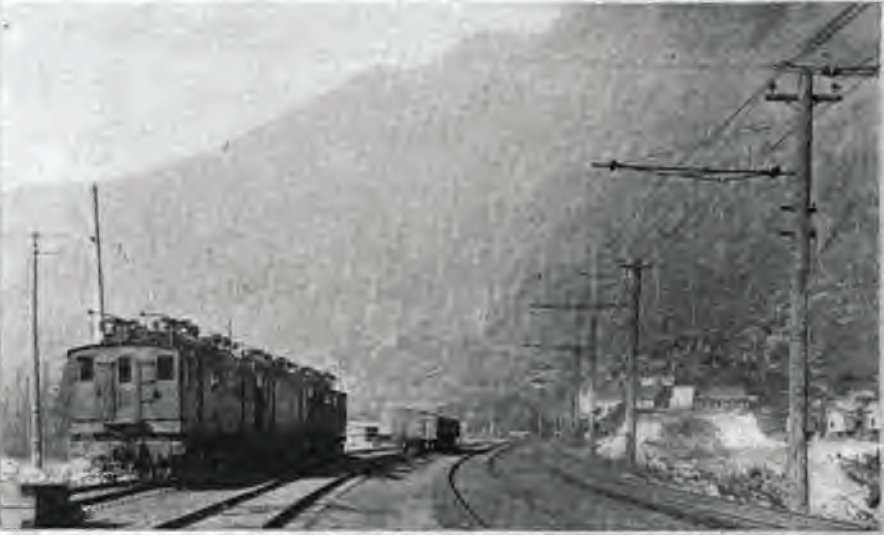
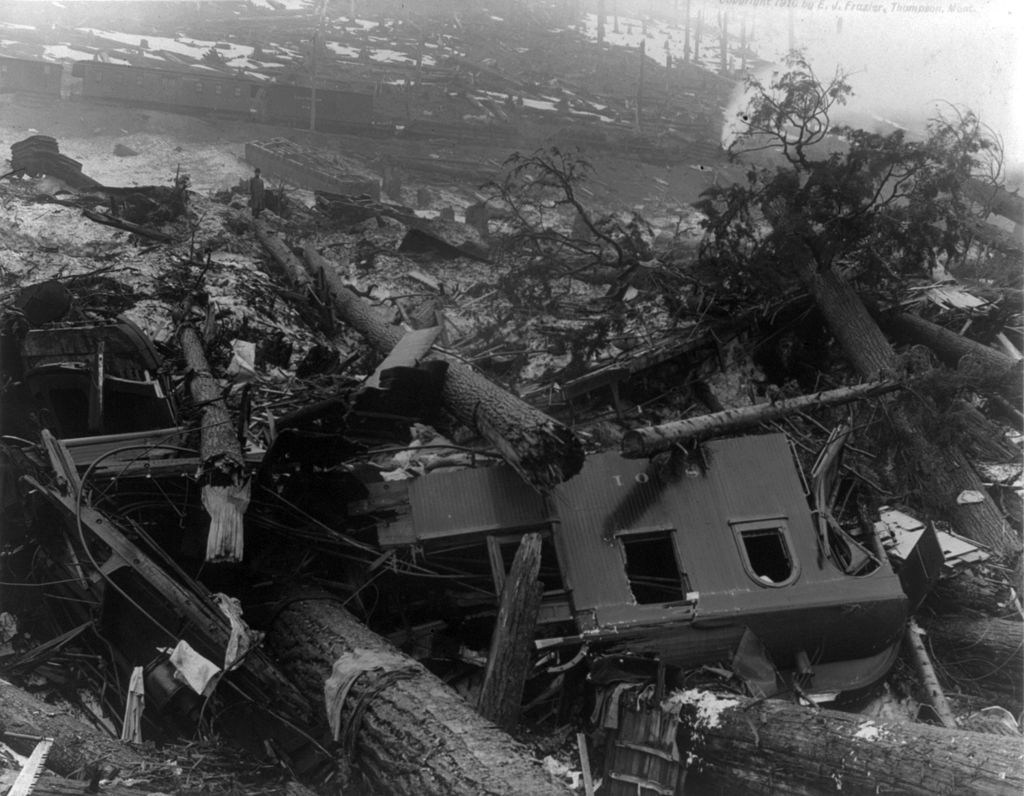
It is known as “The Wellington Avalanche,” and it occurred on March 1, 1910, in Wellington, WA.

It “was the worst avalanche in the history of the United States, marked by the total death count, which numbered to 96.[2]

For nine days at the end of February 1910, Wellington was assailed by a terrible blizzard. Up to a foot (30 cm) of snow fell every hour, and, on the worst day, eleven feet (340 cm) of snow fell. Two trains, a passenger train and a mail train, both bound from Spokane to Seattle, were trapped in the depot.”[1]

“Late on February 28, the snow stopped and was replaced by rain and a warm wind. Just after 1 a.m. on March 1, as a result of a lightning strike, a slab of snow broke loose from the side of Windy Mountain during a violent thunderstorm. A ten-foot high mass of snow, half a mile long and a quarter of a mile wide, fell toward the town. A forest fire had recently ravaged the slopes above the town, leaving very little to impede the avalanche.”[2]

“The avalanche missed the Bailets Hotel (which also housed the town’s general store and post office), but hit the railroad depot. Most of the passengers and crew were asleep aboard their trains. The impact threw the trains 150 feet (45 m) downhill and into the Tye River valley. Ninety six people were killed, including 35 passengers, 58 Great Northern employees on the trains, and three railroad employees in the depot.”[3]

 One witness, Charles Andrews, a Great Northern engineer, said it looked like:

“White Death moving down the mountainside above the trains.  Relentlessly it advanced, exploding, roaring, rumbling, grinding, snapping – a crescendo of sound that might have been the crashing of ten thousand freight trains.

It descended to the ledge where the side tracks lay, picked up cars and equipment as though they were so many snow-draped toys, and swallowing them up, disappeared like a white, broad monster into the ravine below.”[4]


I remember reading the writer and commentator George Will years ago, and in his essay he quoted these words from the Polish poet, Stanislaw J. Lec, “Each snowflake in an avalanche pleads not guilty.”

There is power in accumulation.

Things don’t just happen overnight, but there is a buildup of either positive or negative amounts that produce a point of no return.

Paul was warning his son in the gospel of the dangers of “the little foxes, that spoil the vines.”[5]

Just as in the days of Jude, there are “…certain men crept in unawares, who were before of old ordained to this condemnation, ungodly men, turning the grace of our God into lasciviousness, and denying the only Lord God, and our Lord Jesus Christ.”[6]

These false teachers come into the church from time to time and little by little they feed on the tender grapes who have not fully grown to maturity, and destroy them.

It is time to do as the Apostle directed Timothy, “(1) This know also, that in the last days perilous times shall come.  (2)  For men shall be lovers of their own selves, covetous, boasters, proud, blasphemers, disobedient to parents, unthankful, unholy,  (3)  Without natural affection, trucebreakers, false accusers, incontinent, fierce, despisers of those that are good,  (4)  Traitors, heady, highminded, lovers of pleasures more than lovers of God;  (5)  Having a form of godliness, but denying the power thereof: from such turn away.”[7]

“FROM SUCH TURN AWAY”

Isaiah was clear about the issues of his time and fallen human nature is still the same today (Isaiah 28:9-13):

(9)  Whom shall he teach knowledge? and whom shall he make to understand doctrine? them that are weaned from the milk, and drawn from the breasts.

(10)  For precept must be upon precept, precept upon precept; line upon line, line upon line; here a little, and there a little:

(11)  For with stammering lips and another tongue will he speak to this people.

(12)  To whom he said, This is the rest wherewith ye may cause the weary to rest; and this is the refreshing: yet they would not hear.

(13)  But the word of the LORD was unto them precept upon precept, precept upon precept; line upon line, line upon line; here a little, and there a little; that they might go, and fall backward, and be broken, and snared, and taken.

They scoffed at the prophet and the Word of God.

They mocked the words spoken by prophets who had been “moved on by the Holy Ghost” to write and speak what they divinely uttered. 

Doing so, these mockers and blasphemers continued on into a total backslidden state, were broken by the breaking of that Word, and were bound and placed in captivity.

Too many are bound today, by these false teachers, scoffers, mockers, and spoilers.

It is the devil’s plan to do so and he’ll use false teachers, as he did in Paul’s day, to deny truth and overthrow the faith of some.

2 Timothy 2:15-17

(15)  Study to shew thyself approved unto God, a workman that needeth not to be ashamed, rightly dividing the word of truth.

(16)  But shun profane and vain babblings: for they will increase unto more ungodliness.

(17)  And their word will eat as doth a canker: of whom is Hymenaeus and Philetus;

They were profane and vain words because they were not based on the Word of God. Their words, their teachings, were blasphemous, and every one that heard them unwittingly were eaten up spiritually like a cancer, like gangrene setting in.

It is almost impossible to expunge false doctrine because it accumulates like snowflakes on a mountain until one day – WHITE DEATH pushes everyone in its patch into the cold abyss.

“FROM SUCH TURN AWAY”

2 Timothy 2:19-21

(19)  Nevertheless the foundation of God standeth sure, having this seal, The Lord knoweth them that are his. And, Let every one that nameth the name of Christ depart from iniquity.

(20)  But in a great house there are not only vessels of gold and of silver, but also of wood and of earth; and some to honour, and some to dishonour.

(21)  If a man therefore purge himself from these, he shall be a vessel unto honour, sanctified, and meet for the master’s use, and prepared unto every good work.

 v. 21 – “purge himself from these” = the corrupting influence of false teachers and blasphemers

 It didn’t happen overnight, but it was years (and sometimes centuries).

 “FROM SUCH TURN AWAY”

 The foundation of God standeth sure:

Ephesians 2:19-22, “(19)  Now therefore ye are no more strangers and foreigners, but fellowcitizens with the saints, and of the household of God; (20)  And are built upon the foundation of the apostles and prophets, Jesus Christ himself being the chief corner stone; (21)  In whom all the building fitly framed together groweth unto an holy temple in the Lord: (22)  In whom ye also are builded together for an habitation of God through the Spirit.”
The Word of God is sure:

·        Every word of God is pure: he is a shield unto them that put their trust in him.  (Proverbs 30:5)

·        And Jesus answered him, saying, It is written, That man shall not live by bread alone, but by every word of God.  (Luke 4:4)

·        “…The seed of the word of God.” (Luke 8:11) – [It’s incorruptible and full of life]

·        So then faith cometh by hearing, and hearing by the word of God.  (Romans 10:17)

·        Heb. 4:12, “For the word of God is quick, and powerful, and sharper than any two-edged sword, piercing even to the dividing asunder of soul and spirit, and of the joints and marrow, and is a discerner of the thoughts and intents of the heart.”

·        1 Peter 1:22-25, “(22)  Seeing ye have purified your souls in obeying the truth through the Spirit unto unfeigned love of the brethren, see that ye love one another with a pure heart fervently: (23)  Being born again, not of corruptible seed, but of incorruptible, by the word of God, which liveth and abideth for ever. (24)  For all flesh is as grass, and all the glory of man as the flower of grass. The grass withereth, and the flower thereof falleth away: (25)  But the word of the Lord endureth for ever. And this is the word which by the gospel is preached unto you.”

In conclusion, Wellington, WA, changed its name soon after that horrible avalanche to Tye, WA.

Changed their name and redirected their future.

Someone needs to redirect their future and turn away from false teachers and blasphemers: “…Let every one that nameth the name of Christ depart from iniquity” (2 Timothy 2:19b)

This Is Your Turning Point


[1] https://en.wikipedia.org/wiki/Wellington,_Washington

[2] Ibid.

[3] Ibid.

[4] https://www.awesomestories.com/asset/view/Wellington-Disaster-America-s-Worst-Avalanche

[5] Song of Solomon 2:15

[6] Jude 1:4

[7] 2 Timothy 3:1-5 
Categories
Bible Teaching

So, You Want To Be Like Jesus?

Sermon: So, You Want To Be Like Jesus? (VIDEO:25:00-1:15:48) | Stephen Kuntzman | 7/8/2018 | Apostolic Life Cathedral – Facebook Page (Huntington, WV)

Categories
Bible Teaching

Mysteries That Reveal the End of the Age – G. T. Haywood

Mysteries That Reveal the End of the Age[1]

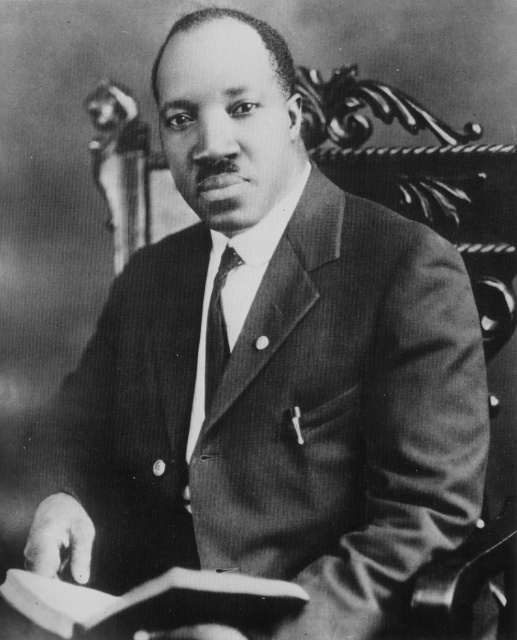
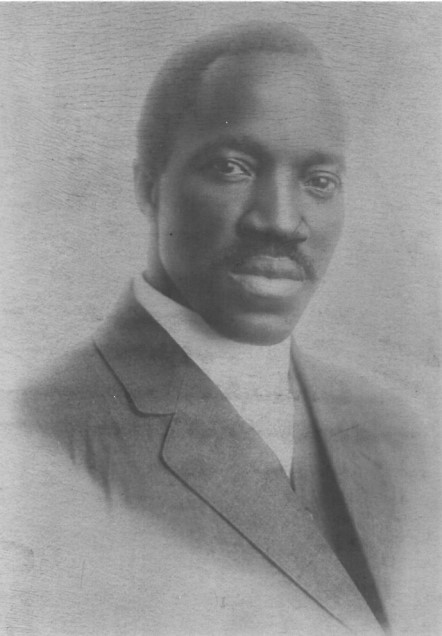
Bishop G. T. Haywood[2]

In the third chapter of Revelations, it is said: “These things saith the Amen, the faithful and true witness, the beginning of the creation of God; I know they works, that thou art neither cold nor hot; I would thou wert cold or hot. So then because thou art lukewarm, and neither cold nor hot, I will spue thee out of my mouth.” Verses 14 to 16. We are living in this day now, when men need to be anointed with eye-salve. It is the last period of the Church. From Adam to Christ 4,000 years rolled away into eternity; then from Christ’s time to the pouring out of His Spirit in seven-fold measure, that is, the fulness of the Spirit poured out to go through the entire Gospel age, and on through the same, almost 2,000 years have flown by, and we are found in the end of the age.

The Career of the Church

Garfield Thomas Haywood

The first period of the Church following the day of Pentecost was the Ephesian days; then followed the Smyrna, Pergamos, Thyatira, Sardis, Philadelphia, and Laodicea periods in turn. There are seven of them. The seven branched candlestick which is shown in the first chapter of Revelation, refers to the seven-fold dispensation of the one church on earth throughout the gospel age.

Jesus, moreover, spake seven parables in the 13th chapter of Matthew, which are, in order, the parable of the sower, the wheat and tares; the grain of mustard seed; the leaven; the treasure hid in a field; the pearl of great price, and lastly, that of the net cast into the sea.

The same Jesus that spoke on the Isle of Patmos to seven churches is the same one who spake the seven parables in the days of His flesh, when in human form. When He spake the seven messages to the Church, He was in glorified form. And so when He spake the parables, he referred to the career of the Church on earth; and when He spoke of the seven candlesticks, He referred to the Seven periods of the Church in its spiritual relationship.

Truly the Word of God is like the bread with which Jesus fed the multitude: the more your break it the more there is to it. You can never exhaust the word of God. It is not possible to get to the place where you can truly say, “l am familiar with the whole Word,” for the true Word is God himself.

And so we find the parable of the sower compares with the Ephesian age; and the parable of the wheat and the tares corresponds to the Smyrnian age; the parable of the mustard seed to the Pergamite time; the parable of the leavened meal to the Thyatiran dispensation; the hid treasure compares to the Sardian period; the costly pearl to the Philadelphian age; and lastly the dragnet parable to the Laodicean, or lukewarm age, in which we are living. People neither call themselves saints nor sinners. You ask them if they are saints and they will say, “Why, no; that is foolishness.” They don’t feel a bit condemned about dancing, stealing and telling lies, playing cards, poker, chewing and smoking. But any man upon whom God has really put His seal, feels sorry at the least thing done contrary to God’s word. Let us take Ephesians 1:16, 17; and read, “Cease not to give thanks for you, making mention of you in my prayers; That the God of our Lord Jesus Christ, the Father of Glory, may give unto you the Spirit of wisdom and revelation in the knowledge of him.” That is, to know God, comes by revelation. It is not what you can study, neither what I can explain to you, but is what God can impress upon your heart by His Spirit.

“The eyes of your understanding being enlightened; that ye may know what is the hope of his calling, and what the riches of the glory of his inheritance in the saints.”-Eph. 1:18. Now I cannot tell to save my life just what He has got in us. He has not made a bad bargain when He bought us! I used to think the rag man was the most foolish man, but I found later he could make more money out of those things than I could with my hard labor. Say, we were such a ragged pack of old bones; but God bought us with His own precious blood! There is something rich in glory about this purchasing our unworthy selves by the Lord. God could not be fooled. He knew His business. God says, “Why they are going to praise Me!” (And I am beginning it now!)

God desires that our eyes be anointed in these last days but it takes God to anoint our eyes. He is going to show us something, even beautiful things to come. I wish to give you the likeness of the parable of the Sower with the Church of Ephesus; and each of the other parables with each of the other Churches in turn. The word “Ephesus” refers to the “moon” and has the sense of the “beginning of the season.” So it was in the beginning of the season of the Gospel, that the Sower went forth to sow the word of God. The parable of the wheat and tares corresponds with the Church of Smyrna. There was a mixture of tares and wheat. So we find in Smyrna, “I know the blasphemy of them which say they are Jews, and are not, but are the synagogue of Satan.”-Rev. 2:9. The wheat and the tares in the field are hypocrites mingling with the saints in the Church through tradition. Then we have the mustard seed, which when grown, became the greatest among herbs and becomes a tree, insomuch that the birds of the air came and lodged in the branches thereof. And to correspond with this, in the church of Pergamos Satan gained a seat; for God said: “I know where Satan’s seat is.”–Rev. 2:13.

Then we have a woman mentioned in both the parables of the leaven and the corresponding church in Thyatira. This woman taught them to commit fornication, which God calls the worshipping of more than one God.–Ex. 34:15, 16. Did not He accuse Israel of harlotry because she went after Baal? And that church of Thyatira taught them to worship three gods by hiding the doctrine in three persons in the Godhead, and leavened the whole religious world.

Next there is the hidden treasure parable. You read the parable and the letter to the Church of Sardis, and you have an exact picture of the life of the people of the Reformation. They did not have the “life” for they only had a name as being alive, but were dead.–Rev. 3:1. But Luther did have faith, though he gave them no life. That hid treasure was “faith.” He sold out all his future prospects with Catholicism so he could get this treasure. The world is the field.

The Philadelphian age of the church is the great age of holiness which began to be preached all over the world. A pearl is a gem which you might term as “brought about by the death of another.” For an oyster has to die to bring forth a pearl. It is a type of oneness and unity. Christ had to die to bring forth the Church, that true “Pearl.” Holiness truth is a wonderful pearl!

And God said, “Don’t cast your pearl before swine.” The parable of the Pearl and the Philadelphian period of the church are one and the same.

And the Church of the Laodiceans is the last church period; and the dragnet parable is the last parable, showing we are living in the lukewarm age of the church, in the end of the age, when God is dragging the gospel dragnet throughout the world. I believe that net is water baptism in Jesus’ name which has come forth “in the end of the Gospel Age.” The pen-photo of the nominal Church today is graphically portrayed in the letter to the Church of Laodicea. And it is at this same time that the net is being cast into the water in Jesus’ name. When one man came to me with the argument that some were going beck on the baptism in Jesus’ name, I went to the Lord and the Lord said, “Look at the parable.” I read it again and it says, He “cast the bad away.”-Matt. 13:48. Thank God that them who come unto Him with a good and honest heart He will in no wise case out.

One of the things we really need to know, is something on the dispensations. Jesus said, “The time is fulfilled. Repent and believe the Gospel.” And I say to you, the time is fulfilled. Repent and believe ye the Gospel! The coming of the Lord is at hand. Let thy kingdom come!


[1] SOURCE: https://www.apostolic.edu/mysteries-that-reveal-the-end-of-the-age-by-bishop-g-t-haywood/. Accessed: 12/09/2022. THE ABOVE MATERIAL WAS TAKEN FROM EARNEST CONTENDERS FOR THE FAITH BY ELDER JAMES L. TYSON AND PUBLISHED BY PENTECOSTAL PUBLICATIONS, 1982, PAGES 7-11. THIS MATERIAL IS COPYRIGHTED AND MAY BE USED FOR STUDY & RESEARCH PURPOSES ONLY.

[2] BIOGRAPHICAL SKETCH: Bishop Garfield Thomas Haywood was born July 15, 1880, in Greencastle, Indiana. His parents were Ben and Penn Ann Haywood. In 1883 he and his family moved to Indianapolis where he would reside the remainder of his life. Bishop Haywood never finished high school, but was nonetheless a great scholar, artist, composer of songs, and author, which became evident in his later life. On February 11, 1902, he married Ida Howard of Owensboro, Kentucky. To this union was born one daughter, Fannie Haywood (Ellis). Bishop Haywood received the Holy Ghost in February of 1908. He assumed the pastorate of a disorganized group of 13 people in 1909, and built it into one of the most outstanding churches of the generation. Christ Temple of Indianapolis, Indiana, still stands as a monument to the feats done under the leadership of this warrior of the Gospel. Bishop Haywood, from about 1910-1914, was a viable force in the Assemblies of God. He came under conviction of the “Jesus Name” baptism in 1915 and from that time established himself as a proponent of the deity of Christ. He rose through the ranks of the Pentecostal Assemblies of the World, serving as general presbyter, and finally as its first Presiding Bishop. He held that office for six years until his untimely death. Bishop Haywood left this earthly abode at 10:40 AM Sunday morning, April 12, 1931, at the age of 51.

Categories
Bible Teaching

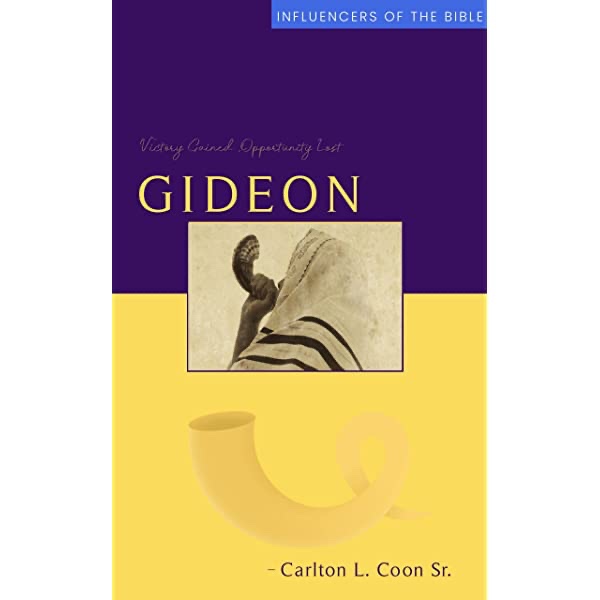
Gideon: Victory Won, Opportunity Lost

“No person should ever feel that their lack inhibits them from being an influence for the Lord Jesus Christ.
Nothing:
Not a lack of education.
Not a lack of Christian pedigree.
Nor a lack of money.
Not the lack of a polished personality
Or being an introvert in a world drawn to extroverts.
The evidence is clear. Almighty God uses unexpected people to influence the outcome of human history.
You can be one of those He uses.
Moreover, you should be one of those He uses.”
-Carlton Coon, https://a.co/c4igeQs

Categories
Bible Teaching

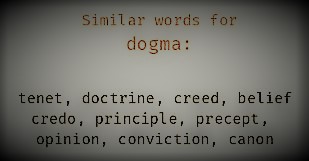
Dogma

Our dogma revolves around the great biblical truth that there is One God, also called “monotheism.” In his book, The Oneness of God, David K. Bernard, J.D. defines monotheism in this manner: “The belief in only one God is called monotheism, which comes from two Greek words: monos, meaning alone, single, one; and theos, meaning God.”

Ralph V. Reynolds simply stated that “there is only one Supreme Being who is God; He cannot be multiplied nor pluralized.” He further declared, “There are over fifty passages of Scripture that teach that God is one and that there is no other.”

In fact, the Word of God naturally assumes this universal truth. Genesis 1:1, “In the beginning God created…” God here is the transliterated form of Elohim, which means “plenitude of might,” or more simply, “one God whose characteristics are many.”

This thought is carried further in Deuteronomy 6:4, “Hear, O Israel: the LORD our God is one LORD.”

In Colossians 2:9 we are told that in Jesus dwells all the fullness of the Godhead (all the characteristics of God) bodily, and we (the Church) are complete in Him (Jesus).

When addressing Timothy, Paul wrote of a mystery, but then he further explained what that mystery was, “And without controversy great is the mystery of godliness: God was manifest in the flesh, justified in the Spirit, seen of angels, preached unto the Gentiles, believed on in the world, received up into glory” (1 Timothy 3:16). Only Jesus Christ fulfills those six points. Therefore, Jesus Christ of the New Testament is Elohim of the Old Testament, which further explains why we are told that Jesus Christ is the image of the invisible God and that all things exist and consist by him, Colossians 1:12-17.

So, we are dogmatic in our belief that there is only one God and Jesus is His name. He is our Creator, Sustainer, Redeemer, and Savior. Isaiah 9:6, “For unto us a child is born, unto us a son is given: and the government shall be upon his shoulder: and his name shall be called Wonderful, Counsellor, The mighty God, The everlasting Father, The Prince of Peace.” Only Jesus fulfills this messianic prophecy. He is the Father in Creation, the Son in Redemption, and the Holy Spirit in us today. Keep this great truth in mind and heart as you celebrate this Christmas season. Merry Christmas!


Bernard, David K. The Oneness of God. St. Louis: Word Aflame Press, 1983.

Reynolds, Ralph V. Truth Shall Triumph. Hazelwood, MO: Pentecostal Publishing House, 1965.

Originally posted on 20 December 2010 on https://thepillarandgroundoftruth.blogspot.com/2010/12/dogma.html

Categories
Bible Teaching

The Benefit and Purpose of Suffering

Sometimes suffering and adversity appear senseless to us, and we ask questions like, “How can anyone possibly benefit from this calamity?” Or, “Can someone tell me what purpose this is serving?” Or, simply, “Why, Lord?”

While there may be many answers to these questions, Daniel L. Segraves offers an answer from 1 Peter 5:10 in his book If God Loves Me, Why Am I Hurting?

“But the God of all grace, who hath called us unto his eternal glory by Christ Jesus, after that ye have suffered a while, make you perfect, stablish, strengthen, settle you” (1 Peter 5:10).

1. Perfect = “the idea of mending or repairing something that has been broken….It may be the will of God for believers to suffer temporarily, but the suffering will be followed by restoration and mending of whatever may have been broken during the suffering.” 

2. Establish = “making something firm….a promise that God will firmly establish those who have suffered to any degree that they have experienced loss by their suffering.” 

3. Strengthen = “making something strong, with specific application to the soul. God will remove any weakness that may have resulted from suffering.” 

4. Settle = “laying a foundation or making something stable. Thus, if any believer’s stability has been damaged by suffering, God will correct it.”

The believer will suffer, but the blessing — Yes, the blessing — of suffering is God’s promise to perfect, stablish, strengthen, and settle each believer before they reach God’s eternal glory.

Categories
Bible Teaching

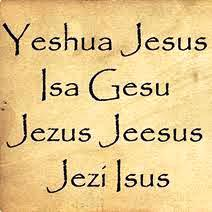
Saying the Name of Jesus

According to the late T. W. Barnes, many people pronounce the name of Jesus without really knowing how to say it. He specified four ways to say the name of Jesus:

  1. Say His name with love; the early church had great success, because they loved not their lives, they loved that Name. Love is powerful. Their love gave them reverence for the Name.
  2. Say His name with vision. Say it seeing the invisible. A woman said, “I resist the devil and he doesn’t leave.” Bro. Barnes asked her, “What do you look for? The Bible doesn’t say resist him and see him sitting on your shoulder; when you resist him you should see him running. The devil no doubt left you when you said in Jesus Name, but since you did not expect him to go, your thinking made you as miserable as if he stayed with you.”
  3. Say His name with faith. Religious leaders in Israel asked the disciples, “How did you heal the man crippled from his mother’s womb?” Peter answered, “…by the name of Jesus Christ…”
  4. Say His name while living a life of sacrifice. The disciples sacrificed everything for that name. We need to love it enough that no sacrifice is too great to make for Jesus.

-Nona Freeman, A Prophet in our Time (2007)

********************************

Why is there so much power in the Name of Jesus?  T. W. Barnes attributed it to the following reasons: 

  1. His Word is in it – John 1:1, “In the beginning was the Word…”
  2. His Blood is in it – Jesus is a blood name that redeems all people from sin and the effects of sin (sickness, disease, mental disorders, etc.).
  3. His Spirit is in it – The Holy Ghost that you received when you spoke in tongues the first time is that Spirit of Christ in you.
  4. The authority of heaven is in it – All power in Heaven and earth belongs to Jesus Christ.
  5. His faith is in it – He made everything by the power of His own Word; He spoke it and it happened.

–Nona Freeman, A Prophet In Our Time (2007)


T. W. Barnes’ website: https://www.twbarnes.com/index.html

T. W. Barnes Memorial Page: https://www.leestoneking.com/T%20W%20Barnes%20Memorial.htm

Originally posted on 2 June 2010 on https://thepillarandgroundoftruth.blogspot.com/2010/06/tw-barnes-saying-name-of-jesus.html

Categories
Bible Teaching

Jesus Christ: Sonship

Isaiah 9:6 = Jesus is God

The Purpose of Sonship

God has always desired to fellowship with man, but sin came into the human family and separated God from man. The purpose of Sonship was so that God could provide the best means by which He and man could regain their fellowship, and to give dominion over the earth to man again. This fellowship is the result of the sacrifice of the Savior on Calvary. He could only do this by providing complete redemption for mankind. He is the Lamb that was slain from the foundation of the world, Rev. 13:8. In short, the Sonship is about God and man engaging in a loving and healthy relationship that is void of any hindrances (sin), which would separate each from the other. For that to take place a Mediator (the Son) had to provide reconciliation between God and man. This Mediator was realized in the person of Jesus Christ.

Who Fulfilled the Sonship

Jesus Christ fulfills the Sonship. In Colossians 2:9 we are told that in Jesus dwells all the fullness of the Godhead (all the characteristics of God) bodily, and we (the Church) are complete in Him (Jesus). Paul did say that the Gospel message was a mystery, but then he went on to explain what the mystery was: “And without controversy great is the mystery of godliness: God was manifest in the flesh, justified in the Spirit, seen of angels, preached unto the Gentiles, believed on in the world, received up into glory” (I Timothy 3:16). Only Jesus Christ fulfills these six points. Thus proving the adage, “Jesus Christ of the New Testament is Jehovah of the Old Testament.”


Originally posted on 5 June 2010 on https://thepillarandgroundoftruth.blogspot.com/2010/06/jesus-christ-sonship.html

Categories
Bible Teaching

Law of Harvest & Law of Distribution

The Harvest, Vincent van Gogh, 1888

Gal. 6:7-10
7
 Be not deceived; God is not mocked: for whatsoever a man soweth, that shall he also reap. 8 For he that soweth to his flesh shall of the flesh reap corruption; but he that soweth to the Spirit shall of the Spirit reap life everlasting. 9 And let us not be weary in well doing: for in due season we shall reap, if we faint not. 10 As we have therefore opportunity, let us do good unto all men, especially unto them who are of the household of faith.

The Law of Harvest:
Gal. 6:7, “…Whatsoever a man soweth, that shall he also reap.”

Consider your seed:
What are you sowing, or planting in your life?
What habits are you developing?
What behavior do you manifest outwardly to others on a day-to-day basis?
What are the secret thoughts that you consider in the privacy of your mind?
What types of music, television programming, movies, and Internet sites do you allow to enter your spirit being through your sense gates?
What kind of conversations do you entertain?

Whatever answers you may have to these questions, one thing is certain; you will reap what you’ve sown:
Sow love and you’ll receive love
Sow hate and you’ll receive the same
Sow kindness and you will receive it in turn
Sow cynicism and others will mistrust you as well

The Apostle is clear on this one issue:
You get what you sow.
You can’t plant an orange tree and expect apples.
You can’t alter the inevitable law of harvest – – like begets like.

Romans 6
1
 What shall we say then? Shall we continue in sin, that grace may abound? 2 God forbid. How shall we, that are dead to sin, live any longer therein? 3 Know ye not, that so many of us as were baptized into Jesus Christ were baptized into his death? 4 Therefore we are buried with him by baptism into death: that like as Christ was raised up from the dead by the glory of the Father, even so we also should walk in newness of life. 5 For if we have been planted together in the likeness of his death, we shall be also in the likeness of his resurrection: 6 Knowing this, that our old man is crucified with him, that the body of sin might be destroyed, that henceforth we should not serve sin. 7 For he that is dead is freed from sin. 8 Now if we be dead with Christ, we believe that we shall also live with him: 9 Knowing that Christ being raised from the dead dieth no more; death hath no more dominion over him. 10 For in that he died, he died unto sin once: but in that he liveth, he liveth unto God. 11 Likewise reckon ye also yourselves to be dead indeed unto sin, but alive unto God through Jesus Christ our Lord. 12 Let not sin therefore reign in your mortal body, that ye should obey it in the lusts thereof. 13 Neither yield ye your members as instruments of unrighteousness unto sin: but yield yourselves unto God, as those that are alive from the dead, and your members as instruments of righteousness unto God. 14 For sin shall not have dominion over you: for ye are not under the law, but under grace. 15 What then? shall we sin, because we are not under the law, but under grace? God forbid. 16 Know ye not, that to whom ye yield yourselves servants to obey, his servants ye are to whom ye obey; whether of sin unto death, or of obedience unto righteousness? 17 But God be thanked, that ye were the servants of sin, but ye have obeyed from the heart that form of doctrine which was delivered you. 18 Being then made free from sin, ye became the servants of righteousness. 19 I speak after the manner of men because of the infirmity of your flesh: for as ye have yielded your members servants to uncleanness and to iniquity unto iniquity; even so now yield your members servants to righteousness unto holiness. 20 For when ye were the servants of sin, ye were free from righteousness. 21 What fruit had ye then in those things whereof ye are now ashamed? for the end of those things is death. 22 But now being made free from sin, and become servants to God, ye have your fruit unto holiness, and the end everlasting life. 23 For the wages of sin is death; but the gift of God is eternal life through Jesus Christ our Lord.

The inevitable law of harvest declares that you will end up in one of two places.
You Choose: Heaven or Hell

The choice of Hell, which designates you as a servant of sin, will reveal certain undeniable indicators in your life (i.e. the works of the flesh: adultery, fornication, uncleanness, lasciviousness, Idolatry, witchcraft, hatred, variance, emulations, wrath, strife, seditions, heresies, envyings, murders, drunkenness, revellings, and such like [Gal. 5:19-21]). When you yield yourself to these you are making a decision to do so.

The choice of Heaven, designating you as a servant of righteousness, will be seen by the presence of the Fruit of the Spirit: love, joy, peace, longsuffering, gentleness, goodness, faith, meekness, temperance (Gal. 5:22-23). Yielding to the Holy Ghost is also a conscious decision that you make.

The Law of Distribution:
Gal. 6:10, “…let us do good unto all men…”

1 Cor. 7:1-24
1 Now concerning the things whereof ye wrote unto me: It is good for a man not to touch a woman. 2 Nevertheless, to avoid fornication, let every man have his own wife, and let every woman have her own husband. 3 Let the husband render unto the wife due benevolence: and likewise also the wife unto the husband. 4 The wife hath not power of her own body, but the husband: and likewise also the husband hath not power of his own body, but the wife. 5 Defraud ye not one the other, except it be with consent for a time, that ye may give yourselves to fasting and prayer; and come together again, that Satan tempt you not for your incontinency. 6 But I speak this by permission, and not of commandment. 7 For I would that all men were even as I myself. But every man hath his proper gift of God, one after this manner, and another after that. 8 I say therefore to the unmarried and widows, It is good for them if they abide even as I. 9 But if they cannot contain, let them marry: for it is better to marry than to burn. 10 And unto the married I command, yet not I, but the Lord, Let not the wife depart from her husband: 11 But and if she depart, let her remain unmarried, or be reconciled to her husband: and let not the husband put away his wife. 12 But to the rest speak I, not the Lord: If any brother hath a wife that believeth not, and she be pleased to dwell with him, let him not put her away. 13 And the woman which hath an husband that believeth not, and if he be pleased to dwell with her, let her not leave him. 14 For the unbelieving husband is sanctified by the wife, and the unbelieving wife is sanctified by the husband: else were your children unclean; but now are they holy. 15 But if the unbelieving depart, let him depart. A brother or a sister is not under bondage in such cases: but God hath called us to peace. 16 For what knowest thou, O wife, whether thou shalt save thy husband? or how knowest thou, O man, whether thou shalt save thy wife? 17 But as God hath distributed to every man, as the Lord hath called every one, so let him walk. And so ordain I in all churches. 18 Is any man called being circumcised? let him not become uncircumcised. Is any called in uncircumcision? let him not be circumcised. 19 Circumcision is nothing, and uncircumcision is nothing, but the keeping of the commandments of God. 20 Let every man abide in the same calling wherein he was called. 21 Art thou called being a servant? care not for it: but if thou mayest be made free, use it rather. 22 For he that is called in the Lord, being a servant, is the Lord’s freeman: likewise also he that is called, being free, is Christ’s servant. 23 Ye are bought with a price; be not ye the servants of men. 24 Brethren, let every man, wherein he is called, therein abide with God.

According to my former Pastor, Michael Seebaugh, of Parkersburg, WV, the beauty of this passage on marriage is that it reveals to us a beautiful present that is best described as the Gift of Perspective:

1. Your experiences prior to conversion and the subsequent ones afterwards give you a particular point-of-view that is unique to you.

2. Paul’s writing concerning marriage gives us insight into the fact that married couples, single individuals, divorced people, widows, and widowers all have various experiences that can benefit others.

3. Couples married for 50 years have wisdom in their perspective that the young married couples would be wise to heed.

4. The Church body is full of people who have many types of experiences and these are necessary for the distribution of the Gospel to the whole world.

What has God given to you that has been vitally important in your continual walk with Him?

Something He gave to you that you couldn’t have made it without?

Jesus?
Mercy?
Grace?
Godly Examples?
Pastors?
Holy Bible?
Godly Parents?
Salvation?
Love?
Faith?
Fruit of the Spirit?
Church?
Family?
Strength?
Prayer?
Praise?
Worship?
Holy Ghost?
Desire?
Wisdom?
Knowledge?
Apostles?
Evangelists?
Teachers?
Prophets?

These examples of God’s gift to you are the very things that He desires you to distribute to others. We need to learn how to distribute to others what God has produced in our lives.

Heed these words of wisdom:
“The mercy you show is the mercy you’ll know.” – LouAnne Kuntzman

Rev. Seebaugh also suggests the following as Principles of Distribution:

1. You can’t distribute (give, divide, disperse, administer, bestow) what you don’t have.
Look at the seven sons of Sceva (Acts 19:13-20). God will bring exponential growth to what you do have if you give it to Him (John 6:1-14)

2. You don’t have to produce the product, but you do need to be able to access it for yourself and for distribution. God is Love. You don’t produce that, but you do possess it, and can access it. You need seed if you intend to sow.

3. You need to be located where people can access your product easily. Are you approachable? Don’t hide behind your “shyness.”

4. You should be focused on how to get the product to the client. Are you “soul conscious?” Do you look for opportunities to distribute?

5. You need to have lots of room for your product. Your product is the testimony of God’s goodness in your life – – It is like seed to the sower. Sow seed by distributing it anywhere and everywhere you possibly can.

The diversity of gifts and offices were distributed for the purpose of Christian maturity in the Body of Christ – – the Church.

Eph. 4:11-16
11 And he gave some, apostles; and some, prophets; and some, evangelists; and some, pastors and teachers; 12 For the perfecting of the saints, for the work of the ministry, for the edifying of the body of Christ: 13 Till we all come in the unity of the faith, and of the knowledge of the Son of God, unto a perfect man, unto the measure of the stature of the fulness of Christ: 14 That we henceforth be no more children, tossed to and fro, and carried about with every wind of doctrine, by the sleight of men, and cunning craftiness, whereby they lie in wait to deceive; 15 But speaking the truth in love, may grow up into him in all things, which is the head, even Christ: 16 From whom the whole body fitly joined together and compacted by that which every joint supplieth, according to the effectual working in the measure of every part, maketh increase of the body unto the edifying of itself in love.

The law of harvest and the law of distribution are cyclic — they are similar to the law of cause and effect (causality).

Eph. 6:8, “Knowing that whatsoever good thing any man doeth, the same shall he receive of the Lord, whether he be bond or free.”

Luke 6:35-36
35
 But love ye your enemies, and do good, and lend, hoping for nothing again; and your reward shall be great, and ye shall be the children of the Highest: for he is kind unto the unthankful and to the evil. 36 Be ye therefore merciful, as your Father also is merciful. 37 Judge not, and ye shall not be judged: condemn not, and ye shall not be condemned: forgive, and ye shall be forgiven: 38 Give, and it shall be given unto you; good measure, pressed down, and shaken together, and running over, shall men give into your bosom. For with the same measure that ye mete withal it shall be measured to you again.

This passage (verse 35) is the ultimate test for some: “…love ye your enemies…do good, and lend, hoping for nothing…”

You cannot hold back from sowing into others for any reason.

Verse 38 is significant because it contains the promise of harvest for those who distribute what they have to others, and your level of harvest is directly linked to your level of distribution.

Don’t distribute as rich people do, but as the certain poor widow: “For all they did cast in of their abundance; but she of her want did cast in all that she had, even all her living” (Mark 12:44).

Jesus Christ has distributed to you the Holy Ghost, which is Christ in you, and you are responsible to distribute the Gospel of Jesus Christ to others, in order that they can experience the same phenomenon.

This is why you are commanded by Jesus to “go ye into all the world, and preach the gospel to every creature.” It is here where we plainly see the law of distribution working in tandem with the law of harvest: “He that believeth and is baptized shall be saved; but he that believeth not shall be damned. And these signs shall follow them that believe; In my name shall they cast out devils; they shall speak with new tongues; They shall take up serpents; and if they drink any deadly thing, it shall not hurt them; they shall lay hands on the sick, and they shall recover” (Mark 16:15-18).

You are not told that every one will believe and obey the Gospel, but you are told that those who do receive what you distribute will receive an unprecedented harvest.

Refuse the excuse, “I have nothing to give.” Distribute what God has already given freely to you and you will witness a harvest. It is inevitable.


Originally posted on 26 May 2007 on http://thepillarandgroundoftruth.blogspot.com/2007/05/law-of-harvest-law-of-distribution.html