1 Timothy 3:15, "...that thou mayest know how thou oughtest to behave thyself in the house of God, which is the church of the living God, the pillar and ground of the truth."
(30) And when they had sung an hymn, they went out into the mount of Olives. (31) Then saith Jesus unto them, All ye shall be offended because of me this night: for it is written, I will smite the shepherd, and the sheep of the flock shall be scattered abroad. (32) But after I am risen again, I will go before you into Galilee. (33) Peter answered and said unto him, Though all men shall be offended because of thee, yet will I never be offended. (34) Jesus said unto him, Verily I say unto thee, That this night, before the cock crow, thou shalt deny me thrice. (35) Peter said unto him, Though I should die with thee, yet will I not deny thee. Likewise also said all the disciples….(69) Now Peter sat without in the palace: and a damsel came unto him, saying, Thou also wast with Jesus of Galilee. (70) But he denied before them all, saying, I know not what thou sayest. (71) And when he was gone out into the porch, another maid saw him, and said unto them that were there, This fellow was also with Jesus of Nazareth. (72) And again he denied with an oath, I do not know the man. (73) And after a while came unto him they that stood by, and said to Peter, Surely thou also art one of them; for thy speech bewrayeth thee. (74) Then began he to curse and to swear, saying, I know not the man. And immediately the cock crew. (75) And Peter remembered the word of Jesus, which said unto him, Before the cock crow, thou shalt deny me thrice. And he went out, and wept bitterly.
Ancillary Text: Joel 2:25-29
(25) And I will restore to you the years that the locust hath eaten, the cankerworm, and the caterpiller, and the palmerworm, my great army which I sent among you. (26) And ye shall eat in plenty, and be satisfied, and praise the name of the LORD your God, that hath dealt wondrously with you: and my people shall never be ashamed. (27) And ye shall know that I am in the midst of Israel, and that I am the LORD your God, and none else: and my people shall never be ashamed. (28) And it shall come to pass afterward, that I will pour out my spirit upon all flesh; and your sons and your daughters shall prophesy, your old men shall dream dreams, your young men shall see visions: (29) And also upon the servants and upon the handmaids in those days will I pour out my spirit.
Luke 22:31-34, “(31) And the Lord said, Simon, Simon, behold, Satan hath desired to have you, that he may sift you as wheat: (32) But I have prayed for thee, that thy faith fail not: and when thou art converted, strengthen thy brethren. (33) And he said unto him, Lord, I am ready to go with thee, both into prison, and to death. (34) And he said, I tell thee, Peter, the cock shall not crow this day, before that thou shalt thrice deny that thou knowest me.
Jesus is being charged and false witnesses come against Him
Only one of His handpicked apostles has stayed with Him. The others fled.
Peter works up enough courage to follow from a distance
Luke 22:54-62, “(54) Then took they him, and led him, and brought him into the high priest’s house. And Peter followed afar off. (55) And when they had kindled a fire in the midst of the hall, and were set down together, Peter sat down among them. (56) But a certain maid beheld him as he sat by the fire, and earnestly looked upon him, and said, This man was also with him. (57) And he denied him, saying, Woman, I know him not. (58) And after a little while another saw him, and said, Thou art also of them. And Peter said, Man, I am not. (59) And about the space of one hour after another confidently affirmed, saying, Of a truth this fellow also was with him: for he is a Galilaean. (60) And Peter said, Man, I know not what thou sayest. And immediately, while he yet spake, the cock crew. (61) And the Lord turned, and looked upon Peter. And Peter remembered the word of the Lord, how he had said unto him, Before the cock crow, thou shalt deny me thrice. (62) And Peter went out, and wept bitterly.
The shame that Peter felt for his weakness and his lack of loyalty to Jesus
We all deny the Lord in various ways, no one is exempt:
Words, Behaviors, Actions
Values and Morals
Disregard His Word
Saying one thing and doing another
Reject the work of Calvary
Peter wept bitterly
Have you ever been there
Shame over wrong choices, actions, words spoken
That cockcrow shook Peter
He looked up and Jesus, with eyes of love and compassion, met Peter’s gaze.
I that moment regret, sorrow, shame and remorse drove Peter out of the courtyard
He wept bitterly
Perhaps, the cockcrow has sounded in your life
It is the sound of mercy…that is the reminder of mercy
THE CALL OF MERCY
Remember Peter, “Satan hath desired to have you, that he may sift you as wheat: But I have prayed for thee, that thy faith fail not: and when thou art converted, strengthen thy brethren.”
That rooster crowed – Peter looks up into the gaze of the Lamb of God
That trumpet sounded – “A body has thou prepared me”[1]
Those priests began to prepare the altar for the Passover sacrifice – the Paschal Lamb
And the Lamb looked at Peter
Christ is looking at you this morning and He is extending The Call of Mercy.
Joel 2:25-29, “(25) And I will restore to you the years that the locust hath eaten, the cankerworm, and the caterpiller, and the palmerworm, my great army which I sent among you. (26) And ye shall eat in plenty, and be satisfied, and praise the name of the LORD your God, that hath dealt wondrously with you: and my people shall never be ashamed. (27) And ye shall know that I am in the midst of Israel, and that I am the LORD your God, and none else: and my people shall never be ashamed. (28) And it shall come to pass afterward, that I will pour out my spirit upon all flesh; and your sons and your daughters shall prophesy, your old men shall dream dreams, your young men shall see visions: (29) And also upon the servants and upon the handmaids in those days will I pour out my spirit.”
I will restore
2x – my people shall never be ashamed
…it shall come to pass afterward, that I will pour out my spirit upon all flesh…
Acts 2:1-2, “And when the day of Pentecost was fully come, they were all with one accord in one place. And suddenly there came a sound from heaven as of a rushing mighty wind, and it filled all the house where they were sitting.
Text: Judges 6:34, “But the Spirit of the LORD came upon Gideon, and he blew a trumpet; and Abiezer was gathered after him.”
Judges 8:22-27, “(22) Then the men of Israel said unto Gideon, Rule thou over us, both thou, and thy son, and thy son’s son also: for thou hast delivered us from the hand of Midian. (23) And Gideon said unto them, I will not rule over you, neither shall my son rule over you: the LORD shall rule over you. (24) And Gideon said unto them, I would desire a request of you, that ye would give me every man the earrings of his prey. (For they had golden earrings, because they were Ishmaelites.) (25) And they answered, We will willingly give them. And they spread a garment, and did cast therein every man the earrings of his prey. (26) And the weight of the golden earrings that he requested was a thousand and seven hundred shekels of gold; beside ornaments, and collars, and purple raiment that was on the kings of Midian, and beside the chains that were about their camels’ necks. (27) And Gideon made an ephod thereof, and put it in his city, even in Ophrah: and all Israel went thither a whoring after it: which thing became a snare unto Gideon, and to his house.”
The Golden Ephod
Judges 6:11-16, “(11) And there came an angel of the LORD, and sat under an oak which was in Ophrah, that pertained unto Joash the Abiezrite: and his son Gideon threshed wheat by the winepress, to hide it from the Midianites. (12) And the angel of the LORD appeared unto him, and said unto him, The LORD is with thee, thou mighty man of valour. (13) And Gideon said unto him, Oh my Lord, if the LORD be with us, why then is all this befallen us? and where be all his miracles which our fathers told us of, saying, Did not the LORD bring us up from Egypt? but now the LORD hath forsaken us, and delivered us into the hands of the Midianites. (14) And the LORD looked upon him, and said, Go in this thy might, and thou shalt save Israel from the hand of the Midianites: have not I sent thee? (15) And he said unto him, Oh my Lord, wherewith shall I save Israel? behold, my family is poor in Manasseh, and I am the least in my father’s house. (16) And the LORD said unto him, Surely I will be with thee, and thou shalt smite the Midianites as one man.”
Judges 6:24-27, “(24) Then Gideon built an altar there unto the LORD, and called it Jehovahshalom: unto this day it is yet in Ophrah of the Abiezrites. (25) And it came to pass the same night, that the LORD said unto him, Take thy father’s young bullock, even the second bullock of seven years old, and throw down the altar of Baal that thy father hath, and cut down the grove that is by it: (26) And build an altar unto the LORD thy God upon the top of this rock, in the ordered place, and take the second bullock, and offer a burnt sacrifice with the wood of the grove which thou shalt cut down. (27) Then Gideon took ten men of his servants, and did as the LORD had said unto him: and so it was, because he feared his father’s household, and the men of the city, that he could not do it by day, that he did it by night.”
Jehovahshalom = “the Lord’s peace; the sign or witness of God’s speaking peace to me, and to his people: or the place where he spake peace to me, when I expected nothing but destruction.[1]
Judges 6:28-35, “(28) And when the men of the city arose early in the morning, behold, the altar of Baal was cast down, and the grove was cut down that was by it, and the second bullock was offered upon the altar that was built. (29) And they said one to another, Who hath done this thing? And when they enquired and asked, they said, Gideon the son of Joash hath done this thing. (30) Then the men of the city said unto Joash, Bring out thy son, that he may die: because he hath cast down the altar of Baal, and because he hath cut down the grove that was by it. (31) And Joash said unto all that stood against him, Will ye plead for Baal? will ye save him? he that will plead for him, let him be put to death whilst it is yet morning: if he be a god, let him plead for himself, because one hath cast down his altar. (32) Therefore on that day he called him Jerubbaal, saying, Let Baal plead against him, because he hath thrown down his altar. (33) Then all the Midianites and the Amalekites and the children of the east were gathered together, and went over, and pitched in the valley of Jezreel. (34) But the Spirit of the LORD came upon Gideon, and he blew a trumpet; and Abiezer was gathered after him. (35) And he sent messengers throughout all Manasseh; who also was gathered after him: and he sent messengers unto Asher, and unto Zebulun, and unto Naphtali; and they came up to meet them.”
The temptation of this church age is also its burden.
The temptation of the golden ephod
The burden of the golden ephod
KJV, Judges 6:34, “But the Spirit of the LORD came upon Gideon, and he blew a trumpet; and Abiezer was gathered after him.”
ESV, Judges 6:34, “But the Spirit of the LORD clothed Gideon, and he sounded the trumpet, and the Abiezrites were called out to follow him.”
The Spirit of God – God’s Glory, God’s Anointing – wrapped around Gideon like a garment.
Came Upon (H3847) = “A primitive root; properly wrap around, that is, (by implication) to put on a garment or clothe (oneself, or another), literally or figuratively: – (in) apparel, arm, array (self), clothe (self), come upon, put (on, upon), wear.”
The golden ephod was Gideon’s attempt to manufacture what only God’s anointing and power can produce (Judges 8:22-28).
The result of this ephod was Israel’s fall into idolatry worshipping man made idols and not God, the created and not the Creator.
Rather than return to what attracted God’s attention to him in the first place, Gideon tried to establish his own system of worship.
There is only One Way to God and any other method leads to idolatry.
“The sword of Lord, and of Gideon” = Gideon taking partial credit for Divine success, and pride beginning to creep in:
Judges 7:16-20, “(16) And he divided the three hundred men into three companies, and he put a trumpet in every man’s hand, with empty pitchers, and lamps within the pitchers. (17) And he said unto them, Look on me, and do likewise: and, behold, when I come to the outside of the camp, it shall be that, as I do, so shall ye do. (18) When I blow with a trumpet, I and all that are with me, then blow ye the trumpets also on every side of all the camp, and say, The sword of the LORD, and of Gideon. (19) So Gideon, and the hundred men that were with him, came unto the outside of the camp in the beginning of the middle watch; and they had but newly set the watch: and they blew the trumpets, and brake the pitchers that were in their hands. (20) And the three companies blew the trumpets, and brake the pitchers, and held the lamps in their left hands, and the trumpets in their right hands to blow withal: and they cried, The sword of the LORD, and of Gideon.
Judges 8:27, “And Gideon made an ephod thereof, and put it in his city, even in Ophrah: and all Israel went thither a whoring after it: which thing became a snare unto Gideon, and to his house.”
Israel went a whoring — they committed idolatry by going to Gideon’s golden ephod in Ophrah to inquire the will of God.
This false ephod drew Israel away from the true ephod, instituted by God for this end, which was to be worn by the high-priest only and was in Shiloh where the Tabernacle rested.
Which thing became a snare — Sin and ruin came upon Gideon, his children and Israel because of this golden ephod.
Judges 8:33, “And it came to pass, as soon as Gideon was dead, that the children of Israel turned again, and went a whoring after Baalim, and made Baalberith their god.”
Gideon may have been a decent man who made the golden ephod with the good intention of worshipping God, but any desire to set up a religion on your own terms and not by the Word of God ultimately leads to sin and ruin.
Why was this sin so dangerous and how does it relate to the church today?
Superstition and will worship, worshipping God by a device of his own, which was expressly forbidden:
Me and Jesus we got our own thing goingGod knows my heart, He knows I’m a good person
Good people don’t go to heaven. Born again people go to heaven.
Presumption, in wearing, or causing other priests to wear this kind of ephod, which was peculiar to the high-priest:
Presumption stems from pride, insolence, and arrogance. It is total rebellion against God, His Word and/or His appointed leaders.
Transgression of a plain command, of worshipping God ordinarily but at one place and one altar,
Deuteronomy 12:5, 13-14, “(11) But unto the place which the LORD your God shall choose out of all your tribes to put his name there, even unto his habitation shall ye seek, and thither thou shalt come:… (13) Take heed to thyself that thou offer not thy burnt offerings in every place that thou seest: (14) But in the place which the LORD shall choose in one of thy tribes, there thou shalt offer thy burnt offerings, and there thou shalt do all that I command thee.”
Making a division among the people:
Laying a stumbling-block, or an occasion of idolatry, before that people, whom he knew to be too prone to it.[2]
[1]Joseph Benson’s Commentary on the Old and New Testaments.
[2]Joseph Benson’s Commentary on the Old and New Testaments. Judges 8:27
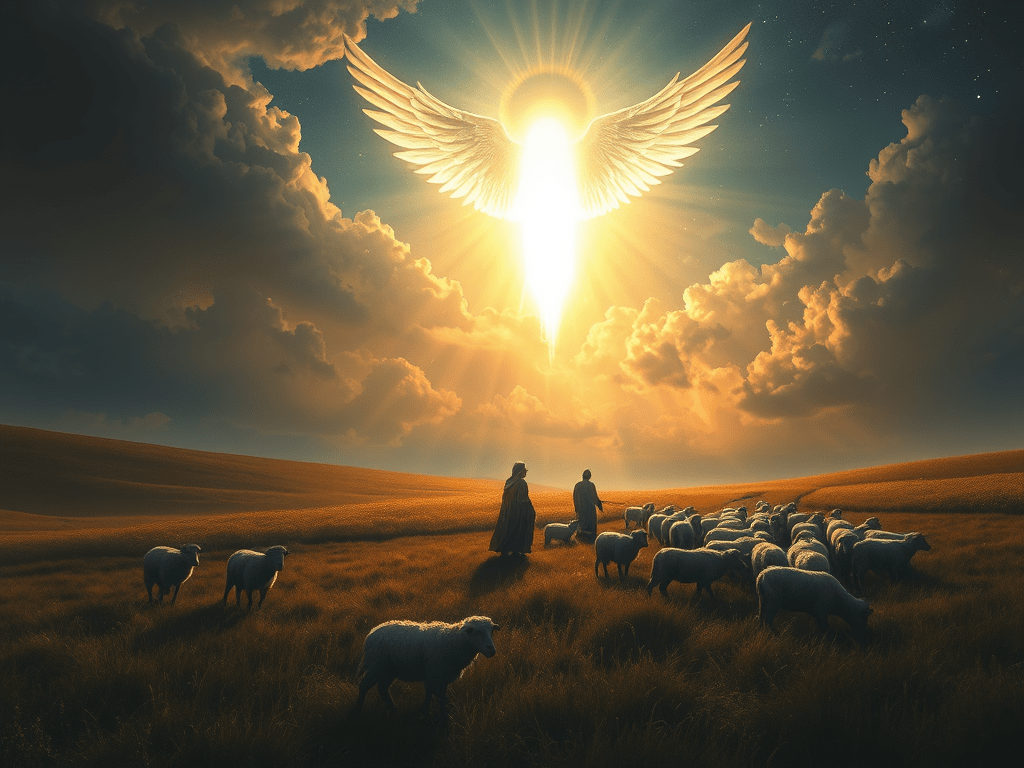
Luke 2:8-14, “And there were in the same country shepherds abiding in the field, keeping watch over their flock by night. And, lo, the angel of the Lord came upon them, and the glory of the Lord shone round about them: and they were sore afraid. And the angel said unto them, Fear not: for, behold, I bring you good tidings of great joy, which shall be to all people. For unto you is born this day in the city of David a Saviour, which is Christ the Lord. And this shall be a sign unto you; Ye shall find the babe wrapped in swaddling clothes, lying in a manger. And suddenly there was with the angel a multitude of the heavenly host praising God, and saying, Glory to God in the highest, And on earth peace, good will toward men.”
Matthew 4:16 in the King James Version (KJV) reads: “The people which sat in darkness saw great light; and to them which sat in the region and shadow of death light is sprung up”.
I’ve always liked the NEB’s translation of Matthew 4:16: “…Light dawned on the dwellers in the land of death’s dark shadow.”
John 9:1-7, “And as Jesus passed by, he saw a man which was blind from his birth. And his disciples asked him, saying, Master, who did sin, this man, or his parents, that he was born blind? Jesus answered, Neither hath this man sinned, nor his parents: but that the works of God should be made manifest in him. I must work the works of him that sent me, while it is day: the night cometh, when no man can work. As long as I am in the world, I am the light of the world. When he had thus spoken, he spat on the ground, and made clay of the spittle, and he anointed the eyes of the blind man with the clay, and said unto him, Go, wash in the pool of Siloam, (which is by interpretation, Sent.) He went his way therefore, and washed, and came seeing.”
“Ye are the light of the world. A city that is set on an hill cannot be hid” (Mt. 5:14).
Too much radiation from strong artificial light sources can cause the formation of toxic levels of harmful chemicals
Long-term UV exposure can lead to the development of carcinomas
Can also cause problems for people with chronic actinic dermatitis, the UV or blue component of artificial light aggravates the associated skin lesions.
In sufferers of lupus erythematosus, it can worsen the disease
It also “disrupts human circadian rhythms, suppressing melatonin, which leads to sleep problems, mood disorders (depression/anxiety), and increased risks for chronic diseases like diabetes, obesity, and heart disease.”[2]
Satan can distort himself to appear as an angel of light: “For such are false apostles, deceitful workers, transforming themselves into the apostles of Christ. And no marvel; for Satan himself is transformed into an angel of light. Therefore it is no great thing if his ministers also be transformed as the ministers of righteousness; whose end shall be according to their works.”[3]
Some indeed preach Christ: “But I would ye should understand, brethren, that the things which happened unto me have fallen out rather unto the furtherance of the gospel; so that my bonds in Christ are manifest in all the palace, and in all other places; and many of the brethren in the Lord, waxing confident by my bonds, are much more bold to speak the word without fear. Some indeed preach Christ even of envy and strife; and some also of good will: the one preach Christ of contention, not sincerely, supposing to add affliction to my bonds: but the other of love, knowing that I am set for the defence of the gospel.”[4]
Some present another Jesus: “Would to God ye could bear with me a little in my folly: and indeed bear with me. For I am jealous over you with godly jealousy: for I have espoused you to one husband, that I may present you as a chaste virgin to Christ. But I fear, lest by any means, as the serpent beguiled Eve through his subtilty, so your minds should be corrupted from the simplicity that is in Christ. For if he that cometh preacheth another Jesus, whom we have not preached, or if ye receive another spirit, which ye have not received, or another gospel, which ye have not accepted, ye might well bear with him.”[5]
We preach Jesus: “But if our gospel be hid, it is hid to them that are lost: in whom the god of this world hath blinded the minds of them which believe not, lest the light of the glorious gospel of Christ, who is the image of God, should shine unto them. For we preach not ourselves, but Christ Jesus the Lord; and ourselves your servants for Jesus’ sake. For God, who commanded the light to shine out of darkness, hath shined in our hearts, to give the light of the knowledge of the glory of God in the face of Jesus Christ.”[6]
The Lamb is the light: “And the city had no need of the sun, neither of the moon, to shine in it: for the glory of God did lighten it, and the Lamb is the light thereof” (Rev. 21:23).
Jesus is the true Light: “In him was life; and the life was the light of men. And the light shineth in darkness; and the darkness comprehended it not. That was the true Light, which lighteth every man that cometh into the world. He was in the world, and the world was made by him, and the world knew him not. He came unto his own, and his own received him not. But as many as received him, to them gave he power to become the sons of God, even to them that believe on his name: which were born, not of blood, nor of the will of the flesh, nor of the will of man, but of God. And the Word was made flesh, and dwelt among us, (and we beheld his glory, the glory as of the only begotten of the Father,) full of grace and truth.”[7]
Jesus is Light & the Father is Light: “This then is the message which we have heard of him, and declare unto you, that God is light, and in him is no darkness at all. If we say that we have fellowship with him, and walk in darkness, we lie, and do not the truth: but if we walk in the light, as he is in the light, we have fellowship one with another, and the blood of Jesus Christ his Son cleanseth us from all sin.”[8]
The Light brings us together = fellowship
Philippians 2:14-15, “Do all things without murmurings and disputings: that ye may be blameless and harmless, the sons of God, without rebuke, in the midst of a crooked and perverse nation, among whom ye shine as lights in the world;”
Micah 7:8, “Rejoice not against me, O mine enemy: when I fall, I shall arise; when I sit in darkness, the LORD shall be a light unto me.”
Habakkuk 3:2-4 (KJV), “(2) O LORD, I have heard thy speech, and was afraid: O LORD, revive thy work in the midst of the years, in the midst of the years make known; in wrath remember mercy. (3) God came from Teman, and the Holy One from mount Paran. Selah. His glory covered the heavens, and the earth was full of his praise. (4) And his brightness was as the light; he had horns coming out of his hand: and there was the hiding of his power.”
Habakkuk 3:2-4 (CEV), “I know your reputation, LORD, and I am amazed at what you have done. Please turn from your anger and be merciful; do for us what you did for our ancestors. You are the same Holy God who came from Teman and Paran to help us. The brightness of your glory covered the heavens, and your praises were heard everywhere on earth. Your glory shone like the sun, and light flashed from your hands, hiding your mighty power.”
John 12:44-47, “Jesus cried and said, He that believeth on me, believeth not on me, but on him that sent me. And he that seeth me seeth him that sent me. I am come a light into the world, that whosoever believeth on me should not abide in darkness. And if any man hear my words, and believe not, I judge him not: for I came not to judge the world, but to save the world.”
John 8:12, “Then spake Jesus again unto them, saying, I am the light of the world: he that followeth me shall not walk in darkness, but shall have the light of life.”
Is. 9:2, “The people that walked in darkness have seen a great light: they that dwell in the land of the shadow of death, upon them hath the light shined.”
Matthew 4:16 (NEB), “…Light dawned on the dwellers in the land of death’s dark shadow.”
Fourth son of Jacob and Leah: “…and she conceived again, and bare a son: and she said, Now will I praise the LORD: therefore she called his name Judah…”[3]
Judah always signifies the act of praise.
“Praise” appears 248 times in 216 verses in the KJV:
Deuteronomy 10:20-22, “(20) Thou shalt fear the LORD thy God; him shalt thou serve, and to him shalt thou cleave, and swear by his name. (21) He is thy praise, and he is thy God, that hath done for thee these great and terrible things, which thine eyes have seen. (22) Thy fathers went down into Egypt with threescore and ten persons; and now the LORD thy God hath made thee as the stars of heaven for multitude.”
Judges 5:3, “Hear, O ye kings; give ear, O ye princes; I, even I, will sing unto the LORD; I will sing praise to the LORD God of Israel.”
1 Chr. 16:4, 35, “And he appointed certain of the Levites to minister before the ark of the LORD, and to record, and to thank and praise the LORD God of Israel:….And say ye, Save us, O God of our salvation, and gather us together, and deliver us from the heathen, that we may give thanks to thy holy name, and glory in thy praise.”
David appointed worshippers and praisers: “Moreover four thousand were porters; and four thousand praised the LORD with the instruments which I made, said David, to praise therewith.”[4]
Ps. 7:17, “I will praise the LORD according to his righteousness: and will sing praise to the name of the LORD most high.”
Ps. 9:1-2, 14, “I will praise thee, O LORD, with my whole heart; I will shew forth all thy marvellous works. I will be glad and rejoice in thee: I will sing praise to thy name, O thou most High….That I may shew forth all thy praise in the gates of the daughter of Zion: I will rejoice in thy salvation.”
Some try to silence praise.
They will try to silence praise through spiritual death, unthankfulness, sin, shame, fear.
Others are too prideful to praise God. They call it “dignity,” but it’s really pride. Too fearful of what others may think.
You can make a choice to either entertain God’s presence, or pursue man’s acceptance.
God is captivated by Praise!
Psalm 22:3, “For thou art holy, O thou that inhabitest the praises of Israel.”
Psalm 147:1, “Praise ye the Lord: for it is good to sing praises unto our God; for it is pleasant; and praise is comely.”
He is attracted to your praise
Ps. 3:1, “Rejoice in the LORD, O ye righteous: for praise is comely for the upright.”
Comely = “beautiful, seemly”
“It becomes them; it is their duty; they are bound unto it by the mercies and favours they have received; should they not give praise to God, the stones of the wall would cry out, and rebuke them for their ingratitude: it is beautiful, and looks lovely in them…”[5]
Psa 34:15, “The eyes of the LORD are upon the righteous, and his ears are open unto their cry.”
True praise is righteous.
Woman at the well: “(19) The woman saith unto him, Sir, I perceive that thou art a prophet. (20) Our fathers worshipped in this mountain; and ye say, that in Jerusalem is the place where men ought to worship. (21) Jesus saith unto her, Woman, believe me, the hour cometh, when ye shall neither in this mountain, nor yet at Jerusalem, worship the Father. (22) Ye worship ye know not what: we know what we worship: for salvation is of the Jews. (23) But the hour cometh, and now is, when the true worshippers shall worship the Father in spirit and in truth: for the Father seeketh such to worship him. (24) God is a Spirit: and they that worship him must worship him in spirit and in truth. (25) The woman saith unto him, I know that Messias cometh, which is called Christ: when he is come, he will tell us all things. (26) Jesus saith unto her, I that speak unto thee am he.”
Hebrews 13:12-15, “(12) Wherefore Jesus also, that he might sanctify the people with his own blood, suffered without the gate. (13) Let us go forth therefore unto him without the camp, bearing his reproach. (14) For here have we no continuing city, but we seek one to come. (15) By him therefore let us offer the sacrifice of praise to God continually, that is, the fruit of our lips giving thanks to his name.”
Judah – praise – scepter not depart – gal pet – to him shall all the people come – magnetic pull of praise – praise draws people to JC –
Gen. 49:10
Ps. 33:1
Gal 3:13-14
[1] SOURCE: Conversation over breakfast with Bishop Jerry W. Dillon (Parkway Church, Madison, MS) at the 2025 UPCI GC in St. Louis, MO.
Acts 8:26-29, “(26) And the angel of the Lord spake unto Philip, saying, Arise, and go toward the south unto the way that goeth down from Jerusalem unto Gaza, which is desert. (27) And he arose and went: and, behold, a man of Ethiopia, an eunuch of great authority under Candace queen of the Ethiopians, who had the charge of all her treasure, and had come to Jerusalem for to worship, (28) Was returning, and sitting in his chariot read Esaias the prophet. (29) Then the Spirit said unto Philip, Go near, and join thyself to this chariot.”
(26) And God said, Let us make man in our image, after our likeness: and let them have dominion over the fish of the sea, and over the fowl of the air, and over the cattle, and over all the earth, and over every creeping thing that creepeth upon the earth.
(27) So God created man in his own image, in the image of God created he him; male and female created he them.
(28) And God blessed them, and God said unto them, Be fruitful, and multiply, and replenish the earth, and subdue it: and have dominion over the fish of the sea, and over the fowl of the air, and over every living thing that moveth upon the earth.
Genesis chapters 1 and 2 contain for us a great and humbling truth:
God created the world for you and I, and He desires to have a covenantal relationship with us.
Will you fully embrace and accept God’s invitation to covenant?
In Moses’ day, Darwin’s theory of evolution did not exist; No one believed the universe “just happened” after a “Big Bang”; and, the prevailing cultural belief of Egypt in that day was that the earth was created by multiples deities.
After all, they would argue, the earth so vast, so full of variety, that surely it was impossible for just one deity to create it all.
These faulty assumptions were upended with one Hebrew phrase written by Moses as he was moved on by the Holy Ghost: “”Bereshit bara Elohim,” or in English, “In the beginning God created the heaven and the earth.”[2]
God did it all by Himself.
No other deity partnered with Him. No triune, co-equal, co-eternal, co-existing deities collaborated on the Creation.
Just One God, Elohim, all by Himself, through the power of His Spoken Word – “And God said, Let there be light: and there was light.”
He said, “Let there be,” and low and behold, there it was.
Malachi 2:10a, “Have we not all one father? hath not one God created us?”
Deuteronomy 4:32-35, “(32) For ask now of the days that are past, which were before thee, since the day that God created man upon the earth, and ask from the one side of heaven unto the other, whether there hath been any such thing as this great thing is, or hath been heard like it? (33) Did ever people hear the voice of God speaking out of the midst of the fire, as thou hast heard, and live? (34) Or hath God assayed to go and take him a nation from the midst of another nation, by temptations, by signs, and by wonders, and by war, and by a mighty hand, and by a stretched out arm, and by great terrors, according to all that the LORD your God did for you in Egypt before your eyes? (35) Unto thee it was shewed, that thou mightest know that the LORD he is God; there is none else beside him.”
Act 4:24, “And when they heard that, they lifted up their voice to God with one accord, and said, Lord, thou art God, which hast made heaven, and earth, and the sea, and all that in them is.”
Isaiah 43:1, “But now thus saith the LORD that created thee, O Jacob, and he that formed thee, O Israel, Fear not: for I have redeemed thee, I have called thee by thy name; thou art mine.”
Isaiah 44:24, “Thus saith the LORD, thy redeemer, and he that formed thee from the womb, I am the LORD that maketh all things; that stretcheth forth the heavens alone; that spreadeth abroad the earth by myself”
John 1:1-3, 10-13, “(1) In the beginning was the Word, and the Word was with God, and the Word was God. (2) The same was in the beginning with God. (3) All things were made by him; and without him was not any thing made that was made….(10) He was in the world, and the world was made by him, and the world knew him not. (11) He came unto his own, and his own received him not. (12) But as many as received him, to them gave he power to become the sons of God, even to them that believe on his name: (13) Which were born, not of blood, nor of the will of the flesh, nor of the will of man, but of God.”
Adam and Eve, the Crown of Creation
The surprising twist in the story of Creation is that as God was building His creation layer upon layer, He was preparing it for a covenantal relationship:
First came the alternation of light and darkness, called “day” and “night” (the passage of time), then the sky, then the sea and land, and so on.
At the end of each stage, God called it good. God was clearly pleased, but He still kept working.
Finally on the sixth day, after He had spoken skies and stars and plants and trees into being, God scooped up a handful of His newly formed earth and began to sculpt it into an “image” of Himself:
Genesis 2:7, “And the LORD God formed man of the dust of the ground, and breathed into his nostrils the breath of life; and man became a living soul.”
In addition, God called him “Adam.”
And the Creation account ends with this statement: “And God saw every thing that he had made, and, behold, it was very good” (Genesis 1:31).
God had been working tirelessly for days on end, had achieved something significant.
He reached His goal and then He rested.
What was noteworthy objective?
To make someone in His image and likeness with whom He could have a covenant relationship.
What about This Word “Covenant?”
The word “covenant” does not appear in the Creation account, but clearly, God was establishing His desire to be in covenant with His people.
The only way to live harmoniously with God and His creation is by a covenant relationship marked by acts of separation and acts of naming.
What is a “Covenant?”
The word “covenant” is used 272 times in the King James Version of the Holy Bible.
A covenant it is an agreement between at least two persons or parties and this agreement can cover any number of things, but it is usually contingent on the idea that one side will do thus and so as long as the other side keeps their end of the contract.
In the Bible, we see that often the Old Testament is a covenant between man and God, while the New Testament is a covenant between God and man:
A scriptural example of an Old Testament covenant is found in 2 Chronicles 7:14, “If my people, which are called by my name, shall humble themselves, and pray, and seek my face, and turn from their wicked ways; then will I hear from heaven, and will forgive their sin, and will heal their land.”
New Testament example: Hebrews 8:1-13, “(1) Now of the things which we have spoken this is the sum: We have such an high priest, who is set on the right hand of the throne of the Majesty in the heavens; (2) A minister of the sanctuary, and of the true tabernacle, which the Lord pitched, and not man. (3) For every high priest is ordained to offer gifts and sacrifices: wherefore it is of necessity that this man have somewhat also to offer. (4) For if he were on earth, he should not be a priest, seeing that there are priests that offer gifts according to the law: (5) Who serve unto the example and shadow of heavenly things, as Moses was admonished of God when he was about to make the tabernacle: for, See, saith he, that thou make all things according to the pattern shewed to thee in the mount. (6) But now hath he obtained a more excellent ministry, by how much also he is the mediator of a better covenant, which was established upon better promises. (7) For if that first covenant had been faultless, then should no place have been sought for the second. (8) For finding fault with them, he saith, Behold, the days come, saith the Lord, when I will make a new covenant with the house of Israel and with the house of Judah: (9) Not according to the covenant that I made with their fathers in the day when I took them by the hand to lead them out of the land of Egypt; because they continued not in my covenant, and I regarded them not, saith the Lord. (10) For this is the covenant that I will make with the house of Israel after those days, saith the Lord; I will put my laws into their mind, and write them in their hearts: and I will be to them a God, and they shall be to me a people: (11) And they shall not teach every man his neighbour, and every man his brother, saying, Know the Lord: for all shall know me, from the least to the greatest. (12) For I will be merciful to their unrighteousness, and their sins and their iniquities will I remember no more. (13) In that he saith, A new covenant, he hath made the first old. Now that which decayeth and waxeth old is ready to vanish away.”
The Old Covenant involved physical circumcision, but the New Covenant is a circumcision of the heart.
The New Covenant is a better covenant and is for the entire human family.
“Covenant” as defined in Strong’s Exhaustive Concordance of the Bible:
(Hebrew) H1285, “a compact (because made by passing between pieces of flesh):—confederacy, [con-]feder[-ate], covenant, league.”
(Greek) G1242, “properly a disposition, that is, (specifically) a contract (especially a devisory will):—covenant, testament.”
God “made heaven, and earth, and the sea, and all that in them is” out of a desire was a desire for fellowship, communion, companionship —to have someone to love and to be loved in return.[3]
To signify the uniqueness of humanity’s relationship with Him, God granted them dominion, sharing His authority so they could rule with Him, caring for creation in their role as His representatives.
Will you embrace the role God has created for you?
Will you pursue the bond with Jesus that He desires to have with you?
Just as it was in the day of Adam and Eve, it is today: We are all created for a relationship with God and He has prepared a unique role for each of us in this world.
Just as Adam and Eve were specifically designed for relationship with God and given specific abilities to fulfill their purpose (“Be fruitful, and multiply, and replenish the earth, and subdue it: and have dominion over the fish of the sea, and over the fowl of the air, and over every living thing that moveth upon the earth”)[4]
You have skills, abilities and a work to do for God that only you can do.
I come to the garden alone
God built a special home for Adam, His image bearer. It was a garden eastward in Eden and a place of pleasure and delight.
Despite all the “good” that God had declared beforehand, and regardless of the paradise Adam was presented with two unexpected phrases burst forth from the pages of the Book of Beginnings: “And the LORD God said, It is not good that the man should be alone; I will make him an help meet for him.”[5]
Disrupting the “good” God saw something missing from Adam’s life that reminded Him of His own isolated existence:
“And out of the ground the LORD God formed every beast of the field, and every fowl of the air; and brought them unto Adam to see what he would call them: and whatsoever Adam called every living creature, that was the name thereof. And Adam gave names to all cattle, and to the fowl of the air, and to every beast of the field; but for Adam there was not found an help meet for him.”[6]
Adam was created in God’s image so he could share fellowship with God, but that meant Adam also needed fellowship with another human—one who was like him.
Eve, the Perfect Helper
Genesis 2:21-24, “(21) And the LORD God caused a deep sleep to fall upon Adam, and he slept: and he took one of his ribs, and closed up the flesh instead thereof; (22) And the rib, which the LORD God had taken from man, made he a woman, and brought her unto the man. (23) And Adam said, This is now bone of my bones, and flesh of my flesh: she shall be called Woman, because she was taken out of Man. (24) Therefore shall a man leave his father and his mother, and shall cleave unto his wife: and they shall be one flesh.
Eve was God’s gift to Adam, perfectly matched to meet his needs.
Eve was created from Adam (specifically, from his side).
Eve was created as Adam’s help, who was meet (matched) to him.
Throughout the Book of Psalms, this term “help” becomes an image of God’s covenantal relationship with humanity:
Psalm 54:4, “Behold, God is mine helper.”
Psalm 46:1, “God is our refuge and strength, a very present help in trouble.”
Adam was not the only one created in the image of God; Adam and Eve together (male and female) comprised the totality of God’s divine image.
In fact, God called them together “Adam.”
Genesis 5:2, “Male and female created he them; and blessed them, and called their name Adam, in the day when they were created.”
Adam was incomplete without Eve and they needed to work together to fulfill the massive task allotted to them: keeping God’s gift of the Garden.
Separation and Identity
Creation is a study on separation and identity:
Genesis 1:2-5, “(2) And the earth was without form, and void; and darkness was upon the face of the deep. And the Spirit of God moved upon the face of the waters. (3) And God said, Let there be light: and there was light. (4) And God saw the light, that it was good: and God divided the light from the darkness. (5) And God called the light Day, and the darkness he called Night. And the evening and the morning were the first day.”
God separated the light from the darkness, and then He identifies the light by giving it the name “Day.” Next, He names the darkness by calling it “Night.”
By separating and naming each specifically God gave them identity, purpose and function.
God then separates the firmament from the waters and identifies that as Heaven, and that is when our atmosphere comes into existence.
Gen 1:9-10, “And God said, Let the waters under the heaven be gathered together unto one place, and let the dry land appear: and it was so. And God called the dry land Earth; and the gathering together of the waters called he Seas: and God saw that it was good.”
Eventually, this whole idea of separation and identity reveals the necessity of order in Creation.
Other examples of separation and identity abound throughout Scripture:
In Genesis 12 God called Abram to separate himself from his pagan culture by leaving his “country…kindred, and…father’s house” (Genesis 12:1).
Later God gave Abram and Sarai new names in order to mark the couple’s new function as nation-makers even though they would be barren for a long time.
In Acts 2, In the upper room either on the southern steps leading to the Temple, or overlooking the Temple courtyard, Peter called his hearers to separation from the world through repenting of their sins and taking on themselves the name of Jesus through water baptism (Acts 2:38).
God’s invitation into covenant is corporate and individual
God’s call to a relational covenant is offered to each individual person. The choice to join God in covenant relationship will always come to the individual; no one else can make that choice for you.
Once you accept God’s individual call you come into fellowship with the body of Christ.
Covenant teaches us that we have more than just a personal relationship with Jesus Christ (as vital as that is); we also have a relationship with His body, the church, a relationship that is also vital to our spiritual health.
When you enter that covenant with Jesus it is simultaneously a call “out of” sin and the depravity of a fallen world and a call “into” a renewed life established on God’s original purpose and design (covenant).
When we enter into covenant with God, we become “in” the world but not “of” the world:
(14) I have given them thy word; and the world hath hated them, because they are not of the world, even as I am not of the world. (15) I pray not that thou shouldest take them out of the world, but that thou shouldest keep them from the evil. (16) They are not of the world, even as I am not of the world. (17) Sanctify them through thy truth: thy word is truth. (18) As thou hast sent me into the world, even so have I also sent them into the world.[7]
Having been separated from the world you take on a new name in Christ and with that a new identity with a new purpose.
Conclusion
Psalm 101:1 – Integrity Psalm.[8] The Maintenance of the Covenant:
“I will sing of mercy and judgment: Unto thee, O LORD, will I sing” (Psalm 101:1, KJV).
“I will sing of steadfast love and justice; to you, O Lord, I will make music” (Psalm 101:1, ESV).
Mercy, Steadfast love, is “sticky love.”
“It is the sort of love you can’t shake off. It sticks to you through every high and low, every success and failure, every malfunction and sin,” every victory and defeat. -Tom Nelson
Tom Nelson – “This attachment love” is the basis of the covenant that the wall of love between you and Jesus is built upon.
You are attached to Jesus by love and the enemy wants to destroy that attachment by disintegrating the wall of relationship, mutual trust and integrity between you and Him.
But the song of stedfast love is the song of God’s mercy: “It is of the LORD’S mercies that we are not consumed, because his compassions fail not. They are new every morning: great is thy faithfulness.”[9]
Marriage is a covenant of companionship:
Malachi 2:14, “Yet ye say, Wherefore? Because the LORD hath been witness between thee and the wife of thy youth, against whom thou hast dealt treacherously: yet is she thy companion, and the wife of thy covenant.”
God remembered his covenant with Abraham, Isaac and Jacob. That is why he put up with their murmuring in the wilderness.
And it came to pass in process of time, that the king of Egypt died: and the children of Israel sighed by reason of the bondage, and they cried, and their cry came up unto God by reason of the bondage. And God heard their groaning, and God remembered his covenant with Abraham, with Isaac, and with Jacob. And God looked upon the children of Israel, and God had respect [knew, favorable regard] unto them.[10]
The Bible begins with a Marriage (covenant) and ends with a Marriage (covenant):
Genesis 2:18, 21-24, “(18) And the LORD God said, It is not good that the man should be alone; I will make him an help meet for him”….”(21) And the LORD God caused a deep sleep to fall upon Adam, and he slept: and he took one of his ribs, and closed up the flesh instead thereof; (22) And the rib, which the LORD God had taken from man, made he a woman, and brought her unto the man. (23) And Adam said, This is now bone of my bones, and flesh of my flesh: she shall be called Woman, because she was taken out of Man. (24) Therefore shall a man leave his father and his mother, and shall cleave unto his wife: and they shall be one flesh.”
Revelation 19:6-9, “(6) And I heard as it were the voice of a great multitude, and as the voice of many waters, and as the voice of mighty thunderings, saying, Alleluia: for the Lord God omnipotent reigneth. (7) Let us be glad and rejoice, and give honour to him: for the marriage of the Lamb is come, and his wife hath made herself ready. (8) And to her was granted that she should be arrayed in fine linen, clean and white: for the fine linen is the righteousness of saints. (9) And he saith unto me, Write, Blessed are they which are called unto the marriage supper of the Lamb. And he saith unto me, These are the true sayings of God.”
Revelation 21:2, 9, “(2) And I John saw the holy city, new Jerusalem, coming down from God out of heaven, prepared as a bride adorned for her husband”….“And there came unto me one of the seven angels which had the seven vials full of the seven last plagues, and talked with me, saying, Come hither, I will shew thee the bride, the Lamb’s wife.”
[1] SOURCE: God’s Word for Life. Covenant. Fall 2025 Lesson Guide. Lesson 1 – Creation. Pentecostal Publishing House.
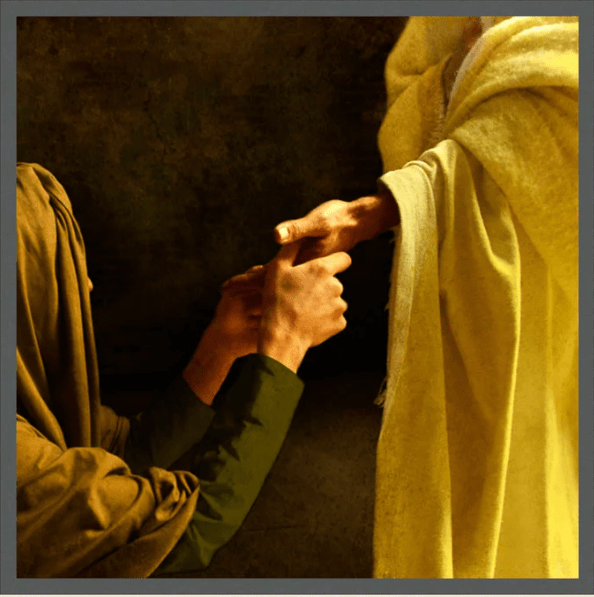
Artist: Eva Koleva Timothy
Source: https://altusfineart.com/products/eva-koleva-timothy-my-lord-and-my-god-doubting-thomas-jesus?srsltid=AfmBOoqxmznqqpB4jdjvdcmDdMgVUAYCGU87R62SXtdZhAe1o4O6X8jA
Stephen Kuntzman | August 31, 2025 | 7:00 pm
Text: Zechariah 13:6, “And one shall say unto him, What are these wounds in thine hands? Then he shall answer, Those with which I was wounded in the house of my friends.”
John 20:24-29
(24) But Thomas, one of the twelve, called Didymus, was not with them when Jesus came.
(25) The other disciples therefore said unto him, We have seen the Lord. But he said unto them, Except I shall see in his hands the print of the nails, and put my finger into the print of the nails, and thrust my hand into his side, I will not believe.
(26) And after eight days again his disciples were within, and Thomas with them: then came Jesus, the doors being shut, and stood in the midst, and said, Peace be unto you.
(27) Then saith he to Thomas, Reach hither thy finger, and behold my hands; and reach hither thy hand, and thrust it into my side: and be not faithless, but believing.
(28) And Thomas answered and said unto him, My Lord and my God.
(29) Jesus saith unto him, Thomas, because thou hast seen me, thou hast believed: blessed are they that have not seen, and yet have believed.
I love a good story.
My favorite story is when someone tells me what Jesus has done in his life.
Where they were when Jesus found them and how He has been there along the way the whole time.
We all have scars, healed over wounds, which tell a story. Tonight, I am preaching on this topic:
The Story in the Wound
If you live any length of time, you will eventually carry on your body as scar.
That scar carries with it memory and emotion, but always a story.
Some wounds are internal, but they contain a chronicle that are as fresh on your mind as the day the injury first occurred.
Doubting Thomas or Thomas the Seeker
Thomas, because thou hast seen me, thou hast believed –I find it of great interest that Jesus does not rebuke Thomas for unbelief. Instead, Jesus approves the faith Thomas possessed.
Some will not believe even if they see and hear.
Thomas was not a doubter, he was a seeker.
He saw Jesus die, but now he was looking, seeking, for infallible proof.
Thomas wanted a firsthand experience for himself.
Jesus looked at Thomas and simply says, “Reach hither thy finger, and behold my hands; and reach hither thy hand, and thrust it into my side: and be not faithless, but believing.”
Then Thomas makes the first post-resurrection proclamation of deity concerning Christ when he through faith-filled lips replies, “My Lord and my God.”
With that one statement, John uses Thomas’ declaration of faith to take us all the way back to the beginning of his gospel:
“In the beginning was the Word, and the Word was with God, and the Word was God.”[1]
Jesus then says, “Thomas, because thou hast seen me, thou hast believed: blessed are they that have not seen, and yet have believed.”
Again, not rebuke of Thomas, just a stunning declaration from Jesus that there would be people who would not see, but believe as Thomas did that Jesus is both Lord and God.
Before he and the other apostles would pass away, they would convince thousands that Jesus Christ was both Lord and Christ, God in flesh, the Messiah, the Almighty.
Jesus is here tonight to deliver you, heal you, help you, if you will simply acknowledge His deity and say the most important three words you will every speak:
“Jesus, Help Me!”
The day may be different but the cry is still the same:
When he heard that Jesus was passing by, Bartimaeus “began to cry out, and say, Jesus, thou son of David, have mercy on me” (Mark 10:47).
Jesus was willing to be vulnerable
People today are searching for someone to show them their true self.
Our society needs someone who will become vulnerable, show them their wounds and tell them their story.
It is the story in the wound that resonates with people.
Yes, we cry out to Jesus, “show me Your glory,” but before He is glorified, He will suffer at Calvary.
Scripture tells us that Jesus was rejected, acquainted with sorrow and grief, made himself of no reputation, became a servant.
He told the people to come to Him, to the little children come, that unto His own and His own received Him not.
He was spat on, smacked, mocked, betrayed, lied on, beaten to the point of death, and nailed to a cross.
Jesus was pierced on His head by a crown of thorns
His hands and feet were pierced to the cross
A spear pierced his side
His back pierced by a whip that slashed across it unmercifully
Jesus was willing to show His egregious wounds if it meant one would believe.
Quit hiding your wounds, hurts, and vulnerabilities.
Elijah on Mt. Carmel v. Elijah at the brook
It’s what Elijah went through that gives greater credibility
What did it cost you to get you here?
Tell that story:
The Story in the Wound – The Story in Your Wound
Your Story, like Jesus’ story may contain bleeding, crying, groaning, crawling, limping walking, running, leaping, dancing,
BUT – The story in the wound is that you made it
When you tell your story, you are sharing through your vulnerability that now only have you been where they are now, but God brought me out.