Categories
NO!

Text: Genesis 49:10
The sceptre shall not depart from Judah, nor a lawgiver from between his feet, until Shiloh come; and unto him shall the gathering of the people be.
The Magnetic Power of Praise[1]
Reuben = firstborn of Jacob and Leah
Simeon & Levi = sons 2 & 3
Judah = Praised[2]
“Praise” appears 248 times in 216 verses in the KJV:
Some try to silence praise.
They will try to silence praise through spiritual death, unthankfulness, sin, shame, fear.
Others are too prideful to praise God. They call it “dignity,” but it’s really pride. Too fearful of what others may think.
You can make a choice to either entertain God’s presence, or pursue man’s acceptance.
God is captivated by Praise!
Hebrews 13:12-15, “(12) Wherefore Jesus also, that he might sanctify the people with his own blood, suffered without the gate. (13) Let us go forth therefore unto him without the camp, bearing his reproach. (14) For here have we no continuing city, but we seek one to come. (15) By him therefore let us offer the sacrifice of praise to God continually, that is, the fruit of our lips giving thanks to his name.”
Judah – praise – scepter not depart – gal pet – to him shall all the people come – magnetic pull of praise – praise draws people to JC –
Gen. 49:10
Ps. 33:1
Gal 3:13-14
[1] SOURCE: Conversation over breakfast with Bishop Jerry W. Dillon (Parkway Church, Madison, MS) at the 2025 UPCI GC in St. Louis, MO.
[2] Brown-Driver-Briggs Hebrew Definitions. H3063.
[3] Gen. 29
[4] 1 Chr. 23:5
[5] John Gill’s Exposition of the Bible.
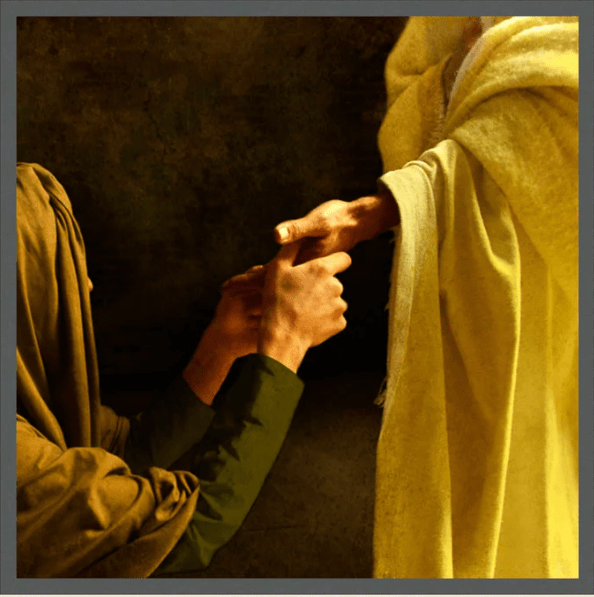
Text: Zechariah 13:6, “And one shall say unto him, What are these wounds in thine hands? Then he shall answer, Those with which I was wounded in the house of my friends.”
John 20:24-29
(24) But Thomas, one of the twelve, called Didymus, was not with them when Jesus came.
(25) The other disciples therefore said unto him, We have seen the Lord. But he said unto them, Except I shall see in his hands the print of the nails, and put my finger into the print of the nails, and thrust my hand into his side, I will not believe.
(26) And after eight days again his disciples were within, and Thomas with them: then came Jesus, the doors being shut, and stood in the midst, and said, Peace be unto you.
(27) Then saith he to Thomas, Reach hither thy finger, and behold my hands; and reach hither thy hand, and thrust it into my side: and be not faithless, but believing.
(28) And Thomas answered and said unto him, My Lord and my God.
(29) Jesus saith unto him, Thomas, because thou hast seen me, thou hast believed: blessed are they that have not seen, and yet have believed.
I love a good story.
My favorite story is when someone tells me what Jesus has done in his life.
Where they were when Jesus found them and how He has been there along the way the whole time.
We all have scars, healed over wounds, which tell a story. Tonight, I am preaching on this topic:
The Story in the Wound
If you live any length of time, you will eventually carry on your body as scar.
That scar carries with it memory and emotion, but always a story.
Some wounds are internal, but they contain a chronicle that are as fresh on your mind as the day the injury first occurred.
Doubting Thomas or Thomas the Seeker
Thomas, because thou hast seen me, thou hast believed –I find it of great interest that Jesus does not rebuke Thomas for unbelief. Instead, Jesus approves the faith Thomas possessed.
Some will not believe even if they see and hear.
Thomas was not a doubter, he was a seeker.
He saw Jesus die, but now he was looking, seeking, for infallible proof.
Thomas wanted a firsthand experience for himself.
Jesus looked at Thomas and simply says, “Reach hither thy finger, and behold my hands; and reach hither thy hand, and thrust it into my side: and be not faithless, but believing.”
Then Thomas makes the first post-resurrection proclamation of deity concerning Christ when he through faith-filled lips replies, “My Lord and my God.”
With that one statement, John uses Thomas’ declaration of faith to take us all the way back to the beginning of his gospel:
“In the beginning was the Word, and the Word was with God, and the Word was God.”[1]
Jesus then says, “Thomas, because thou hast seen me, thou hast believed: blessed are they that have not seen, and yet have believed.”
Again, not rebuke of Thomas, just a stunning declaration from Jesus that there would be people who would not see, but believe as Thomas did that Jesus is both Lord and God.
Before he and the other apostles would pass away, they would convince thousands that Jesus Christ was both Lord and Christ, God in flesh, the Messiah, the Almighty.
Jesus is here tonight to deliver you, heal you, help you, if you will simply acknowledge His deity and say the most important three words you will every speak:
“Jesus, Help Me!”
The day may be different but the cry is still the same:
When he heard that Jesus was passing by, Bartimaeus “began to cry out, and say, Jesus, thou son of David, have mercy on me” (Mark 10:47).
Jesus was willing to be vulnerable
People today are searching for someone to show them their true self.
Our society needs someone who will become vulnerable, show them their wounds and tell them their story.
It is the story in the wound that resonates with people.
Yes, we cry out to Jesus, “show me Your glory,” but before He is glorified, He will suffer at Calvary.
Scripture tells us that Jesus was rejected, acquainted with sorrow and grief, made himself of no reputation, became a servant.
He told the people to come to Him, to the little children come, that unto His own and His own received Him not.
He was spat on, smacked, mocked, betrayed, lied on, beaten to the point of death, and nailed to a cross.
Jesus was pierced on His head by a crown of thorns
His hands and feet were pierced to the cross
A spear pierced his side
His back pierced by a whip that slashed across it unmercifully
Jesus was willing to show His egregious wounds if it meant one would believe.
Quit hiding your wounds, hurts, and vulnerabilities.
Elijah on Mt. Carmel v. Elijah at the brook
It’s what Elijah went through that gives greater credibility
What did it cost you to get you here?
Tell that story:
The Story in the Wound – The Story in Your Wound
Your Story, like Jesus’ story may contain bleeding, crying, groaning, crawling, limping walking, running, leaping, dancing,
BUT – The story in the wound is that you made it
When you tell your story, you are sharing through your vulnerability that now only have you been where they are now, but God brought me out.
God brought you out.
God brought you out
God brought you out
[1]John 1:1.
<< THROWBACK SERMON: December 21, 2003 (Vevay, IN) >>
Job 27:5-10
5 God forbid that I should justify you: till I die I will not remove mine integrity from me. 6 My righteousness I hold fast, and will not let it go: my heart shall not reproach me so long as I live. 7 Let mine enemy be as the wicked, and he that riseth up against me as the unrighteous. 8 For what is the hope of the hypocrite, though he hath gained, when God taketh away his soul? 9 Will God hear his cry when trouble cometh upon him? 10 Will he delight himself in the Almighty? will he always call upon God?
Job 31:1-10
1 I made a covenant with mine eyes; why then should I think upon a maid? 2 For what portion of God is there from above? and what inheritance of the Almighty from on high? 3 Is not destruction to the wicked? and a strange punishment to the workers of iniquity? 4 Doth not he see my ways, and count all my steps? 5 If I have walked with vanity, or if my foot hath hasted to deceit; 6 Let me be weighed in an even balance, that God may know mine integrity. 7 If my step hath turned out of the way, and mine heart walked after mine eyes, and if any blot hath cleaved to mine hands; 8 Then let me sow, and let another eat; yea, let my offspring be rooted out. 9 If mine heart have been deceived by a woman, or if I have laid wait at my neighbour’s door; 10 Then let my wife grind unto another, and let others bow down upon her.
Presumption: ***See notes on obedience*** (Ex: Moses struck the rock twice, king Saul’s disobedience and presumptuous offering, Uzziah)
Ps. 7:8, “The LORD shall judge the people: judge me, O LORD, according to my righteousness, and according to mine integrity that is in me.”
Ps. 26:1, “Judge me, O LORD; for I have walked in mine integrity: I have trusted also in the LORD; therefore I shall not slide.”
Ps. 26:11, “But as for me, I will walk in mine integrity: redeem me, and be merciful unto me.”
Proverbs 11:3, “The integrity of the upright shall guide them: but the perverseness of transgressors shall destroy them.”
Proverbs 20:7, “The just man walketh in his integrity: his children are blessed after him.”
Genesis 39:1-14
vs. 11, “And it came to pass about this time, that Joseph went into the house to do his business; and there was none of the men of the house there within.”
Joseph was innocent, but his character was still called into question because he unwittingly placed himself in a compromising position.
Isaiah 26:1-4
1 In that day shall this song be sung in the land of Judah; We have a strong city; salvation will God appoint for walls and bulwarks. 2 Open ye the gates, that the righteous nation which keepeth the truth may enter in. 3 Thou wilt keep him in perfect peace, whose mind is stayed on thee: because he trusteth in thee. 4 Trust ye in the LORD for ever: for in the LORD JEHOVAH is everlasting strength:
The Rock of Ages has appointed walls and bulwarks of salvation as a habitation for those who keep the truth in their integrity.
1 Peter 2:11-12
11 Dearly beloved, I beseech you as strangers and pilgrims, abstain from fleshly lusts, which war against the soul; 12 Having your conversation honest among the Gentiles: that, whereas they speak against you as evildoers, they may by your good works, which they shall behold, glorify God in the day of visitation.
Romans 12:1-2
1 I beseech you therefore, brethren, by the mercies of God, that ye present your bodies a living sacrifice, holy, acceptable unto God, which is your reasonable service. 2 And be not conformed to this world: but be ye transformed by the renewing of your mind, that ye may prove what is that good, and acceptable, and perfect, will of God.
Song of Solomon 8:8-10
8 We have a little sister, and she hath no breasts: what shall we do for our sister in the day when she shall be spoken for? 9 If she be a wall, we will build upon her a palace of silver: and if she be a door, we will inclose her with boards of cedar. 10 I am a wall, and my breasts like towers: then was I in his eyes as one that found favour.
You will either stand as a wall of integrity or you will allow compromise to breach the door of your heart.
Job proved his integrity!
Job 2:3, 9-10
3 And the LORD said unto Satan, Hast thou considered my servant Job, that there is none like him in the earth, a perfect and an upright man, one that feareth God, and escheweth evil? and still he holdeth fast his integrity, although thou movedst me against him, to destroy him without cause…. 9 Then said his wife unto him, Dost thou still retain thine integrity? curse God, and die. 10 But he said unto her, Thou speakest as one of the foolish women speaketh. What? shall we receive good at the hand of God, and shall we not receive evil? In all this did not Job sin with his lips.
Job is one of the first examples of a man who prayed with his heart. His only way of access to God before the trial was through the sacrifice of animals, but then his animals were destroyed.
Job’s living sacrifice to God was his testimony of integrity before the Lord.
The devil desires to attack and destroy your point of contact (line of communication) between you and God.
God wants the hidden places of your heart. Submit them all too Him. You have places where even God cannot enter. Give those places to Him and witness the work that He will do in your life.
<<THROWBACK SERMON: April 22, 2007 – borrowed and inspired by a sermon preached by Royce Cornelius>>
John 5:2-9, “2 Now there is at Jerusalem by the sheep market a pool, which is called in the Hebrew tongue Bethesda, having five porches. 3 In these lay a great multitude of impotent folk, of blind, halt, withered, waiting for the moving of the water. 4 For an angel went down at a certain season into the pool, and troubled the water: whosoever then first after the troubling of the water stepped in was made whole of whatsoever disease he had. 5 And a certain man was there, which had an infirmity thirty and eight years. 6 When Jesus saw him lie, and knew that he had been now a long time in that case, he saith unto him, Wilt thou be made whole? 7 The impotent man answered him, Sir, I have no man, when the water is troubled, to put me into the pool: but while I am coming, another steppeth down before me. 8 Jesus saith unto him, Rise, take up thy bed, and walk. 9 And immediately the man was made whole, and took up his bed, and walked: and on the same day was the sabbath.”
Notice:
Consider the reality that many in our churches are:
Wilt thou be made whole?
Do you really want to be saved?
Are you really seeking God in every aspect of you life?
Have you truly tried to clean up all the deficits of your personality, nature, urges?
Have you really tried to present yourself to God as “a living sacrifice, holy, acceptable unto God, which is your reasonable service” (Ro. 12:1)?
Are you really striving not to be “conformed to this world: but be ye transformed by the renewing of your mind, that ye may prove what is that good, and acceptable, and perfect, will of God” (Ro. 12:2)?
Do you really want to stop doing what’s ungodly?
Do you really want to please God and obey His Word?
Do you want to be made whole?
In the Apostolic church we tend to close our eyes to what’s obvious in our churches – – that there are those among us who really don’t want to be made whole.
We choose to ignore the deficits among us, and even in our own lives, ignoring the fact that some of us are not whole, and are still crippled by:
| Jealousy | Envy | Hatred |
| Gossiping | Back-biting | Strife |
| Digging up the past | Tale-bearing | Lying |
| Playing the busybody | Arrogance | Pride |
| Lust | Self-righteousness | Looking down on others |
| Spiritual superiority | Bad attitudes | Anger |
Denying the truth that there are still cripples among us – – that there are still those among us not living up to the Bible standard of salvation and holiness. This denial stymies the free flow of Holy Ghost and hinders a true sovereign move of God in our midst.
Do you really want to be made whole?
Are you saved?
Do you really want to be saved?
Can you really and truly sing, with a clear conscience, “I Am a Friend of God?”
Can you really do that when you’re backbiting, gossiping, holding grudges, and full of lust?
Kenneth V. Reeves wrote: “Whoever digs up another person’s forgiven sin, and remembers in his conversation what God under forgiveness (Eph. 1:7; Col. 1:14; 1 Jn. 1:7-10) cannot remember (Heb. 8:12), probably makes the sin of the other person his own property.”[3]
Do you want to be whole?
Are you striving deep down in your heart to live right and holy, or do you hide behind lying on the altar when in the church house and living ungodly away from it?
Anyone can be moved to the altar through the emotional impact of an anointed and convicting sermon, but it is what you do on your own that defines who you truly are.
Lionel B. Fletcher wrote:
“To be hidden from observation is a severe test of character.”[4]
“The thoughts that are welcomed in our minds…are a reflection of our true selves as we appear in the sight of God.”[5]
Wilt thou be made whole?
Jesus saves completely and wholly, not partially or half-way.
You’re either saved, or you’re not – holy, or not – right, or not.
Do you want to be saved?
God won’t heal your body and leave you spirit and soul unsaved.
He doesn’t do a half-way job and leave you mean, bitter, arrogant, contemptuous, hateful, and full of lust.
He doesn’t save you and leave your nature, personality, and urges messed up.
Jesus saves all the way. He saves to the uttermost. He saves completely.
Colossians 2:10-12, “And ye are complete in him, which is the head of all principality and power: In whom also ye are circumcised with the circumcision made without hands, in putting off the body of the sins of the flesh by the circumcision of Christ: Buried with him in baptism, wherein also ye are risen with him through the faith of the operation of God, who hath raised him from the dead.
2 Cor. 5:17, “Therefore if any man be in Christ, he is a new creature: old things are passed away; behold, all things are become new.”
True salvation delivers you from the state of being a cripple. Bible salvation delivers you from the need to strut your stuff, show-off, to play the peacock.
Hebrews 2:1-4, “1 Therefore we ought to give the more earnest heed to the things which we have heard, lest at any time we should let them slip. 2 For if the word spoken by angels was stedfast, and every transgression and disobedience received a just recompence of reward; 3 How shall we escape, if we neglect so great salvation; which at the first began to be spoken by the Lord, and was confirmed unto us by them that heard him; 4 God also bearing them witness, both with signs and wonders, and with divers miracles, and gifts of the Holy Ghost, according to his own will?
When you’re saved you’re delivered, rescued, set free, and brought out of all the unrighteousness you’ve ever been guilty of sinning.
1 John 5:17, “All Unrighteousness is sin.”
You can’t be saved with sin tucked away somewhere in your life, like some hidden guilty pleasure.
Romans 1:32, “…they which commit such things are worthy of death, not only do the same, but have pleasure in them that do them.”
Do you really want to be made whole, to recover, to be healed?
To be saved?
Do you want to live outside of sin? Do you want to live free and clear of a crippled life?
Max Lucado wrote:
“I am a spiritual being. After this body is dead, my spirit will soar. I refuse to let what will rot, rule the eternal. I choose self-control. I will be drunk only by joy. I will be impassioned only by my faith. I will be influenced only by God. I will be taught only by Christ.”[6]
Jesus is coming back for a church that is whole: “…a glorious church, not having spot, or wrinkle, or any such thing; but that it should be holy and without blemish” (Eph. 5:27).
If you want to be made whole then there’s something you and only you have got to do. A decision, drive, and desire that stems from your own hunger to be made whole and righteous: “Blessed are they which do hunger and thirst after righteousness: for they shall be filled” (Matt. 5:6).
Your spouse, parents, pastor, friends, and children can’t do it for you.
You must obey the Word of God and decide to be led by the Spirit of God and not your urges, personality, or lust.
You must fully obey the Bible Standard for salvation: “Then Peter said unto them, Repent, and be baptized every one of you in the name of Jesus Christ for the remission of sins, and ye shall receive the gift of the Holy Ghost” (Acts 2:38).
Paul asked the question:
Ro. 7:14-25, “24 O wretched man that I am! who shall deliver me from the body of this death?”
Who can make you whole? Only Jesus!!
Peter & John’s faith in the name of Jesus Christ wholly heals the lame man:
Acts 3:16, “And his name through faith in his name hath made this man strong, whom ye see and know: yea, the faith which is by him hath given him this perfect soundness in the presence of you all.”
Do you want to be saved? Come to Jesus.
Wilt Thou Be Made Whole?
[1] Thayer and Smith. “Greek Lexicon entry for Astheneo”. “The KJV New Testament Greek Lexicon”. Retrieved: 4-22-2007. <http://www.biblestudytools.net/Lexicons/Greek/grk.cgi?number=770&version=kjv>.
[2] Thayer and Smith. “Greek Lexicon entry for Hugies”. “The KJV New Testament Greek Lexicon”. Retrieved: 4-22-2007. <http://www.biblestudytools.net/Lexicons/Greek/grk.cgi?number=5199&version=kjv>.
[3] Reeves, Kenneth V. (1990). The Lost Sons of God. Inspirational Tapes & Books: Granite City, IL.
[4] Fletcher, Lionel B. (1933). The Pathway to the Stars. Hunt, Barnard & Co., Ltd: London, England. p.23.
[5] Ibid. p.25.
[6] Lucado, Max. (1999). When God Whispers Your Name. W Publishing Group.
<<THROWBACK SERMON: PREACHED ON JULY 2, 2006>>
1st Recorded Act of Worship Accepted By God in the Bible Involved the Shedding of Blood.
Gen. 4
1 And Adam knew Eve his wife; and she conceived, and bare Cain, and said, I have gotten a man from the LORD. 2 And she again bare his brother Abel. And Abel was a keeper of sheep, but Cain was a tiller of the ground. 3 And in process of time it came to pass, that Cain brought of the fruit of the ground an offering unto the LORD. 4 And Abel, he also brought of the firstlings of his flock and of the fat thereof. And the LORD had respect unto Abel and to his offering: 5 But unto Cain and to his offering he had not respect. And Cain was very wroth, and his countenance fell. 6 And the LORD said unto Cain, Why art thou wroth? and why is thy countenance fallen? 7 If thou doest well, shalt thou not be accepted? and if thou doest not well, sin lieth at the door. And unto thee shall be his desire, and thou shalt rule over him. 8 And Cain talked with Abel his brother: and it came to pass, when they were in the field, that Cain rose up against Abel his brother, and slew him. 9 And the LORD said unto Cain, Where is Abel thy brother? And he said, I know not: Am I my brother’s keeper? 10 And he said, What hast thou done? the voice of thy brother’s blood crieth unto me from the ground. 11 And now art thou cursed from the earth, which hath opened her mouth to receive thy brother’s blood from thy hand; 12 When thou tillest the ground, it shall not henceforth yield unto thee her strength; a fugitive and a vagabond shalt thou be in the earth.
Heb. 11:4, “By faith Abel offered unto God a more excellent sacrifice than Cain, by which he obtained witness that he was righteous, God testifying of his gifts: and by it he being dead yet speaketh.”
Heb. 12:22-24, “But ye are come unto mount Sion, and unto the city of the living God, the heavenly Jerusalem, and to an innumerable company of angels, To the general assembly and church of the firstborn, which are written in heaven, and to God the Judge of all, and to the spirits of just men made perfect, And to Jesus the mediator of the new covenant, and to the blood of sprinkling, that speaketh better things than that of Abel.”
Jesus became our scapegoat – “Jesus also, that he might sanctify the people with his own blood, suffered without the gate” (Heb. 13:12).
1 Peter 1:18-19, “Forasmuch as ye know that ye were not redeemed with corruptible things, as silver and gold, from your vain conversation received by tradition from your fathers; But with the precious blood of Christ, as of a lamb without blemish and without spot:”
Thomas Jefferson:
In his first draft of the Declaration of Independence (1776), Jefferson condemned the British crown for sponsoring the importation of slavery to the colonies, charging that the crown “has waged cruel war against human nature itself, violating its most sacred rights of life and liberty in the persons of a distant people who never offended him, captivating & carrying them into slavery in another hemisphere.” However, this language was dropped from the Declaration at the request of delegates from South Carolina and Georgia.
–Thomas Jefferson’s First Draft of the Declaration of Independence
The idea of Hallowed Ground:
The Idea of Cursed Ground:
Abel’s Blood cried out for justice
The Blood of Christ grants mercy
The Blood played a significant part in the OT and NT.
Heb. 10:19-22, “Having therefore, brethren, boldness to enter into the holiest by the blood of Jesus, By a new and living way, which he hath consecrated for us, through the veil, that is to say, his flesh; And having an high priest over the house of God; Let us draw near with a true heart in full assurance of faith, having our hearts sprinkled from an evil conscience, and our bodies washed with pure water.”
“Sin is determined opposition to a holy God.” –Andrew Murray
Heb. 9:11-14, “But Christ being come an high priest of good things to come, by a greater and more perfect tabernacle, not made with hands, that is to say, not of this building; Neither by the blood of goats and calves, but by his own blood he entered in once into the holy place, having obtained eternal redemption for us. For if the blood of bulls and of goats, and the ashes of an heifer sprinkling the unclean, sanctifieth to the purifying of the flesh: How much more shall the blood of Christ, who through the eternal Spirit offered himself without spot to God, purge your conscience from dead works to serve the living God?”
The Voice of the Blood – Jesus Christ (Jn. 1:1-14)
The Song of the Redeemed – Their Testimony (Rev. 12:11)
The Blood Will Never Lose Its Power
Thank God for the Blood
There’s Power In the Blood
I Know It was the Blood
When I See the Blood
I See a Crimson Stream of Blood
The Blood Prevailed
I Know His Blood Has Made Me Whole
God Gave Me a Song
1 Corinthians 2:1-5, “(1) And I, brethren, when I came to you, came not with excellency of speech or of wisdom, declaring unto you the testimony of God. (2) For I determined not to know any thing among you, save Jesus Christ, and him crucified. (3) And I was with you in weakness, and in fear, and in much trembling. (4) And my speech and my preaching was not with enticing words of man’s wisdom, but in demonstration of the Spirit and of power: (5) That your faith should not stand in the wisdom of men, but in the power of God.”
The Lord is seeking people who will press into Him: (12) Not as though I had already attained, either were already perfect: but I follow after, if that I may apprehend that for which also I am apprehended of Christ Jesus. (13) Brethren, I count not myself to have apprehended: but this one thing I do, forgetting those things which are behind, and reaching forth unto those things which are before, (14) I press toward the mark for the prize of the high calling of God in Christ Jesus.[1]
Daniel 11:32, “…but the people that do know their God shall be strong, and do exploits.”
Albert Barnes says, “The word exploits…is supplied by the translators, but not improperly. The meaning is, that they would show great prowess, and perform illustrious deeds in battle.”
<you have held back and been held back long enough>
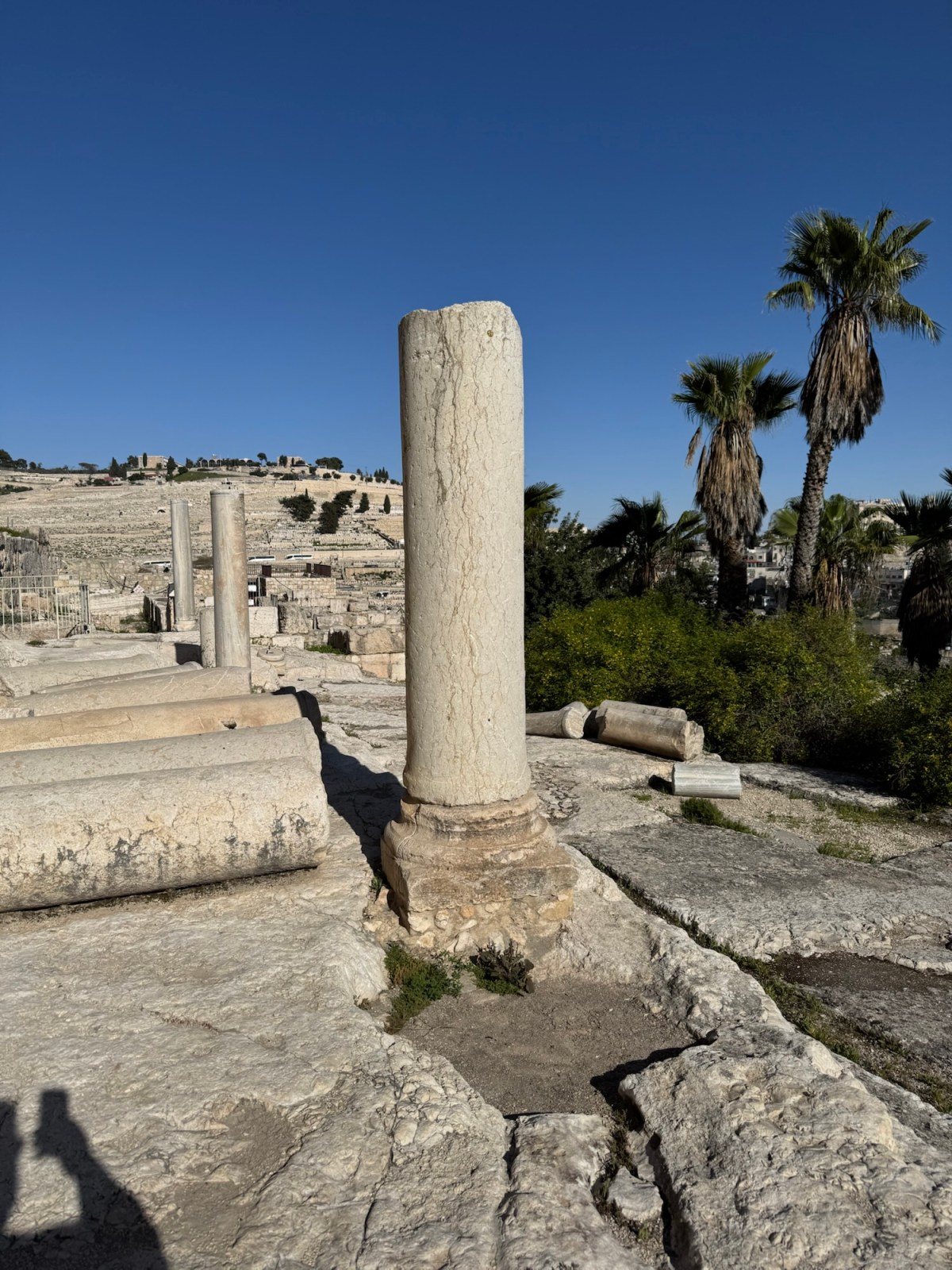
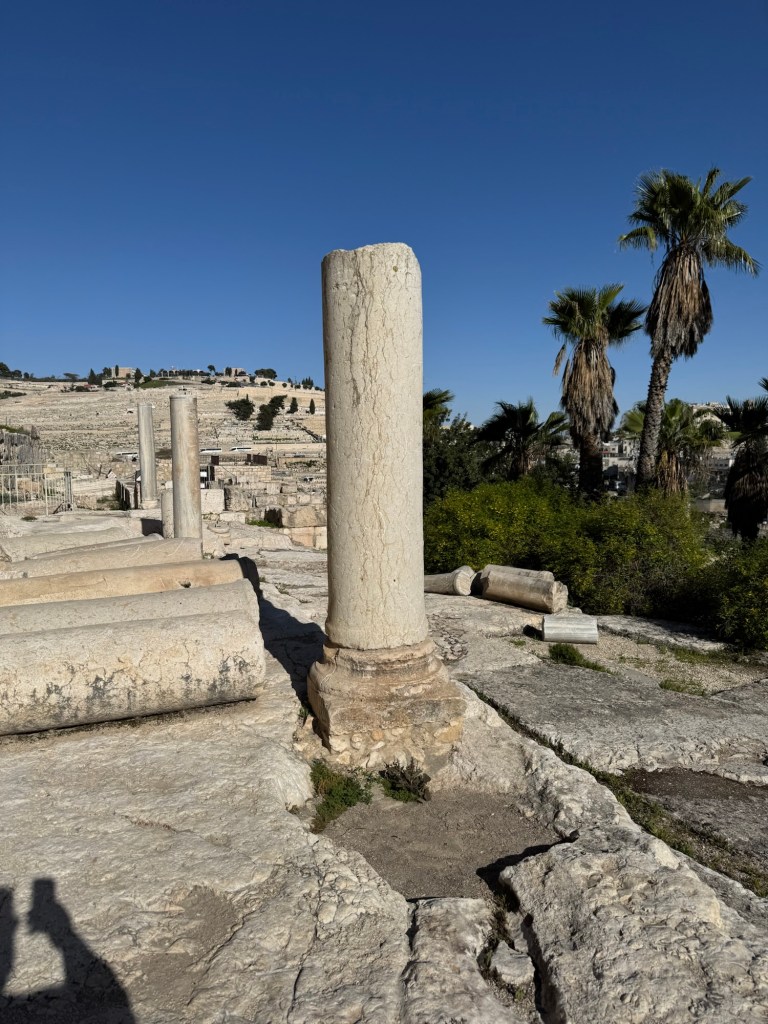
When you visit Jerusalem they will take you to:
Acts 1:8 – they had to wait, we don’t. We have the power, it’s already been poured out: “But ye shall receive power, after that the Holy Ghost is come upon you: and ye shall be witnesses unto me both in Jerusalem, and in all Judaea, and in Samaria, and unto the uttermost part of the earth.”[2]
Hab 1:5, “Behold ye among the heathen, and regard, and wonder marvellously: for I will work a work in your days, which ye will not believe, though it be told you.”
So easy to look outside yourself, but the power or God is in you.
[1] Philippians 3:12-14
[2] Acts 1:8
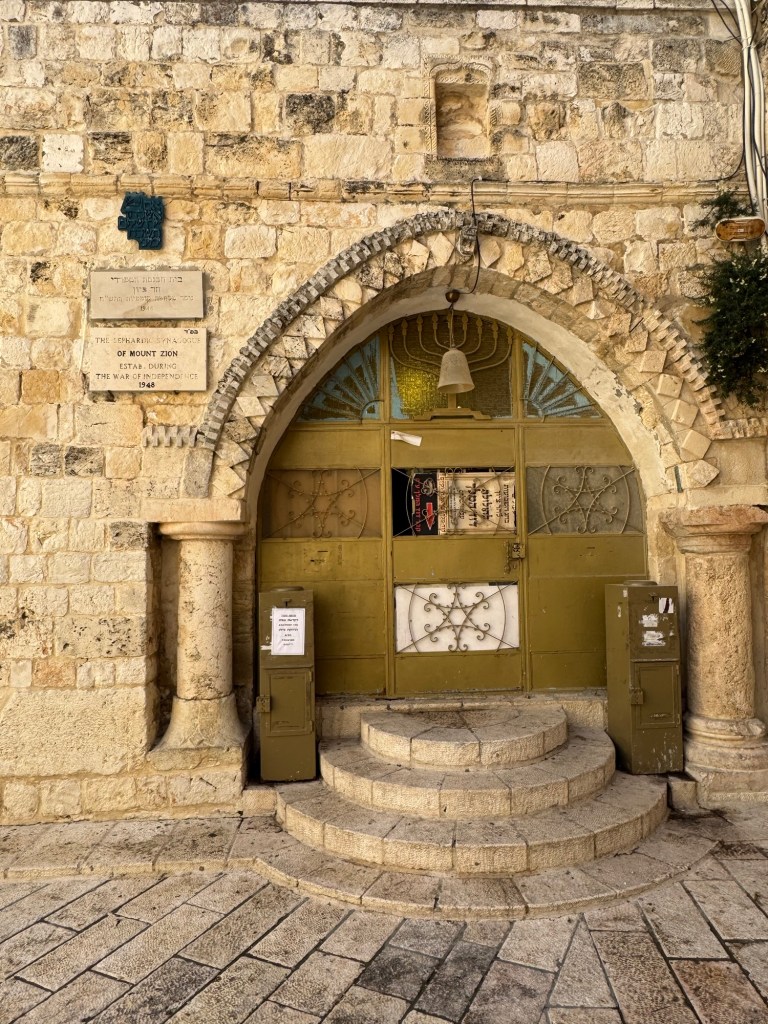

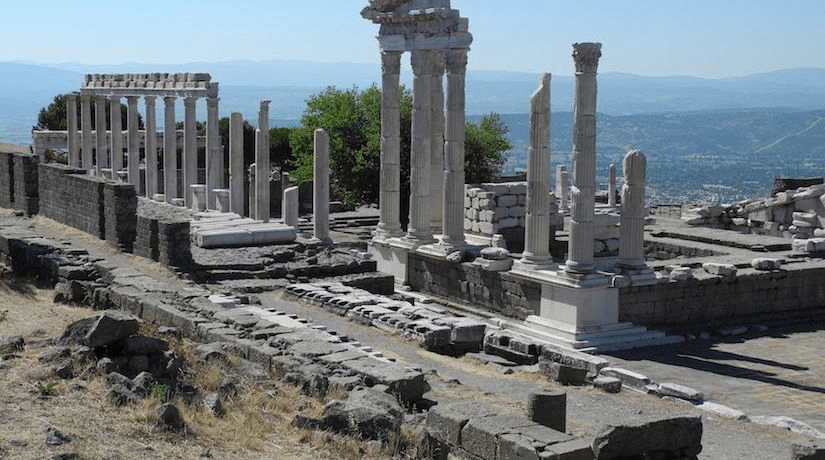
Here’s a throwback sermon from January 3, 2016 I preached to the congregation of Bible Apostolic Church.
Text: “For I am jealous over you with godly jealousy: for I have espoused you to one husband, that I may present you as a chaste virgin to Christ” (2 Corinthians 11:2).
The book of Revelation is probably one of the most misunderstood and discussed books in the Bible.
Many, including myself, often read its pages attempting to figure out answers to questions we describe as the end times, or eschatology (the study of the end times).
In those pages, written by the apostle John – John the beloved – students of the Word of God try to figure out future events coming to this world.
My interest today is not about when, where or how the catching away of the Church will take place.
Nor am I going to discuss seals, vials, elders, or the four beasts sitting around the throne.
I’m not even interested in who the beast, false prophet, or antichrist are, and if they are alive right now.
I know that rockets are dropping all over Jerusalem and Israel even while I am in this podium, and that many are discussing the coming of the Lord for that very reason, but that is not why I have lifted this text to our attention today.
You see the Book of Revelation is primarily written to reveal Jesus to us. It is a disclosure of the everlasting Truth of who Jesus Christ is yesterday, today, and forever. And along with that is the unveiling of the Church in its relationship with our Lord Jesus Christ.
“The revelation of Jesus Christ, which God gave unto him, to show unto his servants things which must shortly come to pass; and he sent and signified it by his angel unto his servant John:” (Rev. 1:1).
It is a “Jesus” book, and in its pages we see Jesus Christ as:
It is also a book written to the church about the past, present, and future.
It is specifically addressed to seven churches: “What thou seest, write in a book, and send it unto the seven churches which are in Asia; unto Ephesus, and unto Smyrna, and unto Pergamos, and unto Thyatira, and unto Sardis, and unto Philadelphia, and unto Laodicea.”
Seven Churches of Asia:
Some believe that these seven churches are symbolic of various ages that the Church will have gone through from Acts until today:
Church~Name Defined~Time Period
Ephesus ~ Desirable ~ 100-200 A.D.
Smyrna ~ Myrrh ~ 200-300 A.D.
Pergamos ~ Marriage/Elevation ~ 300-500 A.D.
Thyatira ~ Continual Sacrifice ~ 500-1500 A.D.
Sardis ~ Remnant ~ 1500-1900 A.D.
Philadelphia ~ Brotherly Love ~ 1900-Rapture
Laodicea ~ People Rule ~ Present-Rapture[1]
I think it is referring to conditions evident in churches right now, spiritual conditions that exist in local assemblies and even in the lives of its individual members.
Today, as we enter a new year and a fresh start, you are at a threshold moment.
This moment can be your last step in a life of mediocrity, defeat, condemnation, insecurity, enslavement, abuse, addiction, hypocrisy, and self-hate as you step over the threshold of Divine mercy and grace into the life of righteousness, peace and joy Jesus has always had prepared for you.
TAKE THAT STEP.
There is conflict at the threshold. Your flesh has been in control and doesn’t want to take that step.
Satan does not want you to be victorious. He’ll appeal to you in anyway he can to keep you from crossing the threshold.
Three Tactics of the Devil at the Threshold (Bishop Norman L. Wagner):
1. Compromise
2. Change
3. Quit
With that in mind, it is this third church mentioned in the Book of the Revelation of Jesus Christ that I am bringing to your attention today: Pergamos.
PERGAMOS[2]
Revelation 2:12-17
(12) And to the angel of the church in Pergamos write; These things saith he which hath the sharp sword with two edges;
(13) I know thy works, and where thou dwellest, even where Satan’s seat is: and thou holdest fast my name, and hast not denied my faith, even in those days wherein Antipas was my faithful martyr, who was slain among you, where Satan dwelleth.
(14) But I have a few things against thee, because thou hast there them that hold the doctrine of Balaam, who taught Balac to cast a stumblingblock before the children of Israel, to eat things sacrificed unto idols, and to commit fornication.
(15) So hast thou also them that hold the doctrine of the Nicolaitans, which thing I hate.
(16) Repent; or else I will come unto thee quickly, and will fight against them with the sword of my mouth.
(17) He that hath an ear, let him hear what the Spirit saith unto the churches; To him that overcometh will I give to eat of the hidden manna, and will give him a white stone, and in the stone a new name written, which no man knoweth saving he that receiveth it.
“Dearly beloved, I beseech you as strangers and pilgrims, abstain from fleshly lusts, which war against the soul; Having your conversation honest among the Gentiles: that, whereas they speak against you as evildoers, they may by your good works, which they shall behold, glorify God in the day of visitation” (1 Peter 2:11-12).
I ask you today:
Are you ready to be an overcomer, or are you content to live a compromised life married to this world and bound by your lust and pride?
Will you step through the threshold?
Your last step of defeat, pain, sorrow, heartache, and compromise can be today as your next step over the threshold becomes an entrance to a life of victory, righteousness, peace, joy, Divine Provision, Divine Favor, purity, innocence, and the Lord’s promise of eternal life.
Come on, leave that worldly compromise. Settle it once and for all.
Take advantage of this threshold moment offered by Jesus Christ to you today.
This Threshold Decision at Pergamos is a decision to once and for all divorce yourself from this wicked and perverse world and be truly espoused (married) to Christ.
[1] Purpose Institute. #5206 – The Book of Revelation. Lesson 1: The Church. 2014.
[2] Dustin L. Abbott. 2007. Revelation Unveiled. Pages 44-48.
 The Pillar and Ground of Truth