1 Timothy 3:15, "...that thou mayest know how thou oughtest to behave thyself in the house of God, which is the church of the living God, the pillar and ground of the truth."
Author:skuntzman
Jesus Christ is my Savior and I have been born again (John 3:1-6; Acts 2:38). He gifted me with the love of my life, Anita. She blessed me with 2 awesome children, a brilliant daughter-in-law, and the 5 best grandkids in the world. Together, Anita and I are striving to introduce and bring people to a victorious life through the Lord Jesus Christ.
A throwback sermon preached on September 30, 2014.
TEXT
John 4:19-24
(19) The woman saith unto him, Sir, I perceive that thou art a prophet. (20) Our fathers worshipped in this mountain; and ye say, that in Jerusalem is the place where men ought to worship. (21) Jesus saith unto her, Woman, believe me, the hour cometh, when ye shall neither in this mountain, nor yet at Jerusalem, worship the Father. (22) Ye worship ye know not what: we know what we worship: for salvation is of the Jews. (23) But the hour cometh, and now is, when the true worshippers shall worship the Father in spirit and in truth: for the Father seeketh such to worship him. (24) God is a Spirit: and they that worship him must worship him in spirit and in truth.
INTRODUCTION
Unless you follow closely the world of professional golf you might never hear the name “Harvey Penick.”
Harvey Penick was a well-respected golf instructor who invested his life in teaching men and women how to play their best game of golf. He taught children, amateurs, collegians, professionals, and even duffers.
He also wrote a book entitled: Harvey Penick’s Little Red Book: Lessons and Teachings from a Lifetime in Golf. It is from those pages that I want direct your attention:
When my student Betsy Rawls was in a playoff for the U.S. Women’s Open championship, I sent her a one-sentence telegram.
It said:
“Take Dead Aim!”
Betsy won the playoff.
For golfers who might not understand Texas talk, let me put the advice in the telegram a different way: Once you address the golf ball, hitting it has got to be the most important thing in your life at that moment. Shut out all thoughts other than picking out a target and taking dead aim it.
This is a good way to calm a case of nerves.
Everybody gets nervous on the first tee, whether it’s Betsy Rawls in a playoff for the Open or a high handicapper teeing off at the club in a $2 Nassau with friends.
Instead of worrying about making a fool of yourself in front of a crowd of 4 or 40,000, forget about how your swing may look and concentrate instead on where you want the ball to go. Pretty is as pretty does.
I would approach my college players before a match and tell them the same thing: Take dead aim.
This is a wonderful thought to keep in mind all the way around the course, not just on the first tee. Take dead aim at a spot on the fairway or the green, refuse to allow any negative thought to enter your head, and swing away.[1]
The Lord is searching for true worshippers to live their lives in worship to Him.
And tonight I want to address this topic, take aim, and swing away.
KEYPOINTS
Cares of Life.
It’s easy to get sidetracked from a life of worship.
Luke 8:14, “And that which fell among thorns are they, which, when they have heard, go forth, and are choked with cares and riches and pleasures of this life, and bring no fruit to perfection.”
Mark 4:19, “And the cares of this world, and the deceitfulness of riches, and the lusts of other things entering in, choke the word, and it becometh unfruitful.”
The word rendered “cares” denotes in the original “distracting anxieties,” which, as it were, “cut a man in sunder.”[2]
Life has a way of getting away from us sometimes, grabbing the bit, and running in its own direction.
We are people of purpose who need to grab the reins and live, and worship, on purpose.
The worship of the Lord Jesus Christ should be so much a part of your life that no decision is made without that in mind.
Ask yourself the question:
How does this magnify God?
Is the Lord pleased by my choice?
I know bills are high, work is a struggle, and the devil wants to fill your mind so full of fear and second-guessing that you might find it difficult to even focus on God long enough for a season of prayer, but I would admonish you to
“Take Dead Aim!”
Find that prayer closet, sing that song of praise, let all your focus turn to Jesus and worship Him.
True worship begins in the spirit.
The “mind,” the “soul,” the “heart.” They shall worship God with a sincere “mind;” with the simple offering of gratitude and prayer; with a desire to glorify him, and without external pomp and splendor.[3]
The mind has to be sincere in its approach to God, void of showmanship, or entertainment.
God’s pleasure in you is not increased by the litany of complex verbiage exiting your mouth, but by the simple thanksgiving and prayer.
And, also, it is the presence of the sincere life that is governed by God’s Holy Spirit impacting and influencing your rational soul.
We focus our mind on the Lord and then
“Take Dead Aim!”
True worship is truthful.
To be true in your worship is to stand before God as you really are, and not in some fashion of fakery.
It is the life of authenticity and vulnerability.
It is you being the real you.
It is you opening up the most true part of yourself to God, focusing on Him, and then
“Take Dead Aim!”
CLOSE
David and Michal.
Woman at the well.
[1] Penick, Harvey. (1992). Harvey Penick’s Little Red Book: Lessons and Teachings from a Lifetime in Golf. Simon & Schuster. Page 45.
[2] The Cambridge Bible for Schools and Colleges. Mark 4:19.
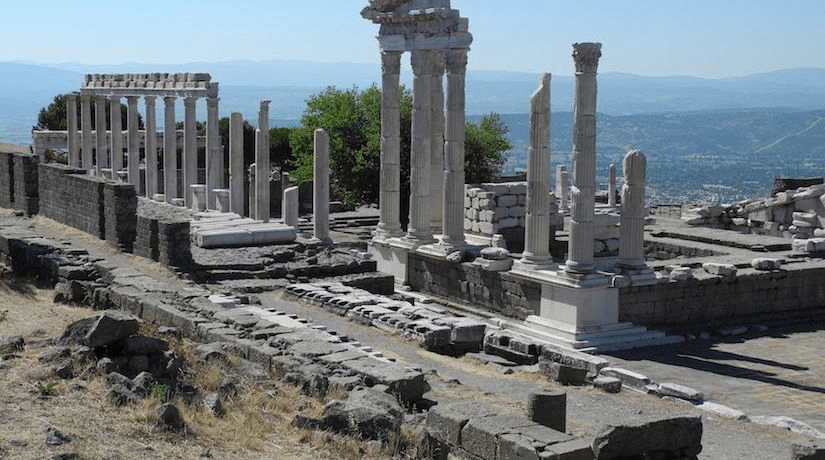
Ruins of the temple of Trajan at Pergamos. Roman citizens had to offer incense to the emperor once each year, for which they were given a certificate showing they had complied with their civic duty. This temple was one place where this could be accomplished (photo by Joel Meeker). Source: https://lifehopeandtruth.com/prophecy/revelation/seven-churches-of-revelation/pergamos/
Here’s a throwback sermon from January 3, 2016 I preached to the congregation of Bible Apostolic Church.
Text: “For I am jealous over you with godly jealousy: for I have espoused you to one husband, that I may present you as a chaste virgin to Christ” (2 Corinthians 11:2).
The book of Revelation is probably one of the most misunderstood and discussed books in the Bible.
Many, including myself, often read its pages attempting to figure out answers to questions we describe as the end times, or eschatology (the study of the end times).
In those pages, written by the apostle John – John the beloved – students of the Word of God try to figure out future events coming to this world.
My interest today is not about when, where or how the catching away of the Church will take place.
Nor am I going to discuss seals, vials, elders, or the four beasts sitting around the throne.
I’m not even interested in who the beast, false prophet, or antichrist are, and if they are alive right now.
I know that rockets are dropping all over Jerusalem and Israel even while I am in this podium, and that many are discussing the coming of the Lord for that very reason, but that is not why I have lifted this text to our attention today.
You see the Book of Revelation is primarily written to reveal Jesus to us. It is a disclosure of the everlasting Truth of who Jesus Christ is yesterday, today, and forever. And along with that is the unveiling of the Church in its relationship with our Lord Jesus Christ.
“The revelation of Jesus Christ, which God gave unto him, to show unto his servants things which must shortly come to pass; and he sent and signified it by his angel unto his servant John:” (Rev. 1:1).
It is a “Jesus” book, and in its pages we see Jesus Christ as:
The Alpha and Omega – the Almighty.
The One in the midst of the candlesticks.
The One holding the seven stars of the churches.
The One sitting on the throne.
The Lion of the tribe of Judah.
The Lamb slain.
The reigning King on a white horse.
The Judge of the living and dead.
It is also a book written to the church about the past, present, and future.
It is specifically addressed to seven churches: “What thou seest, write in a book, and send it unto the seven churches which are in Asia; unto Ephesus, and unto Smyrna, and unto Pergamos, and unto Thyatira, and unto Sardis, and unto Philadelphia, and unto Laodicea.”
Seven Churches of Asia:
Ephesus
Smyrna
Pergamos
Thyatira
Sardis
Philadelphia
Laodicea
Some believe that these seven churches are symbolic of various ages that the Church will have gone through from Acts until today:
I think it is referring to conditions evident in churches right now, spiritual conditions that exist in local assemblies and even in the lives of its individual members.
Today, as we enter a new year and a fresh start, you are at a threshold moment.
This moment can be your last step in a life of mediocrity, defeat, condemnation, insecurity, enslavement, abuse, addiction, hypocrisy, and self-hate as you step over the threshold of Divine mercy and grace into the life of righteousness, peace and joy Jesus has always had prepared for you.
TAKE THAT STEP.
There is conflict at the threshold. Your flesh has been in control and doesn’t want to take that step.
Satan does not want you to be victorious. He’ll appeal to you in anyway he can to keep you from crossing the threshold.
Three Tactics of the Devil at the Threshold (Bishop Norman L. Wagner):
1. Compromise
2. Change
3. Quit
With that in mind, it is this third church mentioned in the Book of the Revelation of Jesus Christ that I am bringing to your attention today: Pergamos.
(12) And to the angel of the church in Pergamos write; These things saith he which hath the sharp sword with two edges;
Pergamos literally means “married with the world.”
It refers to a condition and time when satan changed tactics to attack the Church.
We all want to be accepted.
So, satan stopped persecuting the church and began popularizing it.
The church became the “in thing” to join. And so it became fashionable.
But while fashionable it was impure. Those joining didn’t leave their sinful practices and those already in it became influenced by the world.
This led to a condition where the Church would become unfaithful to Christ and married to the world.
Jesus is stating here that He is coming with a two-edged sword to divide the true Church from the false church that is full of compromise and polluted works.
(13) I know thy works, and where thou dwellest, even where Satan’s seat is: and thou holdest fast my name, and hast not denied my faith, even in those days wherein Antipas was my faithful martyr, who was slain among you, where Satan dwelleth.
Even as popular culture tried to pervert, popularize, and convolute the name of Jesus, the Church held on to the truth of the mighty God in Christ.
They still understood:
Neither is there salvation in any other…
In Him dwelleth all the fullness of the godhead bodily…
Whatsoever ye do in word or deed, do all in the name…
God has always had a True Church that has held onto His name.
Somewhere and somehow Truth has always been preserved.
Even when satan changes tactics, God is always steps ahead preserving and protecting the Church.
You see, Truth doesn’t need protecting. Truth is true whether all believe it, or none do.
It was Adrian Rodgers who said:
It is better to be divided by truth than to be united in error. It is better to speak the truth that hurts and then heals, than falsehood that comforts and then kills. Let me tell you something, friend, it is not love and it is not friendship if we fail to declare the whole counsel of God. It is better to be hated for telling the truth, than to be loved for telling a lie. It is impossible to find anyone in the Bible who was a power for God who did not have enemies and was not hated. It’s better to stand alone with the truth, than to be wrong with a multitude. It is better to ultimately succeed with the truth than to temporarily succeed with a lie. There is only one Gospel and Paul said, “If any man preach any other gospel unto you than that which we have preached unto you, let him be accursed.” -Adrian Rodgers, National Religious Broadcasters Convention in 1996
Pergamos had martyrs who died for Truth by holding fast to the name of Jesus – Antipas (thought to be the pastor).
Unfortunately, there are some who have not taken hold of that lovely name and cherished it like they should. Instead, they’ve taken the name of the Lord in vain by living compromised lives in partnership, relationship, union, agreement, fellowship, and marriage with the world.
I plead with you today, as John did in his epistle:
“Love not the world, neither the things that are in the world. If any man love the world, the love of the Father is not in him. For all that is in the world, the lust of the flesh, and the lust of the eyes, and the pride of life, is not of the Father, but is of the world. And the world passeth away, and the lust thereof: but he that doeth the will of God abideth for ever” (1 John 2:15-17).
All of these fleshly appetites gone out of control married to the world are temporal. They won’t last. Only what you do for Christ will last. They won’t satisfy. Only Jesus can satisfy your soul.
You would never consider cheating on your spouse. Why then do you so easily and nonchalantly cheat on your Maker who is your husband?
(14) But I have a few things against thee, because thou hast there them that hold the doctrine of Balaam, who taught Balac to cast a stumblingblock before the children of Israel, to eat things sacrificed unto idols, and to commit fornication.
It was Balaam who couldn’t curse the Hebrews. So, he encouraged Balac to have his pagan people intermarry with the Hebrews.
Thus, the Hebrews brought a curse on themselves when their gentile wives brought false gods, heathen practices, and compromise into their homes.
The devil wants you to bring a curse on yourself by allowing a marriage of the holy with the profane in your life.
(15) So hast thou also them that hold the doctrine of the Nicolaitans, which thing I hate.
The doctrine (deeds) of the Nicolaitans: Corrupted Paul’s teaching concerning grace, and made it a license to sin.
They were sensual and unrepentant.
They turned the grace of God into lasciviousness.
Paul wrote in reponsse to them: “What shall we say then? Shall we continue in sin, that grace may abound? God forbid. How shall we, that are dead to sin, live any longer therein?” (Romans 6:1-2).
2 Corinthians 6:17, “Wherefore come out from among them, and be ye separate, saith the Lord, and touch not the unclean thing; and I will receive you.”
(16) Repent; or else I will come unto thee quickly, and will fight against them with the sword of my mouth.
REPENT – Jesus here gives to John the very first word of the Gospel that He shared in the beginning – REPENT.
It is the only solution for your sin.
It is better to fall in humble repentance now than to be broken by God’s judgment.
Psalms 103:8-11, “The LORD is merciful and gracious, slow to anger, and plenteous in mercy. He will not always chide: neither will he keep his anger for ever. He hath not dealt with us after our sins; nor rewarded us according to our iniquities. For as the heaven is high above the earth, so great is his mercy toward them that fear him.”
(17) He that hath an ear, let him hear what the Spirit saith unto the churches; To him that overcometh will I give to eat of the hidden manna, and will give him a white stone, and in the stone a new name written, which no man knoweth saving he that receiveth it.
Hidden manna = Divine provision both natural and spiritual.
The Bread of Life, the Lord Jesus Christ, is our sustenance.
White stone = a sign of purity and innocence.
Even in this wicked age of compromise God can keep you pure and declare you innocent.
Name recorded in stone = worthy of eternal life.
God would not condemn the True Church to Hell because of the failures of their generation.
“Dearly beloved, I beseech you as strangers and pilgrims, abstain from fleshly lusts, which war against the soul; Having your conversation honest among the Gentiles: that, whereas they speak against you as evildoers, they may by your good works, which they shall behold, glorify God in the day of visitation” (1 Peter 2:11-12).
I ask you today:
Are you ready to be an overcomer, or are you content to live a compromised life married to this world and bound by your lust and pride?
Will you step through the threshold?
Your last step of defeat, pain, sorrow, heartache, and compromise can be today as your next step over the threshold becomes an entrance to a life of victory, righteousness, peace, joy, Divine Provision, Divine Favor, purity, innocence, and the Lord’s promise of eternal life.
Come on, leave that worldly compromise. Settle it once and for all.
Take advantage of this threshold moment offered by Jesus Christ to you today.
This Threshold Decision at Pergamos is a decision to once and for all divorce yourself from this wicked and perverse world and be truly espoused (married) to Christ.
[1] Purpose Institute. #5206 – The Book of Revelation. Lesson 1: The Church. 2014.
[2] Dustin L. Abbott. 2007. Revelation Unveiled. Pages 44-48.
(1) Now there was a certain man of Ramathaimzophim, of mount Ephraim, and his name was Elkanah, the son of Jeroham, the son of Elihu, the son of Tohu, the son of Zuph, an Ephrathite: (2) And he had two wives; the name of the one was Hannah, and the name of the other Peninnah: and Peninnah had children, but Hannah had no children. (3) And this man went up out of his city yearly to worship and to sacrifice unto the LORD of hosts in Shiloh. And the two sons of Eli, Hophni and Phinehas, the priests of the LORD, were there. (4) And when the time was that Elkanah offered, he gave to Peninnah his wife, and to all her sons and her daughters, portions: (5) But unto Hannah he gave a worthy portion; for he loved Hannah: but the LORD had shut up her womb. (6) And her adversary also provoked her sore, for to make her fret, because the LORD had shut up her womb. (7) And as he did so year by year, when she went up to the house of the LORD, so she provoked her; therefore she wept, and did not eat. (8) Then said Elkanah her husband to her, Hannah, why weepest thou? and why eatest thou not? and why is thy heart grieved? am not I better to thee than ten sons? (9) So Hannah rose up after they had eaten in Shiloh, and after they had drunk. Now Eli the priest sat upon a seat by a post of the temple of the LORD. (10) And she was in bitterness of soul, and prayed unto the LORD, and wept sore. (11) And she vowed a vow, and said, O LORD of hosts, if thou wilt indeed look on the affliction of thine handmaid, and remember me, and not forget thine handmaid, but wilt give unto thine handmaid a man child, then I will give him unto the LORD all the days of his life, and there shall no razor come upon his head. (12) And it came to pass, as she continued praying before the LORD, that Eli marked her mouth. (13) Now Hannah, she spake in her heart; only her lips moved, but her voice was not heard: therefore Eli thought she had been drunken. (14) And Eli said unto her, How long wilt thou be drunken? put away thy wine from thee. (15) And Hannah answered and said, No, my lord, I am a woman of a sorrowful spirit: I have drunk neither wine nor strong drink, but have poured out my soul before the LORD. (16) Count not thine handmaid for a daughter of Belial: for out of the abundance of my complaint and grief have I spoken hitherto. (17) Then Eli answered and said, Go in peace: and the God of Israel grant thee thy petition that thou hast asked of him. (18) And she said, Let thine handmaid find grace in thy sight. So the woman went her way, and did eat, and her countenance was no more sad. (19) And they rose up in the morning early, and worshipped before the LORD, and returned, and came to their house to Ramah: and Elkanah knew Hannah his wife; and the LORD remembered her. (20) Wherefore it came to pass, when the time was come about after Hannah had conceived, that she bare a son, and called his name Samuel, saying, Because I have asked him of the LORD.
Shiloh = Tranquil.[1] A description for the Messiah, but also a description of the Church.
A safe place. A habitation of peace.
She came to the Tabernacle, to safety, to pray and to pour out her sorrow.
She left Shiloh to go home with a promise from the man of God.
Make sure that when you say, “the Lord said,” that the LORD truly said it.
So many of our people are already broken-hearted and don’t deserve the added burden of a false word.
The reason they leave isn’t that they are disappointed in God, but they are hurt from the false word of propheliars (those who speak a false prophetic word).
Elkanah was a Levite, as was his son Samuel and Samuel’s grandson Heman:
(33) And these are they that waited with their children. Of the sons of the Kohathites: Heman a singer, the son of Joel, the son of Shemuel [Samuel], (34) The son of Elkanah, the son of Jeroham, the son of Eliel, the son of Toah, (35) The son of Zuph, the son of Elkanah, the son of Mahath, the son of Amasai, (36) The son of Elkanah, the son of Joel, the son of Azariah, the son of Zephaniah, (37) The son of Tahath, the son of Assir, the son of Ebiasaph, the son of Korah, (38) The son of Izhar, the son of Kohath, the son of Levi, the son of Israel.[3]
He was “the chief of the singers…composed psalms and hymns, which are in the book of Psalms.”[5]
Heman wrote Psalm 88. The most sorrowful and despairing psalm of the 150, it ends without any resolution.
Still, Heman keeps his focus on God, despite questioning God. “Why” is ok.
Like his great-grandmother Hannah, even though he feels forgotten he continues faithfully praying, seeking and worshipping God.
The psalm ends with no answer, but Heman never gives up His belief that God is the only source of deliverance and salvation.
Psalms 88:1-18 (A song and a psalm by the people of Korah for the music leader. To the tune “Mahalath Leannoth.” A special psalm by Heman the Ezrahite.)
(1) You keep me safe, LORD God. So when I pray at night, (2) please listen carefully to each of my concerns. (3) I am deeply troubled and close to death; (4) I am as good as dead and completely helpless. (5) I am no better off than those in the grave, those you have forgotten and no longer help. (6) You have put me in the deepest and darkest grave; (7) your anger rolls over me like ocean waves. (8) You have made my friends turn in horror from me. I am a prisoner who cannot escape, (9) and I am almost blind because of my sorrow. Each day I lift my hands in prayer to you, LORD. (10) Do you work miracles for the dead? Do they stand up and praise you? (11) Are your love and loyalty announced in the world of the dead? (12) Do they know of your miracles or your saving power in the dark world below where all is forgotten? (13) Each morning I pray to you, LORD. (14) Why do you reject me? Why do you turn from me? (15) Ever since I was a child, I have been sick and close to death. You have terrified me and made me helpless. (16) Your anger is like a flood! And I am shattered by your furious attacks (17) that strike each day and from every side. (18) My friends and neighbors have turned against me because of you, and now darkness is my only companion.
God hears your prayer, even when you don’t think He does.
God hears Your whispers.
Samuel then heard God: Samuel! Samuel! — Speak for thy servant heareth.
Jesus ministers through each of us by equipping and empowering us, just as He did the Twelve.
Text: Mark 6:1-13
(1) And he went out from thence, and came into his own country; and his disciples follow him. (2) And when the sabbath day was come, he began to teach in the synagogue: and many hearing him were astonished, saying, From whence hath this man these things? and what wisdom is this which is given unto him, that even such mighty works are wrought by his hands? (3) Is not this the carpenter, the son of Mary, the brother of James, and Joses, and of Juda, and Simon? and are not his sisters here with us? And they were offended at him. (4) But Jesus said unto them, A prophet is not without honour, but in his own country, and among his own kin, and in his own house. (5) And he could there do no mighty work, save that he laid his hands upon a few sick folk, and healed them. (6) And he marvelled because of their unbelief. And he went round about the villages, teaching. (7) And he called unto him the twelve, and began to send them forth by two and two; and gave them power over unclean spirits; (8) And commanded them that they should take nothing for their journey, save a staff only; no scrip, no bread, no money in their purse: (9) But be shod with sandals; and not put on two coats. (10) And he said unto them, In what place soever ye enter into an house, there abide till ye depart from that place. (11) And whosoever shall not receive you, nor hear you, when ye depart thence, shake off the dust under your feet for a testimony against them. Verily I say unto you, It shall be more tolerable for Sodom and Gomorrha in the day of judgment, than for that city. (12) And they went out, and preached that men should repent. (13) And they cast out many devils, and anointed with oil many that were sick, and healed them.
And they were offended in him – That is, they took offence at his humble birth, and at the indigent circumstances of his family. They were too proud to be taught by one who, in family connections, they took to be their equal or inferior. People always look with envy on those of their own rank who advance pretensions to uncommon wisdom or superior power.[2]
It is somewhat telling that just as His familiars were offended in Jesus, you will also find those who are offended in you when you begin to flow in the Equipping and Empowerment Jesus has given you.
But just as the LORD told Jeremiah of old: “Be not afraid of their faces: for I am with thee to deliver thee, saith the LORD. Then the LORD put forth his hand, and touched my mouth. And the LORD said unto me, Behold, I have put my words in thy mouth. See, I have this day set thee over the nations and over the kingdoms, to root out, and to pull down, and to destroy, and to throw down, to build, and to plant.”[3]
John 14:12-14, “(12) Verily, verily, I say unto you, He that believeth on me, the works that I do shall he do also; and greater works than these shall he do; because I go unto my Father. (13) And whatsoever ye shall ask in my name, that will I do, that the Father may be glorified in the Son. (14) If ye shall ask any thing in my name, I will do it.”
“…because I go unto my Father…”
Hebrews 7:25, “Wherefore he is able also to save them to the uttermost that come unto God by him, seeing he ever liveth to make intercession for them.”
“…that the Father may be glorified in the Son.”
The Father has chosen to reveal Himself to this world by the name of Jesus, which literally means “Jehovah Savior” or “Jehovah Is Salvation.” The Father glorified the man Jesus by investing His name (character, power, authority, presence) in Him, by leading Him to the cross to die for the sins of the world, and by raising Him from the dead. Far from manifesting to us a second person of the Godhead unknown to Old Testament saints, the Son manifested [revealed] to us the one, indivisible God for the purpose of our salvation.”[4]
COMING HOME
Nebuchadnezzar destroyed the Temple in Jerusalem in 586 BC, and the majority of survivors in Jerusalem had been marched to Babylon to live out their lives in captivity.
Israel could no longer celebrate feast days at the Temple. Sabbath observances were not the same. Possessions were few and the Jews relied on memory to recite Scripture and pass on their traditions to their families.
We do not have an exact date of when synagogues began to be part of the Jewish identity, but the centrality of the synagogue as a community-meeting place where prayers were prayed and the Torah read aloud developed sometime around the third century BC.
After years of captivity in Babylon, the exiles returned to Israel with a longing to rebuild their community and their disrupted traditions. Seventy years after the first deportation, the exiles began returning under Persian King Cyrus. Without a Temple for their traditional feasts and sacrificial worship, the people started meeting in their communities for Sabbath where the practice of reading from the scrolls started.
The word “synagogues” simply means “meeting or gathering together,” and they became an important part of the religious, social, communal and educational life of the Jewish community as they gathered for prayer, Scripture reading, and instruction in the Law.
When I was on an educational trip to Krakow, Poland (sponsored by Christians United for Israel – CUFI.org), we visited the beautifully restored Tempel Synagogue there in the Jewish Quarter. Our guide, Eli Tur-paz, told us that because of the decimation of the Jewish population in Krakow by the Nazis during World War II, There were not enough people to hold a quorum for meeting, and he said something that I do not think will ever leave my mind: “There are no prayers prayed here anymore.”
Jesus Taught in the Synagogue in Nazareth
In the synagogues, Jesus interacted with the people and began His teaching ministry and performing numerous miracles, often on the Sabbath Day.
Not only did Jesus demonstrate He was Lord of the Sabbath, but in a practical sense, this would be the day most people gathered together in the community, giving Jesus the greatest opportunity to teach them and heal those who needed healing.
The stories circulated about the miracles and teaching of Jesus, so when He returned home after spending time in surrounding communities, He attended the synagogue in Nazareth as somewhat of a local hero—or at least a curiosity.
During that homecoming Sabbath, Jesus volunteered to read, and the scroll of Isaiah was brought to Him and began reading from the already scheduled Scripture reading for that week from Isaiah:
“And there was delivered unto him the book of the prophet Esaias. And when he had opened the book, he found the place where it was written, The Spirit of the Lord is upon me, because he hath anointed me to preach the gospel to the poor; he hath sent me to heal the brokenhearted, to preach deliverance to the captives, and recovering of sight to the blind, to set at liberty them that are bruised, to preach the acceptable year of the Lord” (Luke 4:17–19).
He then stopped reading, closed the scroll, and boldly announced: “This day is this scripture fulfilled in your ears” (Luke 4:21). He had everyone’s attention. The room grew quiet. What was Jesus saying? He was identifying Himself to them as the Messiah.
Jesus’ Family and Hometown Friends Rejected Him as Messiah
The crowd in the synagogue in Nazareth was in awe of Jesus’ words, but they were stuck on His lineage: “Is not this Joseph’s son?” (Luke 4:22). They could not regard Him as a prophet or anything more because they had seen Him grow up as the carpenter’s son. When they said that Jesus was “Joseph’s son,” they were reminding one another that Mary had been pregnant before they were married. How many believed Mary’s story that Jesus was born of a virgin? Would you believe your teenage daughter if she came to you with such a story?
Other questions were asked: “Is not this the carpenter, the son of Mary, the brother of James, and Joses, and of Juda, and Simon? and are not his sisters here with us?” (Mark 6:3).
The connection to family was made to humanize Jesus. They were making the point: He was just one of them. They knew His family. They knew His siblings from their birth, and they knew Jesus was conceived before marriage.
It was all there boiling beneath the surface of their questions. Mark’s last statement sums up their questioning: “And they were offended at him” (Mark 6:3).
Jesus’ own family members may have been embarrassed by His bold claim to be the fulfillment of the prophecy of Isaiah, because if it were not true then He had just committed blasphemy.
Have you ever had people close to you who underestimated you, or who did not see you for who you are? How did that make you feel?
Most of the members of Jesus’ own family did not believe He was the Christ until after His death, burial and resurrection.
What did Jesus do on that day in Nazareth? He modestly responded: “A prophet is not without honour, but in his own country, among his own kin, and in his own house” (Mark 6:4). He may have looked at some of His brothers when He said that last line. Then He referenced two examples from the Scripture where the outsiders (Gentiles), not the people of Israel, received miracles and the favor of God. Those gathered in the synagogue understood Jesus’ implication that they would be passed over and replaced by the Gentiles. This instantly turned their astonishment into anger.
They all rose up, forced Him out of the city and to the edge of the hill, intending to throw Him over the cliff. They had to put the blasphemer to death because they understood Jesus was claiming to be their Messiah. Luke recorded how Jesus escaped the angry crowd: “Passing through the midst of them went his way” (Luke 4:30).
What? How? Did He freeze time? Did He make Himself invisible? Did He just blend in with the crowd? How did He just “pass through their midst?” Luke did not record it so we do not know, but it must have been a miracle. Like the Hebrews of old inexplicably crossing the Red Sea on dry ground, Jesus slipped through the angry crowd, intent on killing Him, and got away.
Nazareth Missed Out on Miracles because of Their Unbelief
Unbelief always stops the miraculous. Mark wrote that in Nazareth Jesus could “do no mighty work, save that he laid his hands upon a few sick folk, and healed them. And he marvelled because of their unbelief” (Mark 6:5–6). His lack of miracles was laid at the feet of their lack of faith.
Everywhere else He had been He taught the people and then He healed the sick.
You know there were people in Nazareth who had the same afflictions and maladies as their neighboring communities. If only they could have embraced the Gospel of the Savior and believed that the same wonders could happen for them as well, but Unbelief left them with just a few miracles occurred there. What would happen today if you responded by accepting and believing that Jesus will heal you right now?
Believe Jesus Is Who He Said He Is
Do you believe that Jesus is and that He is a rewarder of those who diligently seek Him?[5] There are many skeptics in the world today who have trouble believing the miraculous healings and deliverance from addictions that come by prayer and faith in the name of Jesus. Many people only have enough faith to believe that Jesus was just a man who lived a long time ago, but is no longer relevant to their lives.
BUT – there are some here today who believe in Jesus and have confidence that He lives and He is ever present in our lives. Jesus is more than an ancient teacher, a wise prophet, or a spiritual leader; He is the Lord of Glory, the one holy God who came in flesh and lived among us.
JESUS SENT HIS TWELVE DISCIPLES
Nazareth’s rejection did not stop Jesus. He just continued on His purpose, went to another town and continued His ministry.
The angry mob’s intent to push Jesus over the cliff to the rocks below was just the first attempt on His life. There would be other attempts, but Jesus understood His mission and His purpose would not be thwarted.
Without missing a beat, Mark 6:6 transitions from “he marvelled because of their unbelief” to “he went round about the villages, teaching.”
Although Rejected in Nazareth, Jesus Sent His Disciples to Minister
Many believe that Jesus can heal, but they are not convinced that He can heal through them. In just a few short verses, Jesus calls His closest disciples, the Twelve, and empowers them to spread the message of the Kingdom. He sent six teams of two into the surrounding communites, villages and hamlets and increased the spread of His influence
Because He equipped and empowered the Twelve, many more learned of Jesus and became His followers as His fame spread through the disciples’ travels and the powerful results of their ministry. They preached that people must repent and through them, Jesus healed the sick and cast out demons. (See Mark 6:12–13.)
Jesus Ministered THROUGH the Twelve
Jesus taught the disciples to go out in faith. He instructed them to travel light, to leave behind extra clothing, money, and food provisions. They would learn to depend on God to provide for them, relying on the kind hospitality of those to whom they ministered. The teams of disciples went out in obedience to Jesus and began to see miraculous results of their obedience and faith. They anointed the sick and saw miracles of healing. When demons manifested themselves, the disciples spoke with authority and God delivered the oppressed. They learned Jesus could also work through them to accomplish great signs and miracles they saw Jesus work.
If You Will Surrender to Jesus, He Will Minister through You
Learn what the disciples learned: Jesus can work through any obedient follower and He is still calling and commissioning disciples (you and I) to go in the power of His Spirit. He has empowered and equipped you to fulfill the commission and continue the purpose for which He came.
While Jesus was still with His disciples, He declared: “He that believeth on me, the works that I do shall he do also; and greater works than these shall he do; because I go unto my Father” (John 14:12).
After giving the commission, “Go ye into all the world, and preach the gospel to every creature,”[6] Jesus assured His followers, “these signs shall follow them that believe; In my name shall they cast out devils; they shall speak with new tongues; they shall take up serpents; and if they drink any deadly thing, it shall not hurt them; they shall lay hands on the sick, and they shall recover.”[7] Jesus said, “Ye shall receive power, after that the Holy Ghost is come upon you: and ye shall be witnesses unto me . . . unto the uttermost part of the earth.”[8] As much as the promise of the gift of the Spirit is to “you, and to your children,” so also is the calling of God to fulfill the mission of Jesus Christ.[9]
Jesus is working in you to fulfill His purpose by equipping and empowering you.
[1] SOURCE: God’s Word for Life Adult Lesson Guide Summer 2025. Pentecostal Publishing House. Lesson 1.1 – Equipped and Empowered.
[2]Albert Barnes’ Notes on the Bible. Matthew 13:57.
Text: 2 Samuel 6:16-23, “(16) And as the ark of the LORD came into the city of David, Michal Saul’s daughter looked through a window, and saw king David leaping and dancing before the LORD; and she despised him in her heart. (17) And they brought in the ark of the LORD, and set it in his place, in the midst of the tabernacle that David had pitched for it: and David offered burnt offerings and peace offerings before the LORD. (18) And as soon as David had made an end of offering burnt offerings and peace offerings, he blessed the people in the name of the LORD of hosts. (19) And he dealt among all the people, even among the whole multitude of Israel, as well to the women as men, to every one a cake of bread, and a good piece of flesh, and a flagon of wine. So all the people departed every one to his house. (20) Then David returned to bless his household. And Michal the daughter of Saul came out to meet David, and said, How glorious was the king of Israel to day, who uncovered himself to day in the eyes of the handmaids of his servants, as one of the vain fellows shamelessly uncovereth himself! (21) And David said unto Michal, It was before the LORD, which chose me before thy father, and before all his house, to appoint me ruler over the people of the LORD, over Israel: therefore will I play before the LORD. (22) And I will yet be more vile than thus, and will be base in mine own sight: and of the maidservants which thou hast spoken of, of them shall I be had in honour. (23) Therefore Michal the daughter of Saul had no child unto the day of her death.
Picture the moment:
The ark of the covenant is being returned to Jerusalem to the city of David (on a hill south of Mt. Moriah, the Temple Mount, where Solomon’s Temple will one day stand to permanently house it).
It was been away from Israel for 20 year.
7 months with the Philistines
Then the Ark was taken to Abinadab’s house in Kiriath-Jearim, where his son Eleazar, watched over it for 20 years.
Then the house of Obededom cared for it for 3 months.
“And it was told king David, saying, The LORD hath blessed the house of Obededom, and all that pertaineth unto him, because of the ark of God. So David went and brought up the ark of God from the house of Obededom into the city of David with gladness. And it was so, that when they that bare the ark of the LORD had gone six paces, he sacrificed oxen and fatlings. And David danced before the LORD with all his might; and David was girded with a linen ephod. So David and all the house of Israel brought up the ark of the LORD with shouting, and with the sound of the trumpet” (2 Samuel 6:12-15).
“With gladness” = with joyful music, jubilant dancing and passionate singing.
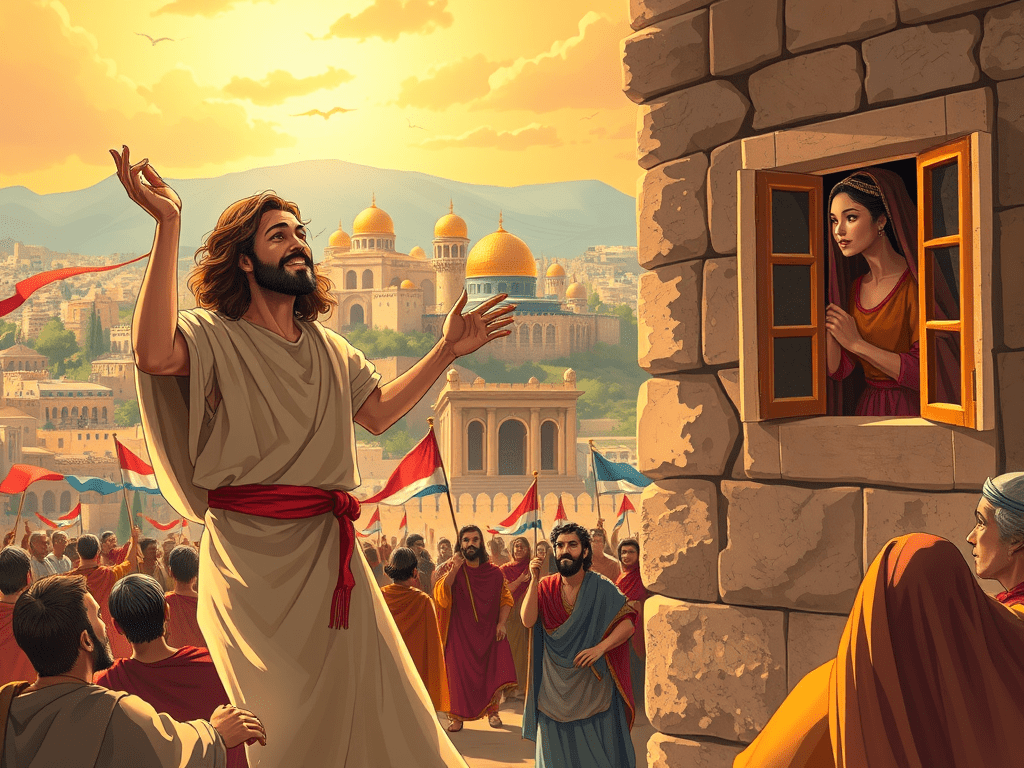
Peering from their home, Michal watched David and despised him for his worship to God.
She so reviled him that the moment he came into the courtyard shemet him and with words dripping with sarcasm, irony, disrespect and even hate, she mocked him for his act of worship –
for making himself small in humble worship to His Lord.
True worshippers forget their surroundings.
They forget what their positions, titles, and roles
They got lost in adoration of the One who fills all space and time.
True worshippers don’t take into account others may think or say, they simply want to offer their praise and worship to their God.
Michal was bitter and like her father, Saul, she was more concerned about the people’s opinion than she was that her husband worshipped his God.
So, in a move of manipulation, she tried to shame David with words that she thought would reduce his joy and gladness, but David had already faced this attack before.
Years before, Saul dangled his daughter as a prize. It was witchcraft anf manipulation.
One day Saul said to David, “I am ready to give you my older daughter, Merab [Michal], as your wife. But first you must prove yourself to be a real warrior by fighting the LORD’s battles.” For Saul thought, “I’ll send him out against the Philistines and let them kill him rather than doing it myself.”[1]
Not an offer out of friendship or good will, but a trap.
Saul’s main struggle was his overwhelming concern with what the people would think of him, which is why he said, “Let not mine hand be upon him, but let the hand of the Philistines be upon him.”
In other words, let them do my dirt work for me so that the people won’t think badly of me.
Manipulation and control – witchcraft.
The struggle every leader faces is “their faces” (Jer. 1:4-10), and Saul failed miserably in this area.
You will remember what the LORD said to Jeremiah:
Then the word of the LORD came unto me, saying, Before I formed thee in the belly I knew thee; and before thou camest forth out of the womb I sanctified thee, and I ordained thee a prophet unto the nations. Then said I, Ah, Lord GOD! behold, I cannot speak: for I am a child. But the LORD said unto me, Say not, I am a child: for thou shalt go to all that I shall send thee, and whatsoever I command thee thou shalt speak. Be not afraid of their faces: for I am with thee to deliver thee, saith the LORD. Then the LORD put forth his hand, and touched my mouth. And the LORD said unto me, Behold, I have put my words in thy mouth. See, I have this day set thee over the nations and over the kingdoms, to root out, and to pull down, and to destroy, and to throw down, to build, and to plant.[2]
Saul’s attempt in trying to persuade David to wear his armor in his fight with Goliath was for the same reason he wanted Samuel to worship with him after God rejected him.
He was more interested in what the people thought. He was terrified of public opinion.
Saul thought that David wearing his armor would be good for Saul.
Saul was two years into his kingship when he showed his fear of public opinion and it was here that he lost the dynasty:
“And Samuel said, What hast thou done? And Saul said, Because I saw that the people were scattered from me, and that thou camest not within the days appointed, and that the Philistines gathered themselves together at Michmash; therefore said I, The Philistines will come down now upon me to Gilgal, and I have not made supplication unto the LORD: I forced myself therefore, and offered a burnt offering. And Samuel said to Saul, Thou hast done foolishly: thou hast not kept the commandment of the LORD thy God, which he commanded thee: for now would the LORD have established thy kingdom upon Israel for ever. But now thy kingdom shall not continue: the LORD hath sought him a man after his own heart, and the LORD hath commanded him to be captain over his people, because thou hast not kept that which the LORD commanded thee.”[3]
In 1 Samuel 15 it looks as if God was willing to give Saul a second chance of sorts, but his disobedience led to his ruin and it was partly due to fear of public opinion:
“And Saul said unto Samuel, I have sinned: for I have transgressed the commandment of the LORD, and thy words: because I feared the people, and obeyed their voice.”[4]
Later Saul lies to Samuel, but still asked for special favor before the people:
“Now therefore, I pray thee, pardon my sin, and turn again with me, that I may worship the LORD. And Samuel said unto Saul, I will not return with thee: for thou hast rejected the word of the LORD, and the LORD hath rejected thee from being king over Israel. And as Samuel turned about to go away, he laid hold upon the skirt of his mantle, and it rent. And Samuel said unto him, The LORD hath rent the kingdom of Israel from thee this day, and hath given it to a neighbour of thine, that is better than thou. And also the Strength of Israel will not lie nor repent: for he is not a man, that he should repent. Then he said, I have sinned: yet honour me now, I pray thee, before the elders of my people, and before Israel, and turn again with me, that I may worship the LORD thy God.”
Saul’s worship wasn’t from his heart to God, but from his mind to manipulate the peoples’ perception.
This was what Saul taught Michal.
If David had never laid down his kingly robes, but instead marched stoically before the Ark, Michal would have been thrilled with this display of Royal pomp and circumstance.
The key difference between Saul and David is here:
“And Samuel said, When thou [Saul] wast little in thine own sight, wast thou not made the head of the tribes of Israel, and the LORD anointed thee king over Israel?” (1 Samuel 15:17)
Humility – the willingness to make himself “MORE VILE” – is what separated David from Saul and distinguished him in God’s eyes as “a man after his own heart.”
David laid down his kingly robes and returned to his humble origins where he first met God as a shepherd boy.
In the Ancient Hebrew, vile also means “gathering to the staff.”
When the shepherd called the sheep they swiftly came to him.
The staff of the shepherd was his tool of authority. With it he would direct, discipline and protect the flock.[5]
David heard the voice of the Shepherd and gathered himself to His Staff in an offering both of animal sacrifices or worship and in a spirited display of a Living Sacrifice.
David learned worship shepherding in the fields long before he became a king, it was east to lay aside his kingly robe to worship his King.
“I beseech you therefore, brethren, by the mercies of God, that ye present your bodies a living sacrifice, holy, acceptable unto God, which is your reasonable service. And be not conformed to this world: but be ye transformed by the renewing of your mind, that ye may prove what is that good, and acceptable, and perfect, will of God” (Romans 12:1-2).
You must make yourself More Vile.
It’s easy in our multigenerational Pentecostal culture to think that worship is in the dance, the shout, the jump, the tongues,
BUT real worship is when you become vile and base to yourself.
You submit your self in an act or personal requirement to lay down your pride, personal rights, what you consider “justice” — lay down your gift and be reconciled.
Why? Because someone has ought against you, not you against them.
We wear robes of dignity, pride, position (that’s beneath me), entitlement, religion, but Jesus is looking for His robe on you: garments of praise, robes of righteousness.
More Vile:
But it doesn’t make any sense
What will people think
Costs you something – a sacrifice
Requires a demonstration of true leadership – a true shepherd (Jesus at Calvary became “more vile”)
Michal, if she ever had it, lost it that day when she reviled and mocked a true worshipper because of her fear of what others might say,
But David, that shepherd-king gave it all in worship.
Jesus is here and He knows what it is like to humble Himself and be seen as vile:
Philippians 2:5-11, “(5) Let this mind be in you, which was also in Christ Jesus: (6) Who, being in the form of God, thought it not robbery to be equal with God: (7) But made himself of no reputation, and took upon him the form of a servant, and was made in the likeness of men: (8) And being found in fashion as a man, he humbled himself, and became obedient unto death, even the death of the cross. (9) Wherefore God also hath highly exalted him, and given him a name which is above every name: (10) That at the name of Jesus every knee should bow, of things in heaven, and things in earth, and things under the earth; (11) And that every tongue should confess that Jesus Christ is Lord, to the glory of God the Father.”
(8) Then Peter, filled with the Holy Ghost, said unto them, Ye rulers of the people, and elders of Israel,
(9) If we this day be examined of the good deed done to the impotent man, by what means he is made whole;
(10) Be it known unto you all, and to all the people of Israel, that by the name of Jesus Christ of Nazareth, whom ye crucified, whom God raised from the dead, even by him doth this man stand here before you whole.
(11) This is the stone which was set at nought of you builders, which is become the head of the corner.
(12) Neither is there salvation in any other: for there is none other name under heaven given among men, whereby we must be saved.
Just a Little Stone
verse 11, “This is the stone which was set at nought of you builders, which is become the head of the corner.”
Have you ever set something aside thinking that it was not useful for your purpose, only to comeback to it later in the project because it was exactly what you needed all along?
OR – have you rejected a person, thing or opportunity only to regret that decision later on.
In life, there are moments you can retrace in your mind that take you to a decision made that changed your life.
Something you “set a nought,” or what the psalmist wrote as being “refused,” and the apostle Matthew said it was “rejected.”
Whether despised, refused, or rejected, you relegated it in you mind to being Just a Little Stone.
This passage from our text quotes Psalms 118:22-23, “The stone which the builders refused is become the head stone of the corner. (23) This is the LORD’S doing; it is marvellous in our eyes.”
A small stone from the Valley of Elah.
It is considered a messianic prophecy, but it is also addressing David’s years of obscurity before he was anointed, accepted and crowned:
His own father discounted him, but the Lord of Heaven and Earth saw in him something of great value.
David’s time in the hills and valley caring for sheep prepared him for leadership
His time of solitude brought him close to God as he poured his heart to Him in prayer, praise, song and music.
The time spent looking for stray sheep offered discoveries that would later serve to hide him in safety from a king who wanted to destroy him.
He learned, in his obscurity, how to defend and protect the flock.
Nobody thought much of David before Samuel anointed him, but in those years of solitude, he was being prepared for his purpose.
While rejected, despised and even snubbed, these years with the sheep were the exact thing he needed to shape him into the kind of person that the Lord said was “a man after mine own heart, which shall fulfil all my will.”[1]
Our text also points to our Lord and Savior Jesus Christ. He was also set at nought, He was refused, rebuffed, despised and rejected of men.
For the most part, the religious leaders of His day did not want, recognize and desire what He was offering.
It did not fit within their understanding, framework, and teaching of how the messiah was to appear to them.
So, they rejected Him.
Instead of a headstone he was set aside and became a stone of stumbling.
Isaiah 28:16, “Therefore thus saith the Lord GOD, Behold, I lay in Zion for a foundation a stone, a tried stone, a precious corner stone, a sure foundation: he that believeth shall not make haste.”
Romans 9:30-33, “(30) What shall we say then? That the Gentiles, which followed not after righteousness, have attained to righteousness, even the righteousness which is of faith. (31) But Israel, which followed after the law of righteousness, hath not attained to the law of righteousness. (32) Wherefore? Because they sought it not by faith, but as it were by the works of the law. For they stumbled at that stumblingstone; (33) As it is written, Behold, I lay in Sion a stumblingstone and rock of offence: and whosoever believeth on him shall not be ashamed.”
In the 1800s, Edward Irving, a Scottish preacher came on the scene in London, England, and his preaching turned London upside down.
He preached to politicians, lords, ladies, the wealthy, the elite, and to the common man.
His effect was so widespread that people would come and sit for hours just to hear him preach God’s Holy Word,
But nobody in England knew about the years he spent in obscurity in Scotland preaching with little success and minor results.
In his biography it was told that he changed nothing about his preaching, style, delivery, and ministry to the people.
It was just that God had finally pulled him out of the corner he was set in and he became a cornerstone for a supernatural move of the work of the Holy Ghost.
Ephesians 2:19-22, “(19) Now therefore ye are no more strangers and foreigners, but fellowcitizens with the saints, and of the household of God; (20) And are built upon the foundation of the apostles and prophets, Jesus Christ himself being the chief corner stone; (21) In whom all the building fitly framed together groweth unto an holy temple in the Lord: (22) In whom ye also are builded together for an habitation of God through the Spirit.”
God has come to pull you out of obscurity…out of the shadows…where He has been:
Refining you
Training you
Preparing you
Arranging the place He wants to put you.
1 Peter 2:5-12, “(5) Ye also, as lively stones, are built up a spiritual house, an holy priesthood, to offer up spiritual sacrifices, acceptable to God by Jesus Christ. (6) Wherefore also it is contained in the scripture, Behold, I lay in Sion a chief corner stone, elect, precious: and he that believeth on him shall not be confounded. (7) Unto you therefore which believe he is precious: but unto them which be disobedient, the stone which the builders disallowed, the same is made the head of the corner, (8) And a stone of stumbling, and a rock of offence, even to them which stumble at the word, being disobedient: whereunto also they were appointed. (9) But ye are a chosen generation, a royal priesthood, an holy nation, a peculiar people; that ye should shew forth the praises of him who hath called you out of darkness into his marvellous light: (10) Which in time past were not a people, but are now the people of God: which had not obtained mercy, but now have obtained mercy. (11) Dearly beloved, I beseech you as strangers and pilgrims, abstain from fleshly lusts, which war against the soul; (12) Having your conversation honest among the Gentiles: that, whereas they speak against you as evildoers, they may by your good works, which they shall behold, glorify God in the day of visitation.”
Romans 11:11, “I say then, Have they stumbled that they should fall? God forbid: but rather through their fall salvation is come unto the Gentiles, for to provoke them to jealousy.”





 The Pillar and Ground of Truth