Tag: Pentecostal Assemblies of the World
Mysteries That Reveal the End of the Age[1]
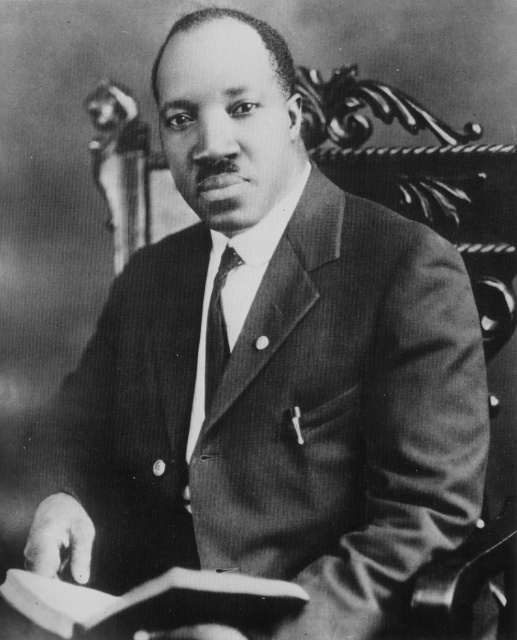
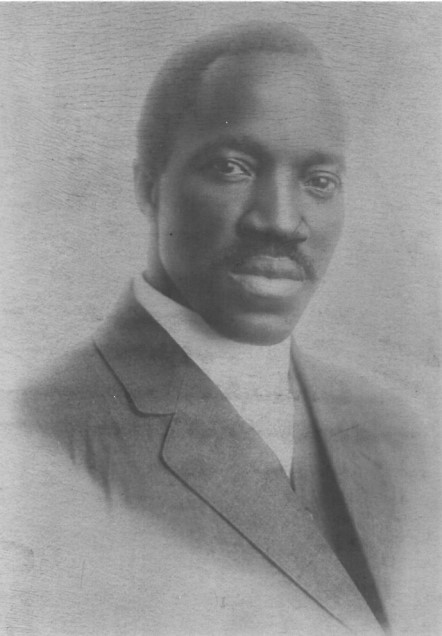
Bishop G. T. Haywood[2]
In the third chapter of Revelations, it is said: “These things saith the Amen, the faithful and true witness, the beginning of the creation of God; I know they works, that thou art neither cold nor hot; I would thou wert cold or hot. So then because thou art lukewarm, and neither cold nor hot, I will spue thee out of my mouth.” Verses 14 to 16. We are living in this day now, when men need to be anointed with eye-salve. It is the last period of the Church. From Adam to Christ 4,000 years rolled away into eternity; then from Christ’s time to the pouring out of His Spirit in seven-fold measure, that is, the fulness of the Spirit poured out to go through the entire Gospel age, and on through the same, almost 2,000 years have flown by, and we are found in the end of the age.
The Career of the Church
The first period of the Church following the day of Pentecost was the Ephesian days; then followed the Smyrna, Pergamos, Thyatira, Sardis, Philadelphia, and Laodicea periods in turn. There are seven of them. The seven branched candlestick which is shown in the first chapter of Revelation, refers to the seven-fold dispensation of the one church on earth throughout the gospel age.
Jesus, moreover, spake seven parables in the 13th chapter of Matthew, which are, in order, the parable of the sower, the wheat and tares; the grain of mustard seed; the leaven; the treasure hid in a field; the pearl of great price, and lastly, that of the net cast into the sea.
The same Jesus that spoke on the Isle of Patmos to seven churches is the same one who spake the seven parables in the days of His flesh, when in human form. When He spake the seven messages to the Church, He was in glorified form. And so when He spake the parables, he referred to the career of the Church on earth; and when He spoke of the seven candlesticks, He referred to the Seven periods of the Church in its spiritual relationship.
Truly the Word of God is like the bread with which Jesus fed the multitude: the more your break it the more there is to it. You can never exhaust the word of God. It is not possible to get to the place where you can truly say, “l am familiar with the whole Word,” for the true Word is God himself.
And so we find the parable of the sower compares with the Ephesian age; and the parable of the wheat and the tares corresponds to the Smyrnian age; the parable of the mustard seed to the Pergamite time; the parable of the leavened meal to the Thyatiran dispensation; the hid treasure compares to the Sardian period; the costly pearl to the Philadelphian age; and lastly the dragnet parable to the Laodicean, or lukewarm age, in which we are living. People neither call themselves saints nor sinners. You ask them if they are saints and they will say, “Why, no; that is foolishness.” They don’t feel a bit condemned about dancing, stealing and telling lies, playing cards, poker, chewing and smoking. But any man upon whom God has really put His seal, feels sorry at the least thing done contrary to God’s word. Let us take Ephesians 1:16, 17; and read, “Cease not to give thanks for you, making mention of you in my prayers; That the God of our Lord Jesus Christ, the Father of Glory, may give unto you the Spirit of wisdom and revelation in the knowledge of him.” That is, to know God, comes by revelation. It is not what you can study, neither what I can explain to you, but is what God can impress upon your heart by His Spirit.
“The eyes of your understanding being enlightened; that ye may know what is the hope of his calling, and what the riches of the glory of his inheritance in the saints.”-Eph. 1:18. Now I cannot tell to save my life just what He has got in us. He has not made a bad bargain when He bought us! I used to think the rag man was the most foolish man, but I found later he could make more money out of those things than I could with my hard labor. Say, we were such a ragged pack of old bones; but God bought us with His own precious blood! There is something rich in glory about this purchasing our unworthy selves by the Lord. God could not be fooled. He knew His business. God says, “Why they are going to praise Me!” (And I am beginning it now!)
God desires that our eyes be anointed in these last days but it takes God to anoint our eyes. He is going to show us something, even beautiful things to come. I wish to give you the likeness of the parable of the Sower with the Church of Ephesus; and each of the other parables with each of the other Churches in turn. The word “Ephesus” refers to the “moon” and has the sense of the “beginning of the season.” So it was in the beginning of the season of the Gospel, that the Sower went forth to sow the word of God. The parable of the wheat and tares corresponds with the Church of Smyrna. There was a mixture of tares and wheat. So we find in Smyrna, “I know the blasphemy of them which say they are Jews, and are not, but are the synagogue of Satan.”-Rev. 2:9. The wheat and the tares in the field are hypocrites mingling with the saints in the Church through tradition. Then we have the mustard seed, which when grown, became the greatest among herbs and becomes a tree, insomuch that the birds of the air came and lodged in the branches thereof. And to correspond with this, in the church of Pergamos Satan gained a seat; for God said: “I know where Satan’s seat is.”–Rev. 2:13.
Then we have a woman mentioned in both the parables of the leaven and the corresponding church in Thyatira. This woman taught them to commit fornication, which God calls the worshipping of more than one God.–Ex. 34:15, 16. Did not He accuse Israel of harlotry because she went after Baal? And that church of Thyatira taught them to worship three gods by hiding the doctrine in three persons in the Godhead, and leavened the whole religious world.
Next there is the hidden treasure parable. You read the parable and the letter to the Church of Sardis, and you have an exact picture of the life of the people of the Reformation. They did not have the “life” for they only had a name as being alive, but were dead.–Rev. 3:1. But Luther did have faith, though he gave them no life. That hid treasure was “faith.” He sold out all his future prospects with Catholicism so he could get this treasure. The world is the field.
The Philadelphian age of the church is the great age of holiness which began to be preached all over the world. A pearl is a gem which you might term as “brought about by the death of another.” For an oyster has to die to bring forth a pearl. It is a type of oneness and unity. Christ had to die to bring forth the Church, that true “Pearl.” Holiness truth is a wonderful pearl!
And God said, “Don’t cast your pearl before swine.” The parable of the Pearl and the Philadelphian period of the church are one and the same.
And the Church of the Laodiceans is the last church period; and the dragnet parable is the last parable, showing we are living in the lukewarm age of the church, in the end of the age, when God is dragging the gospel dragnet throughout the world. I believe that net is water baptism in Jesus’ name which has come forth “in the end of the Gospel Age.” The pen-photo of the nominal Church today is graphically portrayed in the letter to the Church of Laodicea. And it is at this same time that the net is being cast into the water in Jesus’ name. When one man came to me with the argument that some were going beck on the baptism in Jesus’ name, I went to the Lord and the Lord said, “Look at the parable.” I read it again and it says, He “cast the bad away.”-Matt. 13:48. Thank God that them who come unto Him with a good and honest heart He will in no wise case out.
One of the things we really need to know, is something on the dispensations. Jesus said, “The time is fulfilled. Repent and believe the Gospel.” And I say to you, the time is fulfilled. Repent and believe ye the Gospel! The coming of the Lord is at hand. Let thy kingdom come!
[1] SOURCE: https://www.apostolic.edu/mysteries-that-reveal-the-end-of-the-age-by-bishop-g-t-haywood/. Accessed: 12/09/2022. THE ABOVE MATERIAL WAS TAKEN FROM EARNEST CONTENDERS FOR THE FAITH BY ELDER JAMES L. TYSON AND PUBLISHED BY PENTECOSTAL PUBLICATIONS, 1982, PAGES 7-11. THIS MATERIAL IS COPYRIGHTED AND MAY BE USED FOR STUDY & RESEARCH PURPOSES ONLY.
[2] BIOGRAPHICAL SKETCH: Bishop Garfield Thomas Haywood was born July 15, 1880, in Greencastle, Indiana. His parents were Ben and Penn Ann Haywood. In 1883 he and his family moved to Indianapolis where he would reside the remainder of his life. Bishop Haywood never finished high school, but was nonetheless a great scholar, artist, composer of songs, and author, which became evident in his later life. On February 11, 1902, he married Ida Howard of Owensboro, Kentucky. To this union was born one daughter, Fannie Haywood (Ellis). Bishop Haywood received the Holy Ghost in February of 1908. He assumed the pastorate of a disorganized group of 13 people in 1909, and built it into one of the most outstanding churches of the generation. Christ Temple of Indianapolis, Indiana, still stands as a monument to the feats done under the leadership of this warrior of the Gospel. Bishop Haywood, from about 1910-1914, was a viable force in the Assemblies of God. He came under conviction of the “Jesus Name” baptism in 1915 and from that time established himself as a proponent of the deity of Christ. He rose through the ranks of the Pentecostal Assemblies of the World, serving as general presbyter, and finally as its first Presiding Bishop. He held that office for six years until his untimely death. Bishop Haywood left this earthly abode at 10:40 AM Sunday morning, April 12, 1931, at the age of 51.
Bishop Norman L. Wagner (Pentecostal Assemblies of the World) preaching “The Night Before the End” in 1987 to the Because of the Times conference in Alexandria, Louisiana, and introduced by Nathaniel A. Urshan, who was the General Superintendent of the United Pentecostal Church International at that time.
Categories
God’s Masterpiece -G. T. Haywood

The following essay is from a wonderful and revelatory book written by Bishop Garfield Thomas (G.T.) Haywood, who was the Presiding Bishop of the Pentecostal Assemblies of the World from 1925-1931. Haywood was a pioneer of truth and an influential leader of the Oneness Pentecostal movement in the early years of its restoration in North America. I thank God for men of his high caliber.
God’s Masterpiece [1]
Author: Bishop G. T. Haywood
Man is a threefold creature, consisting of Spirit, soul, and body. All that is visible is the body. Man is the masterpiece of God’s workmanship, and is “wonderfully and fearfully” made. Nothing like him has ever been brought into being.
The body was formed from the dust of the ground. God breathed into his nostrils the breath (spirit) of life, and he became a living soul. The union of the Spirit and the body apparently produced the soul. (Gen 2:7.)
The soul is never separated from the body. It is the seat of affections. It is the subconscious realm of human activity. On it is impressed the desires, or affections gathered by the spirit through the mental realm, and afterwards carried into actions by the body. The soul is to the body what the records are to the phonograph. (See Rom. 1:20.) Whatever is imprinted on the soul will be acted out unconsciously by the body.
When the spirit of man begins to reach out after evil things, evil impressions are stamped upon the soul, thus resulting in evil deeds, wicked works and practices. The Psalmist says man is “estranged from the womb; they go astray as soon as they are born, speaking lies.” Psa. 58:3. The soul is often spoken of as the “heart”. (Gen. 6:5; Psa. 51:10; 84:2.)
The preaching of the gospel stirs one’s spirit to seek after righteousness. Though the spirit may be inclined towards righteousness, yet it cannot do the things they desire to do on the account of the soul being, as it were, filled with evil engravings of past affections. Hence there is a struggle between the spirit and the body, because the body is inclined to fulfill deeds recorded on the soul, while the spirit endeavors to perform the works of righteousness. (Rom. 7:9-24.) This is genuine conviction unto godly sorrow, working repentance unto salvation.
There is nothing that can remove those evil records engraved upon the soul, or heart, but faith in the blood of Jesus, the Bishop of our souls. The true cry of a penitent spirit is, “0 wretched man that I am! who shall deliver me from the body of this death?” “Create in me a clean heart, 0 God; and renew a right spirit within me!” “What must I do to be saved?” When a soul reaches that state he should be taught full faith and obedience in the command of God, “Repent and be baptized in the name of Jesus Christ for the remission of sins, and ye shall receive the gift of the Holy Spirit,” and God will confirm His word.
When the soul is cleansed the Holy Spirit comes in to help the spirit to place new records on the soul, that the body might perform the will of God, walking in the newness of life. Through the Holy Spirit He will “put My laws in their minds (spirit), and write them upon their hearts” (soul). See John 14:26; 16:13; Heb. 8:10. The mind is the realm of the spirit’s activity, while the heart is the seat of the soul’s affections. Thus by having new records on the soul it becomes as easy for a man to walk and live righteous as it was for him to live wickedly in his former life. Many are cleansed and filled with the Spirit, but fail to get God’s truth hidden, or engraved in their hearts. Psa. 119:11; Hos. 4:6. They need the TRUTH, and not tradition! John 8:32; 17:17.
The modern purchasing plan beautifully illustrates the purpose of spirit, soul, and body, and their final disposition. Whenever an article is purchased the salesman writes out the price, date, and description of the article on two bills at one writing,—an original and a duplicate bill. When the goods are delivered the duplicate goes with the article purchased, while the original is signed and returned to the Company that gave it. Should any question arise over the goods they are returned with the duplicate, which is immediately compared with the original, and judgment is rendered according to the records of the two bills. Thus it is with the spirit, soul and body.
The body is the article of purchase. The spirit and the soul are the two bills,—original and duplicate, respectively. The records of bodily action originate with the spirit, and are duplicated on the soul. When the body is delivered up to death and the grave, the deeds of the body are still imprinted on the soul. The soul and body enter the grave together. (Job 33:18, 22, 28, 30; Psa. 16:10, and Acts 2:27, 31. Psa. 49:14, 15.) But the spirit returns to the God that gave it. (Ecc. 3:21; 12:7; Lu. 23:14, and Acts 2:31; Acts 7:59, 60.) The dead know not anything that is transpiring in this life after their departure, but they do know what is transpiring in the realm wherein they are confined. The spirit of the wicked is tormented by remorse, being conscious of his future destiny. His soul is harassed while sleeping, like a man with wicked, horrible, tormenting dreams, but unable to awake. And when he awakes on the morning of the second resurrection (Rev. 20:10-15), he will awake expecting relief, but will find that his punishment has in reality just begun. (See Luke 16:22-31.)
As for the righteous their spirit departs to be with Christ in Paradise (Phil. 1:23), while the soul is at rest sweetly sleeping in Christ like “one who has folded the drapery of his couch about him and laid down to pleasant dreams.” And in the resurrection morning he “shall be satisfied when he awakes with His likeness.” His spirit and soul will be united in “a glorious body” and shall enter into that realm of life eternal, where there shall be no death, no night, no sleep, no sorrow to break in on the feast of unending joy in the presence of the Lord. (See Psa. 17:15; Isa. 26:19; Dan. 12:1-3; 1 Cor. 15:49-55; 1 Thes. 4:13-17.)
[1] Haywood, G.T. (n.d.). The Finest of the Wheat. “God’s Masterpiece.” Christ Temple Book Store:Indianapolis, IN. Ch. IV. P. 12-15.
[Originally posted on 30 May 2007 at http://thepillarandgroundoftruth.blogspot.com/2007/05/gods-masterpiece.html]
 The Pillar and Ground of Truth