Tag: Lord Jesus Christ
Categories
Equipped & Empowered
Equipped and Empowered[1]
Jesus ministers through each of us by equipping and empowering us, just as He did the Twelve.
Text: Mark 6:1-13
(1) And he went out from thence, and came into his own country; and his disciples follow him. (2) And when the sabbath day was come, he began to teach in the synagogue: and many hearing him were astonished, saying, From whence hath this man these things? and what wisdom is this which is given unto him, that even such mighty works are wrought by his hands? (3) Is not this the carpenter, the son of Mary, the brother of James, and Joses, and of Juda, and Simon? and are not his sisters here with us? And they were offended at him. (4) But Jesus said unto them, A prophet is not without honour, but in his own country, and among his own kin, and in his own house. (5) And he could there do no mighty work, save that he laid his hands upon a few sick folk, and healed them. (6) And he marvelled because of their unbelief. And he went round about the villages, teaching. (7) And he called unto him the twelve, and began to send them forth by two and two; and gave them power over unclean spirits; (8) And commanded them that they should take nothing for their journey, save a staff only; no scrip, no bread, no money in their purse: (9) But be shod with sandals; and not put on two coats. (10) And he said unto them, In what place soever ye enter into an house, there abide till ye depart from that place. (11) And whosoever shall not receive you, nor hear you, when ye depart thence, shake off the dust under your feet for a testimony against them. Verily I say unto you, It shall be more tolerable for Sodom and Gomorrha in the day of judgment, than for that city. (12) And they went out, and preached that men should repent. (13) And they cast out many devils, and anointed with oil many that were sick, and healed them.
And they were offended in him – That is, they took offence at his humble birth, and at the indigent circumstances of his family. They were too proud to be taught by one who, in family connections, they took to be their equal or inferior. People always look with envy on those of their own rank who advance pretensions to uncommon wisdom or superior power.[2]
It is somewhat telling that just as His familiars were offended in Jesus, you will also find those who are offended in you when you begin to flow in the Equipping and Empowerment Jesus has given you.
But just as the LORD told Jeremiah of old: “Be not afraid of their faces: for I am with thee to deliver thee, saith the LORD. Then the LORD put forth his hand, and touched my mouth. And the LORD said unto me, Behold, I have put my words in thy mouth. See, I have this day set thee over the nations and over the kingdoms, to root out, and to pull down, and to destroy, and to throw down, to build, and to plant.”[3]
John 14:12-14, “(12) Verily, verily, I say unto you, He that believeth on me, the works that I do shall he do also; and greater works than these shall he do; because I go unto my Father. (13) And whatsoever ye shall ask in my name, that will I do, that the Father may be glorified in the Son. (14) If ye shall ask any thing in my name, I will do it.”
- “…because I go unto my Father…”
- Hebrews 7:25, “Wherefore he is able also to save them to the uttermost that come unto God by him, seeing he ever liveth to make intercession for them.”
- “…that the Father may be glorified in the Son.”
- The Father has chosen to reveal Himself to this world by the name of Jesus, which literally means “Jehovah Savior” or “Jehovah Is Salvation.” The Father glorified the man Jesus by investing His name (character, power, authority, presence) in Him, by leading Him to the cross to die for the sins of the world, and by raising Him from the dead. Far from manifesting to us a second person of the Godhead unknown to Old Testament saints, the Son manifested [revealed] to us the one, indivisible God for the purpose of our salvation.”[4]
COMING HOME
Nebuchadnezzar destroyed the Temple in Jerusalem in 586 BC, and the majority of survivors in Jerusalem had been marched to Babylon to live out their lives in captivity.
Israel could no longer celebrate feast days at the Temple. Sabbath observances were not the same. Possessions were few and the Jews relied on memory to recite Scripture and pass on their traditions to their families.
We do not have an exact date of when synagogues began to be part of the Jewish identity, but the centrality of the synagogue as a community-meeting place where prayers were prayed and the Torah read aloud developed sometime around the third century BC.
After years of captivity in Babylon, the exiles returned to Israel with a longing to rebuild their community and their disrupted traditions. Seventy years after the first deportation, the exiles began returning under Persian King Cyrus. Without a Temple for their traditional feasts and sacrificial worship, the people started meeting in their communities for Sabbath where the practice of reading from the scrolls started.
The word “synagogues” simply means “meeting or gathering together,” and they became an important part of the religious, social, communal and educational life of the Jewish community as they gathered for prayer, Scripture reading, and instruction in the Law.
When I was on an educational trip to Krakow, Poland (sponsored by Christians United for Israel – CUFI.org), we visited the beautifully restored Tempel Synagogue there in the Jewish Quarter. Our guide, Eli Tur-paz, told us that because of the decimation of the Jewish population in Krakow by the Nazis during World War II, There were not enough people to hold a quorum for meeting, and he said something that I do not think will ever leave my mind: “There are no prayers prayed here anymore.”
Jesus Taught in the Synagogue in Nazareth
In the synagogues, Jesus interacted with the people and began His teaching ministry and performing numerous miracles, often on the Sabbath Day.
Not only did Jesus demonstrate He was Lord of the Sabbath, but in a practical sense, this would be the day most people gathered together in the community, giving Jesus the greatest opportunity to teach them and heal those who needed healing.
The stories circulated about the miracles and teaching of Jesus, so when He returned home after spending time in surrounding communities, He attended the synagogue in Nazareth as somewhat of a local hero—or at least a curiosity.
During that homecoming Sabbath, Jesus volunteered to read, and the scroll of Isaiah was brought to Him and began reading from the already scheduled Scripture reading for that week from Isaiah:
“And there was delivered unto him the book of the prophet Esaias. And when he had opened the book, he found the place where it was written, The Spirit of the Lord is upon me, because he hath anointed me to preach the gospel to the poor; he hath sent me to heal the brokenhearted, to preach deliverance to the captives, and recovering of sight to the blind, to set at liberty them that are bruised, to preach the acceptable year of the Lord” (Luke 4:17–19).
He then stopped reading, closed the scroll, and boldly announced: “This day is this scripture fulfilled in your ears” (Luke 4:21). He had everyone’s attention. The room grew quiet. What was Jesus saying? He was identifying Himself to them as the Messiah.
Jesus’ Family and Hometown Friends Rejected Him as Messiah
The crowd in the synagogue in Nazareth was in awe of Jesus’ words, but they were stuck on His lineage: “Is not this Joseph’s son?” (Luke 4:22). They could not regard Him as a prophet or anything more because they had seen Him grow up as the carpenter’s son. When they said that Jesus was “Joseph’s son,” they were reminding one another that Mary had been pregnant before they were married. How many believed Mary’s story that Jesus was born of a virgin? Would you believe your teenage daughter if she came to you with such a story?
Other questions were asked: “Is not this the carpenter, the son of Mary, the brother of James, and Joses, and of Juda, and Simon? and are not his sisters here with us?” (Mark 6:3).
The connection to family was made to humanize Jesus. They were making the point: He was just one of them. They knew His family. They knew His siblings from their birth, and they knew Jesus was conceived before marriage.
It was all there boiling beneath the surface of their questions. Mark’s last statement sums up their questioning: “And they were offended at him” (Mark 6:3).
Jesus’ own family members may have been embarrassed by His bold claim to be the fulfillment of the prophecy of Isaiah, because if it were not true then He had just committed blasphemy.
Have you ever had people close to you who underestimated you, or who did not see you for who you are? How did that make you feel?
Most of the members of Jesus’ own family did not believe He was the Christ until after His death, burial and resurrection.
What did Jesus do on that day in Nazareth? He modestly responded: “A prophet is not without honour, but in his own country, among his own kin, and in his own house” (Mark 6:4). He may have looked at some of His brothers when He said that last line. Then He referenced two examples from the Scripture where the outsiders (Gentiles), not the people of Israel, received miracles and the favor of God. Those gathered in the synagogue understood Jesus’ implication that they would be passed over and replaced by the Gentiles. This instantly turned their astonishment into anger.
They all rose up, forced Him out of the city and to the edge of the hill, intending to throw Him over the cliff. They had to put the blasphemer to death because they understood Jesus was claiming to be their Messiah. Luke recorded how Jesus escaped the angry crowd: “Passing through the midst of them went his way” (Luke 4:30).
What? How? Did He freeze time? Did He make Himself invisible? Did He just blend in with the crowd? How did He just “pass through their midst?” Luke did not record it so we do not know, but it must have been a miracle. Like the Hebrews of old inexplicably crossing the Red Sea on dry ground, Jesus slipped through the angry crowd, intent on killing Him, and got away.
Nazareth Missed Out on Miracles because of Their Unbelief
Unbelief always stops the miraculous. Mark wrote that in Nazareth Jesus could “do no mighty work, save that he laid his hands upon a few sick folk, and healed them. And he marvelled because of their unbelief” (Mark 6:5–6). His lack of miracles was laid at the feet of their lack of faith.
Everywhere else He had been He taught the people and then He healed the sick.
You know there were people in Nazareth who had the same afflictions and maladies as their neighboring communities. If only they could have embraced the Gospel of the Savior and believed that the same wonders could happen for them as well, but Unbelief left them with just a few miracles occurred there. What would happen today if you responded by accepting and believing that Jesus will heal you right now?
Believe Jesus Is Who He Said He Is
Do you believe that Jesus is and that He is a rewarder of those who diligently seek Him?[5] There are many skeptics in the world today who have trouble believing the miraculous healings and deliverance from addictions that come by prayer and faith in the name of Jesus. Many people only have enough faith to believe that Jesus was just a man who lived a long time ago, but is no longer relevant to their lives.
BUT – there are some here today who believe in Jesus and have confidence that He lives and He is ever present in our lives. Jesus is more than an ancient teacher, a wise prophet, or a spiritual leader; He is the Lord of Glory, the one holy God who came in flesh and lived among us.
JESUS SENT HIS TWELVE DISCIPLES
Nazareth’s rejection did not stop Jesus. He just continued on His purpose, went to another town and continued His ministry.
The angry mob’s intent to push Jesus over the cliff to the rocks below was just the first attempt on His life. There would be other attempts, but Jesus understood His mission and His purpose would not be thwarted.
Without missing a beat, Mark 6:6 transitions from “he marvelled because of their unbelief” to “he went round about the villages, teaching.”
Although Rejected in Nazareth, Jesus Sent His Disciples to Minister
Many believe that Jesus can heal, but they are not convinced that He can heal through them. In just a few short verses, Jesus calls His closest disciples, the Twelve, and empowers them to spread the message of the Kingdom. He sent six teams of two into the surrounding communites, villages and hamlets and increased the spread of His influence
Because He equipped and empowered the Twelve, many more learned of Jesus and became His followers as His fame spread through the disciples’ travels and the powerful results of their ministry. They preached that people must repent and through them, Jesus healed the sick and cast out demons. (See Mark 6:12–13.)
Jesus Ministered THROUGH the Twelve
Jesus taught the disciples to go out in faith. He instructed them to travel light, to leave behind extra clothing, money, and food provisions. They would learn to depend on God to provide for them, relying on the kind hospitality of those to whom they ministered. The teams of disciples went out in obedience to Jesus and began to see miraculous results of their obedience and faith. They anointed the sick and saw miracles of healing. When demons manifested themselves, the disciples spoke with authority and God delivered the oppressed. They learned Jesus could also work through them to accomplish great signs and miracles they saw Jesus work.
If You Will Surrender to Jesus, He Will Minister through You
Learn what the disciples learned: Jesus can work through any obedient follower and He is still calling and commissioning disciples (you and I) to go in the power of His Spirit. He has empowered and equipped you to fulfill the commission and continue the purpose for which He came.
While Jesus was still with His disciples, He declared: “He that believeth on me, the works that I do shall he do also; and greater works than these shall he do; because I go unto my Father” (John 14:12).
After giving the commission, “Go ye into all the world, and preach the gospel to every creature,”[6] Jesus assured His followers, “these signs shall follow them that believe; In my name shall they cast out devils; they shall speak with new tongues; they shall take up serpents; and if they drink any deadly thing, it shall not hurt them; they shall lay hands on the sick, and they shall recover.”[7] Jesus said, “Ye shall receive power, after that the Holy Ghost is come upon you: and ye shall be witnesses unto me . . . unto the uttermost part of the earth.”[8] As much as the promise of the gift of the Spirit is to “you, and to your children,” so also is the calling of God to fulfill the mission of Jesus Christ.[9]
Jesus is working in you to fulfill His purpose by equipping and empowering you.
[1] SOURCE: God’s Word for Life Adult Lesson Guide Summer 2025. Pentecostal Publishing House. Lesson 1.1 – Equipped and Empowered.
[2] Albert Barnes’ Notes on the Bible. Matthew 13:57.
[3] Jeremiah 1:8-10
[4] David K. Bernard. The Oneness View of Jesus Christ. p. 118.
[5] Hebrews 11:6
[6] Mark 16:15
[7] Mark 16:17–18
[8] Acts 1:8
[9] Acts 2:39
Categories
The Great Mountain

Categories
More Vile
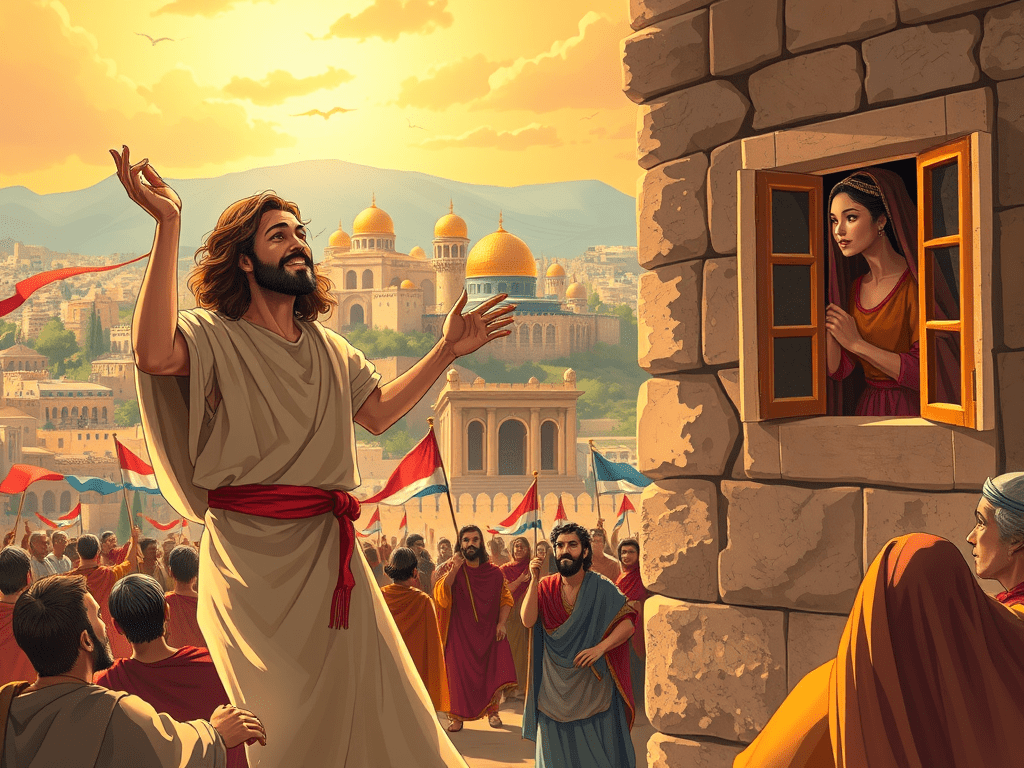
Text: 2 Samuel 6:16-23, “(16) And as the ark of the LORD came into the city of David, Michal Saul’s daughter looked through a window, and saw king David leaping and dancing before the LORD; and she despised him in her heart. (17) And they brought in the ark of the LORD, and set it in his place, in the midst of the tabernacle that David had pitched for it: and David offered burnt offerings and peace offerings before the LORD. (18) And as soon as David had made an end of offering burnt offerings and peace offerings, he blessed the people in the name of the LORD of hosts. (19) And he dealt among all the people, even among the whole multitude of Israel, as well to the women as men, to every one a cake of bread, and a good piece of flesh, and a flagon of wine. So all the people departed every one to his house. (20) Then David returned to bless his household. And Michal the daughter of Saul came out to meet David, and said, How glorious was the king of Israel to day, who uncovered himself to day in the eyes of the handmaids of his servants, as one of the vain fellows shamelessly uncovereth himself! (21) And David said unto Michal, It was before the LORD, which chose me before thy father, and before all his house, to appoint me ruler over the people of the LORD, over Israel: therefore will I play before the LORD. (22) And I will yet be more vile than thus, and will be base in mine own sight: and of the maidservants which thou hast spoken of, of them shall I be had in honour. (23) Therefore Michal the daughter of Saul had no child unto the day of her death.
Picture the moment:
- The ark of the covenant is being returned to Jerusalem to the city of David (on a hill south of Mt. Moriah, the Temple Mount, where Solomon’s Temple will one day stand to permanently house it).
- It was been away from Israel for 20 year.
- 7 months with the Philistines
- Then the Ark was taken to Abinadab’s house in Kiriath-Jearim, where his son Eleazar, watched over it for 20 years.
- Then the house of Obededom cared for it for 3 months.
- “And it was told king David, saying, The LORD hath blessed the house of Obededom, and all that pertaineth unto him, because of the ark of God. So David went and brought up the ark of God from the house of Obededom into the city of David with gladness. And it was so, that when they that bare the ark of the LORD had gone six paces, he sacrificed oxen and fatlings. And David danced before the LORD with all his might; and David was girded with a linen ephod. So David and all the house of Israel brought up the ark of the LORD with shouting, and with the sound of the trumpet” (2 Samuel 6:12-15).
- “With gladness” = with joyful music, jubilant dancing and passionate singing.
Peering from their home, Michal watched David and despised him for his worship to God.
She so reviled him that the moment he came into the courtyard shemet him and with words dripping with sarcasm, irony, disrespect and even hate, she mocked him for his act of worship –
for making himself small in humble worship to His Lord.
True worshippers forget their surroundings.
They forget what their positions, titles, and roles
They got lost in adoration of the One who fills all space and time.
True worshippers don’t take into account others may think or say, they simply want to offer their praise and worship to their God.
Michal was bitter and like her father, Saul, she was more concerned about the people’s opinion than she was that her husband worshipped his God.
So, in a move of manipulation, she tried to shame David with words that she thought would reduce his joy and gladness, but David had already faced this attack before.
Years before, Saul dangled his daughter as a prize. It was witchcraft anf manipulation.
One day Saul said to David, “I am ready to give you my older daughter, Merab [Michal], as your wife. But first you must prove yourself to be a real warrior by fighting the LORD’s battles.” For Saul thought, “I’ll send him out against the Philistines and let them kill him rather than doing it myself.”[1]
Not an offer out of friendship or good will, but a trap.
Saul’s main struggle was his overwhelming concern with what the people would think of him, which is why he said, “Let not mine hand be upon him, but let the hand of the Philistines be upon him.”
In other words, let them do my dirt work for me so that the people won’t think badly of me.
Manipulation and control – witchcraft.
The struggle every leader faces is “their faces” (Jer. 1:4-10), and Saul failed miserably in this area.
You will remember what the LORD said to Jeremiah:
Then the word of the LORD came unto me, saying, Before I formed thee in the belly I knew thee; and before thou camest forth out of the womb I sanctified thee, and I ordained thee a prophet unto the nations. Then said I, Ah, Lord GOD! behold, I cannot speak: for I am a child. But the LORD said unto me, Say not, I am a child: for thou shalt go to all that I shall send thee, and whatsoever I command thee thou shalt speak. Be not afraid of their faces: for I am with thee to deliver thee, saith the LORD. Then the LORD put forth his hand, and touched my mouth. And the LORD said unto me, Behold, I have put my words in thy mouth. See, I have this day set thee over the nations and over the kingdoms, to root out, and to pull down, and to destroy, and to throw down, to build, and to plant.[2]
Saul’s attempt in trying to persuade David to wear his armor in his fight with Goliath was for the same reason he wanted Samuel to worship with him after God rejected him.
He was more interested in what the people thought. He was terrified of public opinion.
Saul thought that David wearing his armor would be good for Saul.
Saul was two years into his kingship when he showed his fear of public opinion and it was here that he lost the dynasty:
“And Samuel said, What hast thou done? And Saul said, Because I saw that the people were scattered from me, and that thou camest not within the days appointed, and that the Philistines gathered themselves together at Michmash; therefore said I, The Philistines will come down now upon me to Gilgal, and I have not made supplication unto the LORD: I forced myself therefore, and offered a burnt offering. And Samuel said to Saul, Thou hast done foolishly: thou hast not kept the commandment of the LORD thy God, which he commanded thee: for now would the LORD have established thy kingdom upon Israel for ever. But now thy kingdom shall not continue: the LORD hath sought him a man after his own heart, and the LORD hath commanded him to be captain over his people, because thou hast not kept that which the LORD commanded thee.”[3]
In 1 Samuel 15 it looks as if God was willing to give Saul a second chance of sorts, but his disobedience led to his ruin and it was partly due to fear of public opinion:
“And Saul said unto Samuel, I have sinned: for I have transgressed the commandment of the LORD, and thy words: because I feared the people, and obeyed their voice.”[4]
Later Saul lies to Samuel, but still asked for special favor before the people:
“Now therefore, I pray thee, pardon my sin, and turn again with me, that I may worship the LORD. And Samuel said unto Saul, I will not return with thee: for thou hast rejected the word of the LORD, and the LORD hath rejected thee from being king over Israel. And as Samuel turned about to go away, he laid hold upon the skirt of his mantle, and it rent. And Samuel said unto him, The LORD hath rent the kingdom of Israel from thee this day, and hath given it to a neighbour of thine, that is better than thou. And also the Strength of Israel will not lie nor repent: for he is not a man, that he should repent. Then he said, I have sinned: yet honour me now, I pray thee, before the elders of my people, and before Israel, and turn again with me, that I may worship the LORD thy God.”
Saul’s worship wasn’t from his heart to God, but from his mind to manipulate the peoples’ perception.
This was what Saul taught Michal.
If David had never laid down his kingly robes, but instead marched stoically before the Ark, Michal would have been thrilled with this display of Royal pomp and circumstance.
The key difference between Saul and David is here:
“And Samuel said, When thou [Saul] wast little in thine own sight, wast thou not made the head of the tribes of Israel, and the LORD anointed thee king over Israel?” (1 Samuel 15:17)
Humility – the willingness to make himself “MORE VILE” – is what separated David from Saul and distinguished him in God’s eyes as “a man after his own heart.”
David laid down his kingly robes and returned to his humble origins where he first met God as a shepherd boy.
In the Ancient Hebrew, vile also means “gathering to the staff.”
When the shepherd called the sheep they swiftly came to him.
The staff of the shepherd was his tool of authority. With it he would direct, discipline and protect the flock.[5]
David heard the voice of the Shepherd and gathered himself to His Staff in an offering both of animal sacrifices or worship and in a spirited display of a Living Sacrifice.
David learned worship shepherding in the fields long before he became a king, it was east to lay aside his kingly robe to worship his King.
“I beseech you therefore, brethren, by the mercies of God, that ye present your bodies a living sacrifice, holy, acceptable unto God, which is your reasonable service. And be not conformed to this world: but be ye transformed by the renewing of your mind, that ye may prove what is that good, and acceptable, and perfect, will of God” (Romans 12:1-2).
You must make yourself More Vile.
It’s easy in our multigenerational Pentecostal culture to think that worship is in the dance, the shout, the jump, the tongues,
BUT real worship is when you become vile and base to yourself.
You submit your self in an act or personal requirement to lay down your pride, personal rights, what you consider “justice” — lay down your gift and be reconciled.
Why? Because someone has ought against you, not you against them.
We wear robes of dignity, pride, position (that’s beneath me), entitlement, religion, but Jesus is looking for His robe on you: garments of praise, robes of righteousness.
More Vile:
- But it doesn’t make any sense
- What will people think
- Costs you something – a sacrifice
- Requires a demonstration of true leadership – a true shepherd (Jesus at Calvary became “more vile”)
Michal, if she ever had it, lost it that day when she reviled and mocked a true worshipper because of her fear of what others might say,
But David, that shepherd-king gave it all in worship.
Jesus is here and He knows what it is like to humble Himself and be seen as vile:
Philippians 2:5-11, “(5) Let this mind be in you, which was also in Christ Jesus: (6) Who, being in the form of God, thought it not robbery to be equal with God: (7) But made himself of no reputation, and took upon him the form of a servant, and was made in the likeness of men: (8) And being found in fashion as a man, he humbled himself, and became obedient unto death, even the death of the cross. (9) Wherefore God also hath highly exalted him, and given him a name which is above every name: (10) That at the name of Jesus every knee should bow, of things in heaven, and things in earth, and things under the earth; (11) And that every tongue should confess that Jesus Christ is Lord, to the glory of God the Father.”
[1] 1 Samuel 18:17, NLT.
[2] Jeremiah 1:4-10
[3] 1 Samuel 13:11-14
[4] 1 Samuel 15:24
[5] H7043. Ancient Hebrew Lexicon of the Bible.
Categories
The Ever Present Ark
Jeremiah 3:15-16, “(15) And I will give you pastors according to mine heart, which shall feed you with knowledge and understanding. (16) And it shall come to pass, when ye be multiplied and increased in the land, in those days, saith the LORD, they shall say no more, The ark of the covenant of the LORD: neither shall it come to mind: neither shall they remember it; neither shall they visit it; neither shall that be done any more.”
2 Timothy 3:1-5, “(1) This know also, that in the last days perilous times shall come. (2) For men shall be lovers of their own selves, covetous, boasters, proud, blasphemers, disobedient to parents, unthankful, unholy, (3) Without natural affection, trucebreakers, false accusers, incontinent, fierce, despisers of those that are good, (4) Traitors, heady, highminded, lovers of pleasures more than lovers of God; (5) Having a form of godliness, but denying the power thereof: from such turn away.”
Zechariah 8:3-8, “(3) Thus saith the LORD; I am returned unto Zion, and will dwell in the midst of Jerusalem: and Jerusalem shall be called a city of truth; and the mountain of the LORD of hosts the holy mountain. (4) Thus saith the LORD of hosts; There shall yet old men and old women dwell in the streets of Jerusalem, and every man with his staff in his hand for very age. (5) And the streets of the city shall be full of boys and girls playing in the streets thereof. (6) Thus saith the LORD of hosts; If it be marvellous in the eyes of the remnant of this people in these days, should it also be marvellous in mine eyes? saith the LORD of hosts. (7) Thus saith the LORD of hosts; Behold, I will save my people from the east country, and from the west country; (8) And I will bring them, and they shall dwell in the midst of Jerusalem: and they shall be my people, and I will be their God, in truth and in righteousness.”
Exo 25:10-22, “And they shall make an ark of shittim wood: two cubits and a half shall be the length thereof, and a cubit and a half the breadth thereof, and a cubit and a half the height thereof. And thou shalt overlay it with pure gold, within and without shalt thou overlay it, and shalt make upon it a crown of gold round about. And thou shalt cast four rings of gold for it, and put them in the four corners thereof; and two rings shall be in the one side of it, and two rings in the other side of it. And thou shalt make staves of shittim wood, and overlay them with gold. And thou shalt put the staves into the rings by the sides of the ark, that the ark may be borne with them. The staves shall be in the rings of the ark: they shall not be taken from it. And thou shalt put into the ark the testimony which I shall give thee. And thou shalt make a mercy seat of pure gold: two cubits and a half shall be the length thereof, and a cubit and a half the breadth thereof. And thou shalt make two cherubims of gold, of beaten work shalt thou make them, in the two ends of the mercy seat. And make one cherub on the one end, and the other cherub on the other end: even of the mercy seat shall ye make the cherubims on the two ends thereof. And the cherubims shall stretch forth their wings on high, covering the mercy seat with their wings, and their faces shall look one to another; toward the mercy seat shall the faces of the cherubims be. And thou shalt put the mercy seat above upon the ark; and in the ark thou shalt put the testimony that I shall give thee. And there I will meet with thee, and I will commune with thee from above the mercy seat, from between the two cherubims which are upon the ark of the testimony, of all things which I will give thee in commandment unto the children of Israel.”
Categories
Your Choice
Text: John 18:40, “Then cried they all again, saying, Not this man, but Barabbas. Now Barabbas was a robber.”
John 18:28-40
(28) Then led they Jesus from Caiaphas unto the hall of judgment: and it was early; and they themselves went not into the judgment hall, lest they should be defiled; but that they might eat the passover.
(29) Pilate then went out unto them, and said, What accusation bring ye against this man?
(30) They answered and said unto him, If he were not a malefactor, we would not have delivered him up unto thee. <<they were defensive>>
(31) Then said Pilate unto them, Take ye him, and judge him according to your law. The Jews therefore said unto him, It is not lawful for us to put any man to death:
(32) That the saying of Jesus might be fulfilled, which he spake, signifying what death he should die.
(33) Then Pilate entered into the judgment hall again, and called Jesus, and said unto him, Art thou the King of the Jews?
(34) Jesus answered him, Sayest thou this thing of thyself, or did others tell it thee of me?
(35) Pilate answered, Am I a Jew? Thine own nation and the chief priests have delivered thee unto me: what hast thou done?
(36) Jesus answered, My kingdom is not of this world: if my kingdom were of this world, then would my servants fight, that I should not be delivered to the Jews: but now is my kingdom not from hence.
(37) Pilate therefore said unto him, Art thou a king then? Jesus answered, Thou sayest that I am a king. To this end was I born, and for this cause came I into the world, that I should bear witness unto the truth. Every one that is of the truth heareth my voice.
(38) Pilate saith unto him, What is truth? And when he had said this, he went out again unto the Jews, and saith unto them, I find in him no fault at all.
(39) But ye have a custom, that I should release unto you one at the passover: will ye therefore that I release unto you the King of the Jews?
(40) Then cried they all again, saying, Not this man, but Barabbas. Now Barabbas was a robber.
Charles Jackson French was a twenty-three-year-old African American from Arkansas who just before World War II enlisted in the Navy.
During the war, French served as a cook on the USS Gregory, a high-speed transport that patrolled the South Pacific.
On patrol, near the Solomon Islands, on the night of September 4, 1942, Japanese submarines surprised the Gregory and opened fire. Before the night was over, the Gregory was sunk.
Fifteen survivors, including Charles French, floated helplessly on the dark waters in an inflatable raft, and things got even worse.
Enemy ships opened fire on the life raft. So, Seaman French made a choice and tied the raft’s rope around his waist and jumped into the dark waters as his feet brushed up against the fins of teeming sharks.
French swam for eight hours in the deep, towing the raft alone against the tide to make sure it never came within range of the distant gunfire.
Charles Jackson French made a choice that saved fourteen souls at the risk of his own life.
At Gethsemane Jesus chose to follow the will of the Father .
It was on the cross where Jesus took our place.
It is your decision to choose Jesus, or someone…something else.
You can decide to choose Jesus, no matter the choice.
It is Your Choice[1]
Jesus’ sacrificial choice was made for everyone.
Barabbas = “Son of Abba.”[2]
Barabbas is the New Testament equivalent of a “John Doe.”
The name literally means “son of a father,” which is not really a name. It essentially means “any man.”
Jesus’ death was a substitution, a sacrifice, for “any man.”
- If any man thirst, let him come unto me…[3]
- …If any man will come after me, let him deny himself, and take up his cross daily, and follow me.[4]
- I am the door: by me if any man enter in, he shall be saved, and shall go in and out, and find pasture.[5]
- Whosoever will come after me, let him deny himself, and take up his cross, and follow me.[6]
- Any man, or woman, who determines to choose and come to Jesus
- Deny = “to forget one’s self, lose sight of one’s self and one’s own interests.”[7]
- Take up your cross = “Embrace the will of God, however painful, daily, hourly, continually.”[8]
- Follow me = become Jesus’ disciple
- Sacrifice is the common denominator for all men who will come after Jesus.
- Any man, or woman, who determines to choose and come to Jesus
What Does It Mean to Sacrifice?
Sacrifice is the choice you make to willingly lose or give up something personal what that cannot be regained.
The loss of something irreplaceable will not come back for the purpose of reconciliation, understanding or appeasement = Sacrifice
Jesus chose sacrifice by blood: “He saved others; himself he cannot save” (Matthew 27:42; Mark 15:31). He chose not to save Himself.
Sacrifice frees the recipient but binds the one who is sacrificing.
“Sacrifice is the language of Heaven.”[9]
Jesus’ Body Was Prepared for Sacrifice
A man who had lost his right arm rolled up his sleeve to reveal the gnarled remnant of his arm. Only four inches of mangled skin and cartilage remained below the shoulder. He held up the stub of his arm and said,
“A lot of people feel sorry for me. They try to look away and make sure I don’t see them looking at me funny. But you should not feel sorry for me. You know why God gave me the arm I lost? Because God knew I’d be in a car accident one day and my son would be sitting next to me. And just as a shaft of metal was headed for his face, I would have that right arm to shield his face and take the blow. I lost my arm; shards of metal went straight through the bone. But that arm saved my son. That’s why God gave me a right arm. That was its main purpose. He gave it to me so I could give it away to save the boy. No, don’t feel sorry for me. No man’s right arm has ever served a better purpose. A son for a right arm. I would do the same thing every time. And when I wake up in the morning and feel the arm I’ve lost, I give glory to God for the son it gained.”
Look at Hebrews 10:4-7,
“For it is not possible that the blood of bulls and of goats should take away sins. Wherefore when he [Jesus] cometh into the world, he saith, Sacrifice and offering thou wouldest not, but a body hast thou prepared me: in burnt offerings and sacrifices for sin thou hast had no pleasure. Then said I, Lo, I come (in the volume of the book it is written of me,) to do thy will, O God.”
- “…a body hast thou prepared me” = David’s messianic prophecy in Psalm 40.
- These words are attributed to Christ, the Son of David “when he cometh into the world, he saith.”
- God in flesh, the incarnation, Jesus Christ came for one purpose – to redeem us through His sacrifice and bring reconciliation between God and Man:
“But when the fulness of the time was come, God sent forth his Son, made of a woman, made under the law, To redeem them that were under the law, that we might receive the adoption of sons.”[10]
Only Jesus’ Sacrifice Would Work
The sacrifice of animals in the Old Testament was insufficient. They could not solve the problem of sin; they could not save Man from the ravages of sin.
So a body was made—a body for God Himself, but to what end?
The Spirit of God is omnipotent; He can do anything by mere decree.
That is why He chose the limitations of flesh, a body, because for a sacrifice to be a true sacrifice it must free the recipient while binding the one who sacrifices.
Jesus, God in flesh, limited Himself to a body for the purpose of sacrifice:
Philippians 2:5-8, “(5) Let this mind be in you, which was also in Christ Jesus: (6) Who, being in the form of God, thought it not robbery to be equal with God: (7) But made himself of no reputation, and took upon him the form of a servant, and was made in the likeness of men: (8) And being found in fashion as a man, he humbled himself, and became obedient unto death, even the death of the cross.”
He humbled Himself.
His body had to depend upon a human mother. His body was susceptible to microbes, sweated through fever, was nourished by mere water, and required a blanket for warmth.
His body could misjudge a step and fall, forget the name of someone He met last week, and be crippled by grief.
His body would lose its freedoms to the men He made and be fastened with nails to a tree He grew.
His body would bleed, His lungs suffocate, His body would die – a choice He made for you…for me…a willing sacrifice.
When Jesus, God in flesh, met the blind, His touch healed them and gave them sight.
With one word, Jesus raised a child from the dead: “Little girl, get up.”[11]
Lazarus lay in a tomb for four days, Jesus called him by name, and he came out the tomb.
He spoke to the lepers and they were healed and cleansed.
But to heal you of your sins, Jesus could not just speak your sins away.
He could not wish your sins away, touch your sins away, or command your sins away.
No, your sins required a body:
“A body hast thou prepared me” (Hebrews 10:5).
His Body!
Like the father who sacrificed his arm to save his son, Jesus chose to sacrifice His body for you: “This is my body, which is given for you” (Luke 22:19).
Because we do not like pain, if it were up to us we would have been tempted to prepare a body that would have withstood the pain of sacrifice before it was formed in Mary’s womb:
- A body with a forehead that would not feel thorns and a back that would not feel the soldiers’ whip.
- Hands and wrists without nerves that would not feel the pain of the iron nails penetrating them.
- A tongue made that would not swell, be parched, or need to beg for water.
But this was not the will of God. God Incarnate assumed a body just like ours:
“For we have not an high priest which cannot be touched with the feeling of our infirmities; but was in all points tempted like as we are, yet without sin” (Hebrews 4:15).
Hebrews 2:18, “For in that he himself hath suffered being tempted, he is able to succour them that are tempted.”
Succour = aid, relieve
You Should Rejoice in Jesus’ Sacrifice for You
How should we respond to Jesus’ sacrifice? We should rejoice.
Without the cross, we have no hope, but thanks to the cross and the empty tomb, we have hope of salvation.
Our sins can be forgiven, and we can be made right with God.
Jesus was not caught or trapped by scheming Roman soldiers or jealous chief priests—He willingly laid down His life for us.
He lived His own words: “Greater love hath no man than this, that a man lay down His life for his friends” (John 15:13).
On Jesus’ Last Day He Ministered to Others
What would you do it were your last day to live?
- Would you go to a place you have always dreamed of going?
- Would you see something you have always wanted to see?
- Would you eat your favorite meal?
- Would you talk you your favorite people?
- What would you do if you knew you only had one day left?
What did Jesus do? He chose to serve, minister, and love others:
He washed His disciples’ feet; prayed all night for them; healed the ear of the man who came to arrest Him; carried your cross to Calvary; pardoned a thief while nailed to your cross and took him to Paradise; had compassion on His mother and the disciple who was with her; forgave all His murderers.[12]
On the day of His sacrifice at Calvary, Jesus chose to give Himself, to sacrifice Himself, all day long.
Billy Cole said, “God’s reward for sacrifice is more sacrifice.”
Before Jesus chose the ultimate sacrifice of Calvary He had to choose other little sacrifices beforehand.
Those ongoing sacrificial choices led Him to choose to sacrifice His life for YOU.
Sacrifice is Your Choice, It is Trading Your Will for God’s Will
You, like Jesus and His apostles, have been called to a life of sacrifice:
“I beseech you therefore, brethren, by the mercies of God, that ye present your bodies a living sacrifice, holy, acceptable unto God, which is your reasonable service” (Romans 12:1).
Just as a body was prepared for Christ, your body has been prepared for you to make a choice to sacrifice yourself, or to choose convenience, complacency, mediocrity.
Some problems cannot be solved by wishing them solved, or praying them away.
Some problems require you to lay down your comfort, convenience, security, safety, health and wealth.
Some problems require your body.
“A body hast thou prepared me.”
On that dark Passover weekend, Jesus died so Barabbas could live.
History has no record of Barabbas after that fateful day, but your story is still being written.
Today, as on Jesus’ last day, you have a choice: Jesus or anything else in this world.
You must get this choice right – – Your Choice
Choose abundant life.
Choose eternal life.
Choose to live for the one who died for us.
Choose Jesus.
[1] Source: God’s Word for Life. Lesson 3.3 – Jesus, or Barabbas? PPH. 2/16/2025.
[2] Strong’s Hebrews and Greek Dictionaries. G912.
[3] John 7:37.
[4] Luke 9:23.
[5] John 10:9.
[6] Mathew 8:34.
[7] Thayer’s Greek Definitions. G533
[8] Adam Clarke’s Commentary on the Bible. Matthew 8:34.
[9] Ken Gurley
[10] Galatians 4:4-5.
[11] Mark 5:21-43; Luke 8:40-56.
[12] John 13; 17; 18; Matthew 27; Luke 22; John 19, Luke 22
Categories
What’s In Your Hand?
Exodus 4:1-2, “(1) And Moses answered and said, But, behold, they will not believe me, nor hearken unto my voice: for they will say, The LORD hath not appeared unto thee. (2) And the LORD said unto him, What is that in thine hand? And he said, A rod.”
Categories
But I Won

Text: 2 Cor. 2:14, “Now thanks be unto God, which always causeth us to triumph in Christ, and maketh manifest the savour of his knowledge by us in every place.”
SONG:
The devil and I had a fight, BUT I WON!
Me and devil and can’t agree, I hate him and he hates me.
And I’m still winning!
Give God a victory praise…you’re still winning!
People may have talked, gossiped and judged, but you won.
2 Corinthians 6:14-18
“Be ye not unequally yoked together with unbelievers: for what fellowship hath righteousness with unrighteousness? and what communion hath light with darkness? And what concord hath Christ with Belial? or what part hath he that believeth with an infidel? And what agreement hath the temple of God with idols? for ye are the temple of the living God; as God hath said, I will dwell in them, and walk in them; and I will be their God, and they shall be my people. Wherefore come out from among them, and be ye separate, saith the Lord, and touch not the unclean thing; and I will receive you, And will be a Father unto you, and ye shall be my sons and daughters, saith the Lord Almighty.”
Shammah
(11) And after him was Shammah the son of Agee the Hararite. And the Philistines were gathered together into a troop, where was a piece of ground full of lentiles: and the people fled from the Philistines. (12) But he stood in the midst of the ground, and defended it, and slew the Philistines: and the LORD wrought a great victory.[1]
1 Tim. 6:12, “Fight the good fight of faith, lay hold on eternal life, whereunto thou art also called, and hast professed a good profession before many witnesses.”
Matthew 12:9-21
(9) And when he was departed thence, he went into their synagogue:
(10) And, behold, there was a man which had his hand withered. And they asked him, saying, Is it lawful to heal on the sabbath days? that they might accuse him.
(11) And he said unto them, What man shall there be among you, that shall have one sheep, and if it fall into a pit on the sabbath day, will he not lay hold on it, and lift it out?
(12) How much then is a man better than a sheep? Wherefore it is lawful to do well on the sabbath days.
(13) Then saith he to the man, Stretch forth thine hand. And he stretched it forth; and it was restored whole, like as the other.
(14) Then the Pharisees went out, and held a council against him, how they might destroy him.
(15) But when Jesus knew it, he withdrew himself from thence: and great multitudes followed him, and he healed them all;
- He knew of the plot which they had formed against his life; but his hour was not yet come, and he therefore sought security.
- By remaining, his presence would only have provoked them further and endangered his own life. He acted, therefore, the part of prudence and withdrew.
- Just because you can don’t mean you should.
- “He healed them all.” Jesus healed their diseases, and preached to them the good news of salvation.[2]
(16) And charged them that they should not make him known:
(17) That it might be fulfilled which was spoken by Esaias the prophet, saying,
(18) Behold my servant, whom I have chosen; my beloved, in whom my soul is well pleased: I will put my spirit upon him, and he shall shew judgment to the Gentiles.
(19) He shall not strive, nor cry; neither shall any man hear his voice in the streets.
- He did not shout as a warrior.
- He is meek, retiring, and peaceful.
- He didn’t seek publicity, fame and popularity.[3]
(20) A bruised reed shall he not break, and smoking flax shall he not quench, till he send forth judgment unto victory.
- Jesus did not oppress the feeble and poor
- The “bruised reed” is a type of the brokenness of the soul on account of sin; weeping and mourning for transgression.
- Jesus will not break it; He will not be severe, unforgiving, and cruel. He will heal you, pardon you, and give you strength.
- He will not further oppress those who have little strength; nor put out hope and life when it seems to be almost extinct.
- He will cherish the feeble flame, tend to it and give it the oil of grace until it is kindled into a blaze.
- He will not allow you to be defeated – BUT I WON!
- The truth is that the Gospel of Jesus Christ conquer.[4]
(21) And in his name shall the Gentiles trust.
The Portal of Victory:[5]
- Intense Prayer
- Intense Hunger & Desire
- Faith & Expectation
1 John 5:4-5
(4) For whatsoever is born of God overcometh the world: and this is the victory that overcometh the world, even our faith.
(5) Who is he that overcometh the world, but he that believeth that Jesus is the Son of God?
But I Won
[1] 2 Samuel 23:11-12
[2] Albert Barnes’ Notes on the Bible. Matthew 12:9-21.
[3] Ibid.
[4] Ibid.
[5] Missionary MVMUTHU. (n.d.). The River of God’s Glory.

