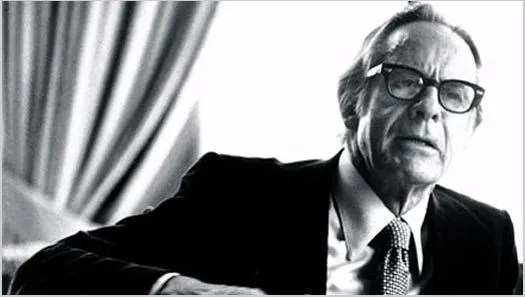
My interest in Rollo May began when I read that he received training in divinity as well as psychoanalysis. At that time I began to think that he might have something to say that I’d be interested in. The more I read about May the more I was intrigued by his views. He makes sense on a number of issues that face our modern society. Although his book, Love and Will, was published in 1969, it is clear that most of the concepts remain accurate and can be applied to the twenty-first century. I found his ideas to be hopeful and focused on a bright future. While May spent many pages dealing with the anxiety, alienation, and the vacuous expression of society today, he ends his book on a positive note when he writes about how “we may embrace the future” (May, 1969). His book left me with the understanding that with a combination of love and will one can wrap their arms around the future without anxiety or loneliness haunting their days. With that in mind, the purpose of this paper is to give a brief history of Rollo May’s life, to recount the various concepts in existential and humanistic psychology that May is credited with defining, to briefly explain May’s views on love and will, and to discuss what I think is a key element missing in May’s aspect of love.
According to Paul Minnillo (n.d.), of the University of Georgia, “Rollo May introduced European existential thought into American psychology.” Minnillo (n.d.) explains the difference between humanism and existentialism by writing, “Humanists see people as basically good; existentialists see human nature as neutral. Whether the person becomes good or evil is a matter of personal choice. One can decide to be good or evil.”
While it is nice to know that May played such an influential part in the development of existential psychology in the US, it is needful that we take a closer look at May’s background before falling headlong into a discussion of contributions and definitions.
In a brief biographical sketch, Dr. C. George Boeree (1998), a professor of psychology at Shippensburg University, writes:
“Rollo May was born April 21, 1909, in Ada, Ohio. His childhood was not particularly pleasant: His parents didn’t get along and eventually divorced, and his sister had a psychotic breakdown. After a brief stint at Michigan State (he was asked to leave because of his involvement with a radical student magazine), he attended Oberlin College in Ohio, where he received his bachelors degree. After graduation, he went to Greece, where he taught English at Anatolia College for three years. During this period, he also spent time as an itinerant artist and even studied briefly with Alfred Adler.
When he returned to the US, he entered Union Theological Seminary and became friends with one of his teachers, Paul Tillich, the existentialist theologian, who would have a profound effect on his thinking. May received his BD in 1938.
May suffered from tuberculosis, and had to spend three years in a sanatorium. This was probably the turning point of his life. While he faced the possibility of death, he also filled his empty hours with reading. Among the literature he read were the writings of Soren Kierkegaard, the Danish religious writer who inspired much of the existential movement, and provided the inspiration for May’s theory. He went on to study psychoanalysis at White Institute, where he met people such as Harry Stack Sullivan and Erich Fromm.
And finally, he went to Columbia University in New York, where in 1949 he received the first PhD in clinical psychology that institution ever awarded. After receiving his PhD, he went on to teach at a variety of top schools. In 1958, he edited, with Ernest Angel and Henri Ellenberger, the book Existence, which introduced existential psychology to the US. He spent the last years of his life in Tiburon, California, until he died in October of 1994.”
While this seems to be quite a long excerpt it is necessary to point out the various influences combined in the mind of May that would eventually become part of his theory. When reading Love and Will (1969), it is easy to become overwhelmed by the vast amount of knowledge that May presents. He writes, quite capably, about a wide range of subjects, which include (but are not limited to) Greek mythology, Judaism, Sigmund Freud, Alfred Adler, Carl Jung, Gestalt, William Shakespeare, Goethe, Dante, Hugh Hefner, Cezanne, Epicurus, Henrik Ibsen, and Soren Kierkegaard. This eclectic taste appeals to the philosophical nature, and yet he uses that knowledge to support a significant amount of his arguments. This would not have been the case if he had not had those years of travel, study, or sickness. At any rate, by the time May published Love and Will (1969) he was 60 years old and had gathered 6 decades of knowledge, experience, and wisdom.
Like many psychologists before him, May developed an assortment of key concepts to define his aspect of Existential psychology. It is important to note that while some of these are mentioned in Love and Will others are not. It is also important that we recognize that many of May’s ideas build upon those of earlier psychologists while taking on a definite Existential tone. The following are those concepts and definitions as briefly defined as possible.
Dr. Boeree (1998) points out the four nontraditional stages that May used in his Existential model:
- Innocence — the pre-egoic, pre-self-conscious stage of the infant. The innocent is premoral, i.e. is neither bad nor good. Like a wild animal who kills to eat, the innocent is only doing what he or she must do. But an innocent does have a degree of will in the sense of a drive to fulfill their needs!
- Rebellion — the childhood and adolescent stage of developing one’s ego or self-consciousness by means of contrast with adults, from the “no” of the two year old to the “no way” of the teenager. The rebellious person wants freedom, but has as yet no full understanding of the responsibility that goes with it. The teenager may want to spend their allowance in any way they choose — yet they still expect the parent to provide the money, and will complain about unfairness if they don’t get it!
- Ordinary — the normal adult ego, conventional and a little boring, perhaps. They have learned responsibility, but find it too demanding, and so seek refuge in conformity and traditional values.
- Creative — the authentic adult, the existential stage, beyond ego and self-actualizing. This is the person who, accepting destiny, faces anxiety with courage!
While May did use these stages to explain his philosophical view of Existential psychology, we need to be careful not to think of these stages as following a specific path like Sigmund Freud’s Psychosexual Stages or Erik Erikson’s Stage Theory.
According to Paul Minnillo (n.d.), “The following terms and concepts relate to May’s specific applications of existential philosophy to psychology:”
- Human Dilemma: the fact that humans can view themselves as both the subject and the object at the same time. Humans can see themselves as an object to which things happen; we are continually influenced by stimuli presented to us (Skinner’s theory); whether we respond or not to the stimuli depends on our rationality (Rogers’ theory); our ability to self-relate is what distinguishes us from the rest of nature; “man’s ability to stand outside himself”; we can view ourselves viewing, a metacognitive skill.
- Intentionality: the means by which the dichotomy between subject and object is partially overcome; all emotional and mental experiences must relate to (intend) object or events outside the person; the human capacity to perceive selectively and to assign meaning to objects and events in the world; the relationship between the thinking person and the outside world. Both the individual’s will (movement in a certain direction to fulfill specific goals) and wish (the imaginative playing with the possibility of future courses of action) are related to his/her intentionality. Intentionality, will, and wish are three of the most important concepts in May’s theory. Through these three cognitive constructs the person experiences his identity, exercises his freedom and senses his being.
- Normal and Neurotic Anxiety: anxiety and freedom always go together. Anxiety is defined as the resulting response to anything that threatens our freedom. May’s definition of normal anxiety: “the apprehension cued off by a threat to some value which the individual holds essential to his existence as a self.” Anxiety is necessary for growth and expansion of self; moving forward into the unknown is anxiety producing, an unfortunate companion of freedom of choice. Healthy anxiety should be recognized and accepted as inevitable. Neurotic anxiety is the feeling that comes when one decides to conform, accept conditions of worth of others, and give up possible personal growth, all in the name of safety and security. Neurotic anxiety, leading to psychological stagnation and intense feelings of guilt, is the subject of therapy.
- Normal and Neurotic Guilt: normal guilt comes when one doesn’t live up to his/her potential as a human being; it is part of the human condition, like anxiety; normal guilt can be used constructively when it is recognized and consciously reduced by appropriate action; neurotic guilt is the result of giving up and taking no risks for growth and expansion of self.
- Values: what we deem important and meaningful. In infancy: love, care, nourishment; in childhood and adolescence: approval, success, status among peers and autonomy from parents; in adulthood: those which transcend the immediate situation in time and encompass past and future, extending outward toward the good of the community and the larger world; holding mature values is more important than satisfying those values, i.e. search for beauty and truth is more important that actually finding it. Without functional values, we are alienated from the world and lose our sense of identity, worth, and significance; there is a sense of helplessness and aimlessness….mature values allow a person to deal effectively with reality, to empathize with others, and to form meaningful interpersonal relationships, and to be future-oriented; without an adequate system of values, people depend on things outside themselves to indicate worth and significance—status, income, possessions, prestige.
- Daimonic: from Greek, meaning both divine and diabolic; any natural function that has the power to take over the whole person—sex, eros, anger, rage, craving for power or achievement; may be either creative and healthy or destructive, or usually both. The desire to achieve is a kind of affirmation of self, but if it becomes an obsession, it takes over the whole person without regard for the person’s well-being or the well-being of others; all of life is a constant search for the optimal level of each of our personality traits.
- Psychotherapy: the goal is to convert neurotic anxiety and guilt to normal anxiety and guilt; to help the client actualize his/her potentialities. What is the client trying to express by the presenting problems? To help the client find meaning in circumstances s/he would otherwise find meaningless or hopeless. Therapy should be an encounter between two selves coming together and sharing their existence; empathy for the client is a key ingredient.
- Importance of Myth: May agreed with Jung that myths give expression to the universal truths of human nature, and guide human existence; these are narratives that make sense in a senseless world; myths provide universal themes to the individual regarding birth, death, love, marriage, good (Christ), evil (Satan), freedom, independence’ memory and myth are inseparable; our earliest memories become our personal myths, that influence our perceptions about the world, others and self.
Perhaps the greatest contribution that Rollo May gives us is his position on the five types of love. May begins chapter two of Love and Will (1969) with this paragraph:
“There are four kinds of love in Western tradition. One is sex, or what we call lust, libido. The second is eros, the drive of love to procreate or create – the urge, as the Greeks put it, toward higher forms of being and relationship. A third is philia, or friendship, brotherly love. The fourth is agape or caritas as the Latins called it, the love which is devoted to the welfare of the other, the prototype of which is the love of God for man. Every human experience of authentic love is a blending, in varying proportions, of these four” (p. 37-8).
After this paragraph May spends the next 139 pages dealing exclusively with sex and eros. He only mentions philia and agape two more times. However, May (1969) makes the argument that each type of love is progressive in nature. Thus, sex needs eros, eros needs philia, and “philia, in turn, needs agape” (p. 319).
The striking thing about this progression to me is the claim that each aspect of love is necessary for one to be fulfilled, and a person needs aspects of all four to reach that state of authenticity mentioned earlier in May’s creative stage.
For example, sex is purely lustful and completely about gratifying the body. There is nothing wrong or evil about sex (within marriage), but when the daimonic of sex overwhelms a person they begin to think only about their performance and this brings about alienation or anxiety, and could end in violence or some type of destructive behavior if left unchecked.
On page 40 May (1969) even mentions that in our own supposedly enlightened age there is “so much sex and so little meaning or even fun in it!” The reason for this is that people are more interested in the mechanics of sex than in the devotion of eros. May puts it better by writing, “We fly to the sensation of sex in order to avoid the passion of eros” (p. 65).
Why this flight from eros? May responds, “Sex can be defined fairly adequately in physiological terms as consisting of the building up of bodily tensions and their release. Eros, in contrast, is the experiencing of the personal intentions and meaning of the act. Whereas sex is a rhythm of stimulus and response, eros is a state of being” (p. 73). This ontological concept – “the science of being” – is what causes the escape from eros (p. 112). It is at this point of sharing our being with another where we learn what love is while experiencing love in its most vulnerable and unprotected state. May wrote that “love means to open ourselves to the negative as well as the positive – to grief, sorrow, and disappointment as well as to joy, fulfillment, and an intensity of consciousness we did not know was possible before” (p. 100). Therefore, it may be this lack of courage (authenticity) which causes so many to run away from eros.
May reminds us that the act of love is unique because “man is the only creature who makes love face to face…looking at his/her partner” (p. 311). However, as “sex is saved from self-destruction by eros,” so eros is made bearable by philia (May, 1969, p. 317). According to May (1969), philia is being able to relax with someone else. It is the ability to be and to appreciate the being of that significant other. There is no requirement for action on the part of philia because it is simply accepting the companionship of someone you love to be with (p. 317).
Agape is needed by philia because it is that love which requires nothing in return. May (1969) declares that agape contains “within it the element of selfless giving” (p. 319). It is a spiritual love transcending the physical.
Since people need to be loved physically and spiritually, and not just one or the other, May pronounces, “In normal human relations, each kind of love has an element of the other three, no matter how obscured it may be” (p. 320). This means that in order for love to truly be authentic it needs will. According to Howard Friedman and Miriam Schustack (1999, 2003), May’s concept of will is effort and volition (p. 502). Thus, authentic love is a decision – a choice – to determine to love courageously and to cast aside those anxieties that hold us back.
The strength of May’s theory lies in its ability for each individual to experience their struggles with courage and to celebrate the uniqueness of their existence. As mentioned earlier, May’s form of psychotherapy gives the client the opportunity to express their problems to an empathetic therapist. This meeting then allows the client to face those daunting situations with the aid of another and to find meaning out of situations that seem to be bleak or pointless.
The weakness of May’s theory, in my opinion, is that he fails to adequately explain the role of the family in the types of love. There is another Greek word for love that he never mentions in his book. This word, storge, is defined by C.S. Lewis (1994) as that affection one finds among family members and is part of the “maternal instinct.” At any rate, Lewis (1970, 1994) calls storge the “humblest of loves” simply because it is there by virtue of one’s birth, or adoption, into a family. In my opinion, by ignoring the love that is found between family members, May misses a key ingredient in his theory of love. If I were to incorporate May’s theory into my own theory I’d add this final element of storge.
_____________________________________________
References
Boeree, C. George. (1998). Rollo May 1909-1994. Personality Theories. Retrieved: December, 2004. http://www.ship.edu/~cgboeree/may.html
Friedman, Howard S., & Schustack, Miriam W. (1999, 2003). Personality: Classic Theories and Modern Research. 2nd edition. Boston: Allyn & Bacon. 502.
Lewis, C. S. (1970, 1994) The Four Loves. (Cassette Recording). Dallas: Word Publishing.
May, Rollo. (1969). Love and Will. New York: W. W .Norton & Company, Inc. 37-8, 40, 65, 73, 100, 112, 311, 317, 319, 320, 325
Minnillo, Paul R. (n.d.). Existential Psychology in Context. Retrieved: December 2, 2004. http://www.arches.uga.edu/~minnillo/
Research Paper (edited)
Love & Will | Stephen E. Kuntzman | West Virginia University Parkersburg | 3 December 2004 | Instructor: Dr. Phil McClung
 The Pillar and Ground of Truth